


Starting May 10, 2025, marriage registration will no longer require going back to the place of household registration of either spouse, and can be handled nationwide. At the same time, it will no longer be necessary to provide a household registration book to obtain a marriage certificate; it can be processed with an ID card.
Chinese people have long been accustomed to "online services" in recent years. The deepest experience is during the pandemic, when nucleic acid testing and health code assignment were done. No matter where your household registration is, no matter where you are, you can complete it on your phone, and it was never said that you must return to your place of household registration for nucleic acid testing.
In the same vein as matters related to identity, why hasn't marriage registration been able to be handled nationwide for so many years?
Answering this question is particularly interesting, and it can also be used to observe many unique and difficult problems that exist in China's governance of society and service to citizens.
The first reason: China entered modern society very late
When it comes to China, everyone can think of its long history, which is true. China's time in a "pre-modern" society was indeed very long. But when it comes to "modern" society, China's history is...
Less than thirty years.
Yes, the reform and opening up have been going on for more than forty years, but if you think about it carefully, it was only from the mid-1990s that Chinese people began to live a "modern life" detached from organizations and units, and the government truly stepped out of the ideological constraints and began to focus on establishing a civilized social order.
As a microcosm of modern civilized life, the large-scale cross-provincial autonomous flow of population, and the freedom of young men and women to fall in love and marry on a wider scale, also began in the mid-1990s.
From then on, the cross-provincial integration of marriage registration information had practical significance, that is, the situation where both spouses are not in their place of household registration and are detached from the "organization".
So the problem arises:
In the many years before this, the methods of marriage registration have undergone many changes, and the departments that handle marriage registration in various places also have great differences. Some are registered in township governments, some are registered in county civil affairs bureaus, large factories, mines, farms, and other state-owned enterprises can also issue marriage certificates. In special times, marriage can also be handled in revolutionary committees and military control committees. After more international exchanges, foreign embassies and consulates can also register marriages...
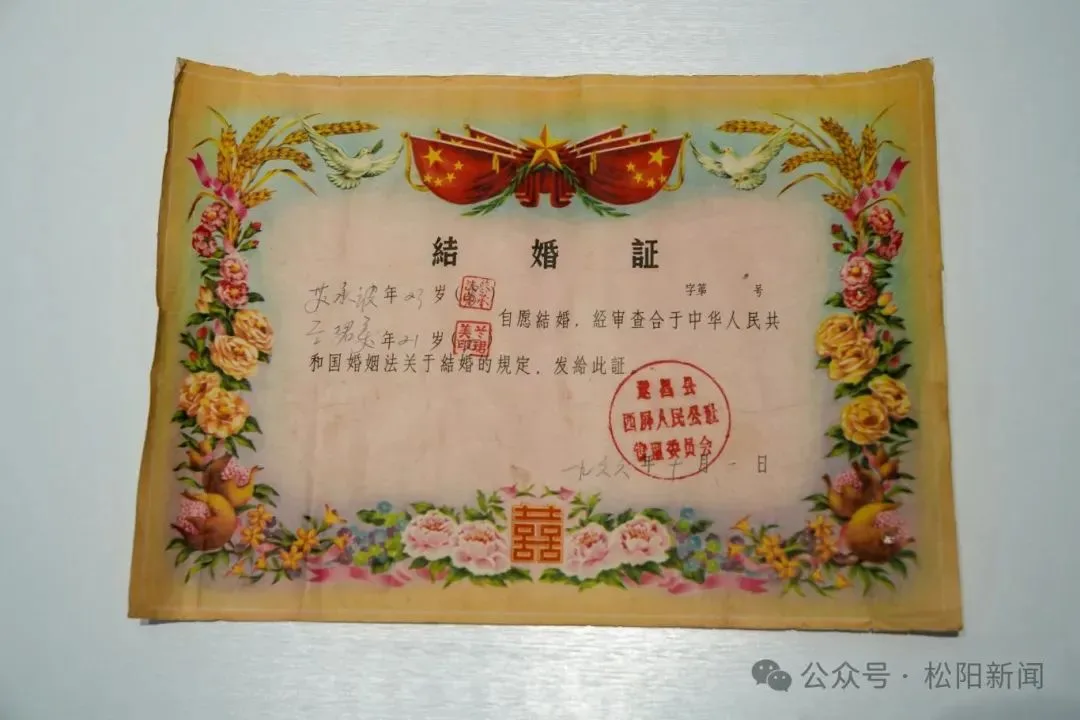
The marriage registration information of the previous thirty years cannot be said to be a pile of loose sand, at least it can be regarded as dozens of tangled threads.
In fact, it's not just marriage information, including birth population registration is also a mess. As a post-85s, my actual date of birth is more than a year different from the date of birth on my household registration book. There are a lot of errors in the names and birthdays on the household registration of the post-80s.
But no matter what, before the establishment of a modern social governance system, the marriage was recognized by the state and society, right? To establish a nationwide marriage registration information database, it is also necessary to sort out these tangled data and put them in to be complete.
In fact, China only began to gradually promote the digital management of marriage registration files in 2004, and only launched the national marriage registration system networking project in 2012. But until 2025, 31 provinces will basically complete the electronicization of historical archives, with a cumulative total of 120 million data entries.
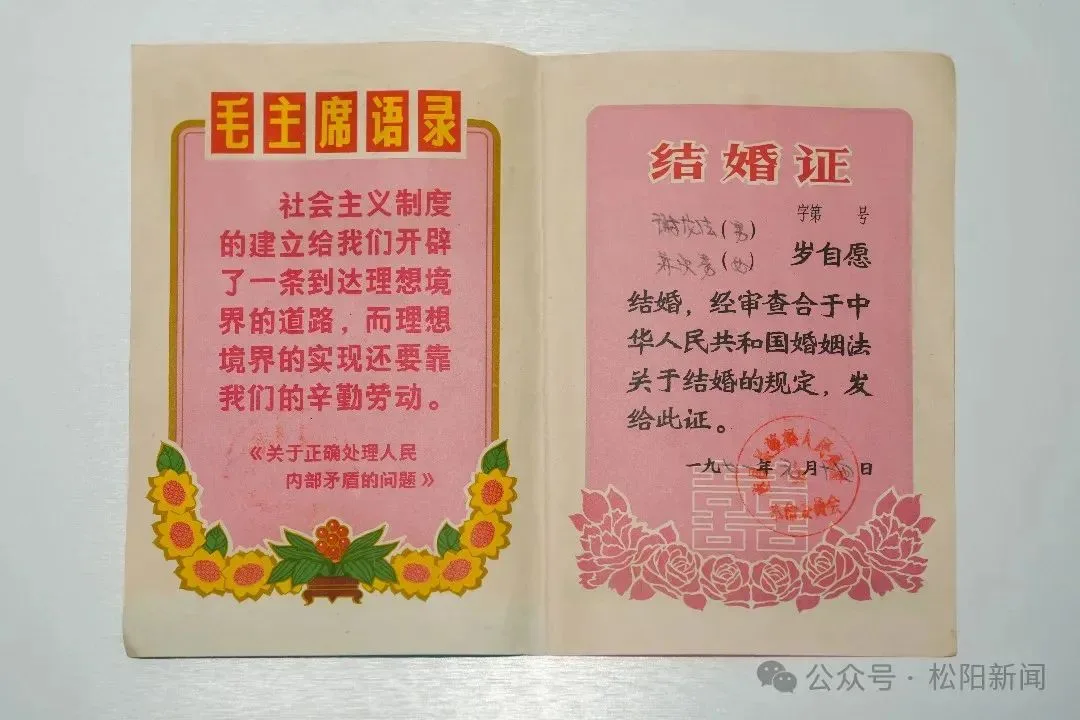
The reason why it is said to be basically completed is because about 15% of those historical paper archives have not been electronically completed and are still being filed. It's just that for those people in their eighties and nineties, the need to check marriage registration information is not so urgent.
The second reason: China has more than 300 decision-making units
As mentioned earlier, China started the electronic management of marriage registration files in 2004, and it has been more than 20 years since then. Logically speaking, even with a data volume of billions, it shouldn't take 20 years to complete, right? This doesn't seem like the speed of China.
In fact, the digitization of paper archives is only a small part of the difficulty of the work. The most difficult thing about connecting the national marriage registration information is the compatibility and integration of different systems and different storage formats in various regions.
Some students may think: as long as each province and city adopts the same system and stores information in the same standard format, wouldn't the problem be solved?
The idea is good, but it's also very naive.
To date, China has very few truly unified government information systems nationwide. Most government information, such as in the fields of industry and commerce, taxation, real estate, environmental protection, and statistics, has its own independently developed and operated system in each province or city. These independent systems are then aggregated to the national level through complex interfaces.
For example, the real estate information registration system in China is almost independently developed by each prefecture-level city by outsourcing to software companies. China has more than 300 prefecture-level administrative units, and correspondingly, there are more than 300 decision-making units, and at least 300 different real estate information registration systems.

To accurately query how many properties a person has nationwide, you need to register and log in to more than 300 real estate information registration systems to get a conclusion.
If real estate is like this, marriage registration information is even more difficult.
In 2019, Ms. Shang from Zhumadian City, Henan Province, and her boyfriend went to the local civil affairs bureau to register their marriage and were shocked to find that she was already registered as married in the system. Even more exaggerated, after reporting the case and checking in other provinces, it was found that she had registered marriages with 5 different men in Shandong, Hebei, Anhui, and Jiangsu from 2004 to 2005. It turned out that someone had impersonated Ms. Shang's ID card and household registration information to get married and used the lack of connectivity between different provinces to handle repeated marriages.
When the marriage registration information systems are isolated from each other, theoretically, a man can have up to 30 wives in China, and they all have marriage certificates.
People in each province and city need to register their marriage and follow the same "Marriage Law". Why didn't they make a top-level plan at the beginning and let each province and city adopt the same system? Similar problems also exist in countless other government affairs fields.
This matter, in the final analysis, is not wanting to, rather than not being able to.
On the one hand, China actually relies more on documents to govern the country rather than on laws. Every adjustment in the field of social management is made by the central government issuing a guiding document, and then each region implements a local plan based on its own situation and the will of local leaders, and develops and operates a local system.
For example, the previous real estate purchase restriction policies in various cities required the cooperation of local real estate information registration systems. If there is only one nationwide system, the management authority will be centralized, and each city will not be able to independently introduce purchase restriction rules.
The above is still the open demand. In fact, there is also a need to secretly leave the opportunity for local dignitaries to illegally modify system information. Letting a prefecture-level city manage an independent system is essentially giving the local leaders the power to interfere with the system to a certain extent, and also ensuring that they cannot overstep their authority to interfere with the systems of other cities.
Breaking down the scattered systems and taking the authority to modify the system to the national level also means depriving the local authorities of the power to issue separate policies and operate in secret, and the resistance can be imagined.
On the other hand, when building the system, if a nationwide unified bidding is used to build a system and then distributed to each province and city for use, it actually deprives the local authorities of the space for separate bidding and construction, and the local authorities are definitely not happy.
In reality, those super-large software outsourcing companies that specialize in developing government affairs systems all use the same set of code to change different skins and repeatedly sell them to dozens of provinces and even hundreds of cities.
If you want more than 30 provinces and 300 cities to fully integrate the systems, either you have to rebuild the systems for some cities, and eventually everyone will use the same one, or you have to build structurally complex "information overpasses" between different systems to barely connect everyone.
In reality, the vast majority of cases choose the more complex, more expensive, more difficult to use, and more fragile latter solution.
It is more difficult to touch interests than to touch the soul.
The third reason: China needs to consider public opinion in all matters
Before the integration of marriage registration information, some people used the loopholes in the lack of connectivity between provinces to repeatedly marry in different provinces and arbitrarily modify marriage registration information. You can imagine, what kind of people are those who can do this and dare to do this?

If you want to integrate marriage registration information nationwide and open it to the public for inquiry, you have to consider the social impact of exposing these situations. It can be imagined that any exposure will trigger a surge of public opinion.
Therefore, in reality, even if it is technically possible to integrate the marriage registration system nationwide, before opening it to the public, it is also necessary to spend a lot of time and energy to clean up and solve the above-mentioned historical legacy issues one by one. I estimate that the time spent on this part may be much more than the technical operation.
Originally, it was a problem of illegal crimes by some people. After the information is integrated, those who should be punished should be punished, and those who should be sentenced should be sentenced. But here, for reasons known to all, it will be treated as a public opinion problem and quietly solved before the new system is launched.
In summary, it has taken so many years to integrate the marriage registration information nationwide, on the one hand, because the work of sorting out paper archives is indeed huge, and on the other hand, because we are facing some unique difficulties.
These difficulties also exist in many, many fields.