



Recently, there have been many American guests on Xiaohongshu, and after everyone compared their living expenses, netizens from both sides were amazed.
Chinese netizens lamented the high hourly wages in the United States, and even more lamented that it is still difficult to save money with such high hourly wages – it turns out that the cost of living in the United States is so high.
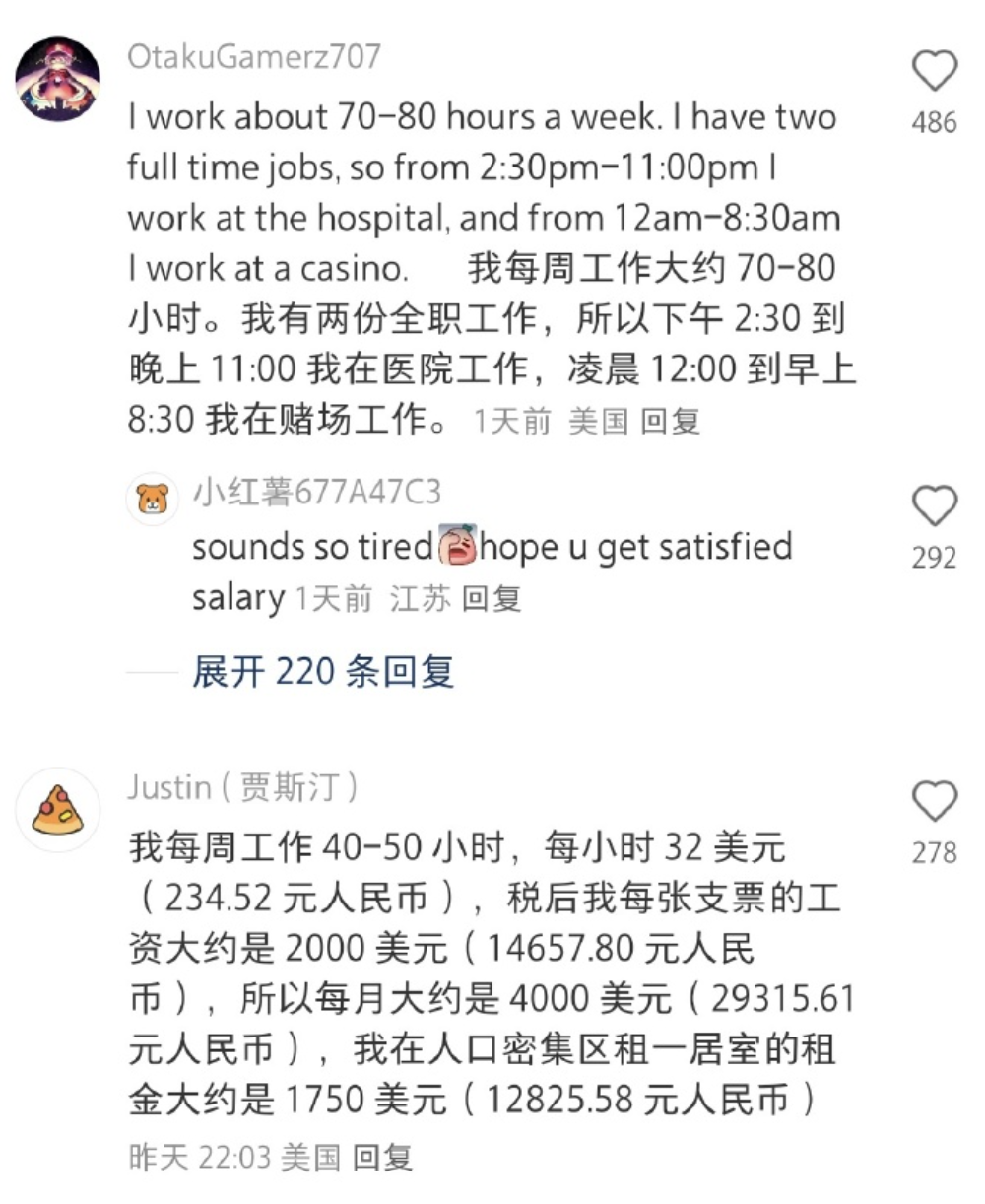
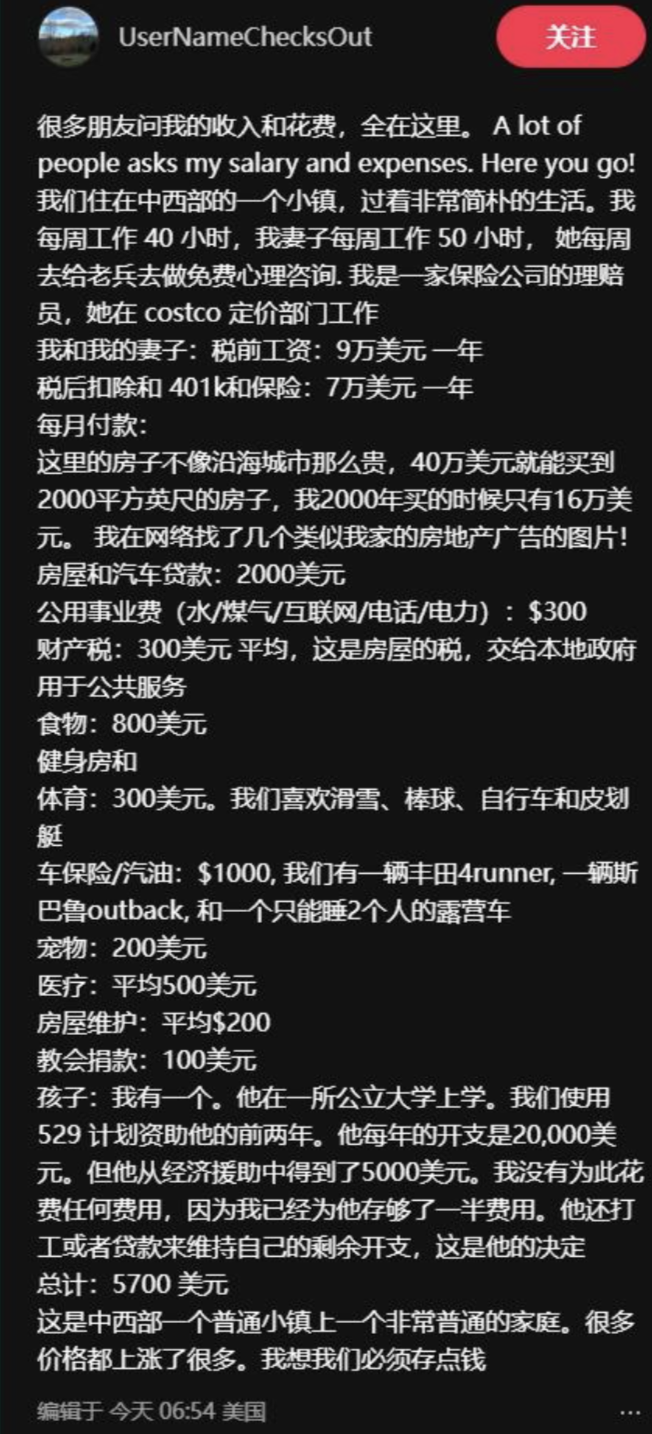
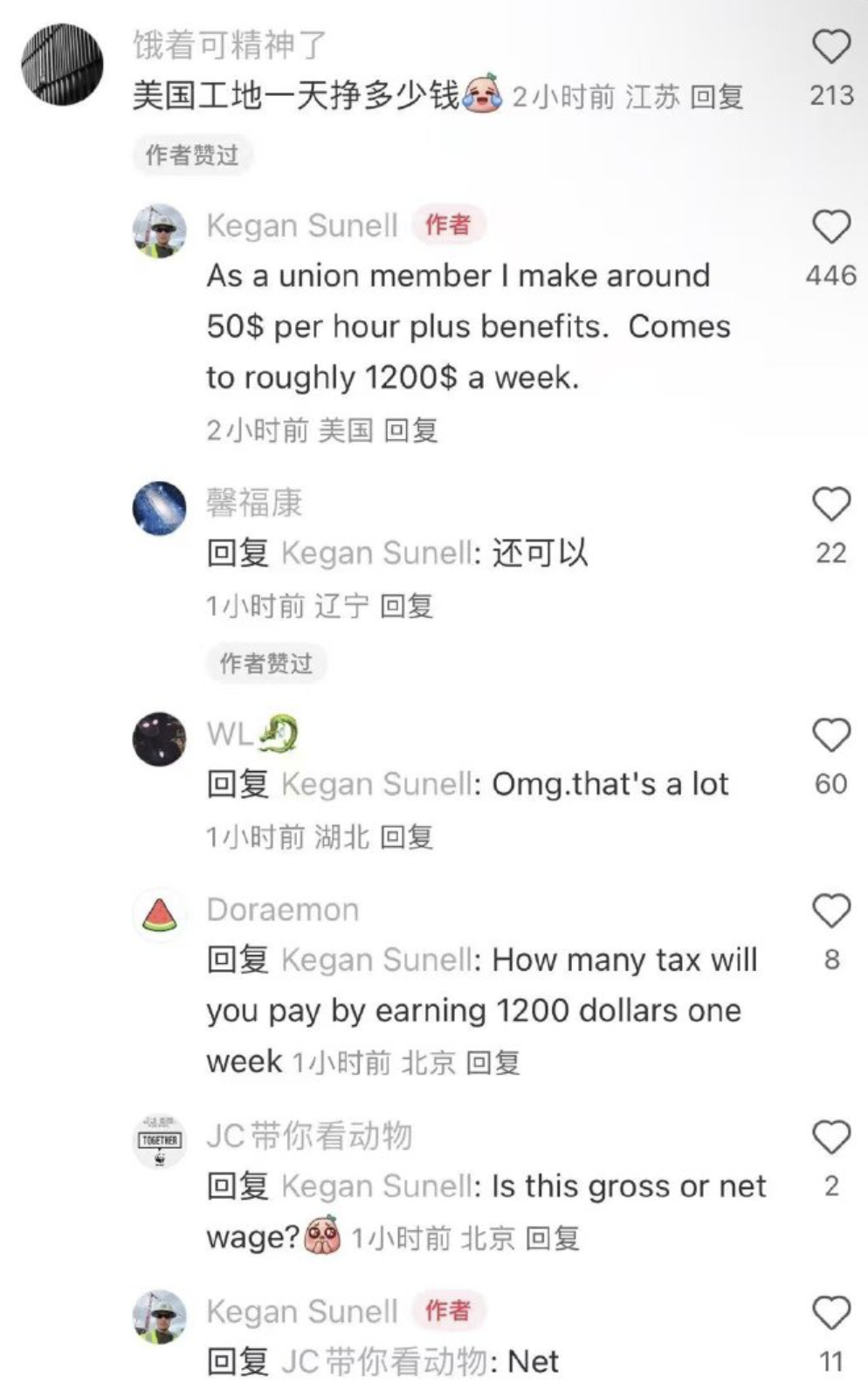
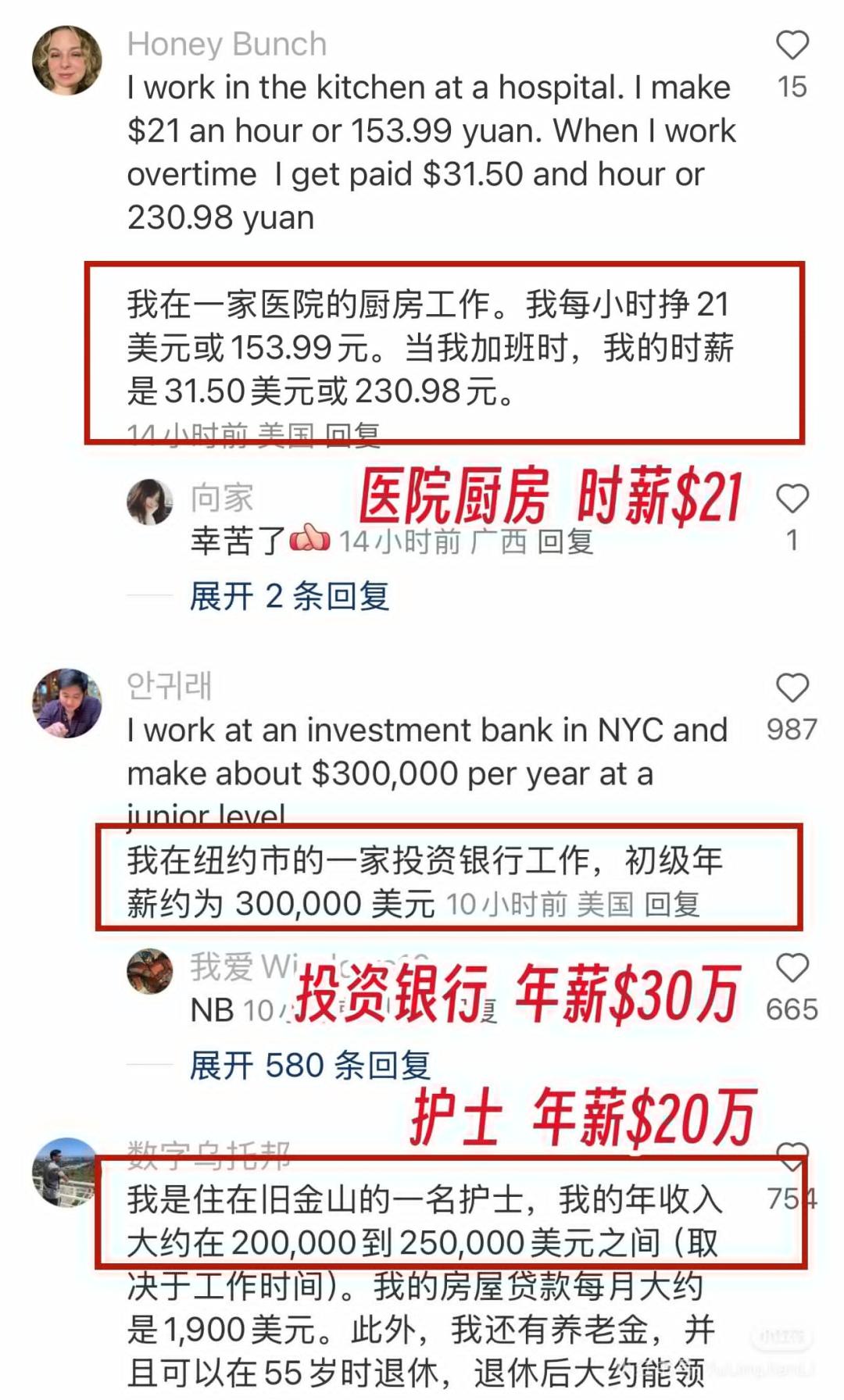
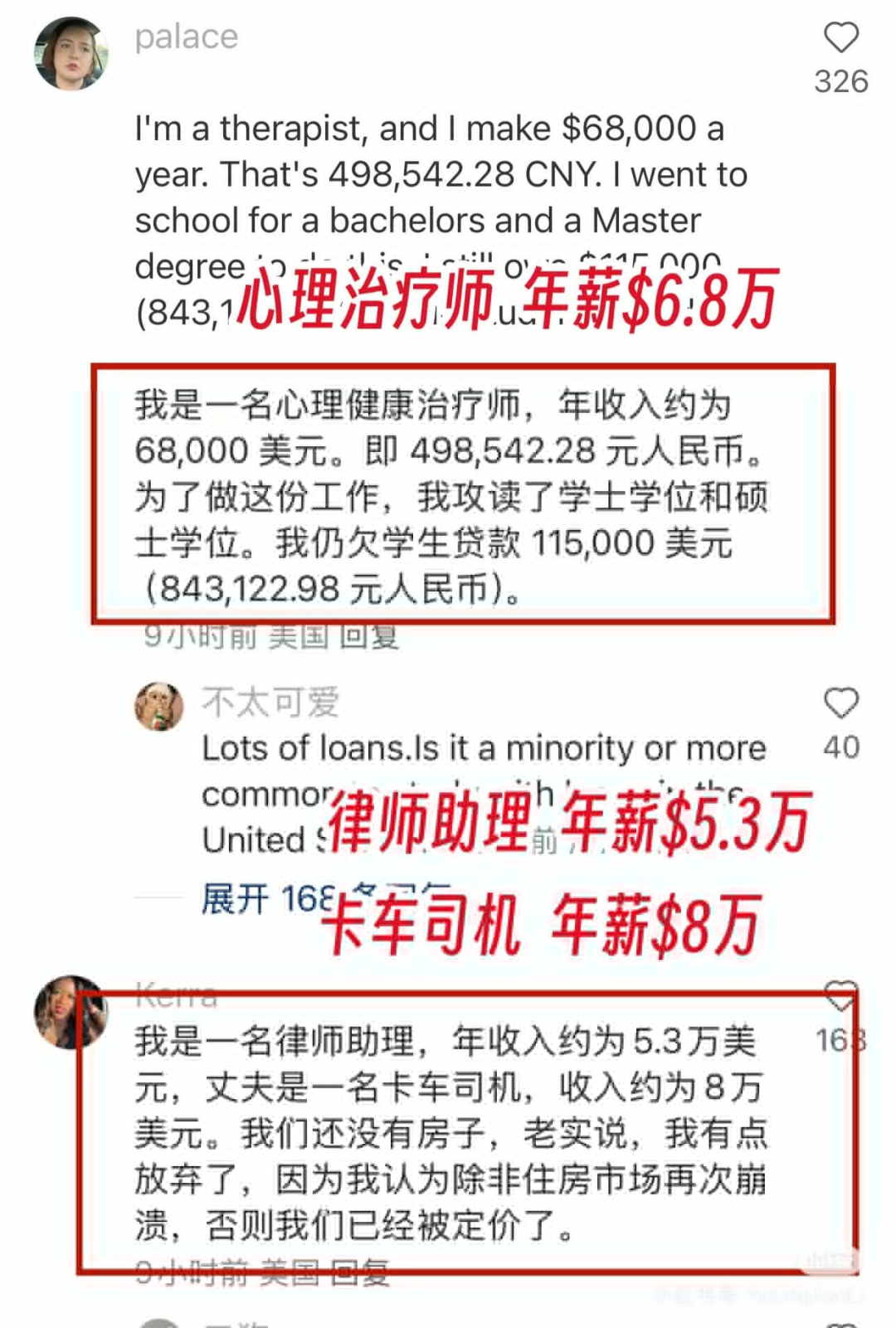
There is no perfect country in the world, and the ordinary people of any country, including Chinese and Americans, do not live easily. And the Americans' lament about the prices and services in China has also broken the understanding of China based on economic figures. It can be said that such online interaction and folk exchanges are of great benefit to enhancing understanding and friendship between China and the United States.
Today, we will take the Xiaohongshu comparison as a starting point and talk about the valuable information behind this matter in several parts, roughly divided into: China's advantageous resources, the high income behind the United States, the economic gap between China and the United States, and the Chen Ping inequality.
1. China's Advantageous Resources
The Xiaohongshu comparison just illustrates the content we specifically discussed in the previous topics, which is China's advantageous resources:What resources are the best in China?
China's human services, public services such as water, electricity, and internet, all domestically produced cars, rent, etc. are cost-effective and highly efficient. And these consumer categories are mostly essential consumption, so even if 600 million people in China earn 1,000 yuan per month and 900 million people earn 2,000 yuan per month, most people can still have enough to eat and wear.
And these advantageous resources almost all come from another large group of hardworking Chinese:
For example, the affordable and high-quality services we enjoy, including express delivery and takeaway, essentially come from another group of Chinese people who work hard day and night but have meager incomes.
For example, services including water, electricity, internet, and public transportation, the prices in China can be said to be the lowest in the world under the same infrastructure level, without exception. But this is mainly because of the subsidies for public services and infrastructure in various places, and most of the subsidies come from land transfer fees, and land transfer fees come from the ordinary people who buy houses with six wallets.
As Chinese people, on the one hand, we should make good use of these advantageous resources that belong to us, cherish the hard-won economic development achievements and the environment of peace and stability, and be grateful to those Chinese people who have contributed to us. On the other hand, we should skillfully avoid those pitfalls (refer to the previous topic: How to make life better during the economic downturn?), so that our lives can be very good.
I think the Xiaohongshu comparison should not be regarded as an argument of losing or winning. We do anything to make ourselves better, not to win. Paying too much attention to winning and losing is equivalent to focusing on the opponent, which is obviously putting the cart before the horse.
The Xiaohongshu comparison should be an opportunity for us to understand the world and demystify some glamorous affairs. We should demystify anyone and any country, as I said in a previous topic: Two shocking things In the discussion, even US President Trump, even the world's richest man Musk, have a very vulgar and even unspeakable side.
2. The Real Situation of High-Income Groups in the United States
I have personal experience in demystifying American work and American income.
I once studied in the United States, and I also envied American life, especially American programmers, and I had a very beautiful filter for this industry… Because the classmates around me who switched to computer science almost all stayed, most of them went to Silicon Valley, Seattle and New York, and they earned more than 100,000 US dollars a year as soon as they graduated. They steadily joined the job and steadily drew H1B, and most of them have now obtained green cards, which made me very envious at the time when it was extremely difficult to find a job. I talked about my situation in detail in the previous topic: I have been sticking to it for 2300 days, why am I fascinated by US technology stocks?
But after so many years, I now have no special feeling for the position of American programmer. Now I will give you a popular science lesson on what the income structure of a mid-to-high-level programmer with an annual package of 400,000 US dollars in Silicon Valley is like.
Taking Google as an example, the average annual package for a Google senior programmer (L5) is 385,000 US dollars. This level is considered to be the first relatively stable and more selective stage in the career of a Silicon Valley programmer. You can lie down, switch teams, change jobs, or continue to climb the ladder in a large company. It should be noted that I am giving the example of Google programmers here, which is definitely a high-income representative of wage earners. Now, the annual package of most entry-level positions in New York investment banks is far lower than the annual package given by Google to CS college graduates, and the living expenses in New York are not lower than those in Silicon Valley. The income of programmers in other areas of ordinary companies is different from that of large factories in Silicon Valley.
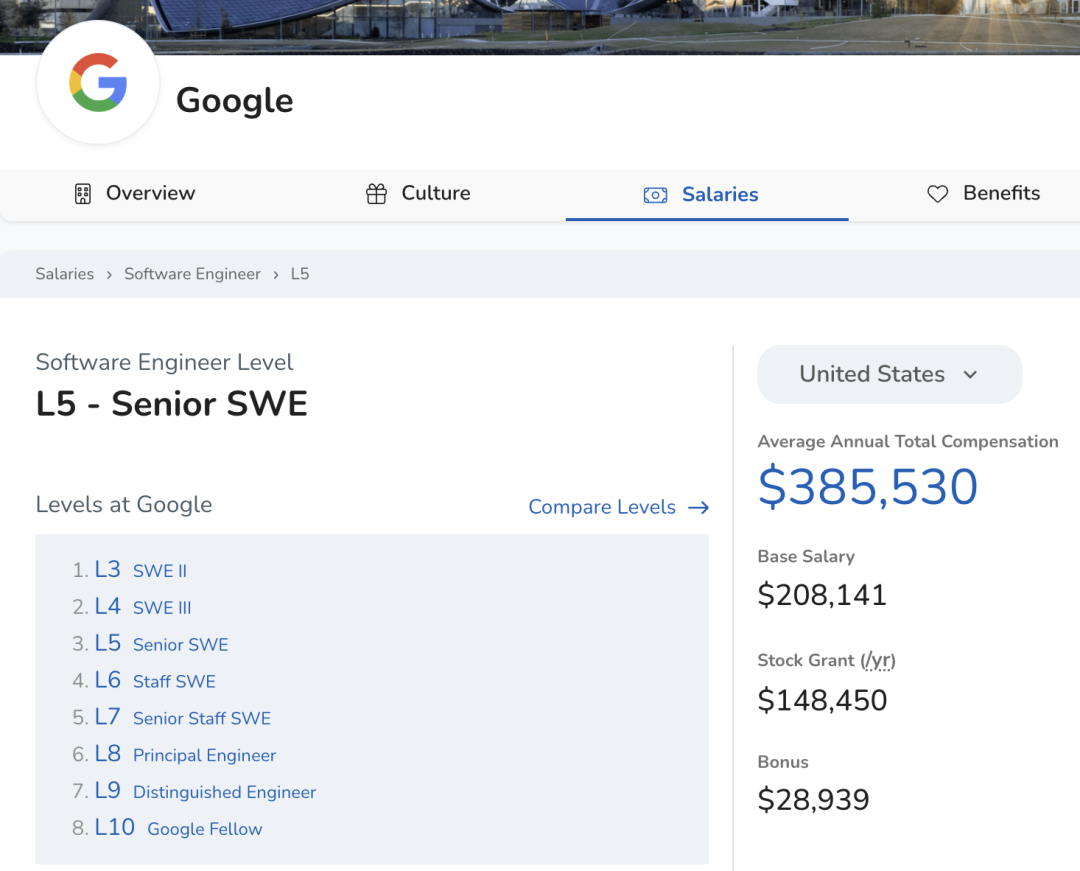
Now we calculate in detail, in this L5 programmer, 208,000 US dollars of the 385,000 US dollars annual package is cash, 28,900 US dollars is bonus, and 148,000 US dollars is stock.
We calculate according to single tax, coordinate Silicon Valley, and 5% of the monthly salary is invested in 401k. This programmer with an annual package of nearly 400,000 US dollars has a cash income of 149,800 US dollars↓
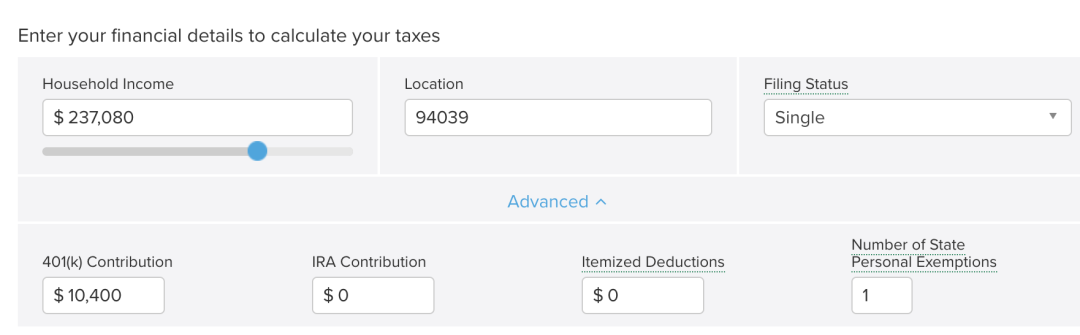
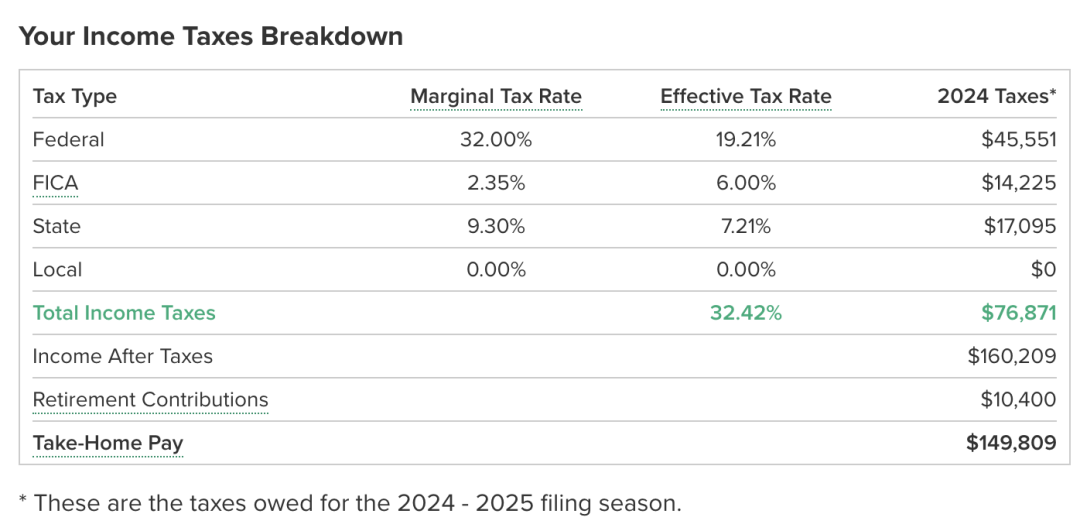
Obviously, this is still a very high income, but compared to the nominal annual package of nearly 400,000 US dollars, it doesn't look so beautiful, averaging 12,500 US dollars per month. And in Silicon Valley, it costs 3,000 US dollars/month to rent a decent single apartment; if you buy a house, 1 million US dollars can only buy a small black house or an ordinary apartment. According to the current interest rate, under the background of a 30% down payment and a 30-year mortgage, the monthly payment for buying a 1 million US dollar small black house will be more than 5,000 US dollars, and the annual property tax will exceed 10,000 US dollars.
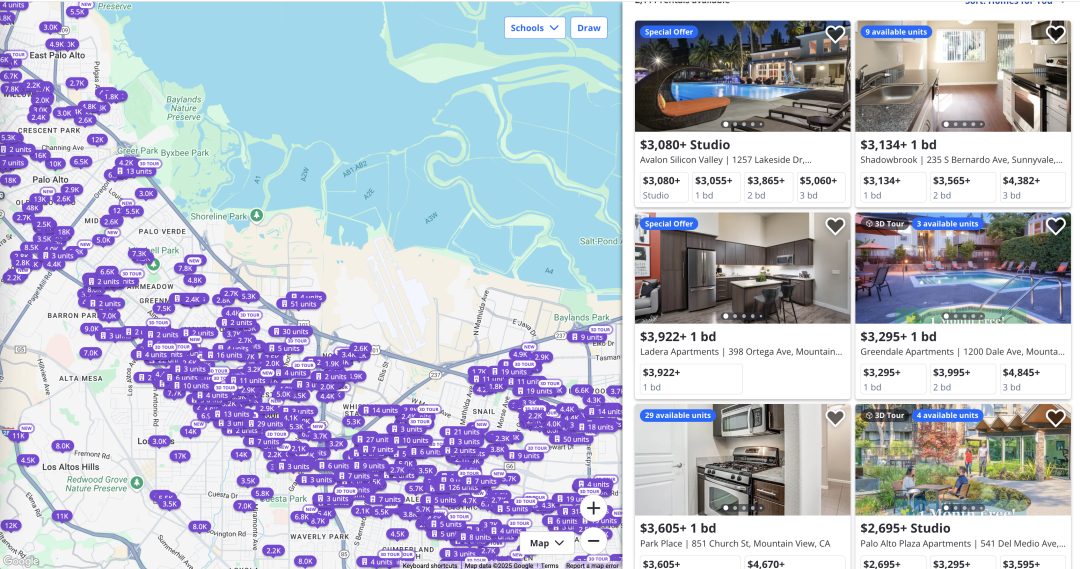
So, not counting the process of saving for the down payment, the monthly payment and property holding cost of a local low-priced housing will occupy two-fifths of the cash ratio of this Google L5 programmer.
This only calculates the housing cost (excluding home insurance and HOA), and does not calculate the expensive restaurants, car insurance, gasoline prices, and human services. Now, the average price of Chinese restaurants in the San Francisco Bay Area, including tax and tips, is 50-100 US dollars per person… So even high-paid programmers in Silicon Valley, if the company's stock is not strong, they can't achieve the freedom of eating out, the freedom of taking a taxi, and the freedom of massage, not to mention financial freedom,
I think that to measure a person's income level or quality of life, you can't just compare the numbers of nominal income. The most important thing should be to calculate a person's income and the purchasing power they can save in the local area after meeting the same quality of life expenses.
For example, A in China, with an annual salary of 1 million yuan, receives 700,000 yuan, spends 400,000 yuan, and saves 300,000 yuan;
Compared with B in the United States, with an annual salary of 300,000 US dollars, receives 180,000 US dollars, spends 120,000 US dollars, and saves 60,000 US dollars.
Then I would think that A is better than B in this comparison, because the goods and services that 300,000 yuan can enjoy in China are indeed greater than the goods and services that 60,000 US dollars can enjoy in the United States. But on the other hand, the difficulty of achieving a pre-tax annual salary of 1 million yuan in China is also much higher than the difficulty of achieving an annual salary of 300,000 US dollars in the United States.
For Silicon Valley programmers, what is really worth looking forward to is the company's stock, because with the rise of the job level, the growth of cash in their annual package is not large, and the growth of the annual package mainly depends on more stocks. These stocks are almost all restricted, and the restriction period of several years may make employees hold them for a long time and enjoy greater appreciation. If a young person joins a good company, they may not be able to save much cash in a few years, but the company's stock has risen sharply, and this young person can achieve financial freedom within five years. There have been many real cases in the past ten years, such as Amazon (2015-2020), and Nvidia (2020-2025).
Of course, stocks will not always rise at the same rate as in the past ten years. Now the US CS industry has also experienced a wave of layoffs aimed at reducing costs and increasing efficiency. The pressure on job seekers, whether new or old, is not small.
It must be admitted that there are still many comfortable places for computer practitioners in Silicon Valley. In my opinion, money is not the most critical thing, but they work less overtime than their Chinese counterparts, have more vacations, and enjoy a better natural environment, a more free and humanized lifestyle and workplace environment, as well as social security and a sense of security (in the case of a green card or citizenship).
3. The Economic Gap between China and the United States
Although we should demystify the United States and even some high-income industries in the United States, we still need to clearly see that the United States is the world's number one developed country, and China is still a developing country. There is still a big objective gap between the income and quality of life between China and the United States.
When we are comparing China and the United States, we should pay attention to a key point, that is, we should compare the same class.
For example, compare the top 10% of income earners in China with the top 10% of income earners in the United States, rather than comparing the high-income white-collar workers in the Internet or finance industries in Beijing, Shanghai, Guangzhou, and Shenzhen with the middle and low-level rednecks or illegal immigrants in the rust belt of the United States.
In addition, high-income areas must be high-consumption areas, if you do not consider the general income level and consumption quality of the public, then the people of Henan will beat the capital Beijing, and the central and western counties will win over the first-tier cities, the logic is the same.


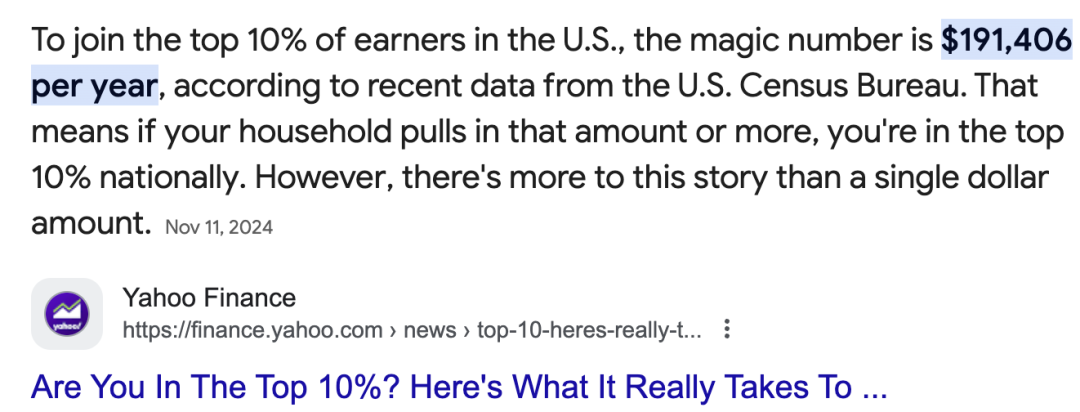
Now we speak with data. According to Forbes data, to reach the top 10% in the United States, the household annual income needs to reach 191,000 US dollars↓
According to the data of the National Bureau of Statistics of China, in 2023, the per capita disposable income of the top 20% of residents in China was 95,000 yuan. According to the average level of the top 20% of the population, it can be roughly understood as the entry-level income level of the top 10% in the country. According to the national average household size of 2.8 people in 2023, the household income needs to reach 266,000 yuan to reach the top 10% in China.
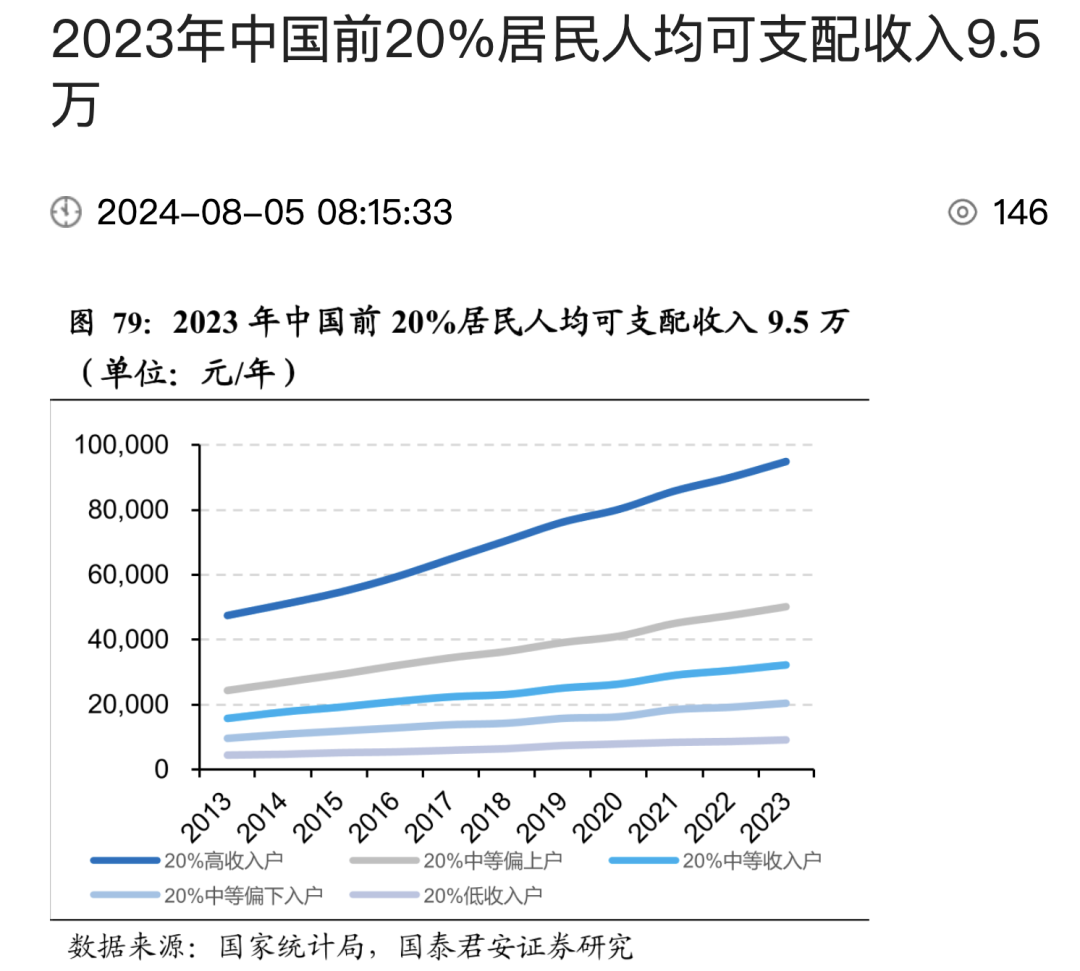
Therefore, an annual income of 191,400 US dollars versus 266,000 yuan (36,500 US dollars), this is the admission ticket for the top 10% income earners in China and the United States.
It can be seen that the difference between the two is more than 5 times, but according to the calculation of purchasing power parity, 1 US dollar is about equivalent to 4 yuan, then the gap between the two is about 3 times. Even so, I think that the wealthy class in China is already the closest in quality of life to the corresponding class in the United States, and the wealthy class in China can enjoy the affordable goods and services provided to them by other lower-income earners in China, just like in India, the real wealth of the Brahmin and other Tianlong people is not their deposits and houses, but the huge number of Sudras and Dalits; in a free-to-play game, the experience brought by paying players who spend tens of thousands to buy top-level equipment does not come from the virtual props they buy, but from the non-paying players in this game, they are part of the experience of the paying players. Therefore, considering the minimum wage and social welfare security, the gap in living standards between China and the United States is actually the middle and low-income groups.
The income of the middle and low-income groups in the United States is not low either. According to the data of the US Bureau of Labor Statistics, as of 2023, the median annual salary of ordinary American workers is 48,060 US dollars, while the median per capita disposable income of Chinese residents in 2023 is 33,036 yuan. Even if the US data is deducted for some taxes, the multiple difference between the two is greater than the result of the comparison of high-income earners.
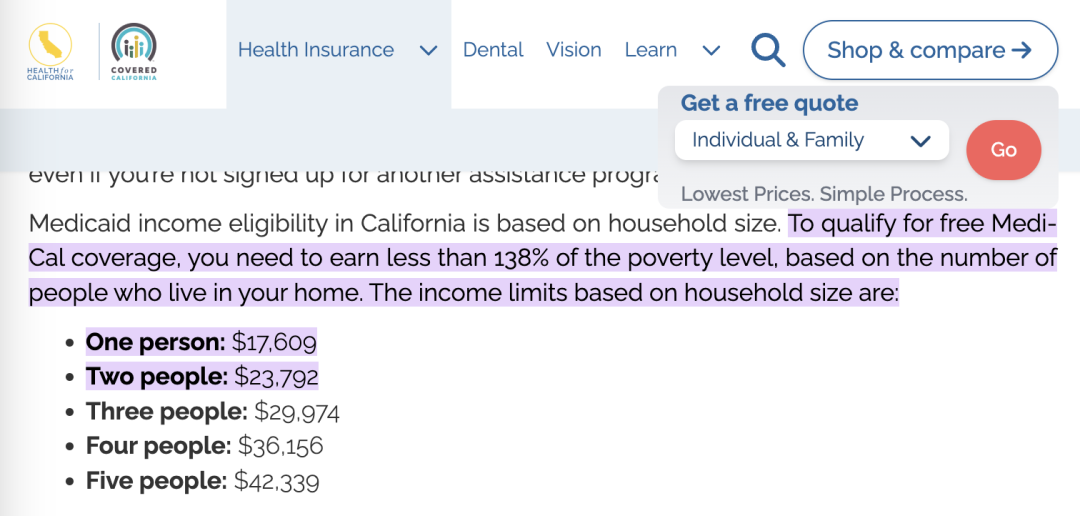
In addition, although the social welfare security in the United States is at a very weak level in developed countries, but if the income is low to a certain extent, medical care and food in the United States are basically not needed to spend money. Taking California as an example, if a three-person family has an annual income of less than 30,000 US dollars, they can get a free white card (Medicaid), which is a free medical insurance and a full reimbursement medical insurance plan. This white card is available in every state, whether it is a red state or a blue state. I have personally witnessed the full reimbursement of the white card:A bill of 50,000 US dollars, an unforgettable experience
If there are economic difficulties but not low enough to meet the white card standard, these middle and low-income earners can also purchase commercial medical insurance. Under the subsidy of Obama Care, a couple can pay a commercial insurance worth 1000+ US dollars/month, and the insurance premium they pay may only be a fraction.
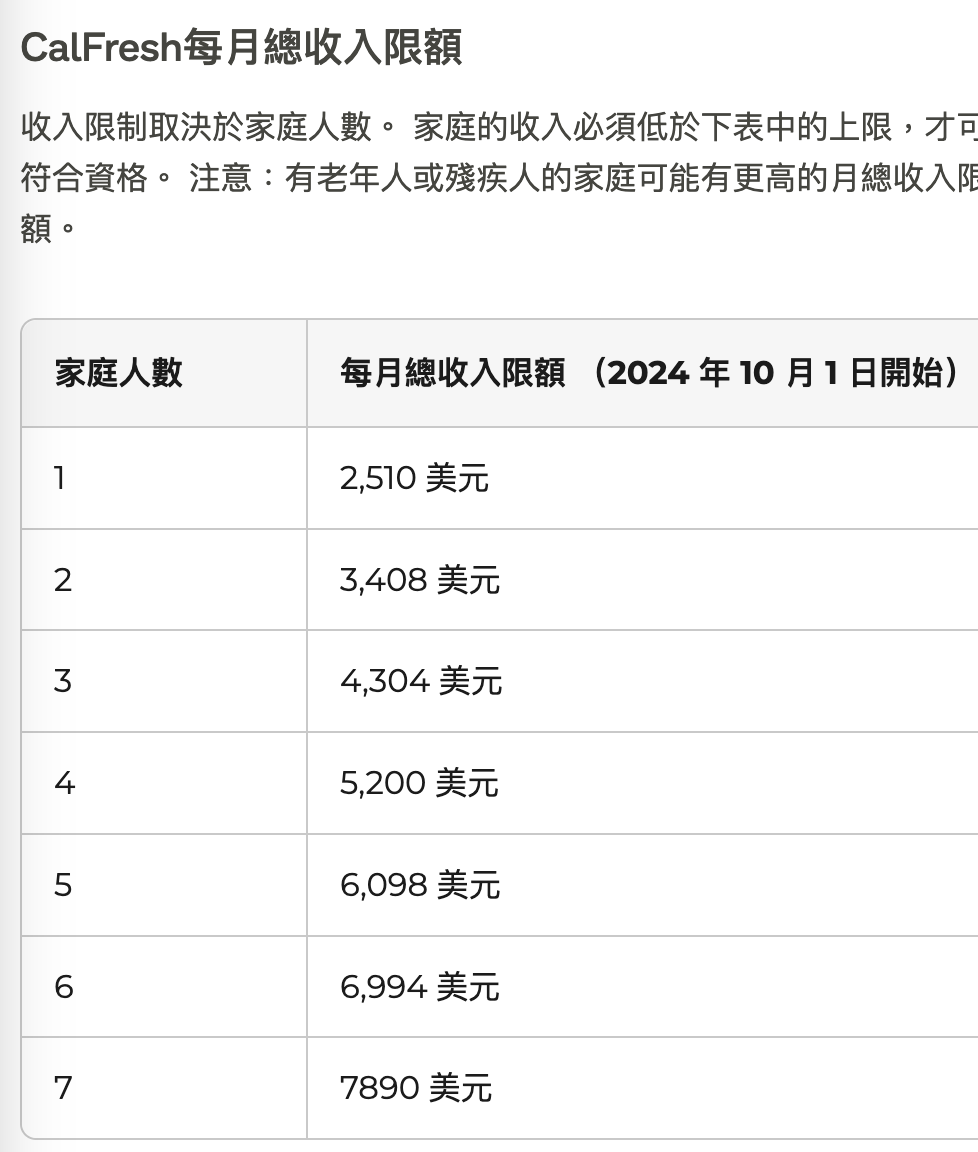
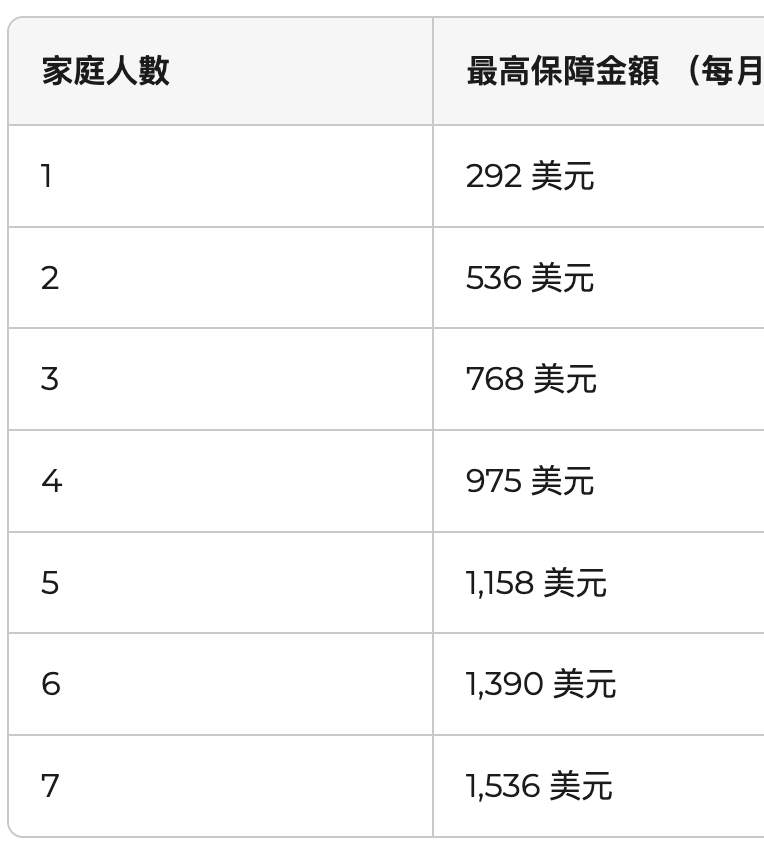
The standard for food stamps is more lenient than medical white cards. In California, a three-person family with a monthly income of less than 4,303 US dollars can receive food stamps of up to 768 US dollars per month. It should be noted that the purchasing power of the US dollar in supermarkets is still very strong, especially for meat, eggs, milk, and fruits. 200 US dollars to Walmart or Costco is basically a shopping cart of things, enough for a family of three for a week.
4. Chen Ping Inequality
The folk exchanges represented by the Xiaohongshu comparison are a good thing, but when I see that some people with ulterior motives take this as a starting point to attack and slander those who disagree with their views, and even curse those compatriots who have immigrated overseas, I think this starting point has a problem.
The purpose of folk exchanges is to enhance friendship and understanding between the two sides. If you use the thinking of struggle to face folk exchanges, you are wrong in direction.
What's more, some people are trying to whitewash the inequality of ¥2000>$3000, attacking and questioning everyone who questions the inequality.
Because the person who proposed this inequality is Chen Ping, it is also called "Chen Ping Inequality". Objectively speaking, the purchasing power and life experience of 2000 yuan is indeed greater than the US dollars corresponding to the exchange rate, but it is obviously sensational and reversing black and white to say ¥2000>$3000.

According to the calculation of international purchasing power parity, the purchasing power of 2000 yuan in China is greater than the equivalent of 275 US dollars, which is about 500-600 US dollars. It is too exaggerated to say 3000 US dollars.

If you must say ¥2000 >$3000, then the comparison must meet the following preconditions:
(1) The Chinese sample has a house without a mortgage and does not need to pay rent,
(2) The American sample has no house or has a house with a mortgage,
(3) The Chinese sample does not buy a car or drive a car, and uses cheap public transportation for all travel;
(4) The American sample buys a car and drives, so it is necessary to increase the cost of gasoline, insurance, and maintenance.
Under the above four conditions, the American sample may only have a few hundred US dollars left after renting a house and using a car; while the 2000 yuan in China only needs to be used to buy vegetables.
Then, under the above four preconditions, do you think such a comparison is still meaningful?
In addition, Chen Ping, the proposer of the Chen Ping inequality, took advantage of this wave of opportunities in the Xiaohongshu comparison to put all kinds of hats on me and attack me, saying that I fabricated the "luxury house illusion" of his family, and also said that I disappeared quickly online after posting the article.
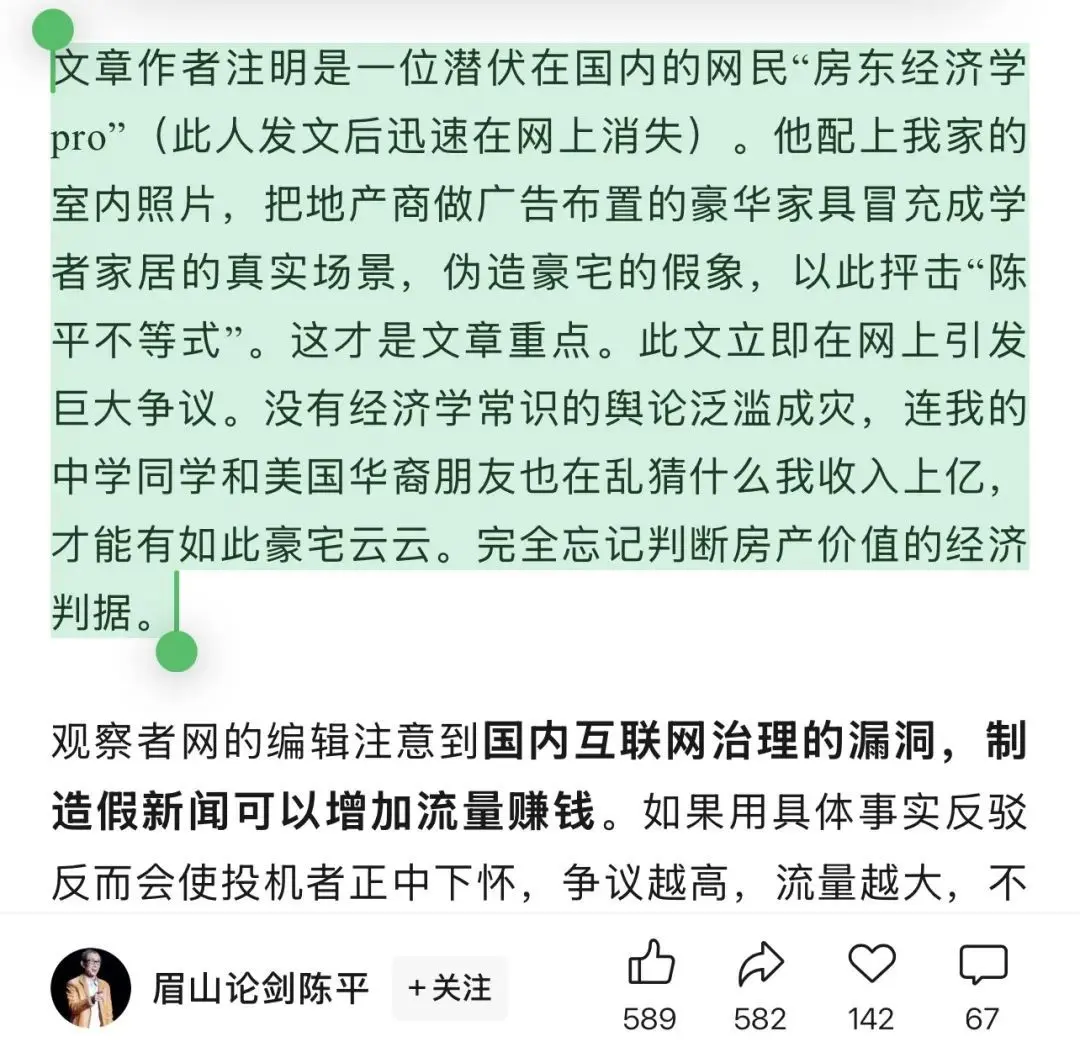
I want to make it clear here that I never do things secretly, I can see the light, and I haven't disappeared. The topic Chen Ping mentioned has been released for almost four years, and the original text is here:Chen Ping's big house in the United States was exposed, this topic does not attack the "Chen Ping inequality" in any paragraph (although this inequality is very absurd), but just publishes some of Chen Ping's views, shares the photos of his house on the Internet before, and expresses some personal opinions on the words and deeds. My words do not infringe on any privacy, nor do they attack anyone.
Friends who know Chen Ping can help me pass a message to him. If I have any false information suspected of rumor-mongering, or if Chen Ping is not satisfied with anything, he is welcome to come and confront me, and he is also welcome to sue me, he can choose in China or the United States, I have plenty of time to play with him.
5. Summary
To sum up all the above content, my views on this Xiaohongshu comparison between China and the United States are only three points:
(1) Cherish the advantageous resources and economic development achievements of our country, and we should always be grateful to those compatriots who provide us with affordable goods and services;
(2) See the differences in the stages of economic development, recognize and calmly face the gap between us and developed countries, and do not be happy with things or sad with ourselves;
(3) Chinese people do need to be confident, but this confidence does not need to be obtained by comparing with anyone else, and there is no winner or loser. All we have to do is to do our own things well and make our every day a little better.