

On December 30, 2024, 18 days after the bid opening date, the results of the tenth batch of national drug centralized procurement were officially announced. This centralized procurement was called the "most in history" by the industry—the largest number of products in history, with a total of 778 products from 493 enterprises participating in the bidding; the largest price reduction in history, with multiple products falling by more than 90%; and the lowest drug price in history, with the winning bid price of aspirin enteric-coated tablets falling to three cents per tablet. What was most unexpected was that no original research drugs were selected in this round of centralized procurement. After six years and ten batches of centralized procurement, original research drugs have gradually withdrawn from public hospitals, which has become a foregone conclusion. The medical habits of some patients who pursue original research drugs are changing, and pharmaceutical companies are also beginning to turn to the off-hospital market to seek new sales channels. Under the changes in the pharmaceutical market structure, private hospitals, e-commerce platforms, insurance companies, and other related industries are all trying to seize the new opportunities brought by original research drugs.
By|Wang Yiran
Editor|Xu Jingjing
Original research drugs that cannot be found
One morning in June, holding her 3-year-old daughter who had contracted respiratory syncytial virus pneumonia, Zhang Miao drove for an hour and a half to the international department of a public hospital in Shenzhen. The reason for going so far was: The international department is more likely to use original research drugs, rather than the cheaper centralized procurement generic drugs.
Zhang Miao's obsession with original research drugs started from her pregnancy. At that time, centralized procurement had just begun, and the reduction of original research drugs in public hospitals had just begun to emerge. Zhang Miao learned about the concepts of original research drugs and generic drugs, and firmly believed that "original research drugs are definitely better." After the child was born, every time she got sick, she would actively ask the doctor to use original research drugs when prescribing medicine, but in many cases, the hospital could not prescribe them. Zhang Miao's attitude was relatively firm. After receiving the prescribed centralized procurement drugs, she would choose to throw them away or keep them for herself, and then go to the pharmacy to find the same original research drugs to feed her child.
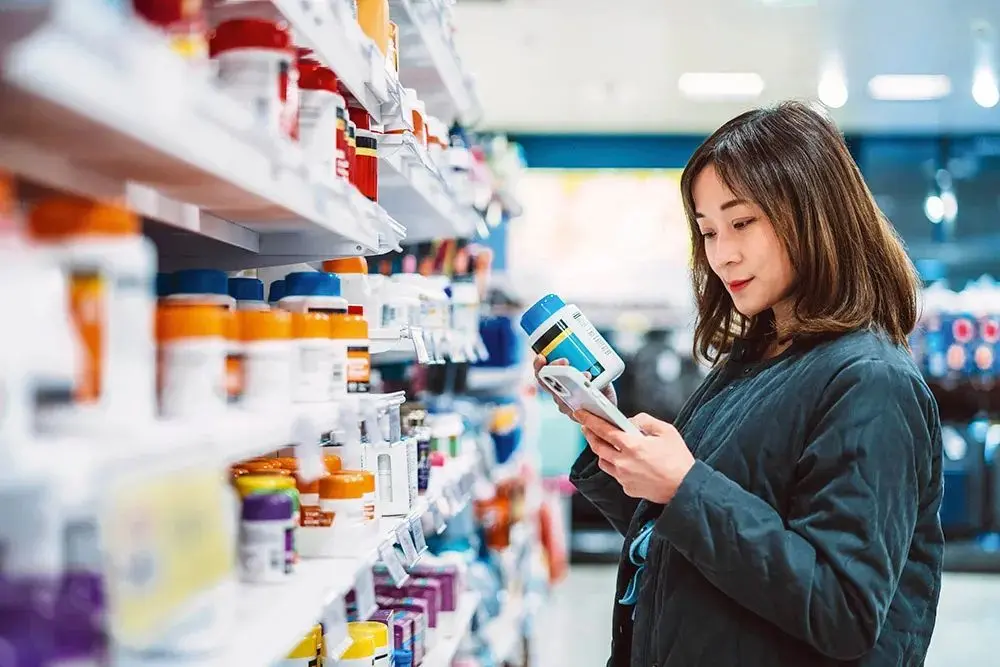
Customers purchasing medicines at a pharmacy (Visual China photo)
This hospitalization of the baby made Zhang Miao discover a new problem. Although the international department can prescribe more comprehensive examinations without being controlled by the DRG payment model (Editor's note: medical insurance pays hospitals according to the diagnosis-related grouping of diseases, no longer paying by project), in terms of drugs, except for core drugs such as antibiotics that are imported, most are still based on centralized procurement drugs. The hospitalization control is stricter. She quietly asked the nurse if she could use the original research drugs she brought, and the nurse told her with embarrassment that she had to report it and sign a disclaimer, and the process was very troublesome. Zhang Miao had no choice but to be unwilling, so she could only choose to be obedient in person, but when she gave the baby the medicine, she replaced the oral generic drugs issued with the original research drugs she bought outside the hospital, "like playing a game of cat and mouse".
"I didn't understand people who went to private hospitals before," Zhang Miao said. This experience of seeking medical treatment in the international department made her start to consider high-end private hospitals for future medical treatment. This choice put her in a dilemma: compared to public tertiary hospitals, she did not trust the medical level of private hospitals; but if she wanted to use original research drugs, it seemed that she had to go to private hospitals. Zhang Miao missed the previous medical environment: when seeking medical treatment in public hospitals, doctors would ask you whether to use imported drugs or domestic drugs. Although imported drugs would be much more expensive, everyone had the freedom to choose according to their own economic ability.
Compared to Zhang Miao, who could still "replace the prince with a raccoon" for her daughter's oral medicine, Xu Shiya, who needed injectable drugs, fell into a more awkward situation.
Stills from "Emergency Department Doctor"
In December last year, 56-year-old Xu Shiya was diagnosed with breast cancer. As a professor at a medical school, she did not hesitate or hesitate in the face of the disease and immediately underwent surgery. After the surgery, the doctor told her that the disease subtype was not very good and she needed chemotherapy, but the "good news" was that this drug had entered centralized procurement—which meant that she could choose cheaper generic drugs, which would greatly reduce the cost of chemotherapy.
Xu Shiya thought that regardless of whether the drug entered centralized procurement, she did not intend to use generic drugs: "It's not that generic drugs are not good, but original research drugs may have fewer side effects. For example, chemotherapy drugs are a matter of killing a thousand enemies and harming hundreds of oneself. Generic drugs may have more impurities, 'harming eight hundred', and imported drugs may 'harm six hundred'. I will suffer less if I use imported drugs. I am also willing to spend more money for this, even if it is all self-funded."
Although she knew that original research drugs were becoming less and less, Xu Shiya was still full of confidence at first. She had been taking a long-term oral original research drug, Lipitor, to lower her blood lipids, and she had always been able to buy it outside the hospital. Moreover, "I have worked at the medical school for a lifetime, and so many students are working in the medical system. Can't I find some imported drugs?"
"Really can't find them." The successive "bad news" within a month made her realize the "reality". Compared to oral drugs, injectable drugs are strictly controlled, e-commerce platforms cannot sell them, and many pharmaceutical companies have also reduced their supply due to the lack of "exports". She searched all the classmates and students who were in public hospitals, pharmaceutical companies, and medical representatives, but even her classmate who was the president of a tertiary hospital could not help her buy them.
This situation is closely related to the implementation of centralized procurement. On December 12, 2024, the tenth batch of national organized drug centralized procurement was bid in Shanghai. In the end, 62 drugs were successfully procured, and 385 products from 234 enterprises obtained the qualification for the proposed selection. Among them, original research drug enterprises were not included for the first time. According to the rules of volume-based procurement and the impact of the DRG payment model, it has become a foregone conclusion that original research drugs will "stay away" from public hospitals.
He Chaoming has been engaged in the field of drug commercialization for more than 20 years. He introduced that original research drugs have always been plagued by the "patent cliff", that is, after the patent expires, they have to face fierce market competition, so they need medical representatives to station and linger in various departments for commercial promotion. Because most patients' medical habits are "what the doctor prescribes, they take", the in-hospital market has always been the "main battlefield" for pharmaceutical companies' competition. The off-hospital market share is too small, and it is more of a "natural flow".
In the previous batches of centralized procurement, some pharmaceutical companies still could not let go of the huge in-hospital market and tried to find a space for survival. For example, a certain drug stipulates that the proportion of centralized procurement drugs should not be less than 50%. Some hospitals' policies are that only when the share of centralized procurement drugs used meets the standard can non-centralized procurement drugs be opened. He once met a medical representative of the original research drug of the same drug. In order to sell his own drug, he first helped sell the centralized procurement drug he was in charge of.
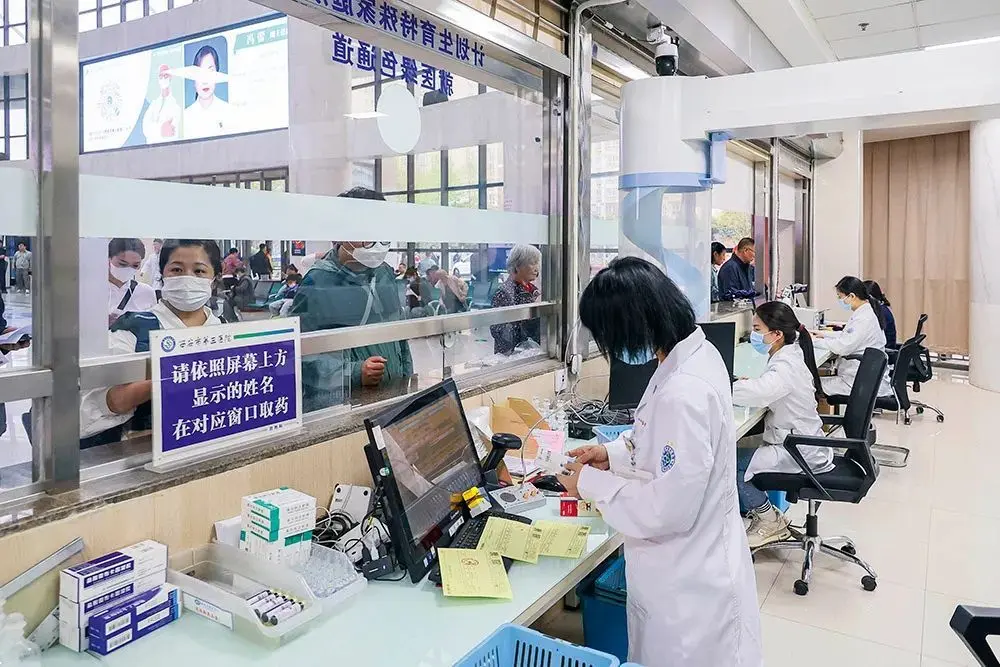
The comprehensive use of centralized procurement drugs is the safest way for hospitals. The picture shows the pharmacy of the Third Hospital of Xi'an (Visual China photo)
But the results of the tenth batch of centralized procurement almost made all original research drug companies give up. According to statistics from Mine.net and Health Kai'ge Research Institute, in the first nine batches of centralized procurement that have been implemented, a total of 32 original research drugs were selected, distributed in each batch of centralized procurement, and at least one original research drug was selected. However, in the tenth batch of centralized procurement, original research drugs were collectively "defeated". In the past, some original research drug companies would consider the huge market share in China and try to exchange volume for price. However, the price reduction of this centralized procurement drug was beyond imagination. In the first nine batches of centralized procurement, the average price reduction was 53.7%. In the tenth batch, compared with the highest effective bid price, the price reduction of more than 50 products exceeded 90%, and the highest price reduction exceeded 96%.
"Aspirin enteric-coated tablets for 3 cents a piece" represents the determination of generic drugs, and also means that original research drugs have completely lost their space for survival in hospitals. He Chaoming introduced that when the price difference between original research drugs and centralized procurement drugs was not very different in the past, original research drugs still had room to struggle by relying on the payment of certain drug circulation fees and their own reputation. But now, under the general trend of DRG bundled payment and reducing the drug ratio, from the perspective of the department, original research drugs have lost their competitiveness no matter what.
On the other hand, the intensity of medical insurance verification is becoming stricter. He Chaoming and people in public hospitals learned that medical insurance is conducting a round of compliance inspections across the country recently. In the past, they checked major items, but now they even have to look at the details. Although this matter has nothing to do with drugs, it made him keenly aware of the tightening trend. This means that the actions of public hospitals will only become more cautious and conservative. When it comes to drugs, although the policy does not advocate "one-size-fits-all", the comprehensive use of centralized procurement drugs is definitely the safest way.
Opportunities for private hospitals?
Xu Shiya also considered high-end private medical institutions, but as an ordinary middle-class person, she could afford the price of original research drugs, but she could not afford the whole set of high-end medical expenses, including a bed fee of several thousand yuan a day and nursing fees. After all, cancer treatment has great uncertainty and is a "protracted war", and savings must be carefully calculated.
After inquiring from many parties, she contacted a private hospital in Beijing that had the drug, and the bed fee was 1,000 to 2,000 yuan per day, which she could afford. But choosing a private hospital also means that in order to get original research drugs, she needs to bear not only the price difference of the drugs, but also the hidden treatment costs that are much higher than the drug price. Xu Shiya felt a little wronged: "I have paid medical insurance for a lifetime and have never been sick. I have contributed so many years to the collective account. When I get sick in my old age, I find that medical insurance is completely useless. Going to a private hospital is completely self-funded, and the money in my personal account has to be left here in vain."
For patients like Xu Shiya, turning to private hospitals is the last choice. In Zhang Miao's words: "It's a helpless way."
In China's medical market, public medical care has long held a dominant position, and private medical care has been struggling to survive. A research report released by Zhongyan Puhua Industrial Research Institute shows that from 2020 to 2022, more than 2,000 private hospitals in China were closed, shut down, or merged and integrated by other hospitals. And by virtue of the advantages of original research drugs, taking over such patients has allowed private hospitals, which have been struggling to survive under the pressure of public medical care for a long time, to see new opportunities for development.
Dr. Bao Yuke is the chief operating officer of the business operation center of a social medical institution in Shanghai, and the institution mainly focuses on tumor treatment. He recalled that since the centralized procurement was generally implemented three or four years ago, he heard more and more doctors feedback that some patients "came just for imported drugs". These patients are not "all rich people", most of them are ordinary wage earners. With the increasing number of drugs covered by centralized procurement, this enthusiasm has obviously increased again in the second half of 2023. Compared with public hospitals, the advantage of private hospitals is that there are fewer restrictions and they are not affected by the DRG payment model, so they have more original research drugs and can also be reimbursed by medical insurance. These situations make the hospital feel that the market is quite broad.
He Chaoming found that many private hospitals have begun to regard original research drugs as an opportunity window. The market environment in Shanghai, where he is located, is relatively loose, and it is very common for hospitals to use the banner of "imported drugs" as a selling point to attract patients. This demand has also led to the shift of pharmaceutical companies. Some pharmaceutical companies will send medical representatives to private hospitals for commercial promotion, while a few years ago, the share of the private hospital market was not taken seriously by pharmaceutical companies.
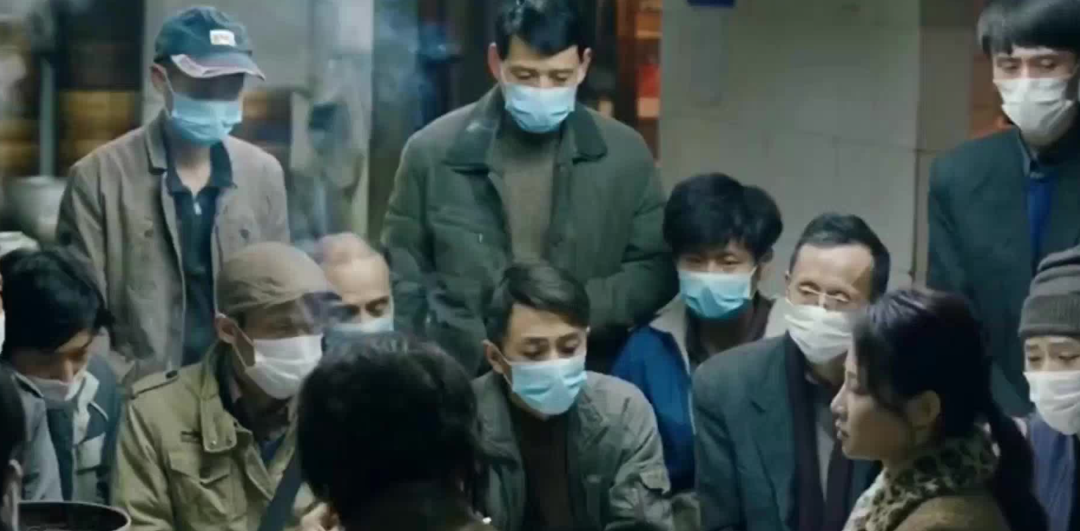
Stills from "Dying to Survive"
Whether it can form a differentiated competitive advantage has become the industry's expectation for social medical institutions. According to a report by Yicai.com, in the second half of 2022, a industry alliance mainly composed of orthopedic hospitals appeared in the Yangtze River Delta region to share and exchange resources. The president of a private hospital in the alliance introduced, "The alliance currently has 49 hospitals, and a pharmaceutical group has been established within the alliance to realize the unified and mutual communication of drug management within the group, and put our entire package of drugs into the alliance. At the same time, we are also expanding the self-funded drugs and continuously adding drugs to the alliance that can be differentiated from public hospitals."
Private hospitals are also shifting their business. Bao Yuke observed that many private hospitals have begun to adjust and increase the proportion of surgery and tumor business. On the one hand, the change in the disease spectrum has caused changes in the disease types. Taking orthopedics as an example, there were a lot of patients with falls at construction sites and traffic accidents in the past. Now, this kind of trauma is decreasing, but with the aging population, joint wear and tear has increased, and artificial joint surgery has increased, and bone tumors have also increased. The replacement of artificial joints involves the use of imported equipment or centralized procurement equipment, and some patients will turn to consider private medical institutions. In order to undertake the medical needs brought by drugs and equipment, private institutions are also more willing to increase investment and expand their scale at this time.
But to what extent original research drugs and imported medical equipment can "save" private medical care is still unknown. Bao Yuke believes that although it is undeniable that original research drugs are an important growth point for current development, the overall ability to boost is still limited.
Bao Yuke said that for small institutions with only outpatient clinics, the volume is not large, and the support of drugs is relatively obvious, but if the scale is slightly larger, it is far from enough to rely on "selling drugs". "Drug differences can only be one of them, and more is the difference of the entire medical system, such as the ability to supplement public medical care, a more humanistic environment, and the support that multiple departments can provide after surgery. If I only rely on having better drugs, it is too simple to think."
Xu Shiya, who works in the medical industry, carefully weighs the pros and cons: although some private institutions have the original research drugs she needs, cancer chemotherapy involves a whole set of diagnostic and treatment systems. Even if she can invite doctors from outside to "fly the knife" and determine the treatment plan, the aseptic environment, the nursing team, and the subsequent treatment ability are all crucial for the long process of cancer treatment. For her, choosing a private institution requires careful comprehensive consideration, not "dare to go if there are drugs".
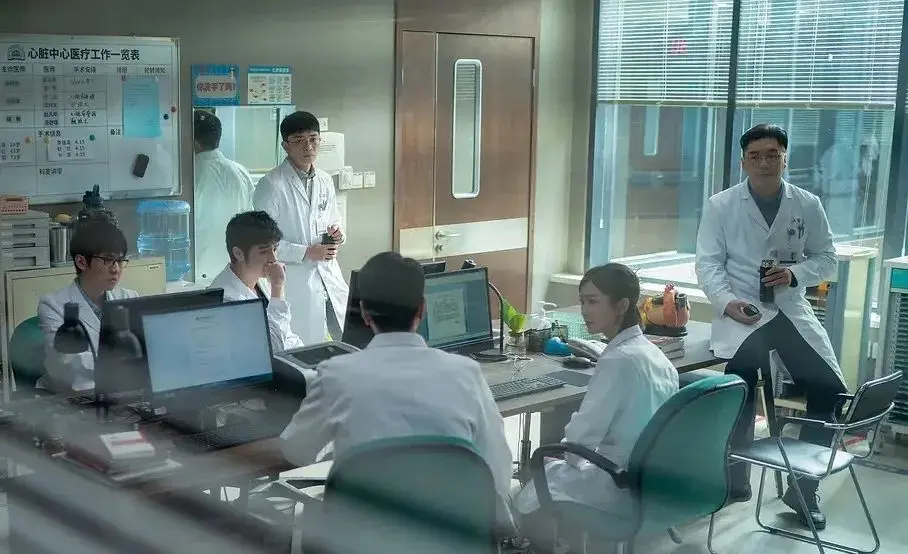
Stills from "The Heart of the Matter"
On the other hand, in private hospitals, original research drugs are not "unlimited supply". Except for a few high-end private hospitals, most private hospitals are medical insurance designated institutions and are subject to the same restrictions as public hospitals. In Shanghai, where Bao Yuke is located, the proportion requirements of centralized procurement drugs and non-centralized procurement drugs in most private hospitals are the same as those in public hospitals, which need to reach 1:1. One problem that needs to be faced is: original research drugs may be used up soon, and centralized procurement drugs are rarely consumed.
"For hospitals with open beds of five or six hundred or more, the number of patients in the hospital is more in line with the normal distribution, and some people can also accept domestic drugs. I'm afraid that those who come are the 5% to 10% who must have non-original research drugs," Bao Yuke said. So in many cases, he can't fully meet the needs of patients, and he still has to "popularize science" to patients that centralized procurement drugs have also passed the consistency evaluation concept.
Another hidden worry is: original research drugs may completely withdraw from the Chinese market.
For pharmaceutical companies that are unwilling to exchange price for space, it is not enough to "lie flat" on the centralized procurement battlefield. All pharmaceutical products sold in public hospitals must enter through the pharmaceutical procurement platform channels in various regions. Expensive original research drugs may face the risk of being withdrawn from the network and directly kicked off the competitive stage. In April last year, the Hebei Provincial Medical Drug and Equipment Central Procurement Center issued the "Notice on the Public Announcement of Drugs with the Same Generic Name as the Ninth Batch of National Centralized Procurement but Not Selected", announcing 110 drugs that were not selected and did not meet the conditions for listing. Among them, there were 29 original research drugs, and the reasons for being withdrawn from the network were basically because the prices were higher than the "Shanghai red line price". Among them, the most well-known is Pfizer's original research azithromycin dry suspension. Mine.net data shows that in 2022, the sales of azithromycin dry suspension in Chinese public medical institutions exceeded 600 million yuan, and Pfizer's products accounted for 93.19% of the market share.
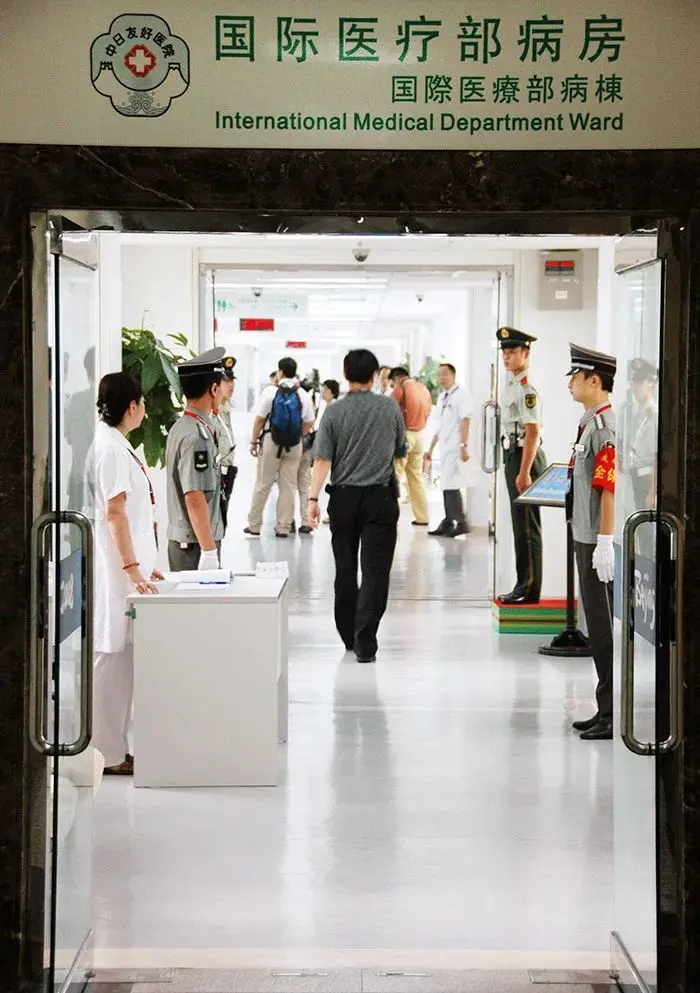
International Department ward of China-Japan Friendship Hospital (Visual China photo)
In 2023, the Fujian Provincial Drug and Equipment Procurement Center issued a notice requiring the latest provincial listing price of all listed medical consumables products to be linked. All consumables must update the current provincial lowest price, and products that are not updated in a timely manner or not updated will face the risk of being withdrawn from the network. Sichuan, Shaanxi and other provinces have also successively introduced relevant policies. He Chaoming learned that the policy in some areas is that the price of the new listed product of the same drug must be within the last three in the price ranking of the existing listed products, otherwise it will lose the qualification to enter the network.
Under this trend, the new term "centralized procurement risk" is increasingly mentioned in the field of drug commercialization. He Chaoming once made an original research product. After entering medical insurance through "national negotiation" in 2022, generic drugs came out in a few months. At this time, the original research product only made tens of millions of yuan in the national market. Last month, this product entered the tenth batch of centralized procurement. The final result is that most hospitals can't use this original research product at all. The early commercial promotion investment was all in vain, and it would be a steady loss to increase investment in the later stage. It can only go with the "natural flow".
Similar incidents are not in the minority. In fact, most of the imported products that He Chaoming has represented have been included in the scope of centralized procurement. He felt that many multinational pharmaceutical companies have begun to change their commercial strategies. On the one hand, they disbanded the sales team and handed over the existing products to third-party companies for agency sales; on the other hand, they are no longer willing to invest in promoting new drugs, and many drugs have disappeared before they are well known to the public. As a drug promoter, he has also become more cautious when "receiving" agency products. Once a certain product has generic drugs on the market, it means that the risk of centralized procurement will come at any time. Investing in the promotion of such products, and after struggling to enter the medical insurance catalog, it will eventually become a "wedding dress for generic drugs".
The shift of pharmaceutical companies has also made some private hospitals feel the chill. "It's not that everyone thinks that original research drugs can't be bought in public hospitals, and they can be found in private hospitals. We can't prescribe some drugs either," a staff member of a private medical institution told this magazine. He Chaoming analyzed that this is because many original research drug companies have chosen to reduce their market share in China or even withdraw due to the lack of hope. For example, the original research paricalcitol injection, with the trade name of Sensipar, is used for hemodialysis treatment, and it is now difficult to find. He Chaoming learned that the current stock on the market may be completely gone after it is consumed.
All parties are working hard
The space is limited, but the market is vast. Under the enthusiasm of patients pursuing original research drugs, in addition to private hospitals, e-commerce platforms, insurance companies and other medical-related industries are all eager to try, trying to seize a business opportunity under the trend of centralized procurement.
He Chaoming observed that in recent years, due to the medical insurance restrictions on retail pharmacies and most private hospitals, most pharmaceutical companies are more optimistic about the self-funded e-commerce platforms.
Li Yanping, the general manager of the pharmaceutical business department of JD Health, told this magazine that in the past three years, original research drugs have performed increasingly strongly on its platform. Taking chronic diseases as an example, patients take medicine for a long time, and the sales volume of certain original research drugs on its platform can account for 50% of the drug variety. Many original research drugs still occupy about 70% of the market share of the drug after being removed from the centralized procurement for two or three years. Moreover, after each centralized procurement, the growth rate of the search volume of some original research drug products that have been removed from the list on the platform is more than 100%. Many pharmaceutical companies are optimistic about the growth ability and will increase investment at this time.
Li Yanping introduced that some pharmaceutical companies will take precautions and take the initiative to come to the e-commerce platform one or two years before the centralized procurement, hoping to establish a deep binding relationship, which was rare in the previous years. JD Health is also trying to seize this opportunity and is preparing to launch a special "original research drug zone". In addition, although injectable products cannot be sold, JD has not given up on opening up the market. It started to cooperate with offline private medical institutions in 2024 to launch a "drug search" service. Xu Shiya found a "small clinic" in Henan that had an injection she needed after searching on JD.
Medical insurance is also seeing new market opportunities under centralized procurement. Insurance salesperson Hu Lin introduced that the main sales of medical insurance in the past were concentrated in the million-dollar medical insurance, which only cost a few hundred yuan, but now the market has entered a soft stage. The most expensive high-end medical insurance costs thousands of yuan, and the most expensive ones cost tens of thousands of yuan, including the special needs department of public hospitals and some private hospitals for medical reimbursement. Originally, this type of insurance was positioned to provide a more comfortable medical environment, and the audience was small. Under the centralized procurement, all insurance companies hope to stimulate the consumption demand of high-end medical insurance by adding the "out-of-hospital drug responsibility" (Note: drugs that cannot be purchased in hospitals when seeking medical treatment, but the drugs are necessary and reasonable for treatment, and the drugs are purchased outside the hospital after the doctor prescribes them) clause.
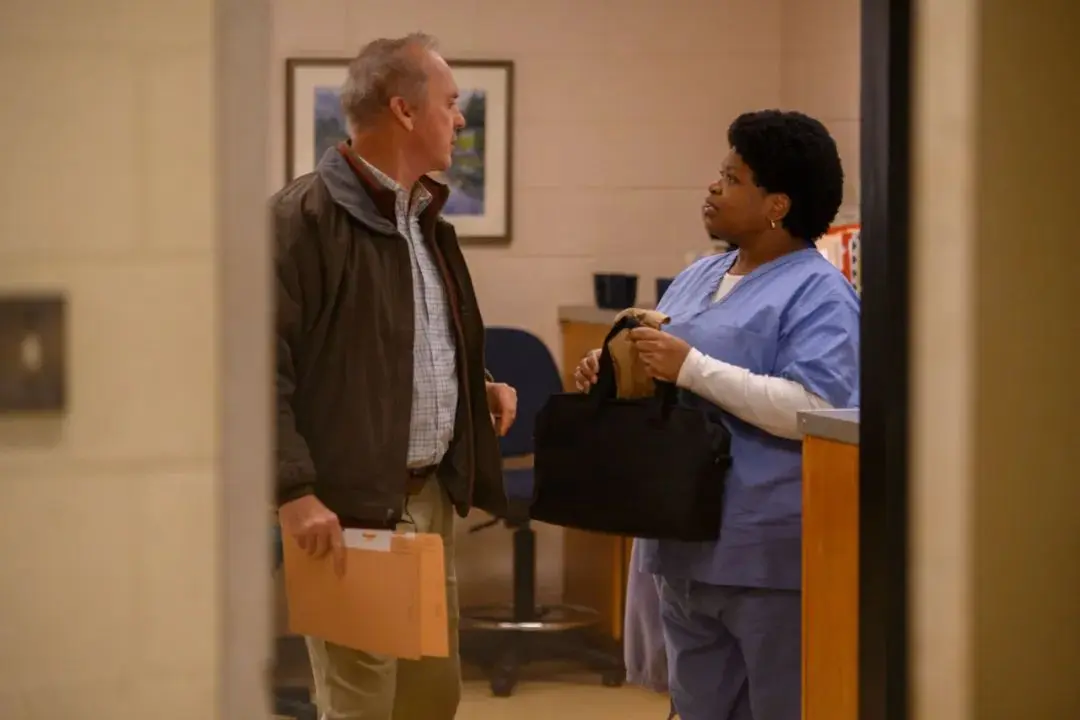
Stills from "Dopesick"
Insurance salesperson Lin Ning found that the change started at the beginning of 2024. At the end of 2023, the "out-of-hospital drug responsibility" was still a niche clause, but in the highly competitive market environment, it has now become a standard configuration for almost all high-end medical insurance on the market. The competition has spread to the million-dollar medical insurance with lower prices. In January 2024, two companies, Zhong'an and Taibao, took the lead in launching million-dollar medical insurance with out-of-hospital drug responsibility.
After the news of the tenth batch of centralized procurement was released, Hu Lin found that the number of people who came to consult her about medical insurance was 20% more than before, and they were almost all asking about "out-of-hospital drug responsibility". However, at present, the market is still far from the imagined prosperity. Due to the comprehensive coverage of medical insurance in China, for young people who "have never been sick", the willingness to purchase commercial medical insurance is not strong, which is a long-term pain point, and they are not sensitive to the demand for drugs. But for middle-aged and elderly people who pay attention to health needs, medical insurance audits are strict, and many are rejected for insurance, just like Xu Shiya, who keenly noticed the significance of high-end medical insurance when the centralized procurement was just starting, and recommended that people around her buy it. Unfortunately, she herself could not be insured due to age restrictions.
In Hu Lin's view, if you want to bypass the restrictions of DRG and centralized procurement at present, the high-end medical insurance with out-of-hospital drug responsibility is indeed the best solution at present. "But it's hard to say after five or ten years."
For example, there are many considerations for doctors to prescribe prescriptions for out-of-hospital drug purchases. In some areas, it is still relatively easy to prescribe these prescriptions, but whether the policy will be relaxed or tightened in the future is unpredictable. Without a prescription, there will be many obstacles in insurance claims.
For another example, some mid-range medical insurance can cover the special needs department of public hospitals, but the special needs department and the ordinary department belong to the same pharmacy, and many original research drugs have disappeared at the import port. If you are only going for the drugs, you cannot guarantee an ideal result. If you upgrade to medical insurance that includes high-end private hospitals, you will face an annual premium of tens of thousands of yuan. In the current economic environment, people will also be more cautious about insurance.
"The window period for development based on original research drugs is only a few years. It is obvious that this development model is definitely not sustainable, because the fundamental purpose of medical insurance is to control costs," He Chaoming said. The policy orientation is clear. In December 2024, the National Healthcare Security Administration and the National Health Commission jointly issued the "Notice on Improving the Work Mechanism of Pharmaceutical Centralized Volume-Based Procurement and Implementation", encouraging village health rooms, private medical institutions, and retail pharmacies to participate in centralized procurement to facilitate the purchase of selected drugs by the masses nearby. In his opinion, it is only a matter of time before more and more medical institutions and pharmacies are included in the medical insurance management.
Stills from "Restart Life"
For example, retail pharmacies, the tentacles of supervision have long been extended, and the policies are becoming stricter. In September 2024, a document from the Medical Insurance Bureau notified that from 2025, the main responsible persons of all designated pharmacies nationwide will be included in the medical insurance payment qualification management and implemented a "scoring" system.
With the shrinking of pharmaceutical companies and the strictness of medical insurance, except for a very few high-end private hospitals that are not restricted by medical insurance, whether it is retail pharmacies or private hospitals, the space for maneuvering will become narrower and narrower, and whether e-commerce platforms will be included in the management of medical insurance payment is also an unknown.
(This article is selected from "Sanlian Life Weekly" February 2025, and the names of Zhang Miao, Xu Shiya, He Chaoming, Hu Lin, and Lin Ning in the text are pseudonyms)