

Although the finances at all levels are not abundant at the moment, the expenditure to protect the health of vulnerable groups should still be a priority.
By | Mei Tang
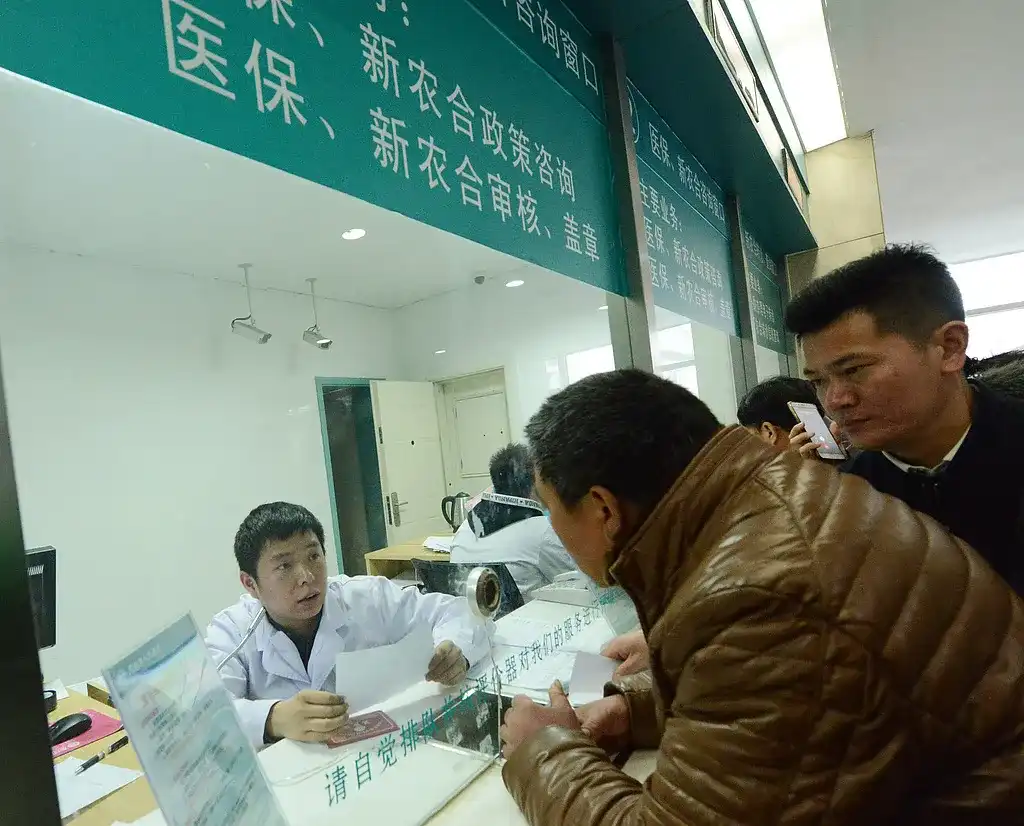
After the Eleventh, various places have successively started the new annual rural cooperative medical insurance payment work.
The new rural cooperative medical insurance payment standard for 2024~2025 has increased from the previous 380 yuan to 400 yuan, and the payment deadline is December 31st. In order to successfully collect the money, various places have racked their brains and displayed their various abilities. For example, some departments in Nanchong, Sichuan, have set their sights on students.
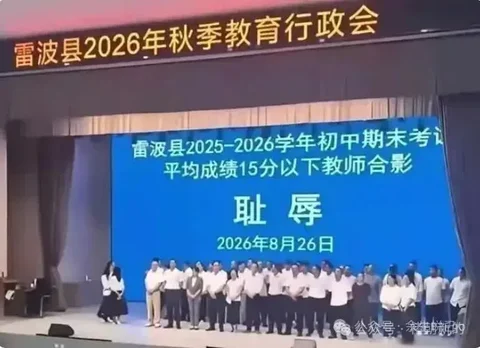
A parent in Nanchong exposed a screenshot of the class's parent-teacher communication group, which showed that the Chinese teacher reminded parents in the group that if they had not bought urban medical insurance for their children, they should buy it immediately, otherwise the school would require them to stop classes and hold a parent-teacher meeting for those who had not bought it.
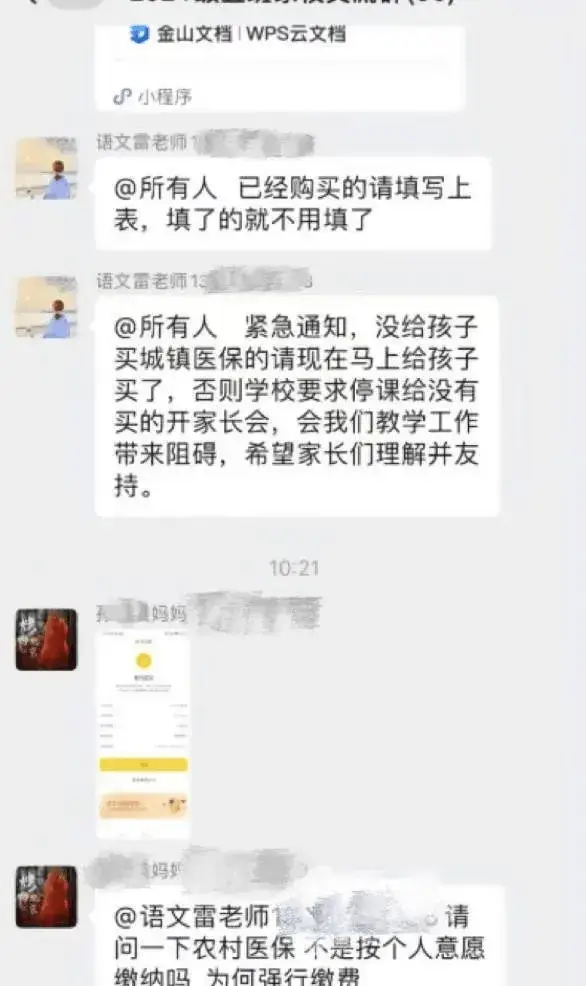
The new rural cooperative medical insurance is implemented on a voluntary basis, but now it is tied to children's education, and even uses the children's suspension of classes to threaten parents, which is hard not to be annoying. After causing public opinion, the local relevant departments all said that it had nothing to do with them.
The Medical Insurance Bureau said that medical insurance is voluntary and has not issued any tasks to the school; the Education and Sports Bureau directly blamed the school, saying that the school's practice was wrong and would investigate it; the street office said that it had a task of more than 20,000, but the school was not under their management.
These departments have cleared themselves, but anyone with a discerning eye knows that if the competent department does not strongly promote it, why would the school bother to make trouble and threaten with suspension of classes? Why should the teacher be a bad guy in front of parents and students?
The reporter interviewed a lot and ran into a wall, and finally met someone who was willing to tell the truth. A local street deputy director said, "This is not mandatory, but the above requires purchase, you know!"
The street office received a task of 20,000, and the Education and Sports Bureau's collection pressure must be not light, after all, children are the easiest to handle. But community collection is not so easy.
Some time ago, the media exposed that community cadres in Xichuan County, Nanyang City, in order to complete the indicators, had to reduce the price for residents, and then pay the difference themselves, and some even had to purchase indicators from some "professional intermediaries".
If a medical insurance is collected for thirty or fifty yuan less, if a staff member has a task of 100 copies, they have to pay out of their own pockets to make up for the hole of three to five thousand yuan, and they have to be scolded for paying money and effort. The helplessness of grassroots collection personnel can be seen.
Even so, many people are still unwilling to pay, or only pay for the elderly and children. Data from the National Medical Insurance Bureau last year showed that the number of residents' medical insurance decreased by 25.17 million in 2023. The fact that 25 million people withdrew their insurance in a year really shocked everyone.
Considering that it has increased by 20 yuan, the situation of medical insurance collection this year is probably not optimistic.
As a guarantee measure for residents provided by modern society, what benefits can medical insurance bring? Rural residents are not unaware. However, distant water cannot quench immediate thirst. For some low-income rural families, the annual premium of two or three thousand yuan is indeed a considerable burden.
Some media have interviewed families who have withdrawn their insurance. Some families have benefited greatly from the reimbursement of the new rural cooperative medical insurance because of the illness of the elderly, but they still choose to pay the medical insurance. Rather than saying that their willingness to participate in the insurance is low, it is better to say that these low-income families lack the ability to participate in the insurance.
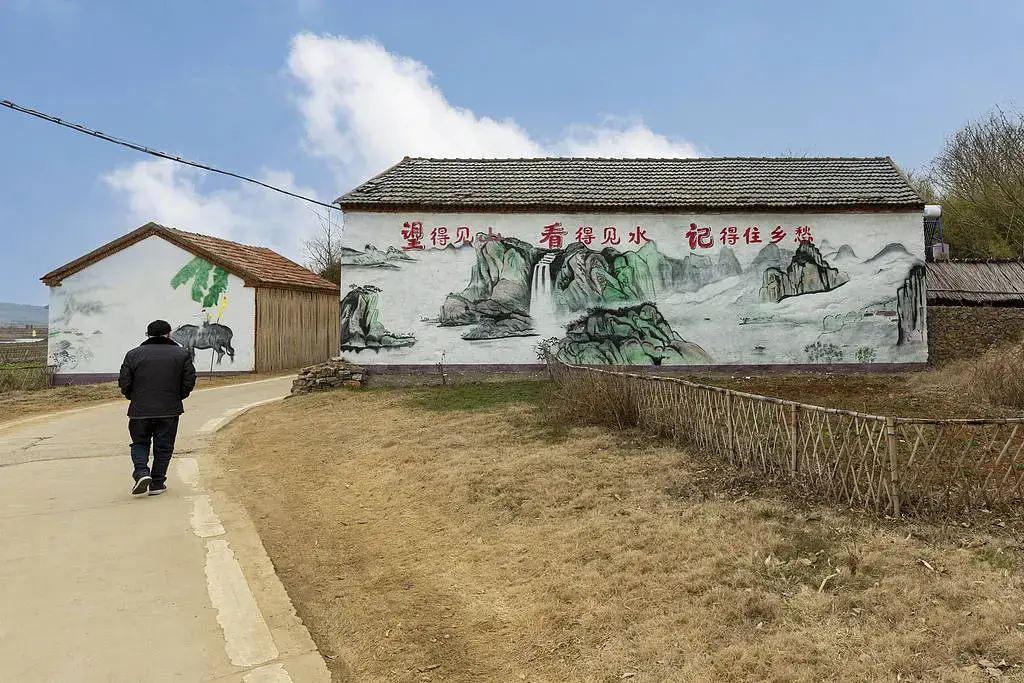
Rural residents have low incomes and sometimes can only take care of the present and not the long term. However, the medical insurance system must operate to have enough people pay.
In essence, medical insurance is for everyone to contribute money to help a small number of people who are unfortunately ill. Only when there are enough people paying, and the medical insurance fund is large enough, can it play a positive role in protection.
If there are few payers, especially if the payers are all elderly people with a high probability of getting sick, then the income will not cover the expenses, and the meaning of providing a safety net will be lost.
This is the dilemma faced by the medical insurance system. From the perspective of rural residents, there are many cases of poverty caused by illness in various places, and in fact, a medical insurance system is also needed to provide a safety net. But if there are too many low-income families who are unwilling to pay, then the medical insurance system will not be able to operate well.
Previously, experts suggested mandatory payment, just like the employee medical insurance. However, the employee medical insurance is paid through the enterprise, and the employees do not feel the pain strongly, and they have a job that can pay medical insurance, which shows that they still have a certain ability to bear it.
It is difficult to implement it on rural residents. Even if it is mandatory, if rural residents have no money in their hands, how can they be "forced"?
Faced with this dilemma, in the long run, of course, we can only hope to develop the economy, so that more rural people have the opportunity to find jobs and increase their income, and in the short term, we may have to consider whether it is possible to achieve short-term support for low-income groups through fiscal transfer payments.
Although the finances at all levels are not abundant at the moment, the expenditure to protect the health of vulnerable groups should still be a priority.