
Food safety is paramount. Relying on public opinion to conduct strict inspections each time fails to address the fundamental issue.
Another case of media exposure of “sulfur exceeding standards” in wolfberries.
According to CCTV Finance, wolfberries from the northwest regions such as Qinghai and Gansu are widely popular across the country due to their large and plump berries, bright color, and thick flesh. However, beneath the surface, some manufacturers and merchants use sodium metabisulfite and industrial sulfur during the wolfberry production process to “enhance color and appearance,” seriously threatening the health of consumers.
On September 2, Jingyuan County, Gansu, one of the exposed areas, issued a notice stating that a joint investigation team has been established to thoroughly investigate the relevant issues in the wolfberry planting and processing环节, and those responsible for violations will be severely punished according to law.
Despite Jingyuan County’s statement that they will conduct a thorough investigation, netizens are still furious when recalling the shocking details exposed by CCTV.
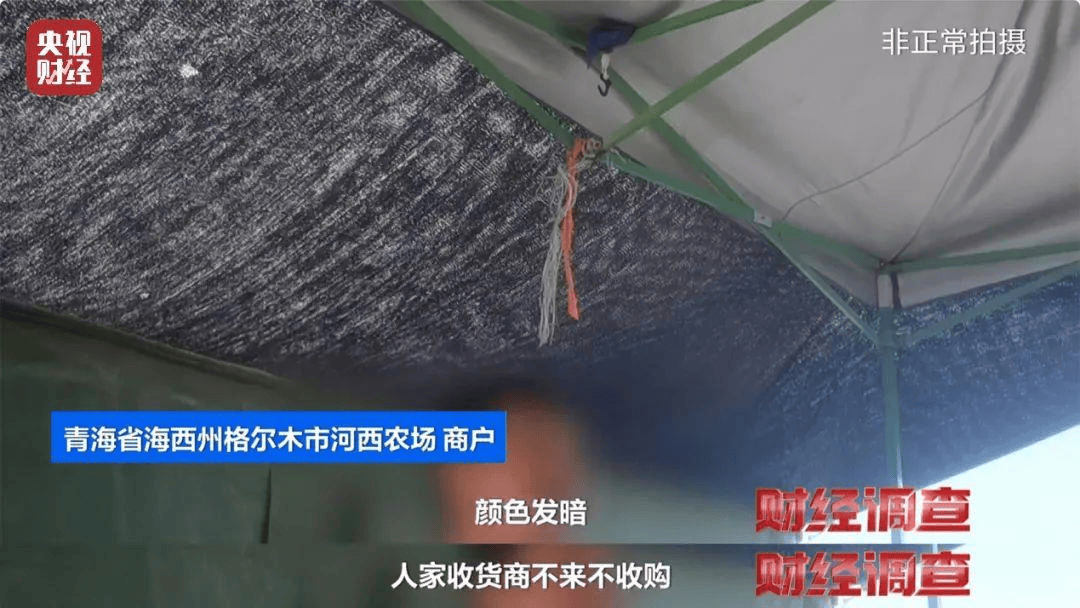
In Golmud City, Qinghai, one of the major wolfberry producing areas, local merchants, in order to sell wolfberries with poor appearance, soak them in sodium metabisulfite solution to make them look more vibrant, completely disregarding a basic fact:
Sodium metabisulfite is a food additive, mainly used for bleaching and preservation of food, but excessive consumption can cause poisoning symptoms, including systemic hypoxia and organ failure, and in severe cases, even death.
Are these merchants unaware of the dangers of excessive use of sodium metabisulfite? Not at all.
Haixi Mongolian and Tibetan Autonomous Prefecture, where Golmud is located, has issued the “Regulations on Promoting the Development of the Wolfberry Industry”, which stipulates that the use of sodium metabisulfite and its substitutes is prohibited in the production and processing of wolfberries and their products.
Some Golmud merchants admitted that they knew they were not allowed to use sodium metabisulfite, and the city inspected it every year, but later found that they would lose money if they didn’t add it, so they simply added it against their conscience.
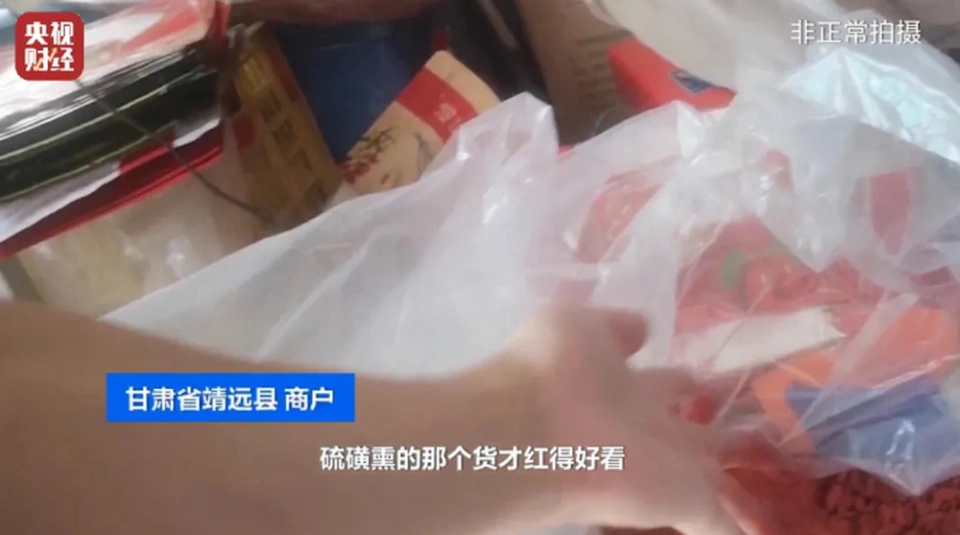
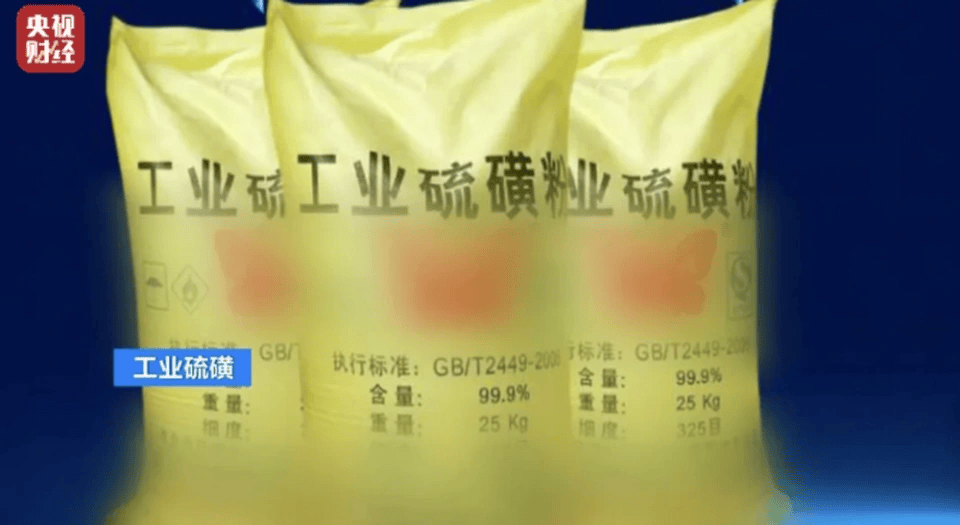
In a “wolfberry town” in Jingyuan County, some merchants are even more unscrupulous, using industrial sulfur to fumigate wolfberries. Compared to sodium metabisulfite, industrial sulfur is explicitly prohibited for use in food processing. Sulfur is poisonous and contains a large amount of arsenic, which can easily cause kidney failure, liver damage, and other symptoms after consumption.
From the video secretly filmed by reporters, the situation of setting up sheds in the afternoon and fumigating late at night, and then dismantling the sheds when the weather cools down, is common in some local villages, and the entire process is skillfully operated. The reporter opened a small opening in one of the fumigation sheds and instantly inhaled a large amount of irritating gas, making it difficult to breathe and causing tears.
And these wolfberries fumigated with industrial sulfur eventually flowed into the market, some went into hot pot restaurants, small pharmacies, some went into tea bags, and some were made into wolfberry wine, harming the health of thousands of consumers.
With such use of sodium metabisulfite and industrial sulfur to “process” wolfberries, how can the local authorities be so slow to react?
It must be admitted that wolfberry cultivation is mainly concentrated in the rural areas of the northwest, with a wide area and scattered planting, which poses certain challenges for supervision. However, from the video exposed by CCTV, it seems that many merchants do not worry about being inspected when using sodium metabisulfite and industrial sulfur.
Some people soak wolfberries in sodium metabisulfite by the side of farm water channels, and some villages are full of fumigation sheds, with large bags of industrial sulfur prominently placed in the courtyards.
With such blatant behavior, could it be that the local village officials did not notice at all? Could it be that the relevant departments do not usually go to the countryside to inspect? Could it be that the wolfberries sampled locally all meet the quality standards?
In fact, a brief search of the news will reveal that the use of sodium metabisulfite and industrial sulfur by some unscrupulous merchants in the wolfberry producing areas of the northwest to “enhance the color and appearance” of wolfberries was exposed more than a decade ago.
Each time it was exposed before, the local authorities issued a notice saying they would conduct a thorough investigation and severely punish those involved. But more than a decade later, this phenomenon has not stopped.
This shows that, in the production, processing, and circulation of “sulfur exceeding standards” wolfberries, there are significant loopholes in supervision. It is even possible that some people or departments, knowing the situation, have turned a blind eye and condoned such wrongdoing.
After the exposure by CCTV, a staff member of the General Office of the Jingyuan County Government in Gansu Province said that they are conducting a full-scale investigation into the production and sales of wolfberries in the area, and have sampled and sent wolfberries from fields, farmers’ homes, and shops for inspection, “from the fields to the market,进行全过程监管. Last night, the working group has gone to the market to verify.”
If these actions were taken earlier, why would there be the exposure by CCTV, and the local wolfberry industry would not have suffered such a great blow.
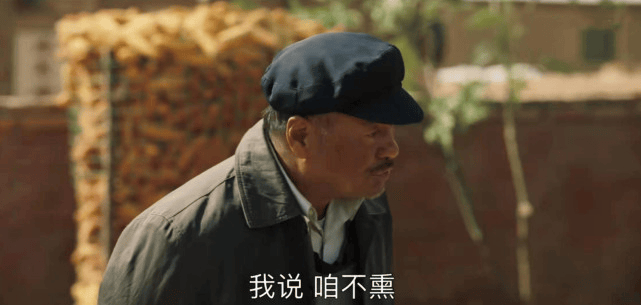
This incident reminds many people of a scene from the popular TV series “Shanhai Qing” a few years ago, where villagers argued about whether or not to fumigate wolfberries with sulfur, and Li Dayou, the biggest “thorn in the side” of poverty alleviation work, said:
“Don’t fumigate! … What is conscience? Conscience is the human heart, it’s a scale, our wolfberries may not be red, but the hearts of the people of Jintan Village cannot be black! We don’t earn money that goes against our conscience!”
This sentence warmed the hearts of the audience, but in reality, to ensure that consumers buy qualified wolfberries, we cannot rely on the conscience of merchants or the self-identification of consumers.
The key is to strictly supervise and crack down on the production and circulation of “sulfur exceeding standards” wolfberries from the source, so that illegal merchants pay a huge economic and legal price. Food safety is paramount. Relying on public opinion to conduct strict inspections each time fails to address the fundamental issue.
Discover more from 自由档案馆
Subscribe to get the latest posts sent to your email.