

When a school needs to maintain internship order by withholding graduation certificates, what this school really needs to rectify is not the students, but its own management philosophy.
Object|Text
Produced by Bingyue Yuyun (ID: Lzkj328)
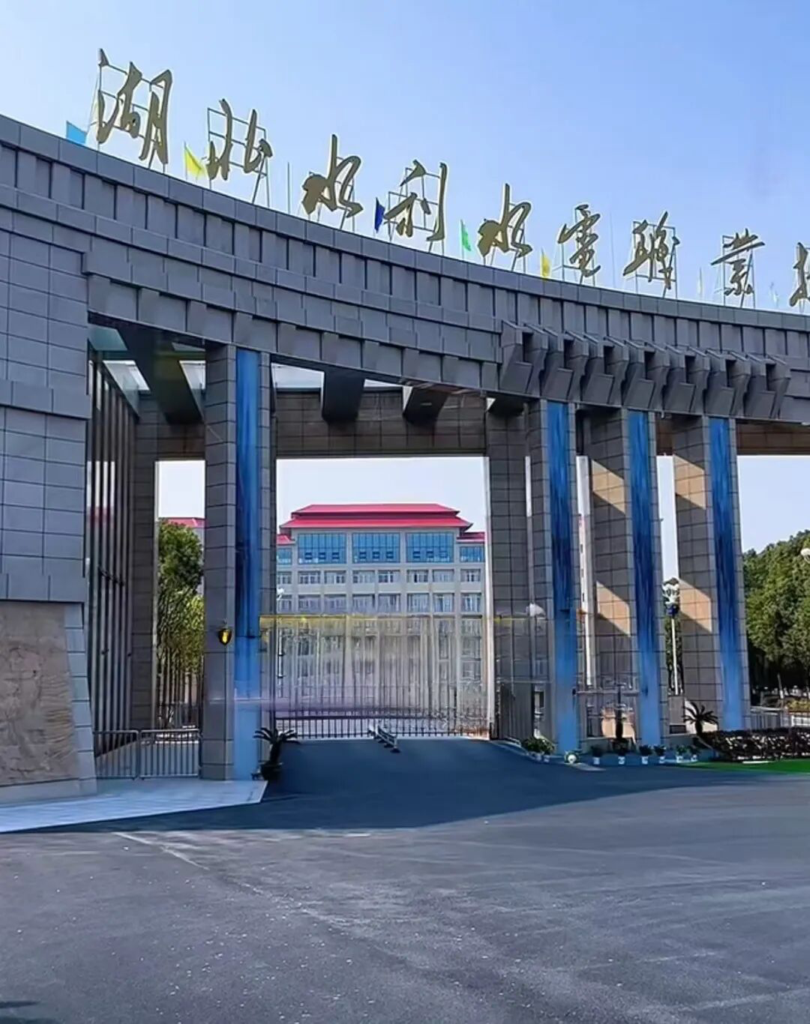
On April 19th, a netizen released a video revealing that when students from the Department of Mechanical and Electrical Engineering of Hubei Vocational and Technical College of Water Resources and Hydropower went to Shiyan for an internship, they paid a 300 yuan accommodation fee in advance, and the school arranged for an eight-person dormitory; some students wanted to pay for a hotel themselves, but were fiercely reprimanded by the team leader, and even threatened that they would not get their graduation certificate.
According to a report by Ningbo Evening News, the school responded afterwards, saying, “The students misunderstood, and the team leader has been criticized and educated.” It also stated that it respects students who are financially able to bear the extra costs of staying in a hotel.
The matter seems to have calmed down, and the threat of not getting a graduation certificate was a “misunderstanding” by the students. But the shock caused by this incident is by no means something that can be easily resolved with a single “misunderstanding.” What is more worth警惕 than the threat that blurted out is a kind of thinking inertia hidden in the minds of educational administrators: students must obey unified arrangements, and any “outrageous” autonomous choices may be regarded as a challenge to order. And the graduation certificate, this “sword of authority”, has become the most handy and brutal tool for maintaining order.
Judging from the school’s response, the cause of the matter is not complicated. The school uniformly arranged for an eight-person dormitory, 20 yuan per night; some students felt that the conditions were poor and wanted to pay for a better hotel themselves.
Is this request reasonable? Of course it is. During the internship, students need to participate in professional practice during the day and need to rest and recover their energy at night. If the eight-person dormitory does have problems such as overcrowding, poor hygiene, and interference with each other’s schedules, then students who are financially able to choose to buy a better rest environment with their own money, neither harms the collective interests, nor violates the internship regulations, and even less challenges the school’s authority. This is a normal choice made by an adult based on their own needs and ability to pay.
However, the team leader’s reaction was emotional, shouting loudly, and even saying things like “not issuing graduation certificates.” The school attributed it to “inappropriate wording” and “student misunderstanding.” But the problem is, why can such a “misunderstanding” happen?
The reason why a teacher’s threat can be taken seriously by students is precisely because in the reality of educational management, the graduation certificate is often alienated into a management tool——
● If you don’t pay tuition, you won’t get a graduation certificate;
● If you don’t have enough credits, you won’t get a graduation certificate;
● If the internship link is not up to standard, you won’t get a graduation certificate.
These regulations themselves have their rationality, but when “not issuing graduation certificates” slides from the bottom line of the system to the “common saying” of daily management, it becomes a Damocles’ sword hanging over the students’ heads.
Teachers use it to suppress students who do not obey the arrangements, and schools use it to eliminate “troubles” in management. Once this sword is unsheathed, students dare not ask “why”, but can only ask “how can I avoid being punished”.
Behind this is a deep-rooted “assembly line” management thinking. In this thinking, students are “products” being processed, and the education process is a set of standardized processes: unified courses, unified schedules, unified accommodation, and unified internship arrangements. Any “individual differences” that deviate from standardization are regarded as interference with the production order.
● Students want to stay in a hotel? No, because everyone else is staying in an eight-person dormitory.
● Students want to solve their own catering? No, because boxed lunches are ordered uniformly.
● Students want to take advantage of the internship gap to do some private affairs? No, because you can’t take leave for collective activities.
Behind these “no’s” is often not because these choices are wrong in themselves, but because they increase the complexity of management. Managers pursue “convenience” rather than “educating people.” When “easy to manage” becomes the highest principle, the reasonable needs of students become “troubles” that need to be suppressed.
What is even more worrying is that this “assembly line” thinking is quietly shaping students’ cognition. When a student is threatened with not getting a graduation certificate because they want to pay for a better place to stay, what do they learn?
● They learn that individual reasonable needs are not worth mentioning in the face of collective authority;
● They learn that autonomous choice is a risk, and obedience is a safe strategy;
● They learn that the correct way to solve problems is not communication and negotiation, but the use of power to suppress dissent.
Such education is not cultivating citizens who can think independently and dare to fight for their rights, but taming “good people” who are accustomed to obedience, afraid of expressing dissent, and submissive to power.
Internships should have been a transitional link for students to contact society and understand the real working environment. What does the real society look like? It is that you can use your own legal income to purchase better services, that you can make choices that are beneficial to yourself within the allowed rules, and that you need to find a balance between collective arrangements and personal needs.
If even “paying for a hotel yourself” is threatened during the internship, then what this internship teaches students is exactly the opposite of the real society.
Some people may say that the school’s unified accommodation is for the convenience of management and to prevent safety accidents from happening to students staying outside, and the original intention is good. This statement has some truth, but it confuses the difference between “management goals” and “management methods”.
To prevent safety accidents, it can be achieved by strengthening safety education, establishing a liaison mechanism, and clarifying the boundaries of responsibility, rather than by depriving students of their right to choose.
If an adult, a college student, doesn’t even have the right to choose where to stay, then how can they learn to be responsible for their own personal safety? The purpose of education is never to keep students under the umbrella forever, but to let them learn to hold their own umbrellas within appropriate risks. Unified arrangement of eight-person dormitories and providing options, while allowing self-funded upgrades of accommodation and signing safety notices, is the approach that is both responsible and respects individuals.
The school’s final adjustment to allow students who voluntarily stay in hotels to bear the extra costs themselves proves that the students’ requests can be fully met. So, the question returns to the original point,
● Why did such a matter that could have been easily resolved have to be brought to the point where students posted videos for exposure, the whole network discussed it heatedly, and the school was forced to respond before it was resolved?
● Why was the team leader’s first reaction not communication, coordination, and understanding, but reprimand and threats?
This is by no means a personal problem of a certain teacher, but a problem of the entire management culture. In an environment accustomed to crushing demands with power, the teacher is just the executor standing at the forefront. The “not issuing graduation certificates” that he blurted out is not a personal lapse, but the evil fruit grown from the soil of the system.
This reminds people of the widely circulated saying: “I will give you two opportunities to skip class, there must be something more important than class, such as the reeds outside the building, or the moon tonight.” The charm of education lies precisely in its ability to accommodate those “out of plan” things.
A teacher who allows students to occasionally skip class to see the moon is not irresponsible, but understands that life itself is also a course. Similarly, a team leader who allows students to pay for their own hotels during internships is not lax in management, but understands the differences and choices of respecting individuals.
Education is not about stuffing everyone into the same mold, but about helping each person become a better version of themselves. This “better” should be defined by the students themselves, not by the managers for them.
Returning to this incident, what we should reflect on most is not whether that teacher should be criticized, but how many similar “standardized shackles” like “unified accommodation” are in our educational management, quietly depriving students of their ability to choose, judge, and be responsible for themselves in the name of “for your own good”.
The graduation certificate is proof that students have completed their studies, not a “hostage” for schools to manage students. When a school needs to maintain internship order by withholding graduation certificates, what this school really needs to rectify is not the students, but its own management philosophy.
The bottom line of education is not to make all students “obedient”, but to make them have the courage, wisdom, and dignity to face an imperfect world when they leave the school, and to be able to find their own place in it. (Author: Bingyu) (Bingyue Yuyun WeChat public account: lzkj328)
Source | Bingyue Yuyun ID: lzkj328
Editor | Xia He
Reviewer | Chang Xi
Produced by | Bingyue Yuyun ID: lzkj328
Thanks for sharing!
Discover more from 自由档案馆
Subscribe to get the latest posts sent to your email.