Faced with the length and depth of history, I often have a sense of absurdity and bewilderment.
When looking at ancient history, we often consider twenty to thirty years as a brief moment, and some twenty to thirty years even have no notable records, leaving only a few words of rough description, passing by silently and without a trace.
But for our generation, twenty to thirty years means extremely profound and exaggerated changes, comparable to several hundred years in history.
We are already using smartphones with various fast and intelligent applications, cars can drive themselves, and we are discussing chips, robots, and AI, as if we are at the forefront of historical progress.
But looking back suddenly at my childhood – which was only about thirty years ago – do you know what my dream was? It was to be able to eat chicken whenever I wanted.
Back then, eating chicken was like celebrating the New Year.
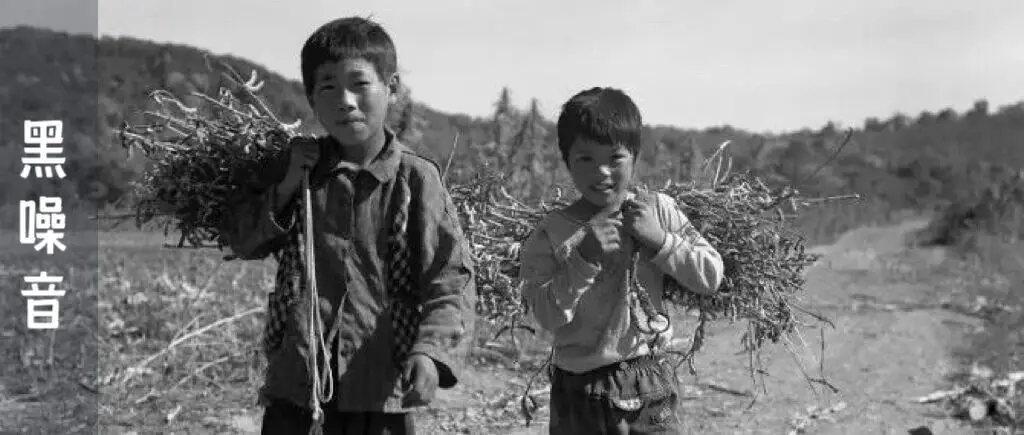
This might be hard for people born after the 90s to imagine, but people born in the 80s just barely experienced extreme material scarcity.
Why was it so difficult to eat chicken? Because the production of meat was very low at the time, it was very difficult to buy a chicken, or it was extremely expensive.
People born in the 80s hardly experienced the ration coupon era, so they were already much better off.
In my memory, eating chicken wasn’t that difficult; it was when “broiler chickens” started to exist, which actually meant the beginning of the development of the food industry.
People who haven’t experienced the late period of material scarcity can hardly understand that feeling: milk and yogurt were very rare, meat could only be eaten two or three times a week in very small quantities, the variety of vegetables was extremely limited, and snacks were even less likely to be eaten regularly.
But people born in the 80s were very lucky; they only experienced the tail end of it and soon encountered the market economy era with an abundance of goods. I can hardly imagine living my whole life in such material scarcity, although there are ways to live when poor, it is ultimately painful.
For example, humans actually crave meat – except for those whose genes make them naturally dislike meat. So, not being able to eat it makes you crave it and suffer. People today cannot understand what it feels like to “eat meat only once a year”; they can try to be vegetarian for a month first, and they will roughly understand.
The key is that the food in the era of material scarcity didn’t have much oil. Today’s vegetarianism is different from the past. In the past, for northerners, eating only potatoes or sweet potatoes, along with a few coarse grains, for a whole month was a common phenomenon.
Today’s vegetarian diet, in the eyes of people from that time, would be like living in heaven. Because when you eat vegetarian, you also have white rice and white flour, stir-fries with sufficient oil, a wide variety of vegetables, as well as nuts and various other foods.
When I chat with my grandparents, the most common thing they talk about is hunger. Even Mo Yan mentioned hunger first in his Nobel Prize acceptance speech.
So we should not forget that our generation is one that has only recently escaped hunger.
I still remember newspapers around 1998 often reported “China has solved the problem of basic needs.”. At that time, I was thinking, why has China only just solved the problem of basic needs?
Looking back now, I find it ridiculous: I myself was the object of the “solved basic needs” problem.
Without all those reforms, I and many children like me would still belong to the group of people suffering from malnutrition and difficulty obtaining food.
Human nature is like this: when you get everything, you take it for granted and forget the pain of not having it in the beginning.
We take freedom of movement for granted, as if it were natural, but in fact, the Sun Zhigang incident in 2003 truly promoted the legal right to freedom of movement.
It has only been 23 years since then.
Nothing is that easy, nothing is that effortless, and certainly not taken for granted.
So, why remember all this? Isn’t it good to immerse ourselves in the current life of material abundance?
This brings us to the meaning of “remembering history” itself.
“Remembering history” is by no means just about dredging up old stories from the river of time to use as conversation fodder; its core meaning is for the present and the future, providing humanity with a critical perspective, a depth of understanding, and the responsibility to defend morality and dignity.
The renowned ethicist Avishai Margalit, in “The Ethics of Memory,” discusses how memory relates to our ethical responsibility towards “our people,” with “care” at its core.
He argues that memory is not just cognitive knowledge but also an emotional memory. If we forget those who share our fate, it is essentially an ethical “betrayal.”
Therefore, remembering past disasters and traumas is not for settling scores or complaining, but for clarifying right from wrong and achieving true social reconciliation.
In an era of accelerating forgetting, preserving memory is a safeguard of the emotions and experiences we cherish, and more importantly, it allows us to exist with dignity.
Without drawing strength from the past, it is impossible to walk well on the path of the future. This is why I want to talk about the memory of hunger today.
Remembering, sometimes, is human dignity itself. That’s why I’ve always loved the title of a Russian novel: “To Live and Remember.”
Discover more from 自由档案馆
Subscribe to get the latest posts sent to your email.