National compensation must consider the overall payment capacity of the country. The legislative intention was to prevent the scope of compensation from expanding indefinitely, but in the scenario of small and micro enterprise owners being criminally detained, this system design can easily turn into a devastating disaster.

Phoenix Network Original National compensation must consider the overall payment capacity of the country. The legislative intention was to prevent the scope of compensation from expanding indefinitely, but in the scenario of small and micro enterprise owners being criminally detained, this system design can easily turn into a devastating disaster.
Author丨Chen Bi
Professor, China University of Political Science and Law
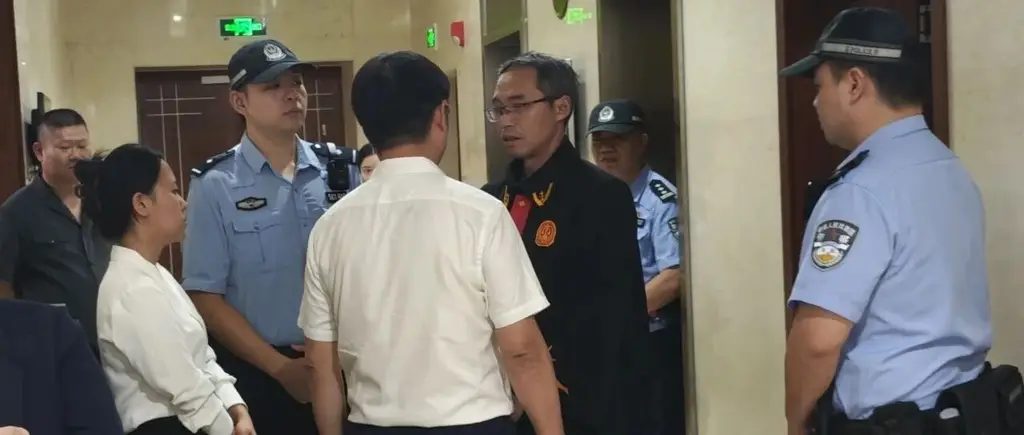
According to media reports, on January 18, 2023, Wang Fei and his wife, entrepreneurs from Xincai County, Henan Province, were taken away by the police on suspicion of fraud. After Wang Fei was detained for 485 days and Liu Sumin for 227 days, the procuratorate decided not to prosecute, and the two were released and declared innocent. While regaining their freedom as innocent individuals is good news for the Wang Fei couple, the bad news is that due to the initiation of criminal proceedings and prolonged detention, the company was left unmanaged, and by the time they were released, they were already over 30 million yuan in debt.
In 2024, the couple applied for state compensation, claiming compensation for personal freedom, solatium for mental distress, return of confiscated subsidies, and business losses. In October 2025, the procuratorate decided to pay approximately 409,000 yuan for personal and mental damages, and also issued a decision to apologize and restore their reputation, but all claims for business losses and subsidy refunds were rejected. The parties applied for reconsideration, but the higher procuratorate upheld the original decision.
Regarding this case, we will discuss three issues: First, did the two constitute the crime of fraud? Second, why is there such a huge discrepancy between state compensation and actual losses? Third, can we escape this roulette of fate?

Was it fraud? Should they have been detained for so long?
Why were Wang Fei and his wife suspected of fraud? The indictment stated, “In October 2021, upon learning that building cold storage could receive national subsidies, Wang Fei and his wife, in collusion with others, built a cold storage facility in the factory of Jinyuan Agricultural Plant in the Xincai County Industrial Cluster Area and signed an engineering installation contract for refrigeration equipment with a total contract price of 720,000 yuan with an out-of-town trading company.” “Knowing that the constructed cold storage did not meet the standard for receiving the maximum subsidy of 1 million yuan, in order to obtain the subsidy of 1 million yuan, they forged purchase and sales installation contracts and receipts, falsely reporting the construction cost of the cold storage, which was less than 1 million yuan, as 2.65 million yuan, thereby defrauding the state of 1 million yuan in subsidies.”
It appears that the couple did indeed fabricate facts and defraud public funds, but why did the prosecution and defense, and the court, have “serious differences in understanding” regarding the alleged crime, ultimately leading the prosecution to withdraw the indictment?
This requires understanding the background of the event. In recent years, some local governments have mobilized enterprises within their jurisdiction to apply for subsidies when introducing support policies. In practice, there is an unwritten rule of “beautifying” or “packaging” application materials, which administrative organs tacitly approve. However, this behavior crosses a legal red line of “settling accounts later”: if the actor only slightly optimizes the declared data under the premise of having basic eligibility, it is generally considered a fiscal administrative violation, with liability limited to the recovery of subsidies and administrative penalties; but if the actor fabricates projects or forges qualifications to obtain fiscal funds, judicial organs may still pursue criminal liability for fraud.
In this case, the prosecution and defense clashed over this red line. According to the prosecution’s logic, this was using fake projects for real fraud, and criminal responsibility should be pursued; according to the defense’s logic, this was beautifying a real project and could not be equated with fraud in the criminal law sense. Many private entrepreneurs, including the Wang Fei couple, have a common understanding when applying for projects: as long as the project truly exists, merely adjusting or beautifying operating data will at most result in the refund of subsidies and administrative responsibility, not criminal responsibility.
However, whether a crime is constituted or not does not depend on their subjective intentions, but on whether the investigating authority judges that the inflation of application materials constitutes a fiscal administrative violation or a fraud under criminal law.
Regarding Article 266 of the “Criminal Law of the People’s Republic of China” on the crime of fraud, the most common example used in criminal law classes is the “beauty filter” reward. If the person behind the beauty filter looks plain, and the reward giver discovers they have been deceived, can they be accused of fraud? What if it’s an ugly old man behind the filter? According to the victim’s failure to achieve their purpose theory in the doctrine of fraud, the former’s transaction purpose was not frustrated and does not constitute fraud; the latter’s deception for rewards may constitute fraud.
As for subsidy fraud discussed in this article, in addition to considering the state’s agricultural support objectives, we also need to consider social appropriateness. If there is partial false declaration but the subsidy objective is not frustrated, there is no need to prosecute for fraud.
In short, this is a question of crime versus non-crime, and also a question of distinguishing administrative liability from criminal liability. When the project is genuinely implemented, the funds are used for their intended purpose, and the agricultural support goal is achieved, with only differences in statistical caliber and non-substantial flaws, it is appropriate to adjust through administrative regulation.
However, the function of China’s criminal law has been continuously expanding, leading to a high degree of overlap between the objects of regulation and regulated behaviors of criminal law and administrative law, making it easy for some illegal acts to become crimes. Furthermore, the dual sanction model adopted by legislation, combining administrative penalties with criminal penalties to combat illegal acts, means that there is no clear boundary in practice as to when public security organs should exercise their criminal jurisdiction, thus leading to excessive intervention of criminal law in areas originally regulated by administrative power.
Once the juggernaut of criminal justice is set in motion, it can have immeasurable impacts on personal lives and business operations.
Regarding the detention of entrepreneurs involved in cases, the significance of the Gu Chujun state compensation case, one of the “Ten Typical Cases of Equal Protection of Property Rights and Personal Safety of Private Enterprises by Law” issued by the Supreme People’s Court in 2019, explicitly states: “Judicial organs should exercise caution in adopting coercive measures.” In the “First Batch of Typical Cases of Judicial Protection of Private Enterprises” issued by the Supreme People’s Procuratorate in the same year, it is also clearly stated: “For private enterprise operators suspected of economic crimes… if bail pending trial does not affect the normal progress of the proceedings, arrest measures should generally not be taken; for those who have been approved for arrest, the duty of reviewing the necessity of detention should be performed according to law, and for those with fixed occupations and residences who do not need to be detained further, the public security organs should be promptly advised to release them or change the coercive measures.”
The opinions of the two high courts are clearly stated. Why were Wang Fei and his wife detained for a long time without any social danger? Is bail really that difficult?
Their prolonged deprivation of personal freedom directly led to business operational risks and significant property losses, with the cost of prosecution far exceeding the harm of the alleged acts themselves. As reported, “In addition to the large number of pigs dying due to lack of management at the farm, the Jinyuan Agricultural Processing Plant in the Xincai County Industrial Cluster Area also suffered order breaches due to production suspension, and more than ten tons of raw materials and products were damaged by mold and spoilage.”

Wang Fei at his own farm
Therefore, this common sense should be reiterated: From the perspective of the谦抑 (qiānyì – restraint/modesty) of criminal law, issues that can be resolved by other laws should be resolved by other laws as much as possible. Judicial organs should adhere to the principle of restraint when handling similar cases and should exercise caution in initiating procedures.

Why is state compensation so low?
In this case, the prolonged detention of the couple led to severe damage to the company’s operations; after the case was closed, the couple had accumulated debts of over 30 million yuan. The Xincai County People’s Procuratorate calculated the compensation for personal freedom at approximately 475 yuan per day, paying Wang Fei about 230,000 yuan and Liu Sumin about 107,000 yuan. An additional 50,000 yuan and 22,000 yuan were paid as solatium for mental distress. Regarding the couple’s request for state compensation for “millions of direct losses within the over 30 million yuan in losses,” the Xincai County Procuratorate stated, “The existing evidence cannot prove that these losses are direct losses, and the request is not supported.”
Why are the losses tens of millions, while the compensation is only hundreds of thousands? This is the current situation of state compensation for wrongful detention leading to innocence: only direct losses of personal freedom are compensated, and only direct property losses are compensated.
The background for this provision in the “Law of the People’s Republic of China on State Compensation” is the belief that indirect losses are unpredictable, including business bankruptcy, damage to reputation, and loss of business expectations, and therefore cannot be calculated. Compensation decisions by the Compensation Committee of the Supreme People’s Court also contain such statements: “If no coercive measures were taken against their enterprise, the losses suffered by their enterprise are not directly causally related to their detention and do not fall within the scope of statutory compensation, and will not be supported.”
In addition to the above-mentioned reasoning logic of non-direct causality, the ninth batch of guiding cases of the Supreme People’s Court in 2012, Case No. 42, the state compensation case of Zhu Hongwei’s application for compensation for wrongful arrest, is also worth mentioning. This is a landmark case in the field of state compensation in China.
In 2005, Zhu Hongwei was accused in a dispute over equity transfer and was detained for 875 days on suspicion of contract fraud. After being declared innocent, Zhu Hongwei applied for state compensation. The Compensation Committee of the Supreme People’s Court decided to compensate Zhu Hongwei with 142,318.75 yuan for personal freedom, and the solatium for mental distress claimed by Zhu Hongwei was determined to be 50,000 yuan, considering that his company could not operate normally during his detention, his daughter was ill, the reference standard for solatium in Guangdong Province, and the local average living standard, as well as the circumstances of compensation negotiation and coordination.

This case was the first state compensation case decided by the Supreme People’s Court to pay solatium for mental distress after the implementation of the “Law of the People’s Republic of China on State Compensation” in 2010. More than ten years have passed, and the scope of state compensation has not changed, still following the scale of the Zhu Hongwei case.
National compensation must consider the overall payment capacity of the country. The legislative intention was to prevent the scope of compensation from expanding indefinitely, but in the scenario of small and micro enterprise owners being criminally detained, this system design can easily turn into a devastating disaster. The wisdom of the Chinese people says, “As long as the green hills remain, there will be wood to burn.” People are out, and money can be earned again. However, a society governed by law must also adhere to the basic bottom line of property protection.
Therefore, given the obvious upper limit of existing compensation methods, on the one hand, we must revisit the spirit of restraint in criminal law from the Gu Chujun case: judicial organs should prudently weigh the long-term impact of coercive measures when taking detention measures against operators; on the other hand, we should also reflect on the scope of state compensation. If the losses caused by wrongful detention are interests that the party would have inevitably realized, should such losses also be compensated? Frankly speaking, the State Compensation Law is in urgent need of new precedents.
In modern society, we need legal protection because it is predictable and provides a sense of security. We also need the restraint of criminal law because its destructive power is too great. Through the case of the Wang Fei couple, we have witnessed a desolate and absurd scene: a post-70s couple from a rural background, who developed their business step by step from their hometown to the county town by raising chickens and pigs. However, before the new factory was completed and put into operation, the couple was taken away by the police on suspicion of fraud. They were gone for a year and a half. When they returned, thousands of pigs were gone, their house was gone, and the factory was gone.
Hindsight is not worth mentioning, and legal education has been done. Let’s tell a Zhuangzi fable: In a chaotic world, Shen Tu Jia lost a leg, but he told Zi Chan that when people come into the world, it is like wandering within the range of Hou Yi’s bow and arrow. Whether they are shot or not depends on fate, and no one should be too happy too soon. It is conceivable that a society with weak rule of law will present such a “Gou Zhong Yi” (羿之彀中 – within the range of Hou Yi’s arrow).
This story reminds us not to stand idly by, not to just pray that we won’t be shot. Only with the escort of the rule of law can everyone’s life be provided with predictability and stability, without having to resign oneself to fate.
“Rule of Law Ideal State” is jointly initiated by Chen Bi, Zhao Hong, Li Hongbo, and Luo Xiang, and is a special original column of the Phoenix Network Comment Department.
Editor-in-Chief|Xiao Yi
If you think this article is good,
We hope you can click “Watching” at the bottom of the article↘,
Or set “Fengsheng OPINION” as a star (top right corner of the public account interface, three dots),
So that the system can continue to push high-quality comments to you.
Discover more from 自由档案馆
Subscribe to get the latest posts sent to your email.