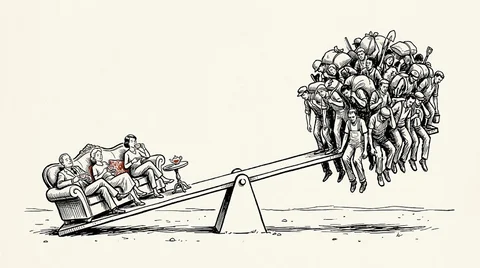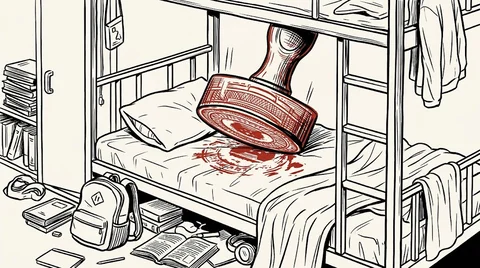


On March 5, 1970, Yu Luoke, only 27 years old, was executed in Beijing.
His life was short but like a flash of lightning, breaking through the ideological silence of that dark era. His "On Family Background" was not only an article, but also a courageous challenge to the unjust system. Half a century has passed, and Yu Luoke's name has long been redefined from "counter-revolutionary" to "pioneer of thought", but it is sad that the specter of "bloodline theory" he criticized has been revived in another form—the "nepotism" within the system—in today's social fabric.
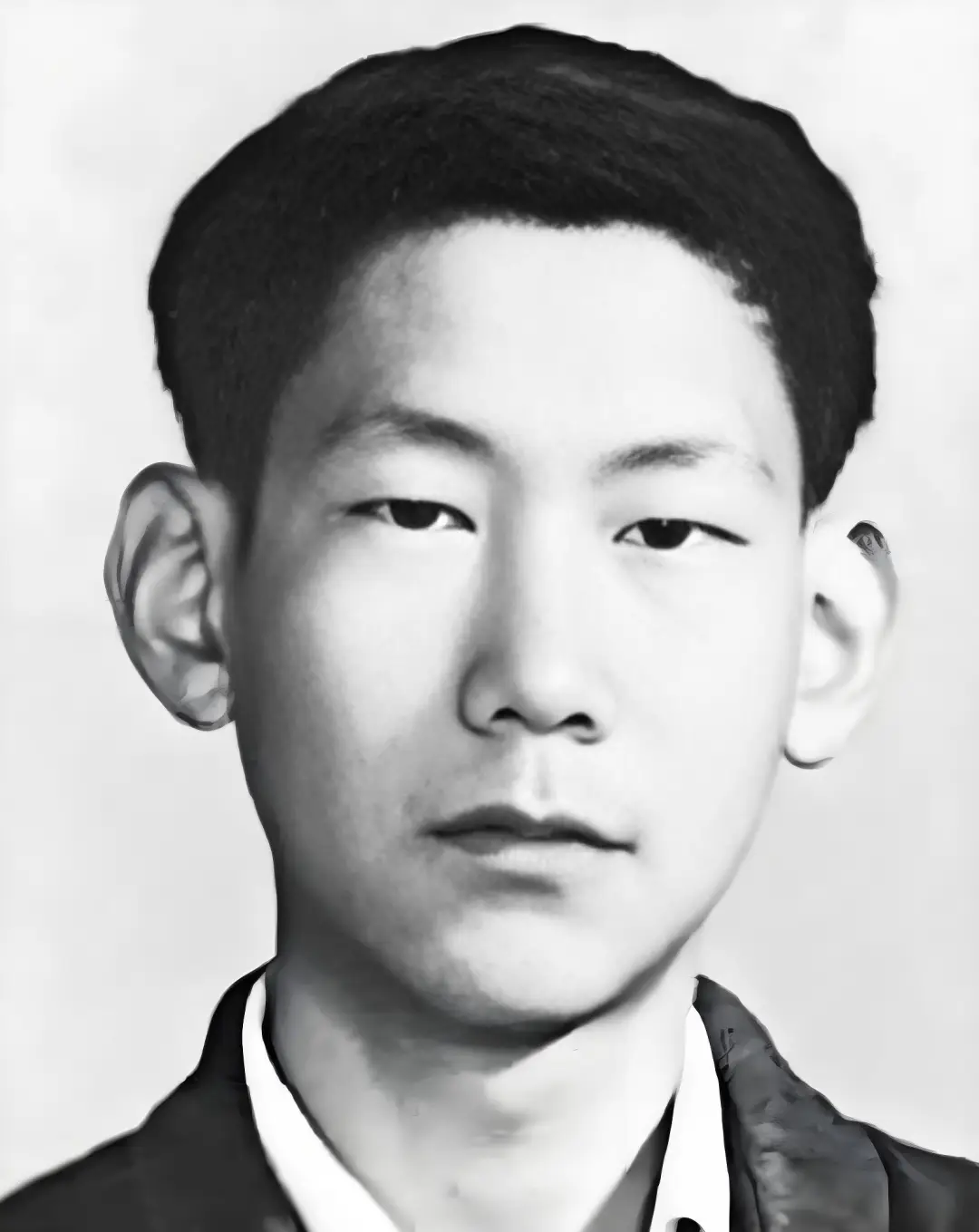
01 Yu Luoke and "On Family Background": The ideological spark that calls for equality
In the early days of the "Cultural Revolution", extreme "bloodline theory" was rampant, and the clamor of "Heroes' sons are good, reactionaries' sons are bad" prevailed in the world. Countless young people were deprived of the right to education, military service, and employment because of their "bad family background". Against this backdrop, Yu Luoke wrote "On Family Background" with amazing courage, directly criticizing the absurdity and injustice of "only family background theory". He pointed out: "Any privilege that cannot be achieved through personal effort is unreasonable." He advocated that to evaluate a person, one should look at their actual performance, not their family background; society should not predict fate based on "family background", but should use ability and morality as the standard.
"On Family Background" was like a bomb of thought, exploding a crack in the dull ideological iron curtain. It did not incite hatred, but called for reason and justice. However, this light was too dazzling and too dangerous. Yu Luoke was therefore labeled a "counter-revolutionary" and eventually paid the price of his life.
02 "Nepotism": The invisible hereditary system within the system
Today, half a century later, we no longer openly talk about "bloodline" and "family background", but a more hidden and institutionalized "family background determinism" is spreading in state-owned enterprises, state-owned enterprises, and government agencies—this is "nepotism".
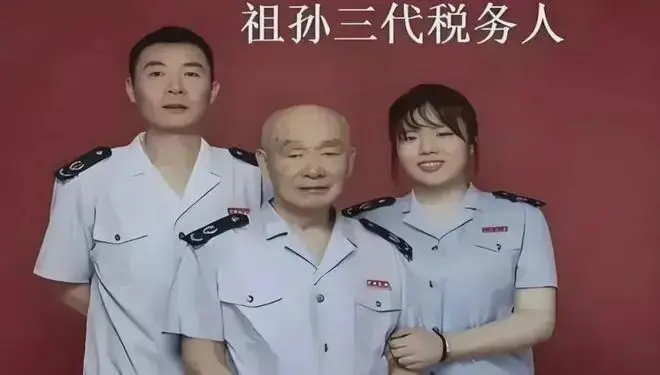
The so-called "nepotism" is not a concept in the biological sense, but refers to the phenomenon of a large number of "internal recommendations", "children's placement", and "relationship priority" in recruitment, promotion, and resource allocation within the system. Some positions in some units, especially key positions or "good positions", are often given priority to the children, relatives, and old friends of leading cadres; the recruitment procedures are just a formality, and "carrot recruitment" and "tailor-made" are common; some "children" have not yet graduated, and their jobs have been "predetermined"; some positions even form a "family-style" occupation, and one person gets the way, the chicken and the dog ascend to heaven.
This phenomenon is particularly prominent in monopolistic state-owned enterprises and local state-owned enterprises such as energy, finance, transportation, and communications. A case of "one person employed, the whole family entered the establishment" was exposed in a certain place; a certain state-owned enterprise was found to have many senior executives' children concentrated in the same department; a certain government agency has recruited internal employees' relatives for many years in a row... These are not isolated cases, but the tip of the iceberg of systemic problems.
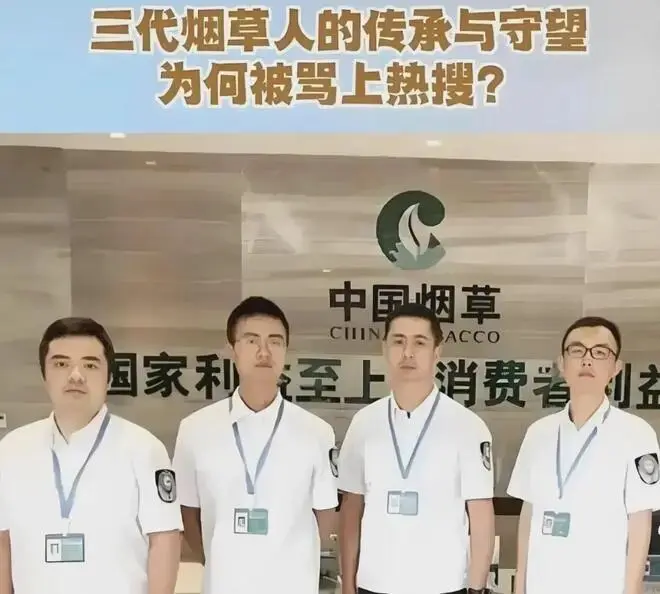
03 Anti-social, anti-civilization systemic ugliness
"Nepotism" is essentially a form of systemic corruption and a blatant trampling on social fairness. It is anti-social because it blocks the upward channels of children from humble backgrounds, making "striving to change fate" an empty word; it is anti-civilization because it privatizes public positions and treats national resources as family welfare, which is a complete betrayal of the spirit of modern governance.
More seriously, it is creating a new "class solidification". When power and resources are passed down from generation to generation in the hands of a few people, social mobility is severely weakened, and the gap between classes is deepening. This not only violates the basic principle of "equal opportunity", but also erodes the social foundation of trust. Young people will ask: If it is more important to rely on one's father than to work hard, why should we work hard? If the rules only serve a few people, why should we abide by them?
This is not only a moral issue, but also a governance crisis. An organization dominated by "relationships" will inevitably breed mediocrity, inertia, and corruption. Those with ability are excluded, and those without ability are in high positions because of their "background", which ultimately harms public interests and organizational efficiency. When state-owned enterprises are overstaffed and lack innovation due to "nepotism", and when government agencies are inefficient and their credibility is damaged due to "nepotism", how can the modernization of national governance be discussed?
04 Yu Luoke is gone, but the question of fairness remains forever
Yu Luoke died in 1970, more than fifty years ago. What he defended with his life was the basic dignity of "not judging heroes by their family background". However, today, we bow down in front of another kind of "family background"—power background, relationship background. This is not only a historical irony, but also a warning of social progress.
We commemorate Yu Luoke, not only by offering a bouquet of flowers in the memorial hall, but also by responding to his question with action: Have we truly established a fair, open, and dignified society?
The spark ignited by Yu Luoke with his life should not be extinguished in the times. What we are pursuing today is not a society of "relying on fathers", but a society of "relying on talent"; not a system bound by a network of relationships, but a stage where everyone can shine with their abilities.
"Nepotism" is not a tradition, but a tumor; not "humanity", but injustice. It is in the same vein as the "bloodline theory" criticized by Yu Luoke, only with a different coat. Only by completely eliminating this anti-social and anti-civilization bad habit can we truly comfort the souls who sacrificed for fairness.
Let the system return to justice, and let opportunities return to equality—this is the best way to commemorate Yu Luoke.

—- THE END—-
Friends with the same values can add the following WeChat, and likes and forwards are the greatest support!

Recommended articles:
The Micro Light in the Long Night - "Believe in the Future"
At least in the past 25 years, China's "God of Wealth" is not Zhao Gongming, but the WTO!
Zhang Ailing's Three Moments in Life
It is useless for robots to look like humans, only thinking like humans is valuable