

The controversy over whether it is permissible to conduct interviews without a press card has been ongoing for a long time. I have written several short articles on this issue. Today, I am compiling and integrating these articles to facilitate dissemination and reading.
Press cards cannot distinguish the authenticity of journalists
During my 17 years as a journalist, I didn't have a press card for a long time. From 2002 to 2005, the first three years when I was on the front lines, I didn't have a press card, but my name in the newspapers during those three years was "Chu Chaoxin, Reporter."
Why didn't I have a press card for more than three years?
First, there were policy restrictions. In 2002, I graduated from university. To take the qualification exam, I had to obtain a qualification certificate before applying for a press card. According to the policy, one had to work for about a year before taking the qualification exam. This meant that all new graduates, regardless of whether they had a bachelor's or master's degree, could not get a press card as soon as they entered the unit; there was a transition period.
I took the qualification exam in 2003 and obtained the qualification certificate. I didn't get my press card until around 2005. The delay was due to the inefficiency of the departments issuing the certificates, the inefficiency of the newspaper, and the restrictions on the number of people holding press cards in the newspaper.
After joining the Beijing News, it took about half a year to get a new press card, and I used my work permit to conduct interviews.
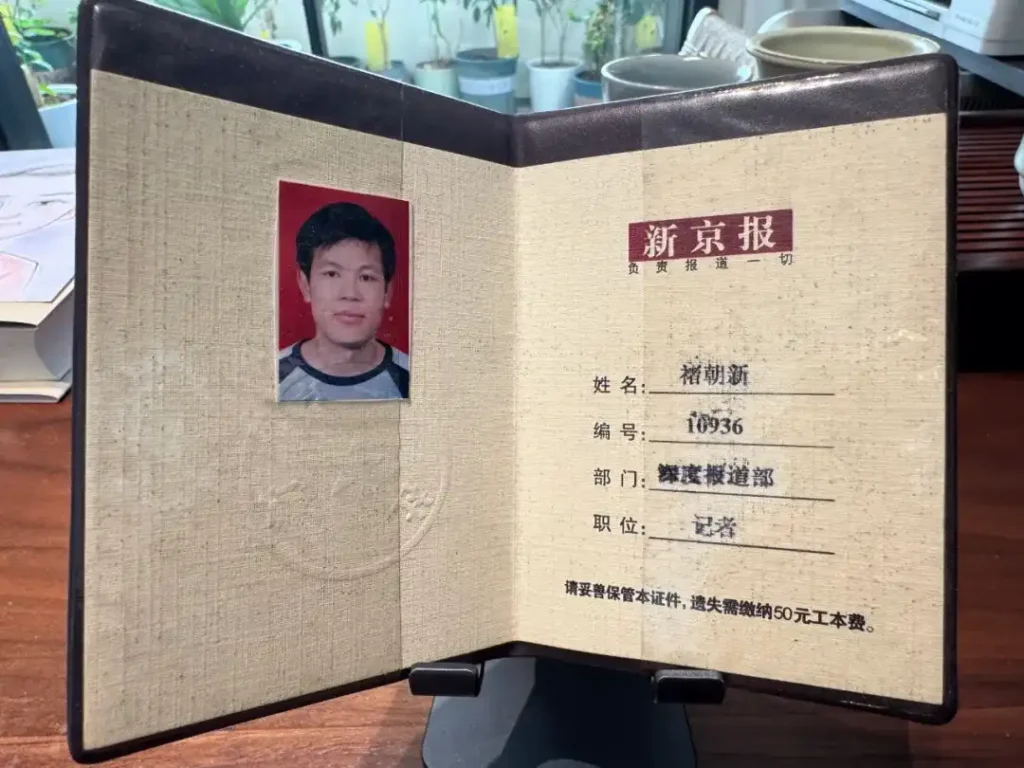
Around 2009, the work permit of the Beijing News
According to the policy, when I resigned from Wuhan Morning News, my press card had to be returned to Wuhan Morning News, which would then apply for its cancellation. Then, the Beijing News would reapply for a press card for me. In between, there would naturally be a few months or even a year or so when I didn't have a press card.
In 2011, I resigned from the Beijing News and joined Southern Weekend. Again, according to this policy, the Beijing News canceled the press card I had applied for at the Beijing News, and Southern Weekend reapplied for a new press card for me. Each time I canceled and reapplied, there would be an interval of several months or even a year or two when I didn't have a card. In 2012, I got my press card again.
I am sharing these personal experiences to introduce some of the procedures and processes for applying for a press card. Sometimes, it is indeed due to policy issues that some journalists do not have a press card. We cannot take whether a visitor has a press card as the sole criterion for judging whether he or she is a real journalist.
In addition, a large number of real-life cases show that many journalists with legitimate press cards have never written a proper news story in their lives, and some people with legitimate press cards are engaged in extortion. Some of these extortions are individual actions, and some are unit actions.
More than a decade ago, I interviewed an official who was deeply involved in a report. During my interview in the area, another media worker went to the area to extort money for this matter. I asked the official, if you have a clear conscience, why don't you arrest the journalist who extorted you? He said: We were prepared to arrest him, and we would have arrested him if the money had gone into his personal account. But later, it was found that the account provided by the person was the account of his unit, which meant that the money was not received by him personally. And the person's unit was a sub-publication of a major newspaper, and we didn't dare to offend them.
Extortion with press cards occurs from time to time. These people, they have press cards, or they have forged press cards, and they are more high-profile than real journalists, often threatening local officials, and some even shout, "If you don't cooperate, we'll have you removed from your position immediately." If the local government and officials are willing to pay a sum of money, he can immediately guarantee that negative reports will not be written, and he will also sign a seemingly formal contract with you, promising to publish a page or half a page of positive publicity.
There are too many cases of extortion using press cards. Therefore, a press card should not be the only standard for verifying whether a visitor is a real journalist. Repeatedly discussing this issue is to clarify some misconceptions, such as "not having a press card means being a fake journalist," and to reduce unnecessary contradictions and friction.
Yuan Renguo, the former chairman of Maotai, was already the general manager of Maotai in 2009, but he actually held a legitimate press card for a long time. Do you think he is a real journalist?
Cai Xin reported in 2017 that Ma Shunlong, the station chief of the Wuwei reporter station of Gansu Daily, was arrested. This person, known as the "underground organization minister" in the area, had amassed nearly 100 million yuan. Such a person is a mid-level cadre of a provincial party newspaper and naturally has a press card. Is he a real journalist?
In July 2019, the case of Miao Yingchun, the station chief of the central reporter station of Inner Mongolia Radio and Television, was sentenced. Miao was sentenced to life imprisonment for multiple crimes. Tell me, did Miao Yingchun have a press card? Of course he did, but was he a real journalist?
Not having a press card does not hinder journalists from conducting interviews
If interviews are refused on the grounds that a visiting media journalist does not have a press card, can it avoid the so-called public opinion crisis?
My personal experience shows that whether I was working at Wuhan Morning News, Beijing News, Southern Weekend, or finally at VISTA Magazine, I had situations where I conducted interviews without a press card, but I completed the interview tasks smoothly.
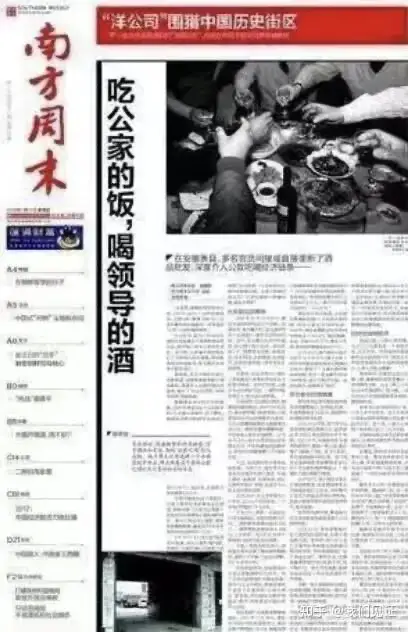
The investigative report titled "Eating the Public's Food, Drinking the Leaders' Wine" in 2012 was completed without a press card.
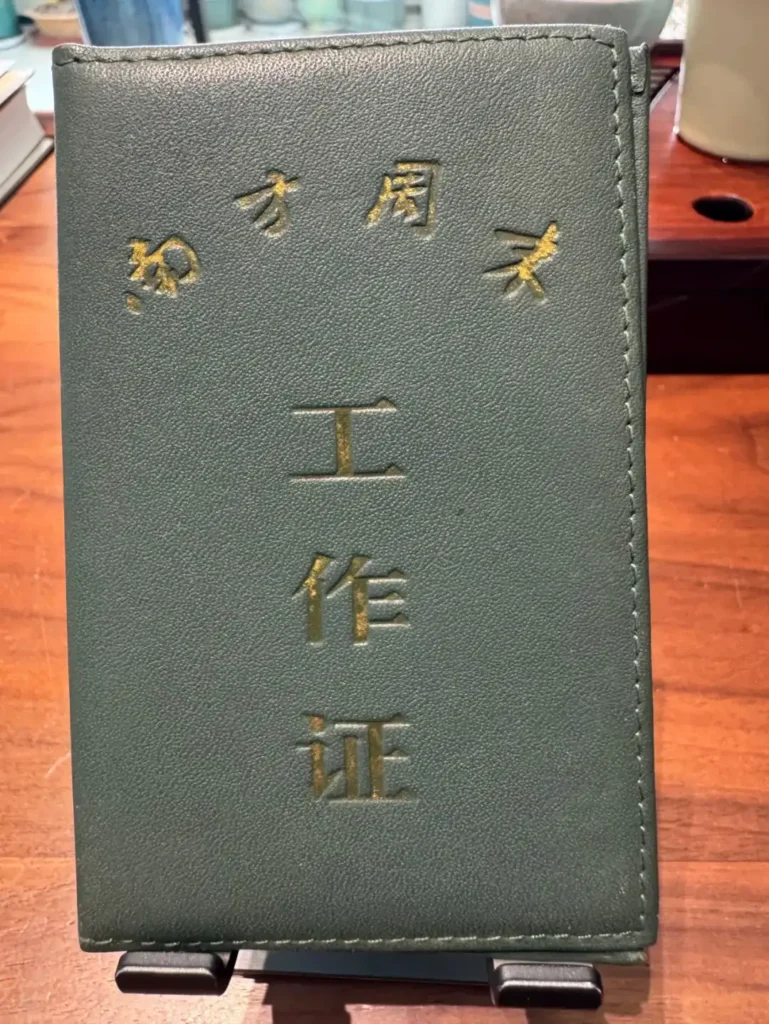
At that time, I was holding the work permit of Southern Weekend
The report exposed Xiao County, Anhui, where some officials and their relatives were agents for liquor businesses and divided up spheres of influence. The departments they were in charge of had to drink the liquor they were agents for when entertaining with public funds, and the officials profited from it; in addition, Xiao County was poor, and excessive eating and drinking was serious. I didn't have a press card at the time, and I conducted undercover visits for five days and open visits for three days. I clearly understood which officials were agents for which liquor, how they profited, and the venues for public-funded eating and drinking. I obtained a large number of receipts and other material evidence, and I witnessed the scene of many officials eating and drinking with public funds.
On April 11, 2011, Chen Feng, the director of the Xiao County Grain Bureau, hosted several of his colleagues from the Xiao County officialdom at the Yiyuan Restaurant. During the meal, a dish called "Old Rooster Grouper" was served, and the price of the dish was as high as 760 yuan. - A large number of such details in the article came from the receipts and material evidence I obtained during my undercover visits.
Without a press card, the investigation was still completed, it just took a little more time, a little more effort, and a little more running around.
Many people ignore a very important point: for a major event, the authorities care about whether there is a press card, but other groups in the area often don't care. What does this mean? This means that information channels will not be completely blocked because the interviewer does not have a press card. A journalist with professional skills, certain personal connections, and enough patience can still complete an investigative report without a press card.
What are the consequences of some local officials refusing to interview journalists because they don't have a press card? The consequence is that the journalist cannot obtain information that the authorities should disclose from the authorities, but can only obtain a large amount of opposing information. This is not the journalist's ability problem, nor is it the journalist's professional ethics problem; it is the authorities who unilaterally close the channel of communication and actively give up their opportunity to speak out. In this case, if it is a supervisory report, the local area refuses to accept the interview and actively gives up speaking out, then the report that the media finally publishes is very likely to be very unfavorable to the local area.
Refusing an interview on the grounds that a visitor does not have a press card is not a wise choice and cannot prevent a slightly more professional journalist from continuing his work, but because the authorities actively give up speaking out and unilaterally close the channel of communication, the local government will be several times more passive than if it had actively spoken out and actively communicated after the report is published.
Refusing an interview with a visiting media person on the grounds that they do not have a press card is often not really because the other party does not have a press card, but because the local government or the relevant institutions and officials themselves are unwilling to accept the interview, refuse public opinion supervision, and are afraid of the media reporting the truth. It is precisely because of this that so many interviews with press cards are also refused.
Having a press card does not necessarily mean smooth sailing
Many local government officials and enterprises like to make a fuss about press cards, saying that media people without press cards are fake journalists, especially after receiving critical reports, they like to use this as a means of counterattack.
Such a counterattack seems to be questioning whether the person writing the critical report is qualified to report the news, but in fact, it is the criticized person's dissatisfaction and resistance to the critical report itself.
In my personal experience, those local government agencies and officials who are willing to contact the media and accept media interviews do not care too much whether the visitor has a press card. What they care about is whether the visiting media journalist is really here to understand the situation and conduct a legitimate interview or is taking the opportunity to extort.
Therefore, some of my words will definitely not be heard by these officials and capitalists, because they are making a fuss about press cards not because they may face the danger of extortion. They are not afraid of extortion, they are afraid of the exposure and supervision of real journalists. For them, the problems that can be solved with money are not big problems. If they can avoid illegal and disciplinary acts from being made public, it is the least costly to spend some money to avoid disaster.
Interviewees who are fixated on the issue of whether they have a press card are mostly people who are unwilling to accept interviews. These people, because they are unwilling to accept media interviews, are looking for all kinds of reasons to refuse interviews, and whether the visitor has a press card is the best excuse for them to refuse.
Article 3 of the bottom page of the official "Press Card" clearly states: All levels of people's governments should provide convenience and necessary protection for news workers who conduct interviews with this card. However, in my 17 years as a journalist, I have had many experiences of conducting interviews without a card, and I have hardly given up an interview task because of this. On the contrary, I often encounter situations where I am refused an interview even with a press card, and I often do not enjoy any convenience and protection.
In the past, some people who were unwilling to accept interviews deliberately misinterpreted "providing convenience and necessary protection" as providing media journalists with food, drink, accommodation, and transportation, rather than arranging for the relevant departments and officials related to the media interviews to accept the interviews.
When you don't have a press card, they say you are a fake journalist and cannot accept the interview. When you have a card, they use other excuses to perfunctorily deal with media journalists. In short, they don't want to accept the interview.
In this environment, it is very important to test the professional ability of media practitioners. They cannot overly rely on the help of local government officials. They must have enough patience and professional skills to find out about a matter when the relevant government departments, officials, and enterprises refuse to be interviewed.
The report "The Survival Reality of an Overstaffed Court" that I wrote in December 2014 was completed when the court in question completely refused to accept the interview. In order to get the court to come out and introduce the situation as much as possible, I thought of many ways to communicate with the court. The first time, I waited outside the meeting room for nearly two hours and finally blocked the president.
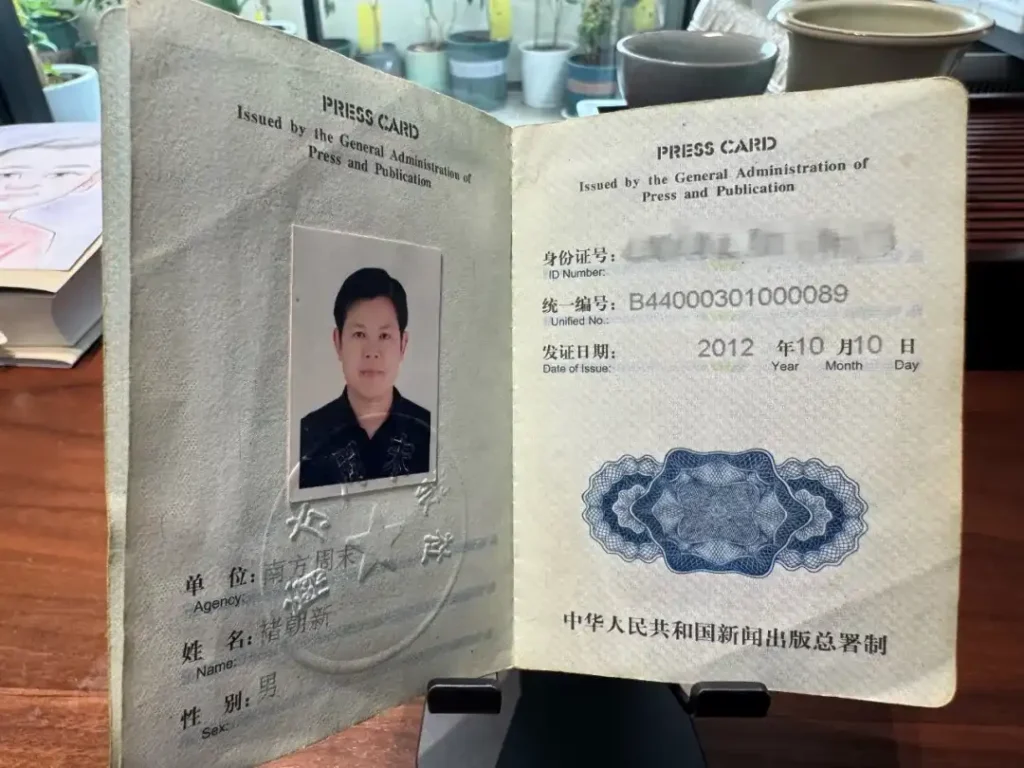
I took out my press card and handed it to him. He didn't even look at it and immediately got up and left, refusing to accept the interview. Then, I found the propaganda minister of the local municipal party committee to coordinate. After a series of phone calls, the minister finally said that he had arranged for the director of the political department of the court to accept the interview. But when I arrived at the court and met the director, he told me bluntly: I only listen to the president.
In this situation, I still successfully completed this report. After the report was published, the propaganda minister, the president, and other officials took the initiative to find me and inform me of the local rectification measures after the report was published.
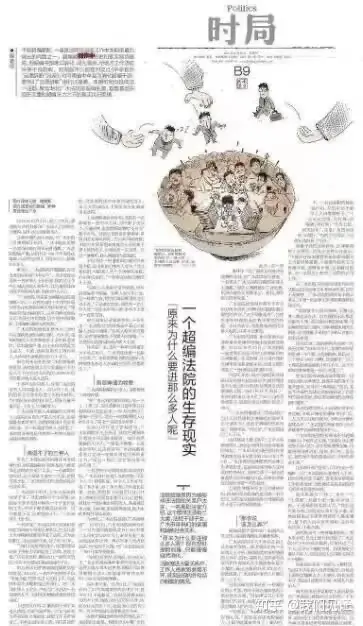
At this time, there is a sense of accomplishment called: even if you refuse the interview, I can still get strong evidence and rich and true materials to complete the news report.
On November 12, 2024, the Economic Information Daily published a report titled "Elastic Cushioning Layer 'Cut and Open', Construction Materials of Hexin Railway 'Inferior Quality' Have Safety Hazards", which revealed that multiple construction units of the Hexin Railway (Hefei to Xinyi) saved costs by substituting inferior materials, illegally replacing the "ethylene-propylene rubber elastic cushioning layer" with "recycled rubber imitations" that do not meet the railway industry standards. These imitations perform far below the design requirements and have safety hazards. Two days later, when Wang Wenzhi and other journalists continued to follow up on the investigation, they were blocked and beaten at the construction site of the Hexin High-speed Railway China Railway Seventh Bureau.
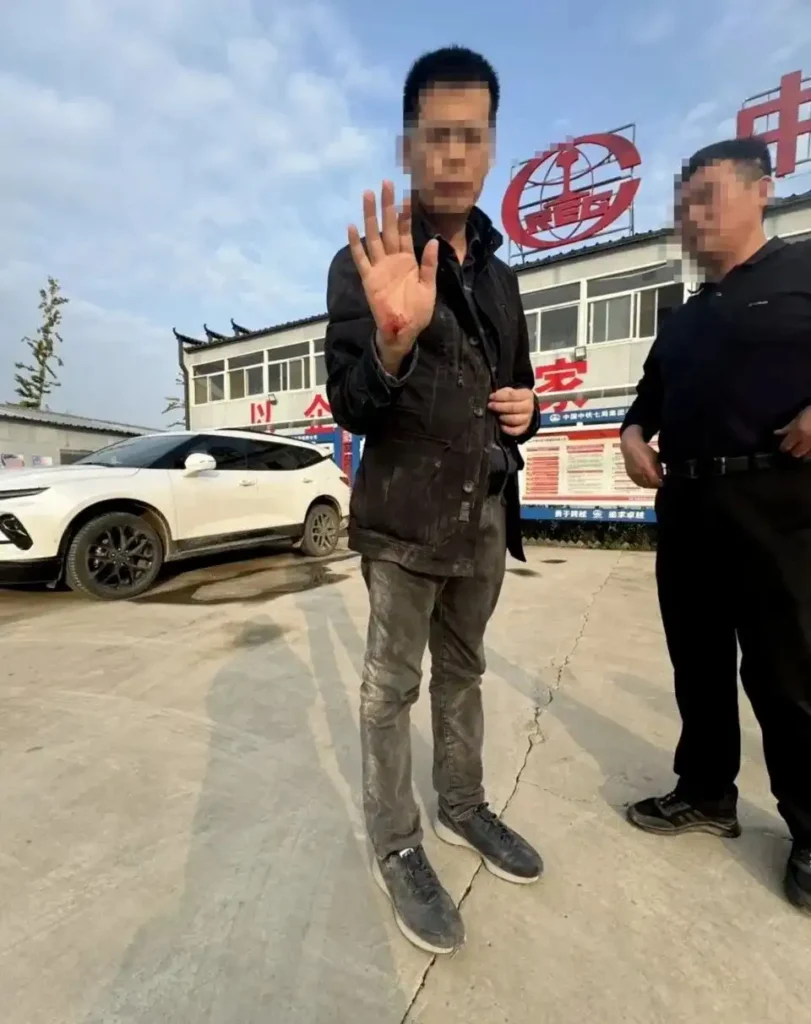
Wang Wenzhi is said to have won 8 China News Awards, so he must have a press card, otherwise how could he have won so many official high-level news awards? However, Wang Wenzhi, who has a press card, was also beaten when he was interviewing a news story involving major public interests.
The beating of Wang Wenzhi is enough to prove that many places resist journalists' interviews not because they really care about whether the journalist has a press card, but because they care whether you are supervising the point. As long as the journalist's interview report hits the nail on the head, for journalists without a press card, they will refuse the interview on the grounds that they do not have a press card. For those with a press card, they will definitely find other excuses to fool the journalist away, take them away, carry them away, or even beat them.
Therefore, sometimes whether the media is obstructed in doing public opinion supervision in the local area does not depend on whether the journalist is constructive criticism, nor does it depend on whether they have a press card, but on whether the local officials are happy to hear criticism and make corrections, or whether they want to cover up the truth, deceive the public, and evade punishment.
The local area often refuses interviews on the grounds that they do not have a press card, which is purely a perfunctory excuse or even an attempt to evade supervision. People with a clear conscience are not afraid of real journalists, let alone beat journalists. If they resort to violence, nine out of ten are "sick."
In my computer, there is a courseware for a news business lecture called "How to Complete an Investigation in a Completely Unfamiliar City", which talks about how to complete an investigative report in a situation where there are no interview resources and the local government and officials do not cooperate with the interview. There are many methods and paths, it depends on whether you have enough patience and the corresponding skills.
Many interviewees with serious problems themselves are not afraid of journalists who extort, but are afraid of journalists who only want to find out the truth without taking money. These people refuse interviews, not because they really care whether you have a press card, but because you are unwilling to be bought.
First draft on August 5, 2019, revised on March 29, 2025