

Yesterday, the main economic data for China in 2025 was released. Let's first look at a piece of data.
GDP grew by 5% in 2025, a figure that everyone has probably seen. So, what about income?
By place of residence, the per capita disposable income of urban residents was 56,502 yuan, a nominal increase of 4.3% year-on-year, and a real increase of 4.2%; the per capita disposable income of rural residents was 24,456 yuan, a nominal increase of 5.8% year-on-year, and a real increase of 6.0%.
There is also a piece of data:
The median per capita disposable income of national residents was 36,231 yuan, a nominal increase of 4.4% year-on-year.
So the data is already very clear: the per capita disposable income of urban residents increased, and the median per capita disposable income of national residents increased. Both of these figures are lower than the GDP growth rate.
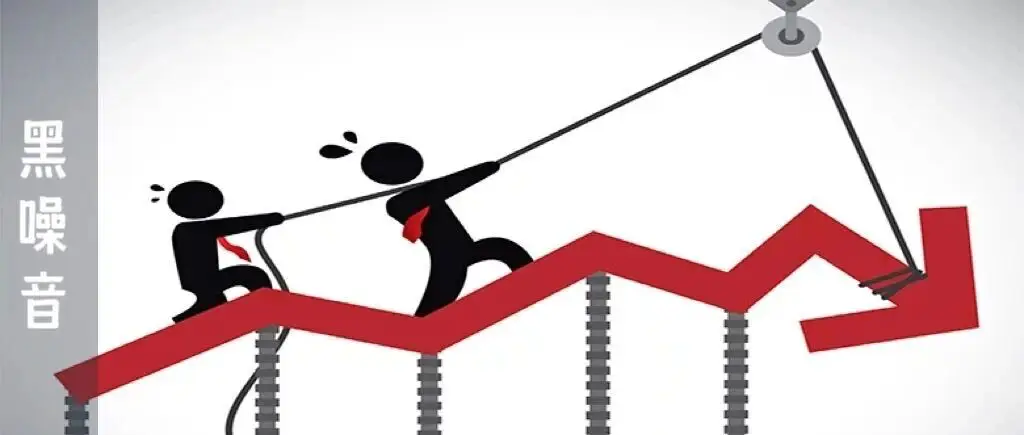
The per capita disposable income of residents is lower than GDP. This situation has not been a matter of one or two years; it is a long-term structural economic problem.
Why is this?
If we compare the national income and expenditure situation to a family account, then in this huge macro account, GDP—that is, the wealth created by everyone's work and economic activities—must ultimately be distributed among three major sectors: residents, enterprises, and the government.
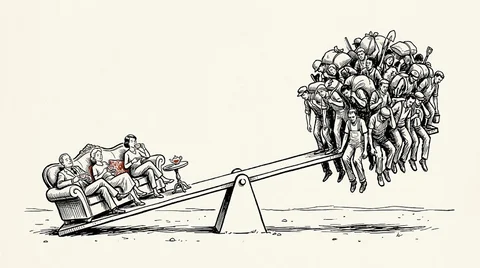
So now we see that the income growth of the resident sector is slow, and it has been slow (relative to GDP). This shows that most of the wealth has been taken away by enterprises and the government.
So, what about the situation of enterprises? As we all know, the situation of enterprises in 2025 is not optimistic. The PPI has been at a low level, and the investment returns of A-share listed companies and the overall investment returns are at a low level.
In 2025, the total profit of industrial enterprises above the designated size in China increased by 0.1% year-on-year in the first 11 months, but there was a 13.1% decrease in November alone.
Obviously, enterprises did not take away more wealth. What's more, a considerable proportion of the enterprise sector in 2025 is basically in the stage of repaying debts and repairing the balance sheet (after all, they have just emerged from the difficult period from 2022 to 2024), and they are also anti-involution, so enterprises cannot take away much wealth.
Then, besides residents and enterprises, there is only the government sector left.
Why is the macro situation stable and improving, but many people don't feel that way? The problem lies here.
In short, at this time, the significance of "repairing and stabilizing" is far greater than "growth".
"Repairing and stabilizing" means consumption. Because in a period of non-high growth, it is also necessary to fill the deficit, which is equivalent to less income and less expenditure.
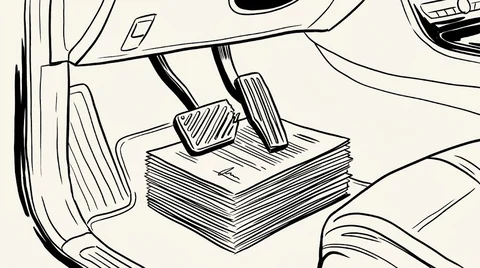
At this time, we can only be careful. Ordinary people's feelings, of course, cannot feel how good it is.
Then another piece of data confirms this point: the per capita consumption expenditure of national residents for the whole year was 29,476 yuan, a nominal increase of 4.4% year-on-year, and a real increase of 4.4% after deducting price factors.
It can be seen that the consumption data is actually lower than GDP.
In the previous data, one item was the median per capita disposable income of national residents, which increased by 4.4%, lower than GDP, which also indicates another structural problem:
The right side of the income distribution (that is, the high-income population) is pulling up the average value, while the data of the middle and left sides (middle and low income) population is "dragging its feet". In fact, there was another piece of data that also confirmed this point, that is, only 8 developed provinces (municipalities directly under the central government) in the country have per capita income higher than the national average income.
The average can be driven by high-income groups, while the median is closer to the real income of ordinary people—an annual income of 36,231 yuan.
That is, the monthly disposable income is about 3,000 yuan, which is the most common income level for Chinese people.
So, what does it mean that the median income has long underperformed GDP?
First, the fruits of economic growth have not benefited everyone well. Second, the income distribution that most people get is slower than the overall economic scale expansion.
Generally speaking, this also means that the income gap is likely to widen during the economic growth stage.
Why is "the statistics are very beautiful, but the reality is very skinny"? In fact, these are the true reflections of the data.
Some people may have noticed that the disposable income of rural residents has actually outperformed GDP, which seems to be not bad. Why is this?
In fact, it does not necessarily mean that the income of rural residents has really improved qualitatively.
The first problem lies in the extremely low base—the per capita disposable income of rural areas is only more than 24,000 yuan per year, so even if the growth is not much, the growth rate will look very beautiful.
Moreover, it is very likely that the income growth in rural areas in 2025 mainly comes from structural compensation rather than real endogenous growth.
Because there has been a large-scale return tide in the past two years, many young people and those who used to work outside have returned to rural areas and counties. Therefore, among the income improvements in this part, the proportion of income from returning to work and transfer payments is very high, and the income growth may not come from the improvement of local production efficiency.
Per capita income once again underperforms GDP, indicating that the long-term structural imbalance is still there.
In the past, this problem was actually covered up by the beauty of the economic take-off period. At that time, many industries went from zero to existence, and real estate also created a huge wealth effect for residents. The real income of people was low, especially the proportion of income to GDP was too low. This problem was actually accumulated.
When the overall growth rate declines, the problem will be exposed very obviously.
So, next, it is actually very difficult to "make the cake bigger"—after all, China's industrial output value has reached 30% of the world, far exceeding the proportion of the population, and it is unrealistic to continue to expand rapidly.
Then, "distributing the cake well" has become the key proposition for the future economy.
Looking back at many late-developing countries, from Japan's "National Income Doubling Plan" to South Korea's "Prosperity after the 1990s", they have actually gone through the process of "distributing the cake well" before the country officially entered the threshold of a developed country.
If the growth rate of residents' income is long lower than GDP, even if GDP is high, there will be three not-so-good consequences: residents' willingness to consume is sluggish; the middle class's expectations and confidence in the future weaken; growth is overly dependent on government investment, rather than the vitality and endogenous demand of the economy itself.
In fact, the so-called "middle-income trap" also means the same thing: if after the period of rapid economic growth, there is no good way to achieve the matching of national income and GDP, then the economic development momentum will definitely weaken.
In the next five years, this will be the biggest challenge facing China's economy.