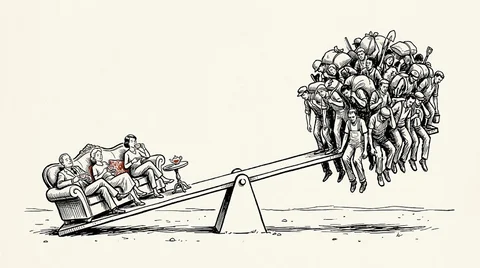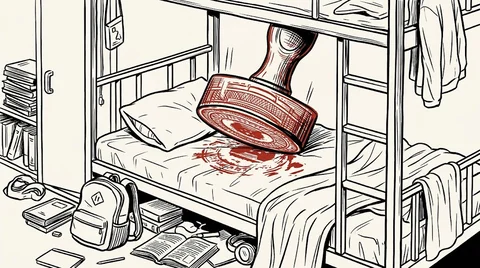


Fundamentally, the problem of "nepotism" in state-owned enterprises (SOEs) is the imbalance in the overall social distribution mechanism, and the problematic role positioning of SOEs themselves, rather than the extent of the harm caused by "nepotism" itself.
Since the beginning of this year, there has been a nationwide investigation into "nepotism" within the system. Many places have announced the results of the investigations, such as:
Xiaochang County, Hubei Province, investigated 338 cadres and employees from 6 county-owned state-owned enterprises, with 6 leads and 2 confirmed cases. Huolinguole City, Inner Mongolia, investigated 7441 cadres and employees, with 13 rectifications.
Since it is a nationwide investigation, I believe there will be more reports in the future.
From south to north, the system is in chaos, and the movement is not small, but the public response is flat. This is because they have seen too much and have little expectation.
01
The so-called "nepotism" within the system is nothing more than "keeping the benefits within the family". Relationships for positions, internal circulation, inheriting the family business, and even the grandchildren taking over are all for lofty ideals? Many are just driven by interests.
Therefore, the "nepotism" within the system has become a trend and is repeatedly prohibited, which is essentially driven by interests caused by the imbalance of distribution.
The data on the wages of employed persons in urban units nationwide in 2024 shows that the average annual wage of non-private units is 124,110 yuan, which is 1.79 times that of private units. How fragrant the "iron rice bowl" within the system is, and how great the motivation is to "keep the benefits within the family".
The widening income gap inside and outside the system began in 2010. This is not accidental, but a "byproduct" of the rapid expansion of the government's fiscal scale. In 2010 and 2011, China's public fiscal revenue was 21.3% and 24.8% respectively, second only to 22.47% and 32.4% in 2003 and 2004.
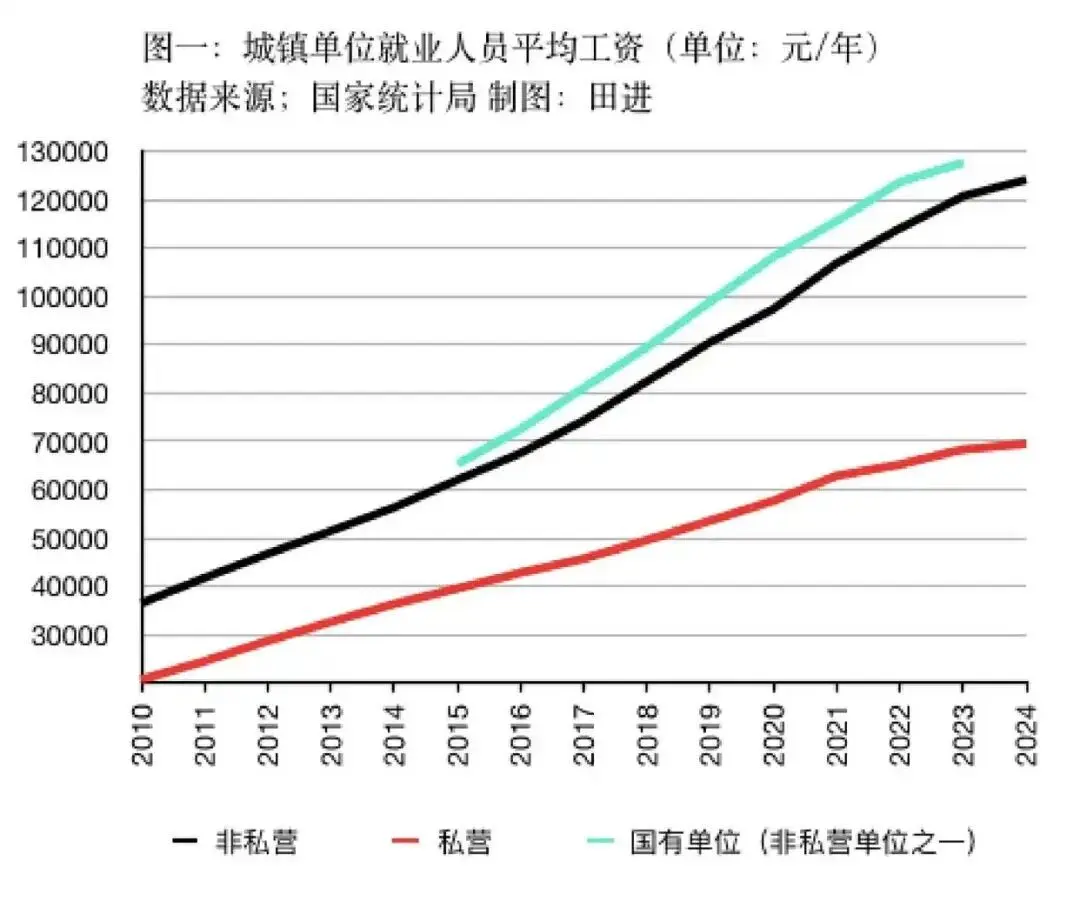
▲ Average wages of employed persons in urban units (Picture/Network)
However, the "harvest" of 2003-2004 was mainly the base effect of the tax-sharing system reform. The surge in 2010-2011 was the "further progress" of high-level growth, which was a substantial increase in the degree of fiscal absorption. And this is only the central government's finances. Many local governments rely on land finance and large-scale infrastructure for "hidden" revenue, which is even more exaggerated.
When there is more money, it needs to be spent. The income of civil servants and public institution employees who directly eat the government's "iron rice bowl" naturally rises. What is more subtle is that the income of state-owned enterprise employees has not fallen at all.
Theoretically, enterprises, whether private or state-owned, all eat "market food" and follow the market, and there should not be a large-scale deviation. However, the actual situation is not the case.
02
In fact, the salary standard management of state-owned enterprises is not market-oriented "following the market", but rigid management of "quasi-civil servants".
Nominally, the state-owned enterprise reform policy as early as 1999 clearly abolished the administrative level of state-owned enterprises, but in actual implementation, it still has to "refer to". Because it is not possible not to refer to it.
The management of China's state-owned enterprises is not recruited by the market, but a "revolving door" that circulates within the system. The identity conversion of a certain bureau director and a certain company general manager is a routine operation, and the corresponding positions and levels are unavoidable. It is not possible not to "refer to".
Since there is a general manager at the level of a director, there is a department manager at the level of a section chief, and the formation of referring to the administrative level is neat and orderly. The formation is neat from top to bottom, and the salaries of civil servant positions at the same level have increased, and the leaders of state-owned enterprises at the same level should also increase. When the leaders' salaries increase, "sharing the joy with the people" is also a matter of course. Therefore, the salary increase of state-owned enterprises is administratively rigid and does not follow the market.
This salary system that integrates politics and enterprises is seriously divorced from the market, and the disadvantages are obvious. Patches have also been made, and various state-owned asset management departments issue a set of KPI rewards and punishments linked to performance from time to time. However, this internal assessment mechanism is destined to be more form than substance.
After all, the "revolving door" is full of insiders, and the general manager of the state-owned enterprise is like a flowing water. Today's KPI makes things difficult for others, and tomorrow it will be your turn, isn't it self-inflicted? It is a small loss to lose a little income, and the insult of becoming a joke at the dinner table of former colleagues is great. Anyway, it is not their own money to pay the salary of state-owned enterprises, so they can be generous.

图/图虫创意
Therefore, during the entire economic upturn period, the government's finances are not bad, and the KPIs of state-owned enterprises are basically more rewards than punishments.
Moreover, precisely because state-owned enterprises are "enterprises", the rewards can be euphemistically called "market-oriented standards", and the standards are set very high. Even if they cannot benchmark private enterprises of the same scale, it is no problem to be far higher than administrative positions of the same level.
Artificially creating fat positions in state-owned enterprises is conducive to playing the lubricating role of the "revolving door". The rivers and lakes are not about fighting and killing, but about human relationships. Should the losers of the competition be appeased? The "retirement post" of the old leaders after retiring to the second line should also have a good place to go.
The establishment and treatment of civil servants and public institutions are all fixed, and only the cake of state-owned enterprise positions can be made bigger and stronger. You can refer to the market when you enter, and you can refer to the administration when you retreat. You can enter and exit freely, and you can collect and release at will. The self-owned land and small kitchen within the system are the unique advantages of state-owned enterprises.
Therefore, the salary standards of state-owned enterprises have never "followed the market". As long as the "revolving door" is still there, it is impossible to "follow the market". After more than ten years of "referring to", the rigidly rising salary level is naturally divorced from the masses and the market. The iron rice bowl is big and stable, and shouldn't it be the first to take care of its own people? If this profit-seeking "potential energy" is not changed, the problem of "nepotism" in state-owned enterprises cannot be solved.
Fundamentally, the problem of "nepotism" in state-owned enterprises (SOEs) is the imbalance in the overall social distribution mechanism, and the problematic role positioning of SOEs themselves, rather than the extent of the harm caused by "nepotism" itself.
03
Many critics believe that state-owned enterprises are engaged in "family-style management", using "relationships over ability", which affects the operating efficiency of state-owned enterprises. This is actually very far-fetched.
Family-style management and professional manager management are the two major schools of enterprise management, each with its own advantages and disadvantages.
The "kinship priority" of family-style management is good at low internal communication costs and high trust, and the shortcomings are conservative management style and insufficient talent reserves. The advantages of professional manager management are strong professionalism and a stronger sense of enterprise, and the shortcomings are high mobility and high human resource investment costs.
Because they have their own advantages and disadvantages, the two major types of enterprise management models have coexisted for a long time, and both have successful cases and lessons of failure. In fact, many enterprises are "hybrid". After family-run enterprises become bigger and stronger, they will consciously employ "outsiders" at all levels of management. It is also common for professional managers to introduce "quasi-kinship" mechanisms in enterprise benefits and corporate culture.
As for using "relationships over ability", the harm to enterprise management is not as great as imagined. First, the division of labor in modern enterprises is highly refined, and most positions are one radish and one pit, and the upper limit of individual ability is not very high. Second, the professional evaluation system is mature, and the lower limit of professional ability is guaranteed. Therefore, ability is not that valuable.
Moreover, enterprises do not distinguish between relatives and strangers when they "step on the pit" in employing people. Relationships are indeed not equal to ability, but does it mean that there is definitely ability without relationships? Many "211" test takers with high eyes and low hands were brought in as treasures and were disappointed and asked to leave, especially in recent years. The boss's nephew is not all playboys, and many of them are low-key and serious. Enterprise management and talent selection have never been standardized operations with a single sentence of "talent is the only criterion".

图/AI生成
Therefore, for truly market-oriented enterprises, whether it is family-style management or professional managers, and whether they use "kinship" or "talent", there is no standard answer. Different industries and different market environments all affect the management model and employment standards of enterprises. If state-owned enterprises can operate in a market-oriented manner, it is the same. On the contrary, if the role of state-owned enterprises as "not politics, not enterprises" remains unchanged, even if "talent is the only criterion", it will not work, or even cannot work.
First of all, the standards for talent selection are different between politics and enterprises. The talent standards of the administrative system give priority to obedience and discipline, and to put it bluntly, they want to "listen". And enterprise talents emphasize initiative and creativity. Talents who are creative and dare to innovate are "incompatible" with our administrative system. How many leaders can tolerate subordinates who have a new idea every day and always want to break through the rules?"
Secondly, the business attributes are not right. The business of state-owned enterprises is either administrative monopoly or administrative strong control. Running to the government is more important than running to the market. Of course, running to the government also requires "talent", but "relationships" work better. For the same thing, a talented person who is familiar with laws and regulations and can speak eloquently may be able to get it done after arguing with the competent authorities for ten days and a half months. Change to a young master or young lady, and it will be done with a phone call. Whose efficiency is higher?
Of course, private enterprises and foreign enterprises also need to consider the relationship of "matching the government", but they also need talents who understand market business. And state-owned enterprises backed by the government, when facing other market entities, are either the big party A or the big intermediary. Only others look at their faces, how can they look at others' faces? The advantage is with me, does it matter if you understand market business? It cannot be said that it is useless, but it is also limited. Therefore, in state-owned enterprises, talents who understand market business are indeed not as important as "relationship households" within the system.
Therefore, from the perspective of the management of state-owned enterprises, "nepotism" is not only reasonable, but also inevitable, and even necessary. Many "relationship households" are indeed idle people, and they may not come to work even once a month, and they only have a few phone calls a year, but they really can't function without them. Their role in communication, lubrication, and interest exchange is irreplaceable.
04
Of course, even if "nepotism" has nothing to do with the operating ability of state-owned enterprises, it is still very necessary to strictly investigate.
The "quasi-administrative" nature of state-owned enterprises has huge practical advantages under the current distribution pattern, which is an indisputable fact. The income gap of nearly twice drives "nepotism" within the system, and also drives the grassroots test takers outside the system. The former holds the real right of access, and the latter also has the banner of "talent is the only criterion" and "fairness and justice", which is the game of power VS the moral high ground of public opinion.
During the economic upturn period, with the buffer of foreign enterprises and private enterprises, the conflicts between the two sides were small. Under the pressure of economic downturn, the buffer layer becomes thinner, and the tearing intensifies. From time to time, young masters and young ladies are on the hot search, causing public opinion to uproar, which is also not a good thing.
Strictly investigating "nepotism" certainly cannot cure the root cause, but it always helps to reduce some public opinion pressure. And more importantly, the government is living a tight life, and checking it can reduce some people. Even if the number of people is reduced by a single digit, even if the mosquito's leg is small, it is still meat, and it is also considered to be reducing the burden.

图/图虫创意
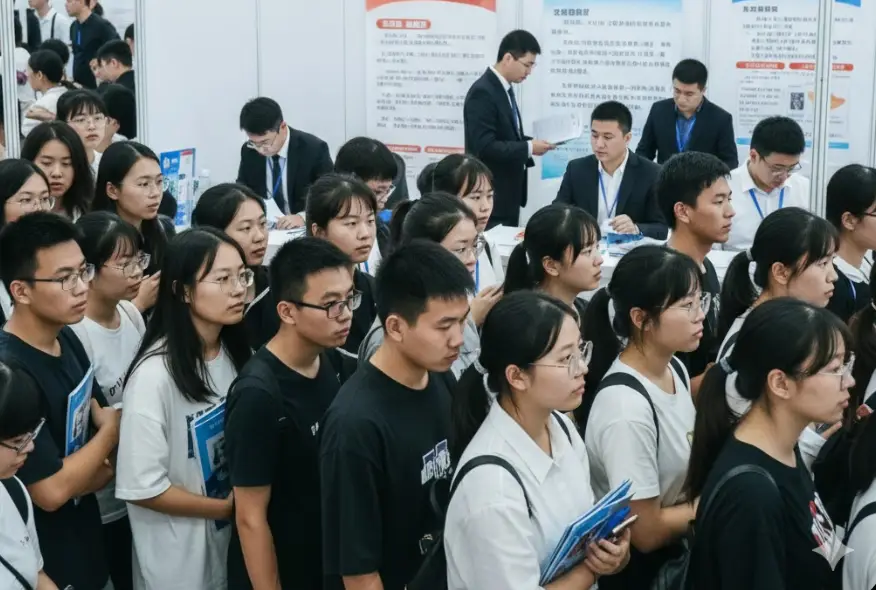
However, from another perspective, the "iron rice bowl" can't support idle people, and how much significance is there for the millions of people who are taking the civil service examination and the examination for public institutions?
In fact, on the issue of "nepotism" within the system, the mentality of test takers from all walks of life has always been quite contradictory. For individual cases, such as a certain young master or a certain young lady on the hot search, the public is indignant and the whole country is discussing it, with great momentum. However, they turn a blind eye to the systemic failures that continuously produce certain young masters and young ladies, and they take it for granted, or even flock to it. If you really want to painstakingly tell them "this is not going to work", it is mostly a sharp retort of "you can do it".
This makes people wonder whether the "talent is the only criterion" and "fairness and justice" they advocate are sincere beliefs, or just the righteous name of "join if you can't beat it"? Perhaps they themselves cannot explain it clearly.
It is human nature to seek profit. Young masters and young ladies can seek profit, and grassroots test takers can also seek profit. It is not necessary to be too harsh on them for holding up the banner of "fairness and justice". However, no matter how high the righteous name is, there must be the ability to judge the pros and cons before seeking profit and avoiding harm.