Author: Ling Ji | Public Account: Gangcheng Ling Ji
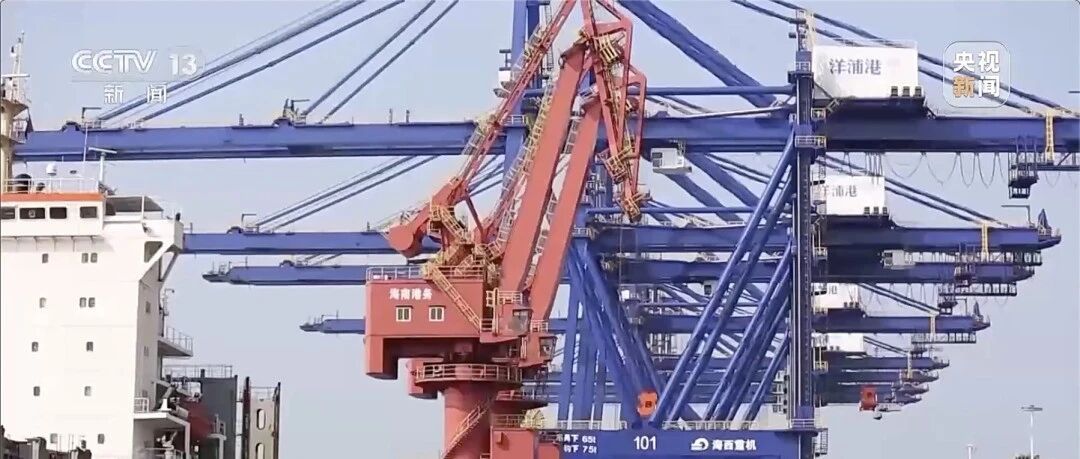
December 18, 2025 is a big day for Hainan’s customs closure. Relevant news dominated the headlines of news clients, but the capital market’s reaction was extremely cold. The Hainan sector saw a net outflow of 1.52 billion yuan from main forces throughout the day, a sharp drop of 4.2%, ranking first in the regional decline list. Why is this?
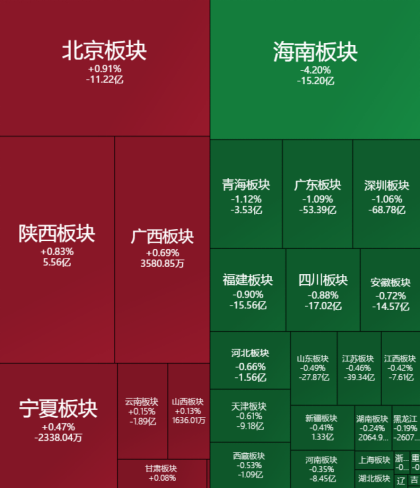
The reason for the sharp decline is that the good news has been cashed out and profits have been taken?
On the day of the customs closure, the Hainan sector of the A-share market fell sharply because the good news was cashed out and funds took profits? It seems that we cannot simply give such an answer.
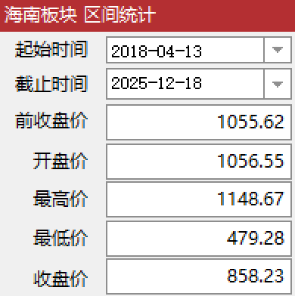
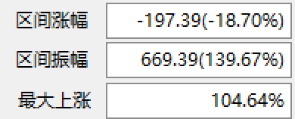
Since April 13, 2018, when it was announced that Hainan would build an independent customs-sealed free trade port, there have been a total of 1867 trading days, and the Hainan sector has fallen instead of rising, with an overall decline of 18.7%. The highest increase within the range was only 104%.
The semiconductor company Muxi shares, which went public the day before the customs closure, achieved a 692% increase on the same day. Moore Threads, which went public a few days earlier, achieved a 723% increase within 5 trading days of its listing. The market’s coldness and warmth are obvious, which shows the attitude of capital towards Hainan Free Trade Port.
Does the old special zone drag down the new free trade port?
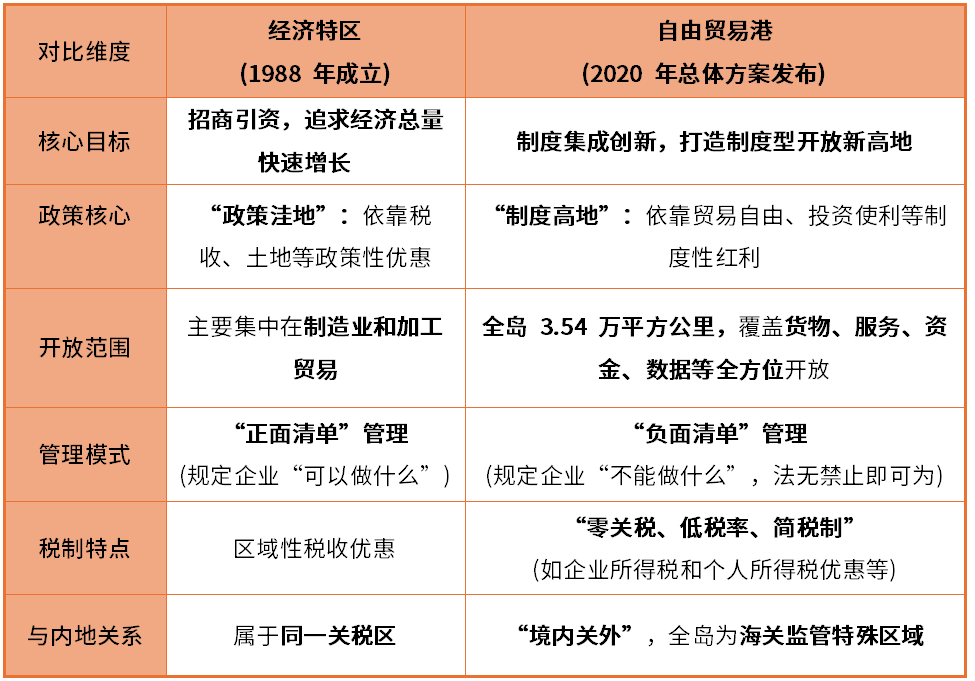
Hainan is not the first time to try to establish an independent economic entity. In 1988, Hainan established a special economic zone, which resulted in a real estate carnival. A large amount of funds poured into real estate, and tens of thousands of real estate companies appeared on the island, and land prices and housing prices soared. After the bubble burst in 1993, a large number of “unfinished buildings” were left, and bank bad debts increased sharply.
In addition, the debate over foreign investment in the development of Yangpu Port has also caused the outside world to question and waver about the special zone policy, which has also harmed the development of Hainan. Therefore, in the planning of this “second entrepreneurship”, relevant policies have avoided the previous minefields.
On the one hand, we should grasp the principle of “housing is for living, not for speculation” and strictly control the overheating of real estate. On the other hand, we have made a lot of institutional innovations. The biggest difference between Hainan Free Trade Port is that it has been adjusted from the previous positive list management to the current negative list management, and the right to development has been handed over to the market to the greatest extent.
Before the wolf and after the tiger, it is not easy for Hainan to stand out
There are more than 130 free trade ports worldwide, so Hainan Free Trade Port has to face an environment of foreign wolves and internal tigers from the moment it is born.
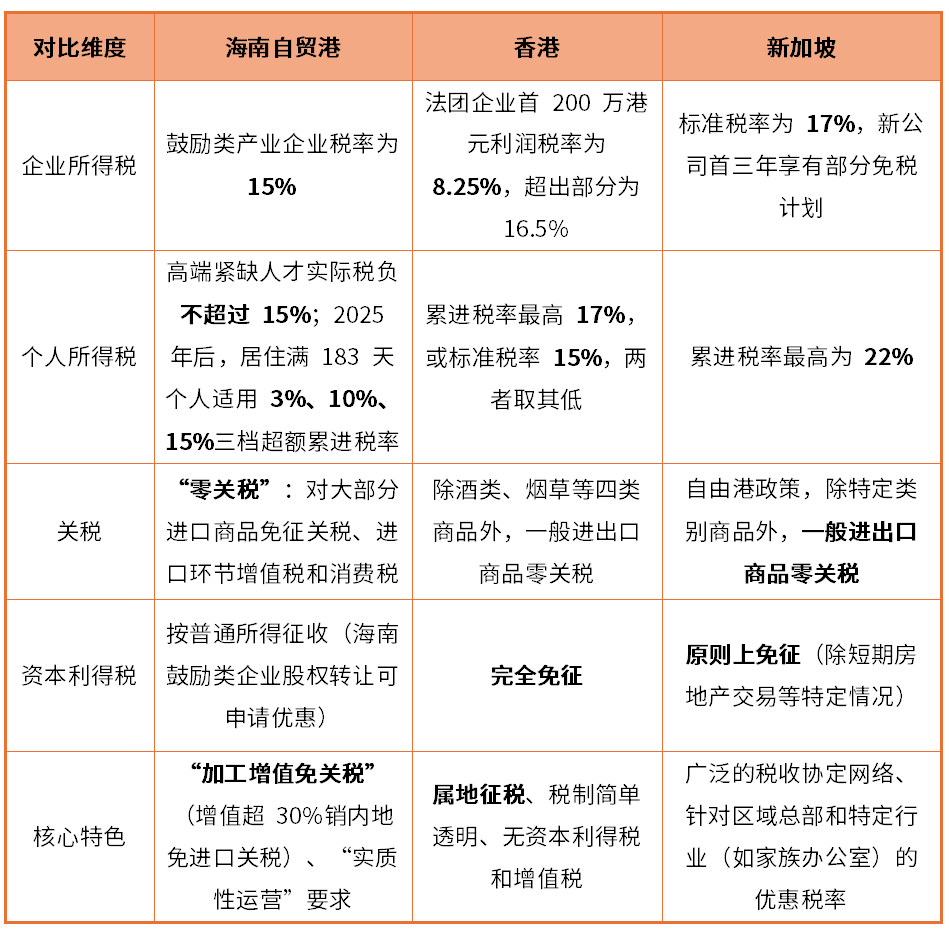
Singapore and Hong Kong are the biggest competitors externally. Both are mature free ports with zero tariffs. The former is a global supply chain hub in an excellent location, and the latter is an international financial center that grasps the key stronghold of RMB going overseas.
There have been a lot of comparisons between the three, so let’s take a look at the key tax policy comparison.
Internally, the competition is also fierce. Guangzhou Nansha, Shenzhen Qianhai and Zhuhai Hengqin also have national-level development zones born with golden keys. It is inevitable to compete for resources when everyone eats in the same pot.
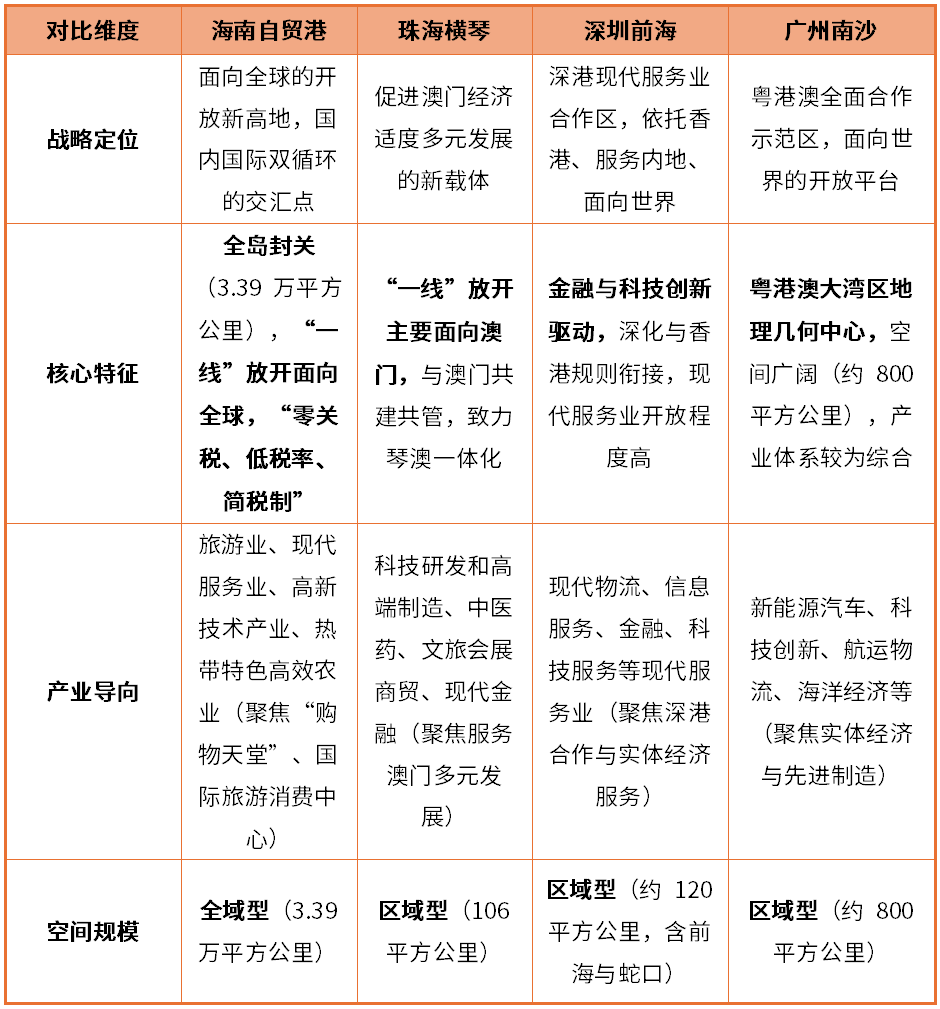
From the above comparison, Hainan Free Trade Port seems to have no particularly prominent core advantages except for its size, and from the information currently available, the positioning of Hainan Free Trade Port is not very clear. Is its main mission “going out” or “bringing in”?
Let’s first look at “going out”. China took the initiative to give Hainan Free Trade Port the qualification of an independent customs territory, but there are about 2,000 similar free trade ports and free economic zones with similar connotations and functions worldwide, but the label of Hainan’s export goods is still MADE IN CHINA, and foreign tariff policies on China also cover Hainan. The final effect of going out will undoubtedly have to be observed.
Let’s look at “bringing in”. In October 2025, the China-ASEAN Free Trade Area 3.0 version will be officially signed, and 90.3% of the goods trade tariffs in the region will be directly reduced to zero. At the same time, 43 of the least developed countries and many countries in the Pacific region will also gradually implement zero tariffs on exports to China through free trade agreements. The advantage of Hainan Free Trade Zone’s zero-tariff export of 30% value-added materials seems not to be great.
The capital market undoubtedly mainly looks at expectations. In addition to tourism, consumption and aerospace, Hainan does not have many advantageous industries, and it may take more time to prove the real development prospects.
Discover more from 自由档案馆
Subscribe to get the latest posts sent to your email.