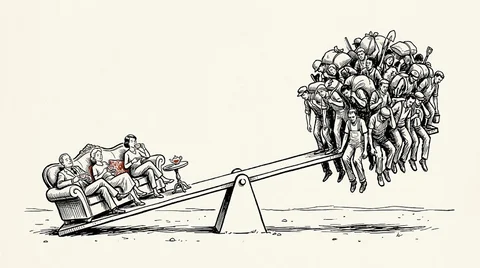


The case, where fake liquor intertwines with real power, is not only a touchstone for the rule of law but also a magnifying glass for anti-corruption. The Central Commission for Discipline Inspection (CCDI) can no longer delay; it's time to take action.
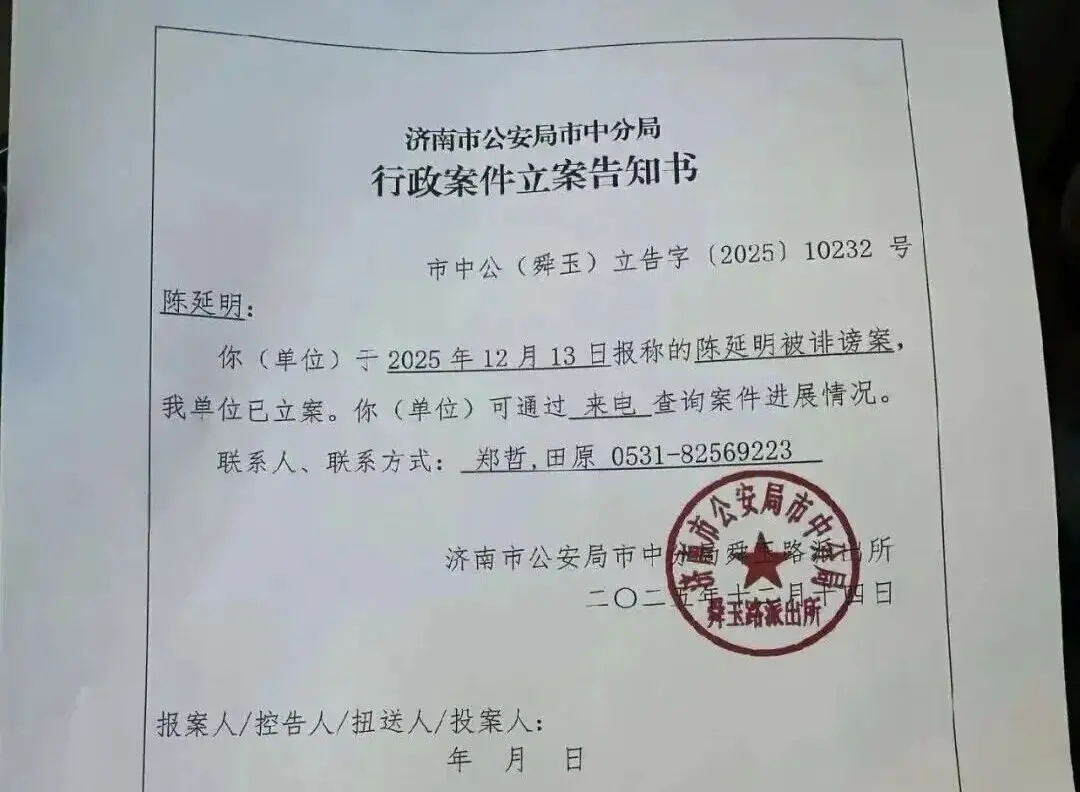
On December 13, 2025, Chen, a retired deputy provincial-level cadre at the age of eighty, filed a report alleging "defamation," claiming that certain media outlets had violated his privacy. The Shunyulu Police Station in Jinan issued a "Notice of Case Filing."
The report stemmed from a ruling by the Huangdao District Court in Qingdao in September 2025, which thrust the high-ranking official, who had been retired for 17 years, into the public eye. Chen's "butler," Li Peng, had exploited his position for two and a half years to steal and sell famous liquors like Maotai and Wuliangye from Chen and his daughter's homes, accumulating illegal profits of up to 2.435226 million yuan.
As the case entered the second instance and the details were disclosed by the media, the retired cadre Chen believed that the public opinion infringed upon his privacy, constituting "defamation."
Where did such a large amount of liquor come from? Why is the proportion of fake liquor so high? In light of the publicly known case, the CCDI should immediately take action, either to clear Chen's name or to punish the corrupt individuals.
The "house thief"'s crime and arrest
The case began in early 2021. At the time, Li Peng was hired to work in the home of Chen's daughter, Chen, serving as a driver, cook, and housekeeper, responsible for taking care of Chen's daily life.
During his employment, Li Peng gradually gained the trust of the Chen family and was assigned to take, transport, and store the liquor in the house.
Starting in April 2021, Li Peng began to use the keys and access cards he possessed to steal famous liquors from Chen's residence in Qingdao and Chen's residence in Jinan multiple times, using the method of "ants moving house."
Li Peng's theft lasted for two and a half years, until October 2023, when Chen discovered something amiss after reviewing the surveillance footage.
On the evening of October 16, 2023, when Li Peng drove to Chen's home in Jinan to commit the crime again, he was caught by the public security authorities on the spot.
The police seized Maotai, Wuliangye, and other liquors from his car's trunk, which had not yet been sold. According to the price appraisal, the value of the seized liquor alone was 14,670 yuan.
Another noteworthy detail of this case is the extremely high proportion of counterfeit liquor involved.
According to the appraisal materials submitted by the procuratorial organs during the trial, after the Guizhou Maotai Liquor Co., Ltd. appraised a batch of the involved Maotai liquor, it proved that 42 out of the 44 bottles of Maotai liquor sent for inspection were not produced by the company and were counterfeit.
Only two bottles of 15-year-old/Five-Star Maotai liquor were confirmed to be products of Maotai Co., Ltd.
The appraisal results of Wuliangye Group Co., Ltd. were equally shocking: among the eight bottles of Wuliangye sent for appraisal, four were counterfeit products, and four bottles of the seventh-generation Wuliangye liquor and one bottle of Zun liquor were genuine products of the company.
Chen's son-in-law, He, stated during the trial that at least 60 cases of Maotai liquor, two cases of Wuliangye, 20 bottles of red wine, 5 boxes of tea, and a Cartier watch, among other valuables, were missing from the house.
Theft or embezzlement?
Although the court of first instance has made a judgment, there is still controversy over the legal nature of the case.
Li Peng and his family believe that the Chen family authorized Li Peng to take, transport, and store the liquor in the house, and Li Peng took the opportunity to sell it for profit, which should be considered embezzlement rather than theft.
The difference between embezzlement and theft in law is significant: the former is the illegal appropriation of other people's property entrusted to one's care, while the latter is the secret theft of other people's property with the purpose of illegal possession.
Embezzlement is a minor crime, while theft is much more serious.
Li Peng's defense attorney pointed out that Li Peng could have stolen the liquor without supervision when driving the car alone, without the need to risk breaking into the house to steal the liquor. Since the victim claimed to have surveillance, why not provide the surveillance records.
However, the court of first instance did not accept this defense opinion.
The court, based on Li Peng's confession, vehicle entry and exit records, community surveillance videos, and the statements of the Chen family, determined that the Chen family did not authorize Li Peng to take care of the liquor and other items, and Li Peng stole them by secret means, his behavior constituting theft.
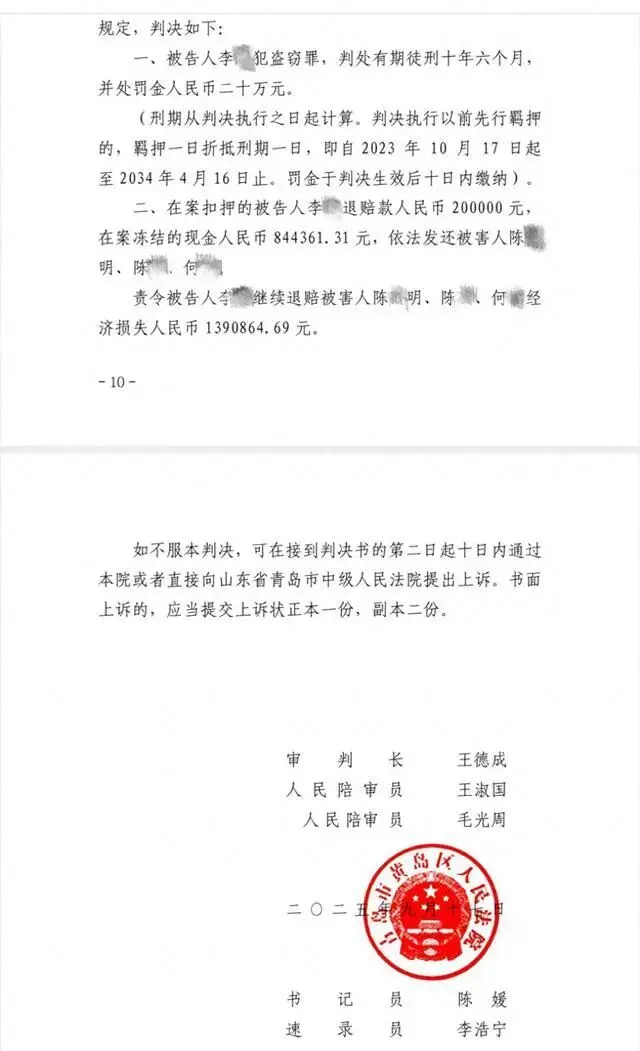
The Huangdao District Court in Qingdao, after hearing the case, held that Li Peng, with the purpose of illegal possession, repeatedly stole other people's property by secret means, the amount was particularly large, and his behavior constituted the crime of theft.
On September 27, 2025, the court made a first-instance judgment: Li Peng was convicted of theft, sentenced to ten years and six months in prison, and fined 200,000 yuan.
After the case, Li Peng's family had voluntarily compensated 200,000 yuan. Dissatisfied with the first-instance judgment, they filed an appeal on December 15, 2025. The second instance has not yet been opened.
The Vice Governor reported the case on the grounds of "defamation"
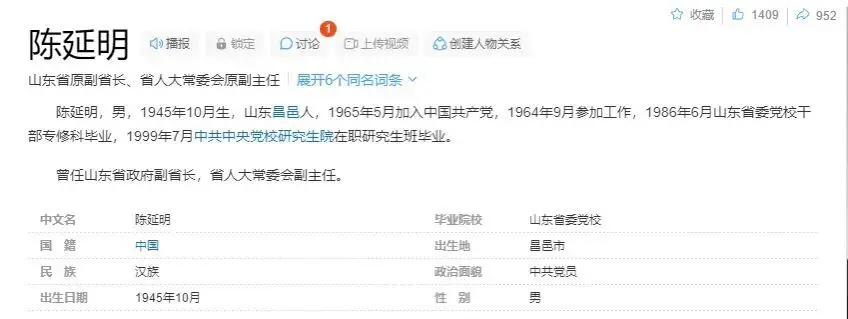
The person involved, Chen, born in 1945, served as mayor, party secretary, committee member of the prefectural committee, deputy commissioner of the administrative office, deputy secretary of the prefectural committee, commissioner of the administrative office, and secretary of the prefectural committee from 1987. From 1997, he successively served as assistant governor, vice governor, and deputy director of the Standing Committee of the Provincial People's Congress. In 2008, at the age of 63, Chen retired from the position of deputy director of the Standing Committee of the Provincial People's Congress.
This case, which seems like an ordinary theft, has at least three major questions that need to be investigated and reported by the CCDI due to Chen's special status and the unusual circumstances of the items involved:
First, does the source of the famous liquor involve violations of discipline?
Chen, who once served as vice governor and deputy director of the Standing Committee of the Provincial People's Congress, is a cadre under the direct management of the central government. If the large amount of famous liquor stored in his home was given by others, it may involve bribery or violation of the spirit of the central government's eight-point regulations. If these liquors were purchased by Chen and his daughter themselves, they need to provide purchase records to prove their innocence.
Second, the rampant fake liquor exposes regulatory loopholes, and should the liquor factories be held responsible?
The high proportion of fake liquor is astonishing. If it was purchased, Chen, as a senior cadre, bought a large amount of fake liquor but did not defend his rights, which is not in line with common sense; if it was received as a gift, the act of the gift-giver "passing off fakes as genuine" may involve fraud. Maotai Liquor Factory once claimed that the fake liquor rate was less than 1%, but this case shows that fake liquor is rampant in the high-end market, and the regulatory authorities need to trace the fake liquor chain.
Third, why does the judicial process "avoid the important and dwell on the trivial"?
The Huangdao District Court's judgment only pursued the responsibility of the butler for theft and did not investigate the source of the famous liquor. According to the "Criminal Law," theft cases need to clarify the nature of the items involved, but the judgment's avoidance of the ownership, authenticity, and background of the stolen goods weakens the credibility of the judiciary.
As the details of the case spread on social media, Chen filed a report with the public security authorities on December 13, 2025, on the grounds of "defamation," claiming that public opinion infringed upon his privacy. The public security authorities have issued a "Notice of Case Filing" to him.
However, according to the "Disciplinary Regulations of the Communist Party of China," leading cadres need to accept public opinion supervision, especially when it involves public interests. Chen did not clarify the source of the famous liquor but instead sued netizens, which was criticized as "shifting the focus."
Beijing lawyer Zhao Cong analyzed that if media professionals only extract, analyze, and evaluate the content of the first-instance judgment, without fabricating facts, and their content comes from judicial documents, then it does not constitute defamation under the law.
This case has gone beyond the scope of a theft case and involves three major issues: the integrity of cadres, market supervision, and judicial justice. Given that Chen is a cadre under the direct management of the central government, the local discipline inspection commission and supervision commission have no right to investigate, and the CCDI must intervene directly.
A theft case has torn open the hidden corners of a retired high-ranking official's home. The case, where fake liquor intertwines with real power, is not only a touchstone for the rule of law but also a magnifying glass for anti-corruption. The CCDI can no longer delay; it must launch an investigation as soon as possible, either to clear Chen's name or to punish the corrupt individuals.