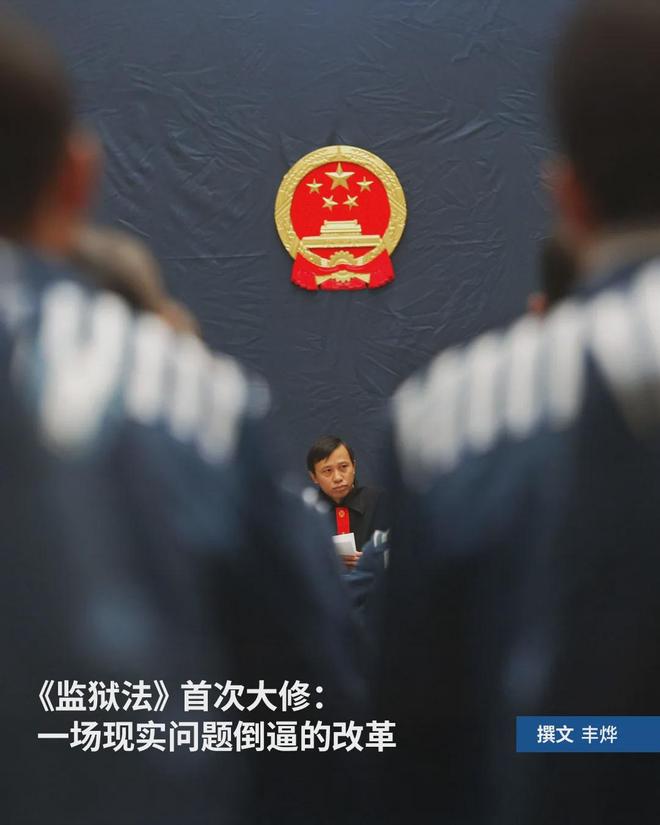
The draft of the “Prison Law” has currently entered the third review expert consultation phase. The revision brings hope, but there are still many ambiguities in the draft. For the prison system, the law still needs to overcome deeper structural obstacles to be implemented from paper to reality.
Written by_Feng Ye
Edited by_Hai Sha
Platform Editor_cc
Last September, Cheng Dongping welcomed “release education.” That day, the prison guard told him: “Don’t participate in sensitive activities after you go out, work hard, and follow the arrangements.”
He nodded and didn’t say much.
41-year-old Cheng Dongping was imprisoned for nearly 2 years. In August 2022, the Henan rural bank exploded, and he and other victims went to Zhengzhou to petition for their rights, and were later convicted of “picking quarrels and provoking trouble” and “gathering a crowd to assault state organs.”
On the last night before his release, Cheng Dongping sat in the dimly lit cell for a long time. The high walls changed him, allowing him to see some things that were originally vague—the other side of the rules, and how “power” was infinitely amplified in a closed space.
More than a year after Cheng Dongping’s release, in September 2025, the revised draft of the “Prison Law”_ (hereinafter referred to as “the draft”)_ was made public for comments on the China National People’s Congress website.
This is the first time this law, which has been in effect since 1994, has been systematically revised: the articles have been expanded from 78 to 118, with new content such as “appeal,” “basic medical care for prisoners,” “communication and visitation rights,” “social insurance continuation,” and “criminal record sealing.”
According to the Supreme People’s Procuratorate, the Central Political and Legal Work Conference held in January this year clearly proposed to promote the revision of multiple laws, including the “Prison Law,” saying that “laws are established and advanced with the times.”
Zhan Hua, a legal expert who participated in the revision of the “Prison Law,” said that the core of this revision is to make “prisons more standardized and inmates return to society more smoothly.”
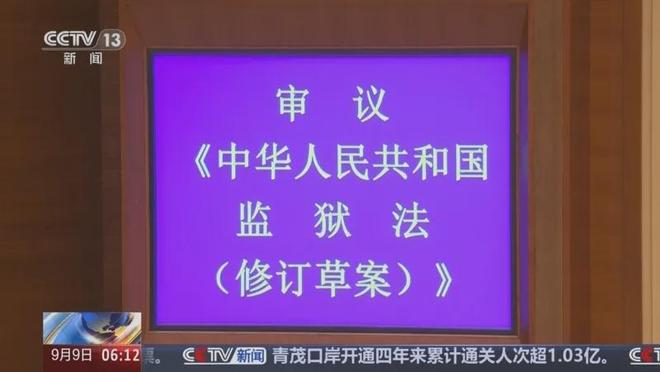
September 8, 2025, the second draft of the revised “Prison Law” was submitted to the 17th meeting of the Standing Committee of the 14th National People’s Congress for deliberation. (Picture_Network)
But he also admitted that this revision was not an active reform, but was forced out by real-world problems. The draft is currently in the expert consultation phase of the third review and is about to be voted on. He holds a positive attitude towards the future.
However, this “positive” attitude is still waiting to be implemented. Many lawyers, social workers, and people who have returned to society after serving their sentences mentioned that there are still many ambiguities in the draft; and the rights of prisoners still need to overcome deeper structural obstacles to be implemented from paper to reality.
Banlangen is no longer a “cure-all”
In the current prison system, many problems are hidden under the name of “system.” Before the draft was included in the Central Political and Legal Work Conference, the prison system had actually begun to make changes.
Luo Wang is a prison guard in a medium-sized prison in East China. It is a newly renovated modern prison, housing more than a thousand inmates, with factories, playgrounds, and medical rooms.
Two years ago, several deaths occurred in the prison area: some due to self-harm, some due to medical delays. Luo Wang remembers most clearly that in the winter of 2022, a middle-aged prisoner suffered a sudden cerebral hemorrhage. The approval procedures for treatment were reported all the way up, but when it was approved, the person was already gone. A few months later, another inmate died of the worsening of a chronic disease.
This is a major event in prison. Accountability from top to bottom followed one after another, and meetings were held one after another. The core requirement conveyed at the meeting was only one sentence—no more incidents.
Since then, the logic of medical treatment within the prison is no longer “one size fits all.” In the past, when inmates complained of physical discomfort, prison guards often judged based on experience, and for “minor illnesses,” they would throw out Banlangen or Huo Xiang Zheng Qi Shui. “Inside, Banlangen and Huo Xiang Zheng Qi Shui are ‘cure-alls.’ When the prison guards throw them out, they never care whether they work.” said lawyer Wei Jing, who is engaged in legal aid in the southwest region.
And now, in order to avoid risks, prison guards are almost responsive to every request. Luo Wang said that doing so is “to avoid things happening on their own heads.”

April 18, 2023, Sichuan Hanwangshan Prison provides health checkups and chronic disease screening for inmates. (Picture_Pengpai News)
For sick inmates, the revised draft of the “Prison Law” adds 26 articles, clearly stating that “timely treatment should be given.” Article 75 also states: “The state guarantees the basic medical care of prisoners. The drug catalog, medical service items, and medical consumables catalog for basic medical care of prisoners shall be implemented with reference to the relevant provisions of local basic medical insurance.” In other words, in the future, inmates will not only be able to receive medical保障, but also enjoy a certain percentage of medical reimbursement.
Luo Wang said that in the prison system, “doing more is often wrong” is sometimes a common saying. When prison guards report the health problems of inmates, they are sometimes sent back by the leaders—”This little problem, let him tough it out.” In addition, the prison is a miniature society with strict hierarchies, and an old prison guard’s words are enough to set the tone, and young prison guards cannot make decisions beyond their authority. Over time, regardless of major or minor illnesses, everyone simply cuts corners until a crisis occurs.
Among the inmates Wei Jing has come into contact with, some have mental illnesses and their applications for medical treatment have not been approved for a long time. Others have delayed treatment for chronic diseases and were only sent to the hospital after symptoms of anemia and kidney damage appeared.
A person who was released from prison in Hebei recalled that when he sought medical treatment for acute gastric bleeding, the prison guard thought he was pretending to be sick, and the two had a dispute. On the way to the hospital, the handcuffs were locked too tightly, and his wrists were rubbed raw. After returning to the cell, his re-examination was delayed, and the resident doctor only made routine inquiries without any examination. The medicine was often in small bags—after eating it, he had diarrhea. When he reported it, he only got the reply, “Eat it if you want, don’t talk nonsense.”
However, in terms of the physical and mental health of inmates, the clear basic medical保障 is only a part of the draft. Researchers point out that the other side of the draft is to strengthen ideological education.
For example, the draft adds “the prison work adheres to the leadership of the Party,” and adheres to the undefined “overall national security concept.” Luo Wang’s feeling is that these principles not only target inmates, but also constrain prison guards.
Since last year, the prison where Luo Wang works has to organize at least 3 ideological studies for inmates every week, covering politics, party building, legal system, and patriotic education. For the legal system content, instructors from the familiar public security system will be invited to give lectures; patriotic education will allow the squad leaders of the cells to first study the revolutionary stories in the newspapers, and then share them with others in the classroom.
Electronic screens are also installed in the prison’s labor places, scrolling through various video materials of the Party Congress. Just recently, in response to the Eight-Point Regulation, the prison also held a few days of sharing meetings in the auditorium, requiring all inmates to participate, and they also had to submit meeting notes afterwards.
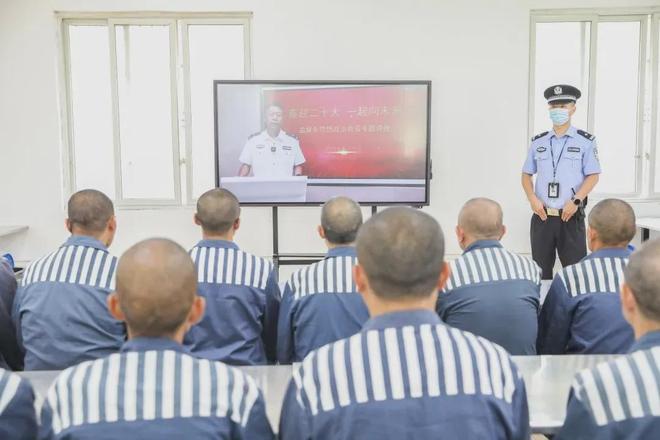
During the National Day in 2022, Sichuan Prison carried out patriotic theme education activities. (Picture_Network)
For these courses, the prison’s slogan is “turning the prison term into a semester.” For inmates, one benefit of studying is that they can get points or work points, which can be used for sentence reduction.
Luo Wang remembers that during a study of “News Broadcast,” the theme was “China-US Trade War.” An inmate wrote “American garbage” in his notebook. Luo Wang asked him why he wrote this, and the other party said seriously: “The United States only knows how to bully people. If there is a war, I will definitely stand on the side of the Party.” Luo Wang was speechless.
Sometimes, Luo Wang thinks that for inmates, not only is their physical health not guaranteed in prison, but the psychological imprints may be even deeper.
He knows that these “positive energy” courses are of no use for people’s transformation. Although there were similar study courses in the past, they would not exceed 2 times a month, and they were rarely linked to sentence reduction. He feels that if the draft is successfully implemented, similar studies may increase.
Luo Wang also feels that notes and心得 will also bring some gray areas. “It’s still okay now, but if the proportion of sentence reduction and study evaluation is linked in the future, then the subjective decision-making power of the prison guards will increase, and naturally someone will do something about it.”
Loopholes in the old law
In the rights system of inmates, the rights of appeal, accusation, and defense have long been written into law, but they are often restricted at all levels in actual implementation. Compared with the current “Prison Law,” the adjustment of this part in the revised draft is particularly critical.
The draft clearly stipulates:
“After receiving the appeal, accusation, and reporting materials of the inmates, the prison needs to transfer them to other organs for processing, and shall transfer them within five working days, and shall not withhold them.”
“Prisons, people’s courts, and people’s procuratorates shall not use the inmates’ appeal, accusation, and reporting as the basis for determining that they do not obey discipline and do not show repentance.”
“After the prison transfers the appeal, accusation, and reporting materials, it shall inform the inmates within five working days; if there are special circumstances, the extension period shall not exceed five working days.”
In Zhan Hua’s view, these three new articles are essentially a repair of the loopholes in the old law. In the past, many prisons often regarded “appeal” as a manifestation of inmates “not admitting their guilt and repenting,” which directly affected their rights such as sentence reduction and parole. Inmates were therefore in a dilemma of “wanting to appeal but not daring to appeal.”
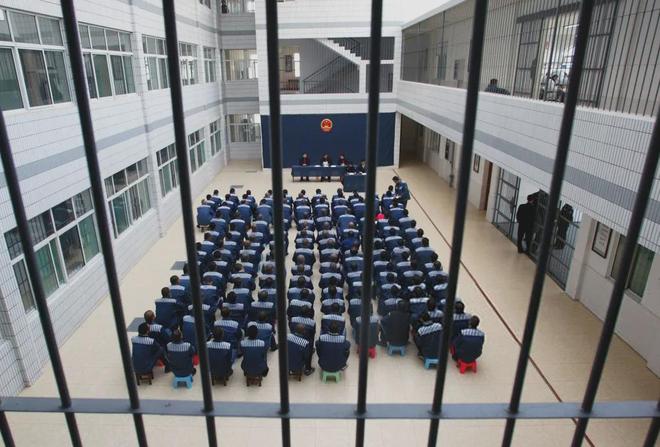
December 10, 2004, Hubei Hongshan Prison, inmates are participating in the sentence reduction announcement. (Picture_Network)
A person who was released from prison after being convicted of “picking quarrels and provoking trouble” for participating in the rights protection movement told Aquarius Era that he had tried to appeal several times, but was warned by the prison guard: “If you still don’t admit your guilt and don’t admit the penalty, I’ll let you sit in prison for life.” He knew it was a threat, but he was powerless to resist. He also found that inmates who did not admit their guilt were often “specially treated,” with higher management intensity and more difficult circumstances.
Qu Zhenhong, a criminal defense lawyer at Beijing Huayi Law Firm, said that many appeal materials were withheld internally by the prison without reason, and even inmates’ sending of documents to lawyers often encountered seizure. In the cases she has represented, some inmates were even identified as “not obeying discipline” for insisting on appealing, and were subsequently detained in other places.
Wang Fei, a lawyer at Beijing Zebo Law Firm, also admitted that even though the old law had already clearly stated that “the prison should promptly transfer the appeal materials and not withhold them,” there are still “deformed” practices in various places in the implementation.
“The prison often regards admitting guilt and repentance as a prerequisite for sentence reduction, which is in conflict with the right to appeal itself.” He explained that once an appeal is made, it means “not admitting guilt,” and even if they perform well, it is difficult to get a sentence reduction. Many appellants in wrongful cases are suppressed in this environment.
Lawyer Xu Kai, who has represented criminal appeal cases, pointed out that although the draft has clearly prohibited this binding, the current judicial interpretation of the Supreme People’s Court still retains a vague expression—”the inmates’ proper appeal must be analyzed without adding that they do not admit their guilt and repent.”
Xu Kai believes that this wording of “must be analyzed without adding” gives the implementation end too much discretion, and also makes the implementation of the new law uncertain.
“This is a matter of concept,” Wang Fei concluded. “Many prisons still regard ‘admitting guilt’ as a management goal, but admitting guilt is not obedience, and admitting guilt should not be the only standard for transformation.”
In addition to the appeal level, the “visitation system,” which is closely related to the right to appeal, has also been adjusted in the draft of the “Prison Law.”
The draft stipulates that inmates have the right to “meet with their legal representatives, close relatives, and lawyers appointed or assigned by legal aid institutions.” At the same time, the scope of visits and calls has been expanded to include “other personnel who are conducive to the transformation of the inmates” approved by the prison director.

In a detention center in Xicheng District, Beijing, a detainee is meeting with a lawyer. Whether in detention centers or prisons, many lawyers have experienced the situation of “difficult visits.” (Picture_Network)
Many lawyers have experienced the situation of delayed visits. Wei Jing said that according to the regulations of the Ministry of Justice, as long as the lawyer provides three materials—lawyer’s license, proof of law firm, and power of attorney, the prison should arrange a visit within 48 hours. But in reality, 48 hours is just a reference written on paper. “It’s normal to delay it for a few days, and it’s possible for a few months.””
Wei Jing privately learned the reasons. On the one hand, the prison does not have enough manpower; on the other hand, the person involved may be involved in sensitive cases, such as having experience in petitioning and rights protection, or continuously appealing in prison, and being judged as “not obeying discipline,” the prison will indirectly delay the review period of the visit.
Wang Fei told Aquarius Era that his application to visit his client who was serving his sentence in a prison in Tibet was delayed for eight months. And sometimes, even if the visit is realized, the process of the conversation will be layered, and once before the visit, he was required by the prison to provide a “visit outline.”
Wang Fei believes that the appearance of the draft is a positive signal, but “after the revision of the law, how to implement it is the most difficult step.”
New ambiguous boundaries
In the view of some legal professionals, one of the controversial points of the revised draft of the “Prison Law” is that it generates new ambiguous boundaries.
Article 47 of the current “Prison Law” stipulates: “Inmates can communicate with others during their imprisonment, but the correspondence should be inspected by the prison. The prison can withhold letters that are detrimental to the inmates’ transformation. Letters written by inmates to the superior organs and judicial organs of the prison are not subject to inspection.” However, how to understand “detrimental to transformation” and how to define the specific content, the current law does not clearly define it.
Based on Luo Wang’s practical experience, although there are no specific regulations, “detrimental to transformation” is divided into two.
On the surface, it refers to “not admitting guilt.” The operation of him and his colleagues is that if the letter mentions asking family members to help find a lawyer for defense, it will be directly crossed out and then uniformly handed over to the office in charge of receiving and sending letters. In most cases, these letters will be thrown into the trash.
And the way to distinguish in the dark is: “I think this is not good.” Luo Wang remembers that an inmate wrote a lot about the hardships he suffered in prison in a letter, being locked up in solitary confinement, working overtime to earn work points for sentence reduction, and also mentioned being bullied by prison guards in prison.
“This kind of content definitely cannot go out.” Luo Wang said that if something goes wrong, the family members report it, and everyone will be in trouble.
The revised draft of the “Prison Law” has made adjustments to the above-mentioned real-world problems. Article 67 clearly points out: “The prison shall protect the inmates’ right to communicate in accordance with the law. Inmates can communicate with others during their imprisonment, but the correspondence should be subject to security inspection. Letters that are found to be suspected of endangering national security or criminal activities shall be withheld and handled in accordance with the law.”
But Wei Jing’s question is, similar to “detrimental to transformation,” who should define the expression of “endangering national security,” and whether there is a clear content boundary? He worries that without external supervision and open mechanisms, vague expressions may become new “pocket crimes,” making the right to communicate in reality a mere formality.

An inmate receives a letter from a prison guard. (Picture_Network)
The restrictions on communication are not limited to the letters written by inmates, but also involve the issue of receiving letters. Xu Kai once sent a letter to an inmate, and the system showed “signed,” but the person never received it.
Xu Kai asked repeatedly, but no one told him which link the letter was intercepted in and for what reason it was intercepted. Even if family members or lawyers find that the letter has been withheld, they cannot obtain an explanation or an appeal channel. The right to communicate has become a formal right, lacking actual保障.
Some legal professionals believe that this involves another core controversy in the revision of the draft, that is, the expansion of the prison’s power boundaries.
Zhan Hua said that the prison system operates two sets of rules—one is the “Prison Law” that is open to the public; the other is the internal law enforcement manual.
The internal manual is not open to the public, but it plays a decisive role in actual operation. The prison can use it for internal supervision, implementation of norms, and self-discipline of power. Zhan Hua believes that this mechanism can indeed prevent the abuse of power to some extent, but it also means that the outside world cannot truly understand the prison’s operating logic and decision-making process.
“The outside world’s concerns about the expansion of prison power are reasonable,” he said. “But from the inside, the system also has the ability to self-restrain, especially in the past year, the judicial system has launched a series of top-down supervision actions.”
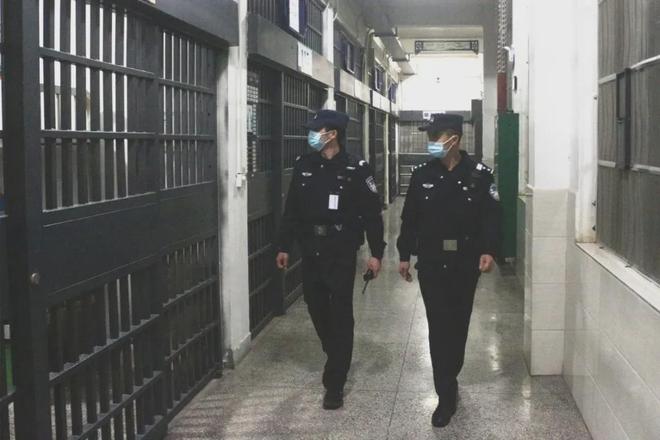
January 2025, Xijiang Prison, Guangxi, two prison guards are conducting patrol work. (Picture_Network)
This is also reflected in the draft. The revised law mentions for the first time that the prison implements prison affairs openness, and discloses the legal basis, procedures, and results in the execution of criminal penalties in a timely and accurate manner in accordance with the law, and actively accepts supervision. However, the draft also points out: “Information involving state secrets, personal privacy, and information that may endanger national security, social stability, and prison order after being disclosed shall not be disclosed.”
Zhan Hua said that the openness of prison affairs can avoid misunderstandings from the outside world and the breeding of various internal chaos as much as possible, and promote the rule of law.
But he also emphasized that the openness of prison affairs is actually a Chinese concept. In Western countries, the openness of prison affairs belongs to the content of “law enforcement openness” in government information disclosure. In our country, although the Prison Administration is affiliated to the Ministry of Justice and is a part of the government, its information disclosure does not belong to the scope of government affairs disclosure.
Labor and discipline
Although the draft has written “respect and保障 human rights” into the law for the first time, Cheng Dongping still feels a chill down his spine when he recalls his past experiences. In his view, rights are written on paper, but the reality is too thick.
In addition to system design and law enforcement practice, the labor and living conditions inside Chinese prisons have also long been of concern to international public opinion. Cheng Dongping said that in prison, raising the issue of labor environment and rights will only bring risks to himself. In prison, everything emphasizes “obedience” and “discipline.”
In the summer days, the workshop was so hot that people couldn’t breathe, but the air conditioner was not turned on because the prison area stipulated “energy saving.” Metal dust fell on the skin, and it would hurt after a long time. He once proposed whether to turn on the air conditioner or find a way to absorb the dust, but was told: “We will handle these things, you don’t have to think too much.” But the next day, his labor indicators were quietly increased.
Cheng Dongping also remembers that one day, a young man in the workshop fainted because of dizziness, but the prison guard first questioned him whether he was “deliberately avoiding labor.” The young man didn’t dare to speak, only said that he would continue to work.
He recalled that in most cases, he worked 8 hours a day, and it might be 12 hours in the peak season, but the remuneration was meager—most people could not get 200 yuan a month. But labor itself is not the most tiring, what is really unbearable is the “standard assessment.”
Each job has production targets, and if they are not met, it will affect the “performance score,” and the performance score is related to the number of phone calls, visits, and sentence reduction opportunities.
“Here, labor is not labor, and rights are not rights, but a part of the order,” Cheng Dongping said.
Regarding the labor time and labor remuneration in the prison, the revised draft of the “Prison Law” clearly stipulates: “The prison shall implement the labor time of the inmates with reference to the relevant provisions of the state on labor hours; in special circumstances such as seasonal labor, the labor time may be adjusted; inmates have the right to rest on statutory holidays and rest days; the prison shall give remuneration to the inmates who participate in labor in accordance with the relevant provisions and implement the relevant provisions of the state on labor protection.”
But Wei Jing said that from past experience, first of all, it is difficult to implement labor remuneration. The labor inside the prison, there are many physical jobs in the male prison, and the female prison is relatively easy, doing some clothing work, but the salary income is “pitiful” and related to the prison term. For example, for life imprisonment or a prison term of more than ten years, the monthly income is about a few hundred yuan. For a prison term of 3 to 5 years, the monthly income is only about 100 yuan.
Similarly, in terms of labor rest and labor time, Wei Jing said that in most prisons, the labor tasks of inmates are often linked to sentence reduction or the acquisition of rights. For example, a thief, even if sentenced to ten years, if he wants to get a sentence reduction, he must have a good attitude and actively return the stolen goods. But the reality is that many inmates are unable to pay compensation at all, and can only strive for points or sentence reduction through obedience to discipline and excessive labor. This system arrangement invisibly increases the pressure and also makes labor their “only thing they can control.”

March 7, 2008, in a prison in Chongqing, inmates are using sewing machines to work. (Picture_Network)
Taking the prisons in the southwest region that Wei Jing is familiar with as an example, inmates can only purchase three to four times of daily necessities per month, with a maximum of 500 yuan each time, and the types are limited. Snacks, seasonings, and other daily foods are strictly controlled, and the fun of life is compressed to the lowest level.
He also remembers that an inmate described to him that “eating hot pot” was the happiest moment inside the prison, but it was just a sausage, soaked in cold water, with instant noodle seasoning and pea crumbs. This clumsy “sense of ritual” is the few life comforts they can have.
The journal “Chinese and Foreign Law” pointed out in “Comparison of Prison Systems in Modern Western Countries” that when designing prisons in European and American countries, labor and education were regarded as the core of transformation.
From a system perspective, the United States provides vocational training and prison industry opportunities; France implements government-managed labor and franchise labor, with part of the income freely disposable and part used for justice or savings; Germany pays particular attention to youth education and vocational training, emphasizing social contact and transformation. Parole and out-of-prison execution systems are common, and inmates who perform well can apply for early release or temporary outings, which are reviewed by a special committee.
Zhan Hua explained that the core of the draft is to hope that through a more standardized system, on the one hand, the prison side can rely on the law and has specific implementation measures to avoid the abuse of rights in the law enforcement process; on the other hand, it can better protect the rights of inmates.
But Zhan Hua also pointed out that the prison is only the tip of the iceberg, and the operation of power in detention centers and detention places also needs attention. From a global perspective, the details inside the prison are not only a management issue, but also involve the core issues of judicial civilization, the boundaries of power, and the transformation and social return of inmates. When the boundaries of power are redefined, true judicial civilization may germinate within the high walls.
Wang Fei also holds a similar view. He believes that regardless of the revision of the draft or the recent discussion of “designated residential surveillance” and “confession dependence,” they essentially point to the same problem—the trade-off between efficiency and justice.
The disconnection of continuation
Prison scholar Rui Jiarui pointed out in “Prison Law” that the prison should bear the function of allowing people to return to the social track. This is also the meaning of the systematic revision of the “Prison Law” this time.
Compared to previous versions, Article 60 of the draft proposes “sealing of eligible criminal records”, and Article 79 concerns the “continuation and protection” of social insurance after release from prison.
After being released from prison in 2024, Kong Xi found a temporary job at a glass factory. A few days later, a colleague discovered that he was using an Apple fourth-generation phone, and his past of theft and imprisonment was thus revealed. The boss didn’t ask any questions and let him go the next day, without paying his wages.
Kong Xi admitted that he had made mistakes, but felt that, “Once you go in, you’re dirty, and you can’t wash it off.”
Later, he tried no less than 20 jobs, the shortest of which lasted only a little over ten days. Either the salary was so low that he couldn’t survive, or the other party would fire him once they checked his criminal record. He could only borrow someone else’s account to drive Didi, and he couldn’t last long at all.
Some people who were released from prison after participating in public events also said that when applying for jobs, companies of a certain size would require a certificate of no criminal record, which became a high wall that he could not overcome, and he had no choice but to change his name.
Cheng Dongping said that there is a saying outside that “a criminal record lasts a lifetime”. Once a criminal record is left, it is difficult to find normal employment. In reality, even security guards and online car-hailing drivers need a “certificate of no criminal record”.

Currently, many companies require applicants to provide a certificate of no criminal record, which has become an insurmountable hurdle for many people who have been released from prison for minor crimes to return to society. (Photo_Jimu News)
Lawyer Jin Hongwei has always been concerned about the issue of “minor criminal records”. He once wrote that “a criminal record lasts a lifetime” has essentially become a form of additional punishment. More than 40 laws in China, such as the “Civil Servant Law” and the “Teacher Law”, stipulate the deprivation of the qualifications of those who have been subjected to criminal punishment.
Data from the book “Introduction to Offender Correction” shows that among those who re-offend, more than 60% are unable to find employment after release.
Zhan Hua believes that the core of criminal record sealing lies in protecting individual rights, and even if a crime has been committed, their social rights should not be deprived due to the unlimited use of the record. Relevant authorities should, as far as possible, treat them as a “no criminal record” status when handling personal affairs. For example, when issuing a certificate of no criminal record, even if there is a minor crime, sealing should be allowed.
He also stated that the practices of Germany and the Nordic countries are also based on tolerance and the protection of rights, but domestic systems have not yet been fully implemented. Currently, for minor crimes (such as cases of three years or less or a maximum sentence of six months), ways of issuing sealed certificates are being explored, and the sealing period is still controversial, with less than one year being considered more reasonable. Due to the limitations of the legislative theme, the Prison Law itself cannot directly solve the problem of criminal record sealing.
The magazine “Caixin” also mentioned in a recent report “How to Seal Minor Criminal Records? Research Suggests Piloting with Dangerous Driving Crimes” that the research group of the Supreme Court Advisory Committee believes that people released from prison have long suffered discrimination, and some permanent consequences of criminal records are equivalent to declaring “social death”. The research group suggested that some crimes should be selected for pilot projects first, and then the practical experience should be summarized to improve legislation; and it is recommended to give priority to crimes such as dangerous driving, which have a large number of cases and a wide social impact.
Qu Zhenhong pointed out that some civil servants or employees of state-owned enterprises involved in corruption have their social security suspended after serving their sentences, and their re-employment and medical treatment are affected after their release. If the Ministry of Justice and the Ministry of Human Resources and Social Security can solve the problem of social security connection through supporting regulations, it will play a key role in their social reconstruction.
Li Jian was previously a departmental-level cadre who was imprisoned for seven years for corruption, and later had his sentence reduced by two years. After his release, he had no social security or medical insurance. In order to regain retirement security, he could only re-pay nearly 200,000 yuan in insurance premiums.
The draft also mentions judicial correction and assistance, and adds clauses such as psychological counseling and social adaptation education, requiring prisons to pay attention to the mental health of prisoners, help them restore social functions, and reduce the risk of re-offending. But in the eyes of Zhu Cong, the founder of the Di Yi Social Work Service Center in Changsha, starting over is not just a slogan for those released from prison, but a long reconstruction.
This social work service center mainly rescues and assists homeless people on the streets. According to her statistics, at least half of the homeless people have criminal records. Over the past few years, she and her colleagues have assisted them in reintegrating into society through long-term case companionship—supplementing documents, finding places to live, and rebuilding their life rhythms.
Zhan Hua also stated that among the experts who made suggestions, there are also scholars who pointed out that the State Council had proposed in a relevant announcement to call “people released from prison” as “people returning to society”. He said that eliminating the stigma in the name may also be an important step in helping them reintegrate into society.
Cheng Dongping said that some problems cannot be changed by people and laws. However, the telling itself may be a form of resistance, and may bring about change.
(Cheng Dongping, Li Jian, Luo Wang, Wei Jing, Kong Xi, and Zhan Hua are pseudonyms in the text)