

Recently, news related to academic fraud by Guo in Jiangsu University of Science and Technology has been widely circulated online. According to netizens, Guo once served as the chief scientist and doctoral supervisor of Jiangsu University of Science and Technology, but in fact only had a high school education; in addition, the descriptions of scientific research achievements, awards, honors, etc. in his resume were obviously inconsistent with the facts, and he was suspected of academic fraud and embezzlement of national scientific research funds.
In response to these online rumors, on November 18, the official Weibo of Jiangsu University of Science and Technology issued a notice stating that the school had launched an investigation procedure. "After investigation and evidence collection, it was determined that Guo had serious academic misconduct, and the employment agreement with Guo had been terminated in accordance with regulations, and appropriate arrangements had been made for Guo's team of teachers and students. At the same time, the school reported the case to the public security organ at the first time, and the case is currently being investigated."
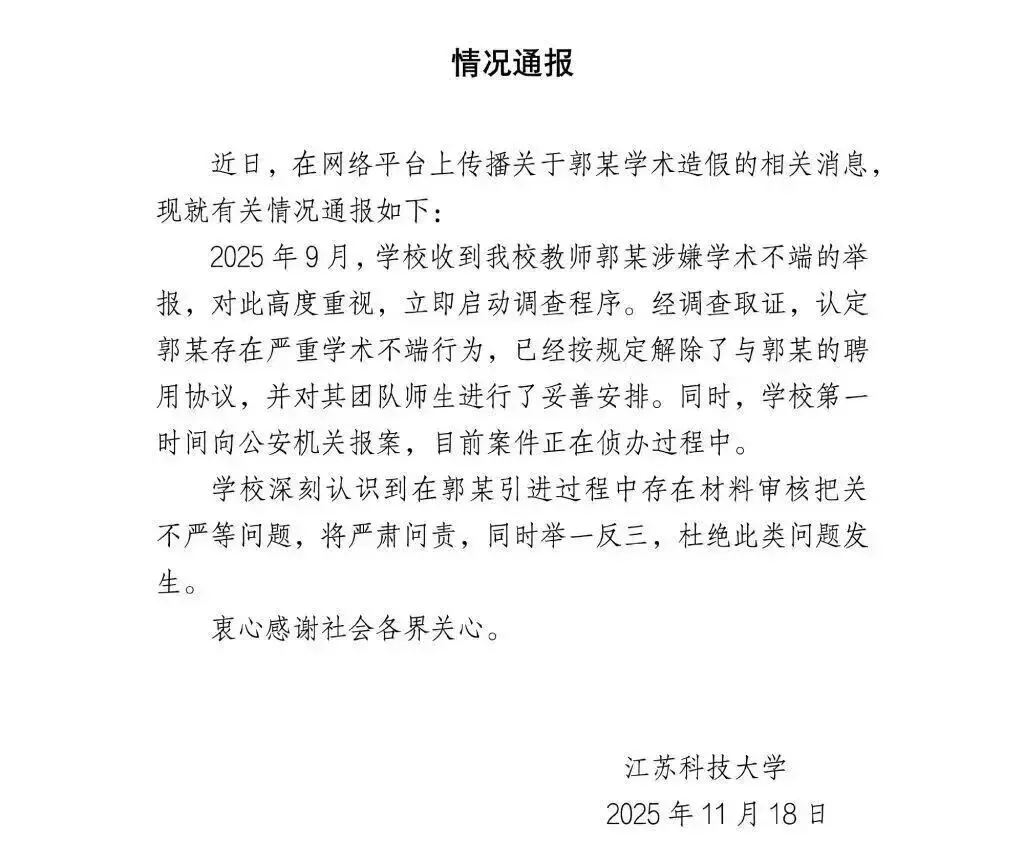
Jiangsu University of Science and Technology issued a notice Source: School's official Weibo
The online buzzword "When you go out, your identity is given by yourself" has become a reality in the Guo incident. If the online information is true, how did a liar with only a high school education break through the review mechanism of high-level talent introduction in universities, making the rigorous academic appointment and supervision system a mere formality? How did he, as a professor and doctoral supervisor, calmly carry out the so-called "teaching and scientific research" for two years without arousing any suspicion from those around him?
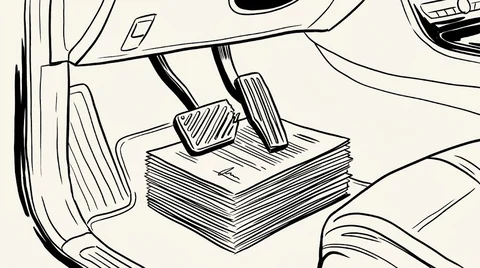
This is not only an academic fraud incident at the individual level, but also a mirror reflecting the failure of the operation of the academic evaluation and supervision mechanism in universities. Some netizens lamented that "this world is indeed a makeshift band", although it is a joke, it also reflects a fact: if the system itself fails to operate, then the appearance of "liars" is only a matter of time.
Our handling of Guo's academic fraud is not without legal basis. In fact, from the "Ten Standards of Professional Conduct for Teachers in Universities in the New Era" to the "Measures for the Prevention and Handling of Academic Misconduct in Institutions of Higher Education" and the "Regulations on the Disciplinary Actions of Public Institution Staff", China has established a relatively complete system of academic governance norms in form. The key to the Guo incident is not that there is "no rule to follow" for the regulation of such behavior, but that "rules are not followed" or "not strictly followed" in practice.
According to the provisions of the "Measures for the Prevention and Handling of Academic Misconduct in Institutions of Higher Education", fabricating scientific research data and materials, or fabricating facts and fabricating false research results, providing false academic information in the process of applying for projects, achievements, awards and job evaluation, etc., are all academic misconduct (Article 27); if there are circumstances such as "multiple implementations" and "causing adverse effects", it should be determined as serious (Article 28).
In this regard, universities have the right and obligation to make a series of treatments or disciplinary actions, including criticism, termination or revocation of relevant scientific research projects, revocation of academic awards or honorary titles, dismissal or dismissal, demotion, and expulsion, based on the determination of the academic committee.
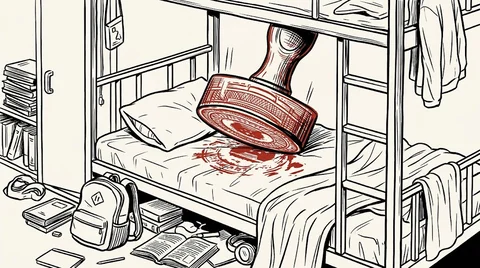
The notice of Jiangsu University of Science and Technology stated that the employment agreement with Guo had been terminated, but if Guo's academic fraud is verified, all titles, projects, and honorary titles obtained by his misconduct should be completely revoked; at the same time, the school should also put forward processing suggestions to the relevant competent authorities (Article 29). In addition, according to Article 30 of the Measures, the school should also issue a formal processing decision, clearly recording the facts, processing basis and remedies.
One of the issues of particular concern to the public is how to deal with the national scientific research funds that Guo is suspected of embezzling. In this regard, Article 13 of the "Regulations on the Disciplinary Actions of Public Institution Staff" clearly points out that the property and property used for violations of laws and regulations obtained by staff of public institutions, except for those that should be confiscated, recovered or ordered to be compensated by other organs in accordance with the law, shall be confiscated, recovered or ordered to be compensated by the unit that makes the disciplinary decision; if it should be returned to the original owner or the original holder, it shall be returned in accordance with the law; if it belongs to state property or should not be returned and cannot be returned, it shall be turned over to the state treasury.
This means that the investigation of the fund issue involving Guo should not stop at the internal processing of the school, but should be connected to the judicial process, and further verification and processing should be carried out by judicial staff.
In this incident, the university's negligence also needs to be held accountable. According to the provisions of the "Measures for the Prevention and Handling of Academic Misconduct in Institutions of Higher Education", universities have the legal obligation to actively investigate and handle academic misconduct clues involving personnel of the school (Article 14). If the university shirks responsibility, conceals and shields, and fails to investigate and deal with the matter, the competent authorities can directly intervene in the investigation (Article 37); if adverse effects are caused due to untimely and unfair handling, or if academic misconduct is organized for the purpose of seeking benefits, the competent authorities should hold the relevant leaders of the school accountable and issue a notice, and revoke the relevant rights and interests obtained by the university (Article 38).
These clauses clearly stipulate the responsibility of universities in academic governance. Whether the relevant leaders of the university in the Guo case should bear the corresponding responsibility remains to be further investigated.
In addition, the case may also involve criminal offenses. If it can be verified that Guo used fabricated academic qualifications and academic achievements to defraud national scientific research funds, the act has been suspected of violating the crime of fraud in the "Criminal Law of the People's Republic of China" - illegally occupying public property by fabricating facts and concealing the truth. If the relevant personnel of the school have conspired to commit fraud or accepted bribes, they may constitute accomplices of the crime of fraud or bribery-related crimes.
A person with a high school education can actually teach in a university for two years, lead a team, guide students, and obtain honors and funds by virtue of false packaging. We have to ask: Is it that the liar's deception is too clever, or is the university's system too childish?
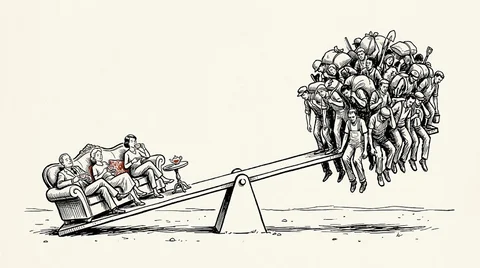
The Guo incident also reflects the alienation of the current academic evaluation system in universities. The assessment of teaching and scientific research personnel emphasizes "hats" but neglects ability, emphasizes quantity but neglects quality, and emphasizes results but neglects the process. When academic value is simplified to the number of papers, project levels, and talent titles, it will inevitably give rise to a style of seeking quick success and instant benefits, providing a space for "packaging" scholars and opportunists.

Guo in this incident is obviously familiar with this set of evaluation systems in the academic world. His various glamorous and high-end packaging is the "perfect product" after the precise calculation of this alienated and distorted evaluation system, and finally earns himself a considerable material return.
In today's world where the Internet is so developed and information is highly transparent, Guo could not have thought that his fabricated false background would be exposed by netizens, but he still dared to take risks. In addition to his personal moral misconduct and disregard for laws and regulations, it also reflects that the implementation effect of the current academic misconduct punishment mechanism is not ideal.
Although documents such as the "Ten Standards of Professional Conduct for Teachers in Universities in the New Era" have repeatedly emphasized that university teachers should abide by academic norms and clearly stipulate disciplinary measures, in practice, after some academic misconduct occurs, some universities or scientific research units tend to "internalize" and downplay the handling, considering the maintenance of the unit's reputation, leading to the suspension of the system and insufficient deterrence.
When the cost of violation is far lower than the expected return, academic misconduct is transformed into a kind of "high return, low risk" speculative behavior, and the occurrence of the Guo incident is not unexpected.
This also reminds us again that the maintenance of academic integrity cannot only rely on personal moral consciousness, but also requires the rigid constraints and guarantees of the system. Only by making every act of fraud bear the legal consequences it deserves, and making every review checkpoint truly bear responsibility, can the hall of academics not be reduced to a place of fame and fortune for liars.