

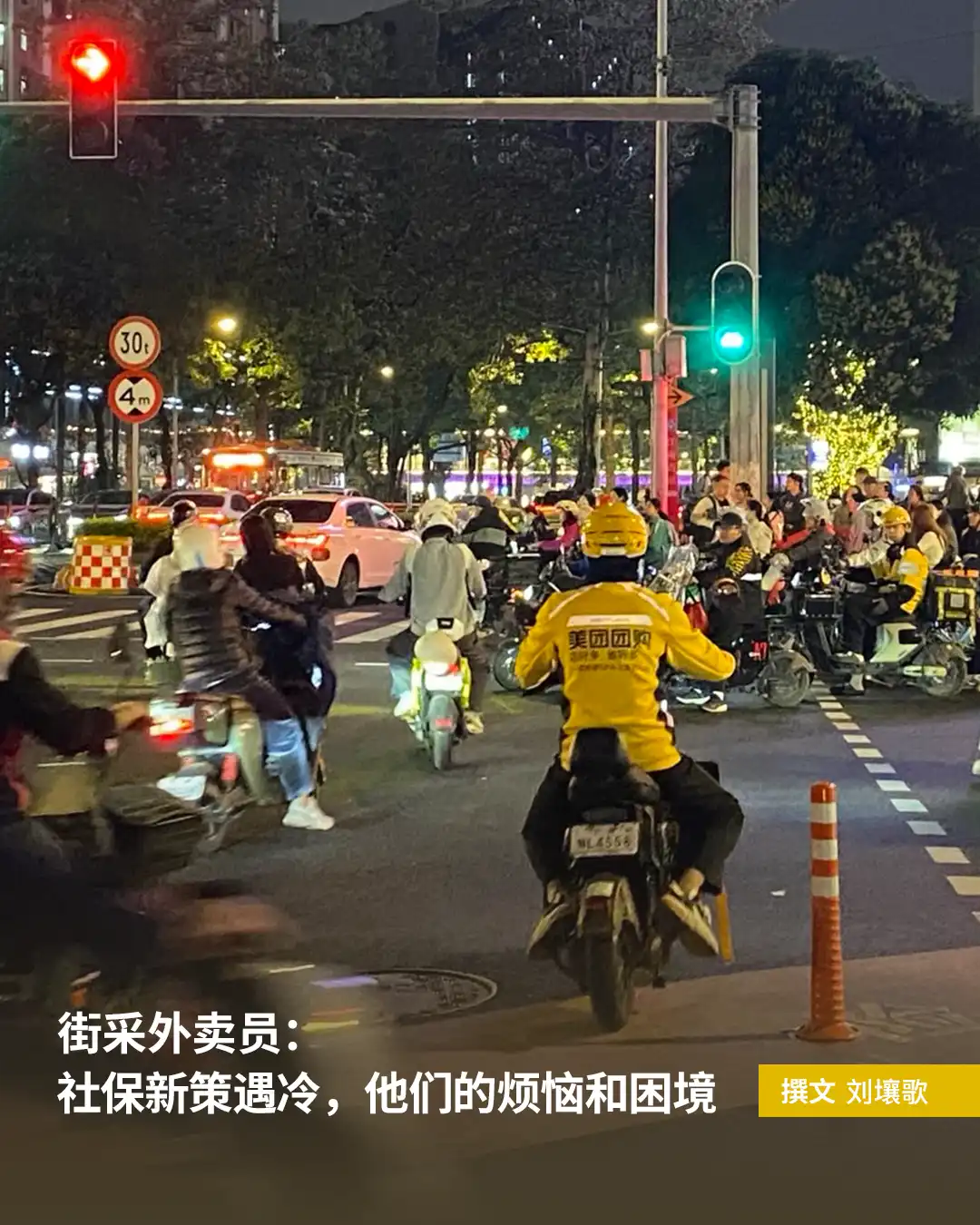
When the effort to protect riders' rights becomes a bargaining chip in business competition, how much do the riders actually benefit? In the mid-to-late March, Aquarius Era randomly interacted with more than a dozen delivery riders on the streets of Guangzhou. Surprisingly, almost none of them were happy about the new social security policy, and most of them had their social security payments suspended. Also, no one took the initiative to ask whether the platform's promise had been fulfilled. What they cared more about was: whether there were any orders to dispatch, whether their accounts were "wasted", and whether they had enough money to send home this month.
Rider Li Bin said directly: "I can only get my pension at 63, and I may not live that long." Social security seems too far away from their daily thoughts and concerns.
On April 21, JD.com released an open letter, stating that a competing platform "forced riders not to accept JD.com's instant delivery orders, and if violated, would take measures to ban them." In the open letter, JD.com also condemned the competing platform for "not paying five insurances and one housing fund for any rider for more than a decade." Photos of Liu Qiangdong wearing JD.com's delivery uniform delivering food to users in Beijing on the same day also spread quickly. Meituan responded with an announcement, claiming that the information spread by "a certain platform" was a rumor, and a screenshot of a "Dada JD.com Instant Delivery Action" group announcement showed that "a certain platform" clearly required full-time riders not to run orders from other platforms—it was not Meituan that restricted riders' choices.
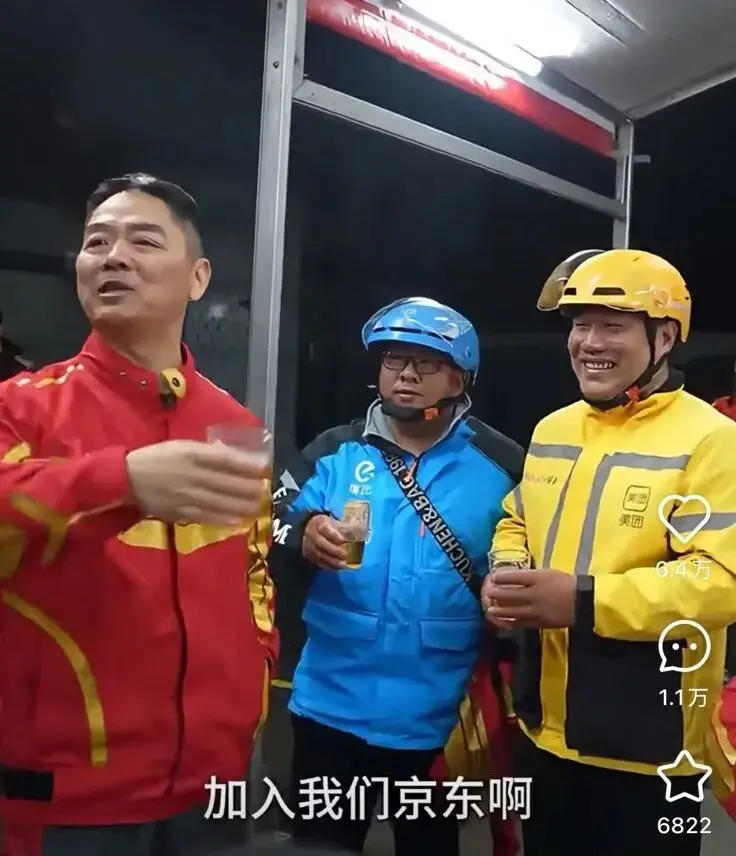
On April 21, a video of JD.com CEO Liu Qiangdong inviting riders to dinner circulated on social media. (Image_Screenshot from Xiaohongshu)
The verbal business war between JD.com's upstart delivery service and Meituan and Ele.me has been going on for nearly two months. The "social security promise" of the food delivery platforms became a hot topic in March. JD.com announced that it would pay five insurances and one housing fund for full-time delivery riders starting March 1; Meituan followed suit, also stating that it would pay social security for special delivery and "stable part-time" riders nationwide; Ele.me claimed that it had already started pilot programs in some cities in 2023.
On April 3, Meituan announced that it had launched the first pilot program for pension insurance subsidies for delivery riders in Quanzhou, Fujian and Nantong, Jiangsu. According to the pilot program, for riders whose monthly income reaches the lower limit of the relevant contribution base in the place of employment and who meet the condition for 3 months in the past 6 months, Meituan will subsidize 50% of the fees based on the relevant contribution base, which is expected to cover more than 22,000 riders and will gradually cover the whole country.
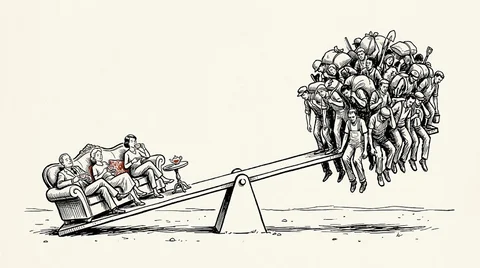
Platform giants have changed the old image of "layer-by-layer outsourcing and evading responsibility", and took the initiative to express that they want to provide social security for riders, which quickly triggered public attention and questioning: "Who will pay for this money?" "Can social security really reach the riders?" A more direct question is: "Do riders need social security, or does social security need riders?"
When the effort to protect riders' rights becomes a bargaining chip in business competition, how much do the riders actually benefit? In the mid-to-late March, Aquarius Era randomly interacted with more than a dozen delivery riders on the streets of Guangzhou. Surprisingly, almost none of them were happy about the new social security policy, and most of them had their social security payments suspended. Also, no one took the initiative to ask whether the platform's promise had been fulfilled. What they cared more about was: whether there were any orders to dispatch, whether their accounts were "wasted", and whether they had enough money to send home this month.
Rider Li Bin said directly: "I can only get my pension at 63, and I may not live that long." Social security seems too far away from their daily thoughts and concerns.
Their troubles: no orders, low order prices
At four o'clock in the afternoon, the afternoon tea time in the riders' schedule. Under the tall banyan trees, a row of delivery riders wearing bright yellow and blue work clothes sat on electric vehicles, their figures lined up along the entrance of the shopping mall lined with restaurants, sometimes filling up twenty or thirty vehicles. They looked down at their phone screens, their fingers repeatedly switching between games, short videos, and order-taking interfaces. The time waiting for orders quietly passed, and they sat there in silence, half an hour, an hour, or even two hours.
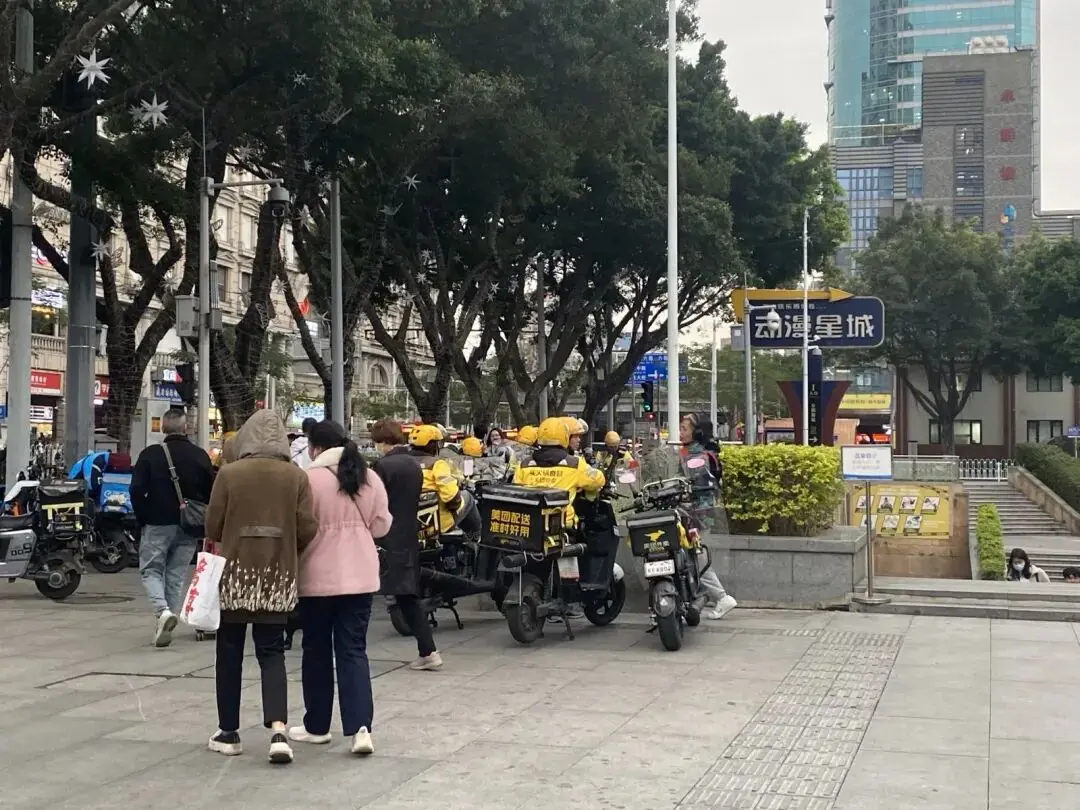
Riders waiting for orders outside the mall (Image_Author/Photo)
Unlike the heated discussions on social media about platforms paying social security, offline, the delivery workers who have a direct interest in this news often respond indifferently—"don't know" or "don't care" are the most common responses. They have more realistic and urgent troubles: this industry has long been saturated, and the system often has no orders to dispatch.
Public information shows that delivery riders are now roughly divided into two categories: special delivery and crowd-sourcing. Special delivery riders are usually recruited and managed by the station, and sign labor contracts or labor contracts with the delivery merchants rather than the platform. They have fixed work shifts, similar to "employees". The system will allocate orders according to the location of each rider, and the rider cannot refuse, but can transfer the order. Crowd-sourcing riders are flexible workers, who can take orders after registering on the platform, and can also grab orders independently, but they do not have labor contracts and have a cooperative relationship with the platform. The International Labour Organization's working report released at the end of 2020 shows that Meituan's employment has a crowd-sourcing ratio of 60%.
She Hua Bang, forty years old, wearing a brand new and tidy helmet and work clothes, sat on the steps of the subway entrance, his eyes fixed on the phone screen. He had worked in the patrol team of the police station for seven or eight years until he was dismissed last year, "because I'm old, I have to switch to a younger one". This day was his second day running special delivery, and he encountered heavy rain for two consecutive days, but the number of orders did not increase sharply. From 10 a.m. to 8 p.m., he only completed 13 orders. He was a little anxious because he hadn't received a new order for an hour and a half.
According to data released by the Meituan Research Institute, the number of delivery riders has increased from 3.99 million in 2019 to 7.45 million in 2023, with an average annual growth rate in double digits. Due to the low threshold of the delivery industry, it is easy to enter the industry as long as you know how to use a mobile phone, look at navigation, and ride a bicycle. This characteristic has attracted many people who are unemployed and seeking transition, and the salary higher than the local average salary has also attracted debtors who are eager to repay their debts after business failures after the epidemic.
Tang Zequan, 34, has been in the real estate industry and has also done car modification. Because he owed a lot of foreign debts, he started running delivery in 2016. After finally paying off almost everything, he opened a store to sell lithium batteries in 2019, but he encountered the epidemic, and the goods were squeezed and could not be sold. After paying the rent and labor costs, he returned to a state of debt. He is a Meituan "Le Pao" rider, which is a type of crowd-sourcing rider, but he has requirements for the number of orders and online time like special delivery.
More and more young people who lack professional skills choose to be riders. Among the more than a dozen delivery workers contacted by Aquarius Era, they are all male, mostly from rural areas or nearby counties, with the post-90s generation accounting for the majority, and four of them are post-00s.
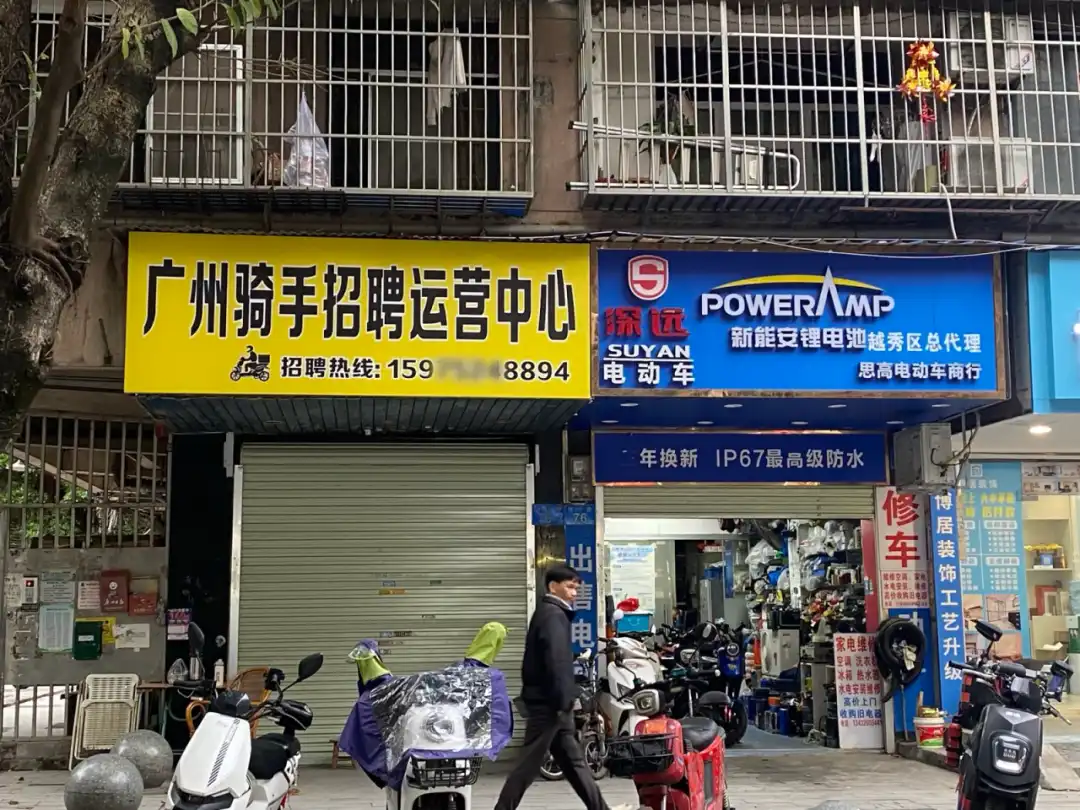
Rider recruitment shops on the streets of Guangzhou (Image_Author/Photo)
Li Bin, 25 years old this year, is from Henan. He has been running special delivery for Meituan for three years. He said that compared with when he first entered the industry, the unit price has now dropped from more than eight or nine yuan to more than six yuan. He now runs more than twenty orders a day, and sometimes he can't even complete the required minimum number of orders within the specified time of the shift, so he has to apply to the station to extend the online time to work overtime. And if he doesn't run enough, he has to go back to the station to accept "physical punishment", copying "more than 16 orders within the daily shift" on paper, filling a page.
A crowd-sourcing rider complained to Li Bin that he was in his thirties and still didn't have a girlfriend, and his family urged him to buy a house, "otherwise who will marry you!" He came to run delivery for high salaries, but he found that not only were there fewer orders, but also the rider meals from quality chain restaurants that could be eaten for only 8 or 10 yuan were cancelled. Li Bin felt that these were signs of cost reduction and efficiency increase, and the riders were already saturated.
To break through, you have to cultivate your account. At 11 p.m., the Beijing Road Pedestrian Street, which was crowded during the day, was sparsely populated. Hu Jianhua was still waiting for orders on the side of the road. He has dark skin and is a rare special delivery rider with a monthly salary of over 10,000 yuan, "can run 1,500 orders a month". After deducting two days of monthly rest, he runs at least 53 orders a day on average.
He summarized a set of methods: the first thing a newcomer does when they come in is to cultivate their account, spend time, and deliver quickly. He goes out at 7 a.m. and stays until after 10 p.m. He also accepts "garbage orders" that are far away and have to climb stairs. He runs fifty orders a day, and it takes at least one or two months to cultivate the account well. "After the system believes that you are stable and efficient, it will dispatch fifty orders to you every day," Hu Jianhua said, "If your account is bad, there is basically no hope."
The system monitoring is everywhere. Even if the riders' accounts have fallen into the "bad account" determined by the system, in the gaps between no orders, everyone still needs to wear their work clothes and helmets in a serious manner—this is to deal with the inspection of the rider APP. The rider APP has obtained the permissions of front and rear cameras, microphones, and geographic location. The camera will take photos at any time to check whether the rider's helmet and work clothes are worn properly, and will not remind the rider before taking the photos. If it does not meet the requirements, the punishment is also copying, "copying 'you must wear a helmet and work clothes when you go to work'," Li Bin said.
Jiang Xin sat on the electric vehicle with his helmet and work clothes neatly dressed, fishing. He is a special delivery rider for Ele.me. He goes to the river to fish around three o'clock in the afternoon when there are not many orders, "to relax". The reddish-brown bait was wrapped in a plastic bag and piled on the stone railing. Jiang Xin used a folding fishing rod and caught a small fish the size of a palm in less than twenty minutes. He took off the hook from the fish's mouth and threw the fish back into the river. When he left, he took out his mobile phone hidden in a small black drawer—this was his way of avoiding monitoring—and put it on the phone holder, and his blue back merged into the flow of traffic.
Their views: respect personal wishes, reduce burdens
Delivery workers do not have a basic salary, and their wages are calculated based on the number of orders. "The unit price of seven yuan and five in the previous year has dropped to more than six yuan this year." After that, Jiang Xin now earns more than five thousand yuan a month. He is in his thirties and is not married, and his income is only enough for himself. "When it comes to the moment of getting married and raising children, you can't get the money. When you think about this, you can't sleep." Li Bin's parents are farming in their hometown. He is the eldest in the family, and he has a younger brother and a younger sister. His younger brother works outside, and his younger sister is in high school. After deducting rent and food and drink, he saves one thousand yuan a month, either saving it or sending it home.
Tang Zequan spoke the minds of many delivery workers. He posted a video saying that for full-time riders who "live on the platform" such as special delivery and "Le Pao", the personal contribution of a few hundred yuan a month for social security is a burden for them. He hopes that the platform can bear a larger proportion of social security contributions, reduce the burden of riders' contributions, and allow riders who work hard to run orders to be willing to pay social security. This video quickly topped the Douyin hot list.
Young people don't stay on a platform for long, they come and go as they please, and they care more about freedom. Jiang Le, a native of Jiangmen, is 23 years old this year. After graduating from junior high school, he started learning to make cakes and worked in his hometown county for a while. "It's not easy to do," he came to Guangzhou to run delivery. He ran special delivery for Ele.me for three months, and then jumped to Meituan and ran special delivery for another three months. Jiang Le's fingers swiped out gorgeous special effects in the King of Glory game, accompanied by the prompt sound of "annihilating the enemy", and said without raising his head: "I'm going to leave, and whether Meituan pays social security has nothing to do with me."
Li Bin explained that the cooperation between old riders and new riders and the repeated receipt of referral fees is a hidden source of income for special delivery riders. "There are also benefits to jumping around. You can get a referral fee when you join the job, but not too often. The platform requires a minimum interval of three months." He cooperated with old riders and jumped from Ele.me crowd-sourcing to Meituan to do special delivery. "The referral fee was very considerable at the time, there were four thousand, generally seven-three or eight-two, and the new rider got the big share."
After graduating from high school, he came to Guangzhou and worked as a warehouse manager in a supermarket. After two years, he was promoted to a small supervisor, earning more than four thousand yuan a month. Although the supermarket paid social security, he resigned to run crowd-sourcing for Ele.me because "there was little money and a lot of work", and thus stopped paying social security. Like Jiang Le and Li Bin, he now only pays the "New Rural Cooperative Medical Scheme" (New Rural Cooperative Medical Scheme) in his hometown.
Li Bin said that he doesn't care about paying social security. "The pension can only be received at the age of 63, and I don't think I can live that long." He hopes that the platform can respect the riders' willingness to participate in the insurance. "Riders' work is relatively flexible, and people come and go at any time. Not many people plan to do it for a long time, so some people are willing to pay, and some people are not willing to pay. Among the people who are willing to pay, some also do not accept the amount of personal payment."
Tang Zequan also doesn't plan to run delivery for a long time. He is quick-witted and has also registered a rider self-media in addition to delivering food, shooting daily videos of running orders to "earn traffic", "three yuan for a thousand views". He also shoots short dramas with the theme of riders, "riders smashing meals in front of customers", "riders and security guards having conflicts, etc.". Tang Zequan claimed that the video of a rider's accidental collision that he casually shot was forwarded by more than 100 official media, and the views reached 3.8 billion. He was a little proud: "I have more than 200 videos with millions of views, more than 10 with tens of millions of views, and I also have 3 with over 100 million views." He is planning to transform, find a partner to live with and who is willing to appear on camera, and take the family daily blogger route.
Li Bin originally decided to resign at the end of the month, but he had to work overtime until 10 p.m. to complete the required number of orders for several consecutive days. He was a little disheartened and left in the middle of the month. He always runs orders alone. He has familiar friends but doesn't know each other's names. He chats with them a few words when they meet, and then rides into the wind separately. He only greeted the landlord and got on the train back to his hometown. He didn't have much luggage, and one box was enough. This city where he had stayed for seven years no longer had his life traces.
Chen Guojiang is the founder of the "Delivery Jianghu Knights Alliance", also known as the "Leader". The alliance brings together the scattered delivery workers with different interests and appeals, attracting more than 14,000 riders to join. It once had more than a dozen WeChat groups, organized large-scale meals for riders, and also provided legal assistance and life help for riders, almost playing the role of an "independent trade union" (Note: "Independent trade union" refers to an organization voluntarily formed by workers or employees, aimed at safeguarding and promoting the rights and interests of members.).
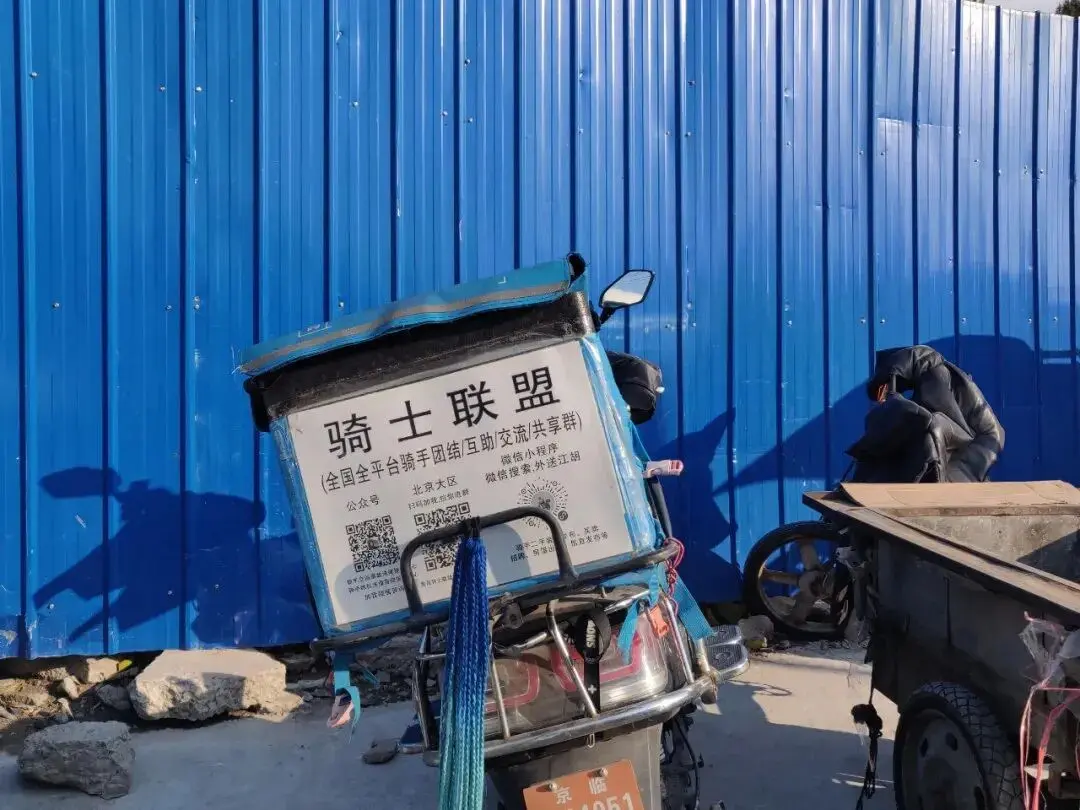
A "Knights Alliance" leaflet posted on the delivery box behind the rider (Image_Network)
He said that from his personal experience and communication with other delivery workers, most people are unwilling to pay half of the money for social security themselves, and even unwilling to let the platform pay social security—where does the money come from? Everyone is worried that the cost will eventually be passed on to the riders. In his opinion, due to the low entry threshold and lack of career development prospects, delivery workers will not take delivering food as a lifelong career, and in the case of insufficient protection of labor rights and interests, if they change to other jobs, the employers may not pay social security in accordance with the law, so the social security paid when delivering food will also be in vain.
Chen Guojiang believes that the core appeal of the vast majority of delivery workers is not social security, but that the unit price cannot be reduced again and again. In addition, riders and platforms lack an equal negotiating position. "The riders who are punished have their appeals rejected, accounts are arbitrarily blocked, and the wages of special delivery riders are deducted, etc. A series of unreasonable situations should be introduced to the supervision and review of a third party or government departments. After all, such a large group, you can't issue the riders' money yourself, and the riders appeal, and you still review it yourself. You can't be a policeman and a judge at the same time, which is unreasonable."
More delivery workers find it difficult to form groups to negotiate their rights and interests, and they don't have friends to discuss things with in a strange big city. In order to be able to leave at any time, Jiang Le didn't rent a house himself, but lived in the rider dormitory of the station, "bunk beds, eight people in one dormitory, the rent is five hundred yuan a month, deducted from the salary". He rarely chats with his roommates. He waits for orders at the entrance of a closed shop. He said that talking to Aquarius Era was the longest day he had face-to-face conversations with people—half an hour.
During the chat, riders in purplish red, yellow, blue, and green clothes were blocking the red light. A bus drove onto the zebra crossing and hit a Sam's Club delivery person. The bus driver got out of the car to apologize and help the electric vehicle up. The delivery person didn't seem to be injured. When the green light came on, he got on the electric vehicle, turned left and right in the crowd, and rode away anxiously.
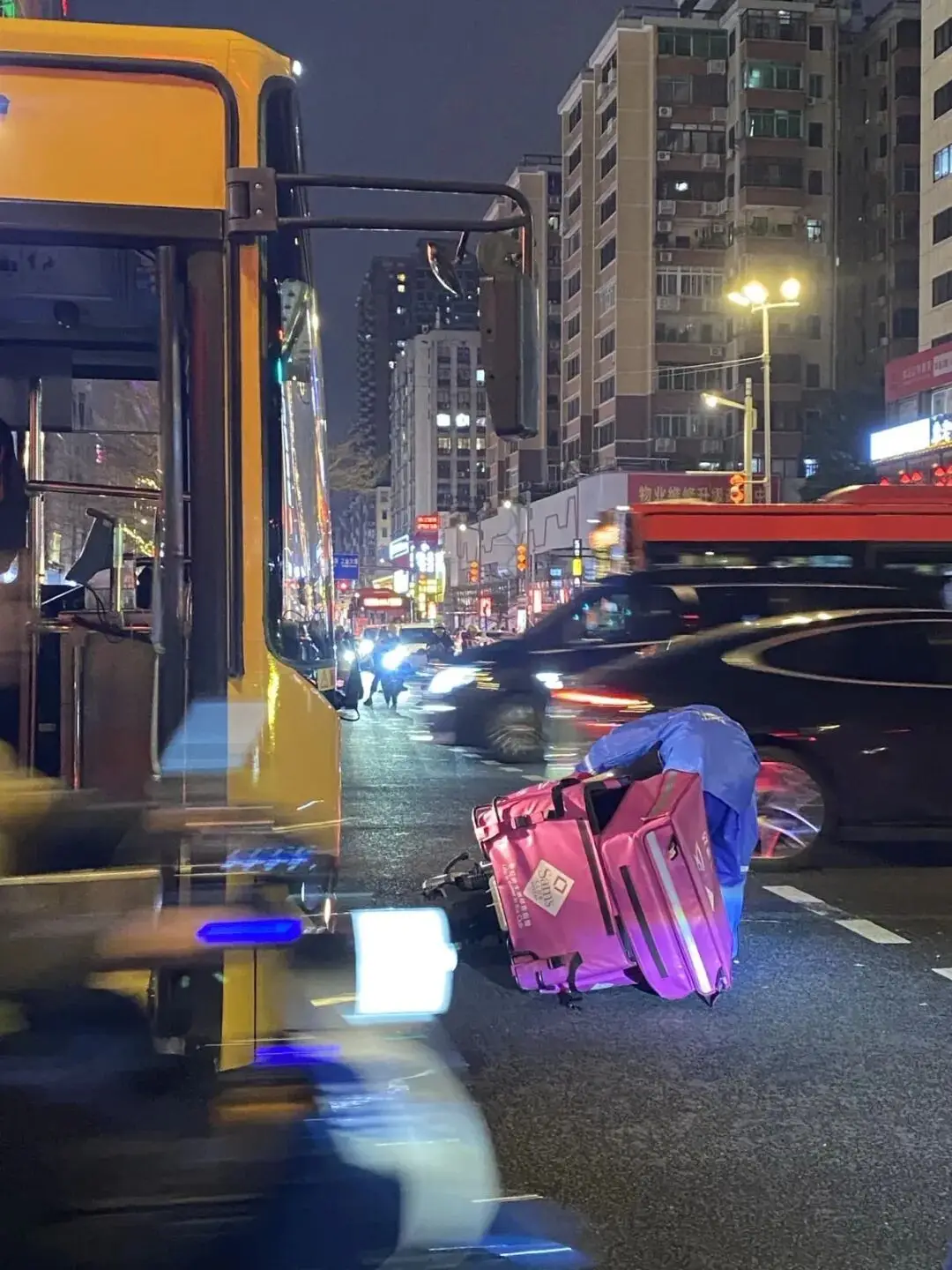
The Sam's Club delivery person who was hit (Image_Author/Photo)
Their dilemma: car accidents and protection
Social security mainly includes basic old-age insurance, basic medical insurance, work-related injury insurance, unemployment insurance, and maternity insurance. For many delivery workers, medical insurance and work-related injury insurance are more urgent. In the week of the conversation, Aquarius Era witnessed four electric vehicle accidents involving delivery.
Delivery riders are considered to be a high-risk group with the highest incidence and frequency of traffic violations. A study from the Ministry of Emergency Management shows that from January to August 2021 in Chengdu, the road traffic accidents involving express delivery and delivery electric bicycles accounted for 51.6% of the total number of accidents, and an average of 1 rider was injured or killed every 1.5 days. From 2019 to 2021, in Shanghai, the accidents involving express delivery and delivery industries accounted for 90.3% of the total number of road traffic accidents.
"If you are late and are complained by customers and get a bad review, you will be fined 200 yuan, and you will have worked for nothing for a day," Jiang Xin explained why the riders chose to violate the law. The system issues a packaged delivery time. If the merchant's meal preparation is ten minutes late, the rider's delivery time will be ten minutes less, "then you have to run a red light more."
Li Bin, who claims to be careful and "Buddha-like" in running orders, also experienced a minor car accident. He still remembers that when he was on the way to the station for the morning meeting, the other party wanted to overtake from behind, but the large box on the car was too wide, and it knocked him and the car over. His hands and feet were scraped, "mainly the car was broken". He exchanged the one thousand yuan he received in compensation and the money deducted from the old electric vehicle for a new car of one thousand eight hundred yuan. He often felt frightened when speeding on the road: "If you abide by the traffic rules, others may not abide by them. Like those who go against the traffic, suddenly turn without looking behind, and the ride-hailing cars and taxis suddenly change lanes to drop off passengers in front of you, and the buses suddenly stop, there are too many..."
The vast majority of delivery workers do not have work-related injury insurance in social security. Work-related injury insurance needs to be paid by the employer. In 2021, the Beijing Zhicheng Migrant Workers Legal Aid and Research Center released the "Legal Research Report on the Employment Model of Delivery Platforms" (hereinafter referred to as the "Report"), which pointed out that as the number of delivery workers gradually increases, platforms reduce labor costs, outsource the delivery business layer by layer, effectively breaking the labor relationship with delivery workers, and even the situation that delivery merchants require delivery workers to sign "voluntary abandonment of social security" agreements, and delivery workers are registered as individual industrial and commercial households. Without a labor relationship, it is naturally not necessary to pay social security for employees in accordance with the "Labor Law".
In fact, discussions about social security began in the online community of the rider APP last year. Some riders hope that Meituan will purchase social security for employees and care more about front-line riders, and some riders ask: "Can I report the company if it doesn't pay social security?" "Why can't such a big company pay social security, even if it's in my own name, it's not possible, I'm sad..." "Where did our social security go..."
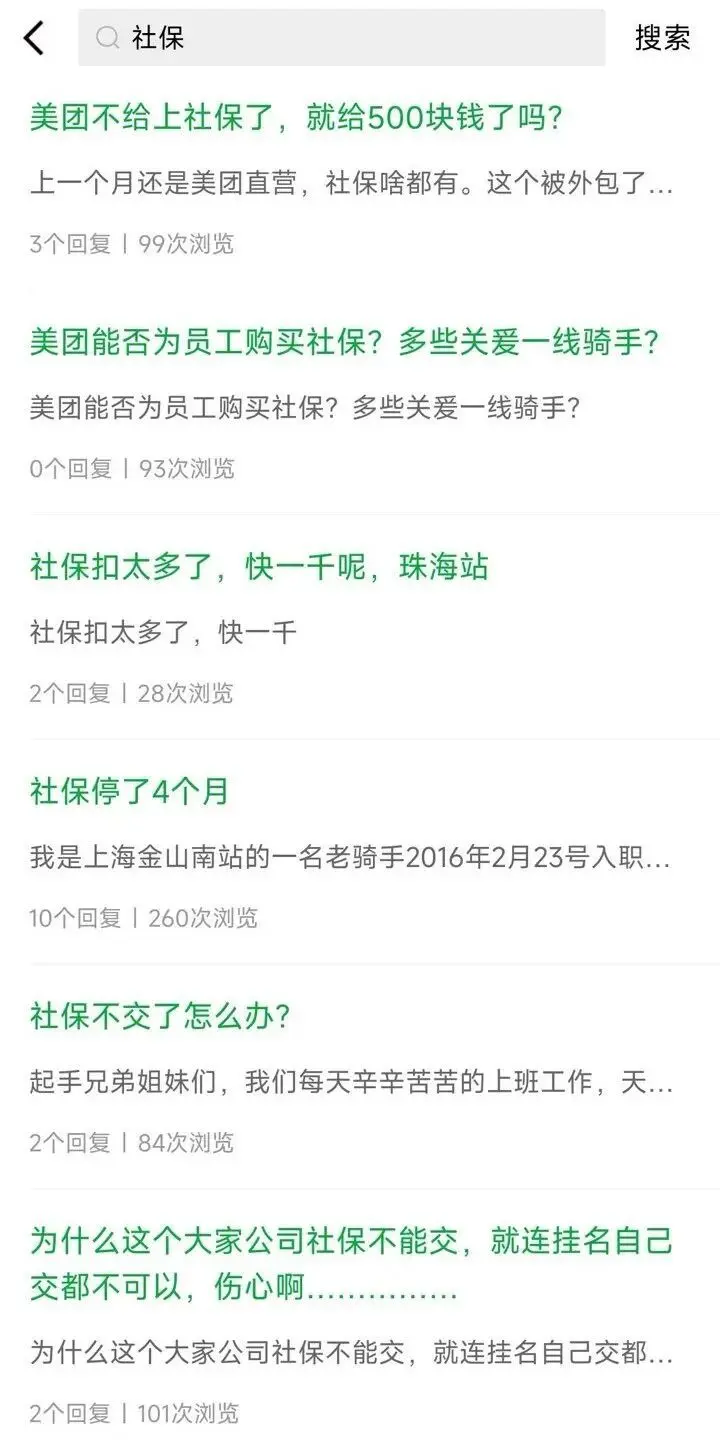
The online community of the Meituan rider APP, where riders discuss social security issues (Image_APP screenshot)
The "Report" pointed out that in fact, in the early stages of the development of the delivery platform, most delivery personnel had labor contracts, and they were called self-operated riders. The platform would pay social insurance for them and provide equipment such as electric vehicles, clothes, and hats for free. During the work-related injury period, the delivery platform can still pay wages to self-operated riders. But "at present, this kind of rider who signs a labor contract with the platform almost does not exist".
In September 2020, the article "Delivery Riders, Trapped in the System" triggered public attention to the labor rights and interests of riders. Then, due to multiple incidents of sudden death and injury of delivery workers, public outcry was aroused. Meituan and Ele.me began to provide sudden death protection for all riders that year. Later, they insured "employer liability insurance" for special delivery riders, deducting insurance premiums of one hundred to two hundred yuan from the riders' monthly wages, and insured "personal accident insurance" for crowd-sourcing riders, deducting 3 yuan from the riders' accounts every day, part of which was used as insurance premiums, and the insurance period was 24 hours on the same day.
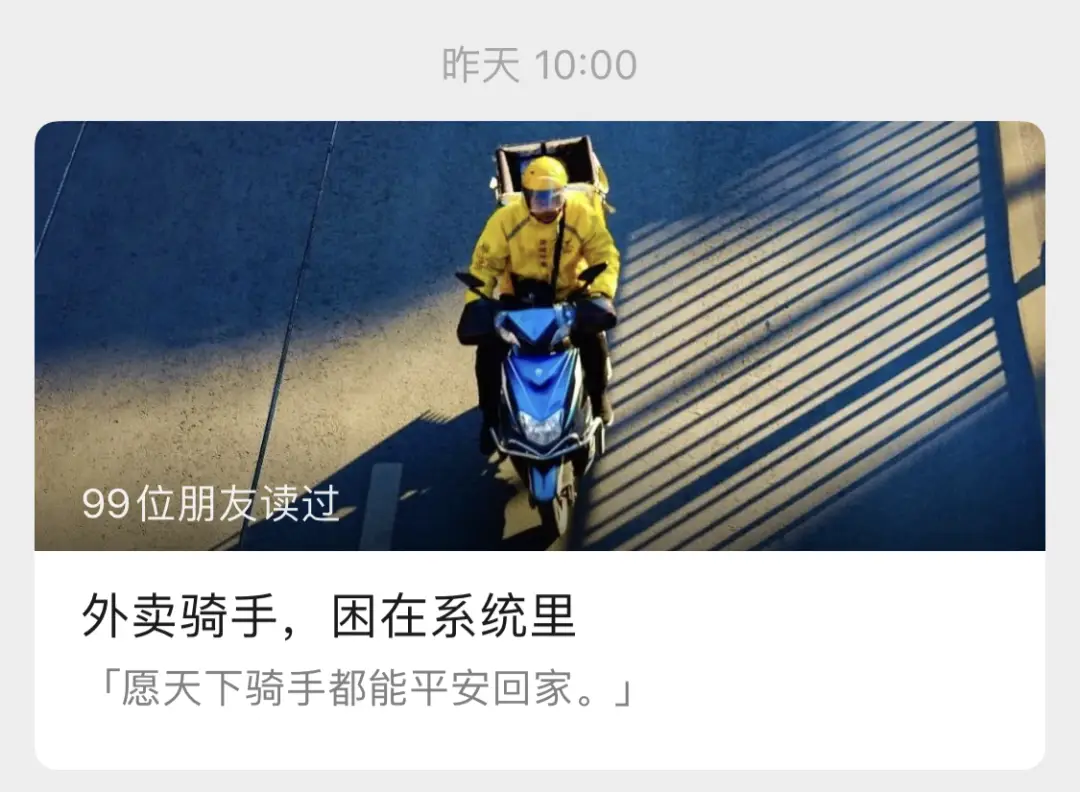
The article "Delivery Riders, Trapped in the System" in the magazine (Image_Network)
In July 2021, Meituan and Ele.me, under the guidance of the Ministry of Human Resources and Social Security and other departments, launched a pilot program for occupational injury protection for new employment forms ("New Occupational Injury"). Since then, the commercial insurance and new occupational injury insured by the platform have constituted the protection for riders in case of work-related injuries.
Hao Zhengxin is a labor lawyer and was once a member of the research team of the "2019 Annual Research Report on the Protection of Labor Rights and Interests of New Employment Personnel" of the Beijing Yilian Social Work Office. The report found that delivery personnel had prominent problems such as ambiguous labor relations, lack of basic labor protection, and prominent occupational injury problems, and it was difficult to cover work-related injury insurance.
She introduced that the platform's commercial insurance claims are relatively simple, and can be reported with one click on the APP, mainly dealing with minor accidents such as small bumps or vehicle damage. If the rider is seriously injured and has paid for the new occupational injury, and chooses to enter the new occupational injury procedure, the case will be handled by the human resources and social security department, which will refer to the identification standards for work-related injuries to determine the injury level, and reimburse the medical expenses according to the reimbursement ratio of work-related injury insurance. If the injury reaches the disability level after identification, they can enjoy disability benefits, including disability subsidies and allowances. But the difference between "new occupational injury" and work-related injury is that work-related injury protection is mandatory, requiring the employer to pay wages during the treatment of the employee's injury, while the platform will not provide such treatment to the riders.
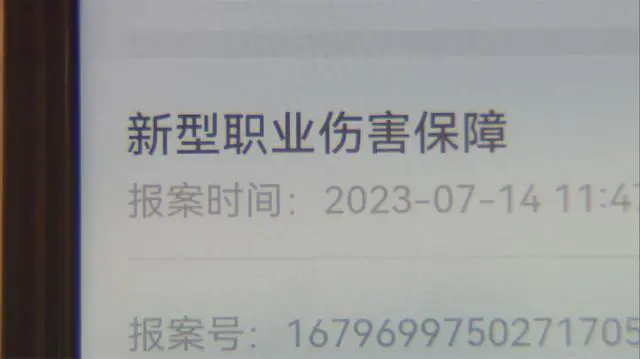
Hao Zhengxin noticed that the insurance terms of "employer liability insurance" are also being iterated, and the scope of claims is narrowing. "We chat with riders and station managers, and they also found that the insurance terms for crowd-sourcing are no longer the initial '3 yuan per day, from 0:00 to 24:00', but have become the protection for riders for two hours before and after each order, from the time of receiving the order to the completion of the delivery. Now it has become only the scheduled time for special delivery riders, but the working hours of each rider are far more than 8 hours, and the insurance for injuries outside the scheduled time will not be compensated."
Whether it is the platform insuring commercial insurance for riders, or the riders receiving compensation "similar to work-related injury insurance", or the platform piloting pension insurance subsidies, the loopholes in the labor rights and interests of riders seem to be getting smaller and smaller, but the key issue of labor relations has always been bypassed. "The three main points to determine the labor relationship between the worker and the employer are: first, the worker accepts the strong management of the employer; second, the worker's wages are paid by the employer; third, the worker's work is part of the unit's business." In Hao Zhengxin's view, the labor relationship between special delivery riders and the platform is undoubtedly certain, and it is the platform's legal obligation to pay social security for them. Moreover, "according to the provisions of the Constitution, social security is a right of the citizens of the People's Republic of China to obtain material assistance from the state and society in case of illness and old age, or other loss of labor capacity."
What actually happens is that social security, which should have been the protection when the worker is unable to work, has now become a burden that aggravates poverty when the worker is able to work. The protection has been left behind by the precarious rush, and delivery workers are forced to become gamblers. Under the constantly transferred and accumulated labor risks, they can only firmly hold the handlebars of the electric vehicle and focus on the road ahead.
(At the request of the interviewees, Li Bin, Jiang Xin, Jiang Le, and Hu Jianhua are pseudonyms)
(应受访者要求,李彬、江新、姜乐、胡建华为化名)