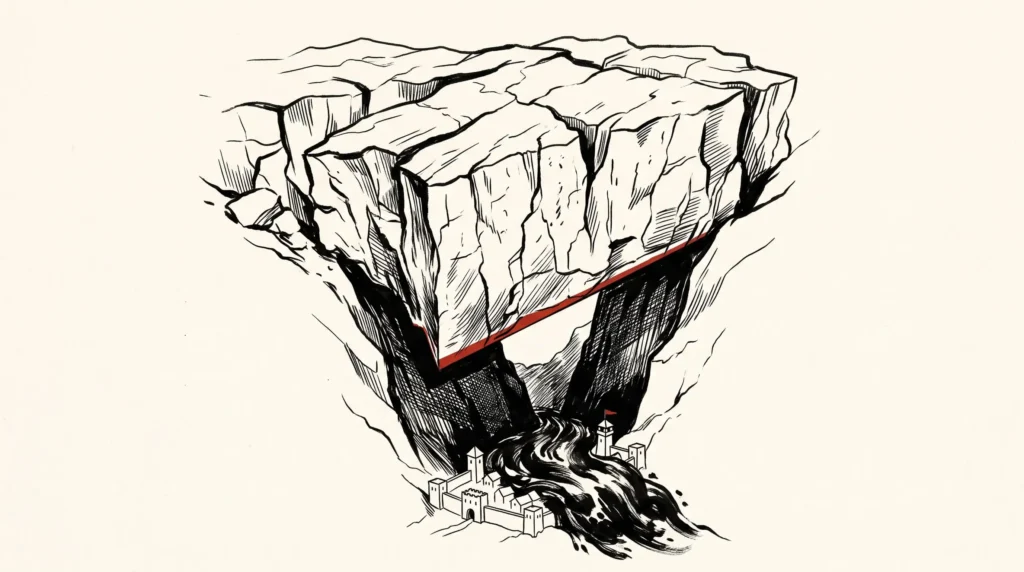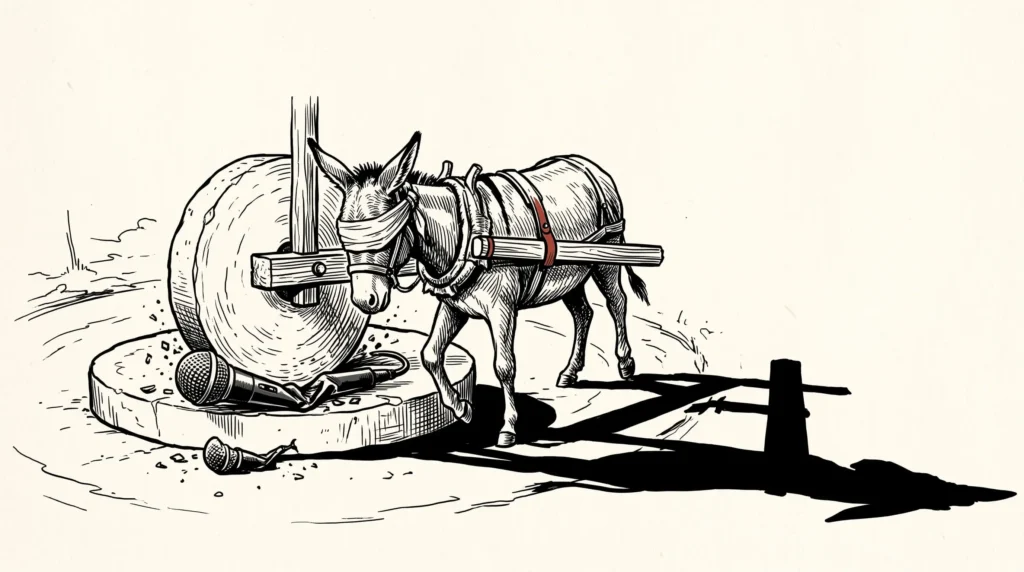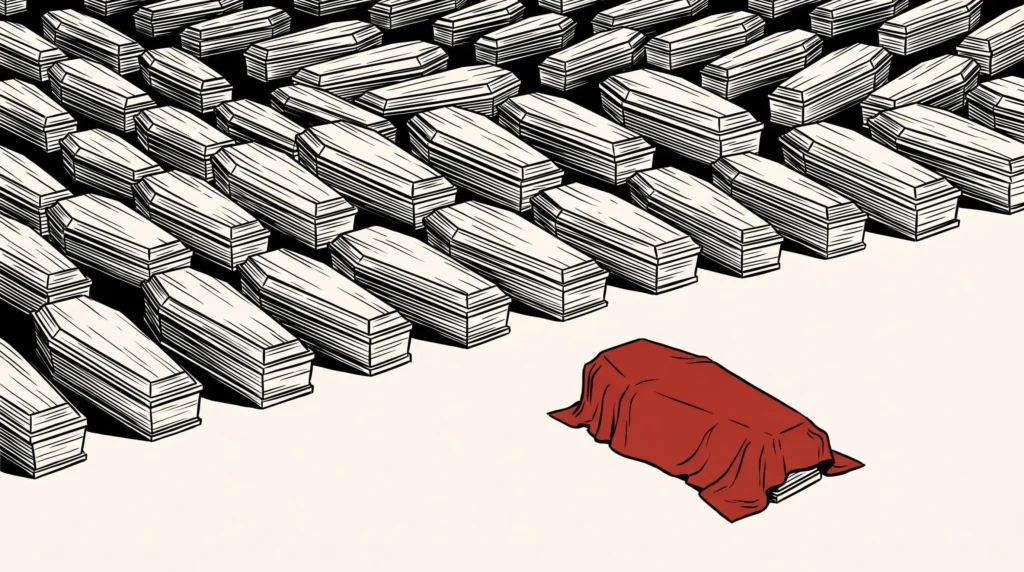
In the agricultural age, power resided in the land; in the industrial age, power was held in the barrel of a gun; in the information age, power is hidden in code.
When a ruler with an agricultural age mindset reviews the armies of the industrial age, attempting to confront the countless individuals of the information age, the outcome is already predetermined.
—— Preface
Part One: The Rhyme of History—Grand Celebrations, the Curtain Call of Empires
Flying military flags, gleaming bayonets, and grand displays of military might are not uncommon in history, often leaving a deep impression of national strength on the people of the time.
But the irony of history lies in the fact that when we peel back the surface of the celebrations and examine the subsequent historical processes of these military parades and exercises, we often find that these grand ceremonies are declarations of power at the time, a kind of political ritual, a desperate self-affirmation when the regime is facing a profound legitimacy crisis. They attempt to use tangible, intimidating grand narratives to reverse the intangible, eroding public consensus at major turning points in history, when the old system faces irreversible challenges, to declare the legitimacy of its rule.
However, history has repeatedly proven that no grand celebration can reverse the tide, saving an old system that cannot adapt to the development of the times from the revolution.
For this reason, these grand displays of power are often the last requiem of an era.
The Last Performance on the Road to the Guillotine: The French Federation Festival Parade of 1790
On July 14, 1790, the first anniversary of the storming of the Bastille, the Champ de Mars in Paris witnessed an unprecedented grand event—the “Fête de la Fédération” (Federation Festival). In order to accommodate more than 300,000 spectators, tens of thousands of Parisian citizens volunteered to work, building a huge amphitheater in the mud and rain. This celebration was a masterpiece of political drama: a mass was presided over by the opportunistic Bishop Talleyrand of Autun, followed by the commander-in-chief of the National Guard, Lafayette, all members of the National Assembly, and finally, King Louis XVI himself, all swore allegiance to “the Nation, the Law, and the King.” The celebration successfully created a strong and short-lived “appearance of national unity.”
The entire parade mobilized tens of thousands of active-duty soldiers and the Paris National Guard, covering all branches of the army, and was the largest parade in French history.
However, beneath this harmonious performance, there were irreconcilable rifts. The legitimacy of the old regime (Ancien Régime) based on divine right had collapsed, while the new social contract had not yet been formed. The national treasury was on the verge of bankruptcy, the gap between the rich and the poor widened dramatically, and an economic crisis swept the country.
This celebration was a desperate attempt by the constitutional monarchists to create a consensus out of thin air, but fundamental questions about power, property, and the role of the church remained unresolved. Just two years later, the monarchy was abolished, and Louis XVI was sent to the guillotine in 1793.
Political Makeup Before Disintegration: The Habsburg Jubilee Celebration of 1898
In 1898, the Austro-Hungarian Empire held a grand celebration in Vienna to celebrate the 50th anniversary of the coronation of Emperor Franz Joseph I (the husband of Sisi).
The core purpose of the celebration was to consolidate the loyalty of the already scattered subjects of the feudal empire in the rising tide of the bourgeoisie and nationalism.
At the parade in Vienna, the armies from the 11 ethnic groups of the empire wore their respective traditional costumes, attempting to show the imperial dream of “unity in diversity.”
Unfortunately, this was just a beautiful lie. Czechs, Hungarians, Serbs, Croats—they played the role of loyal imperial subjects on the parade ground, but they were secretly planning for the opportunity of independence.
Sixteen years later, his heir was assassinated by a nationalist in Sarajevo, triggering World War I. The “unified” army in the parade soon slaughtered each other on the battlefields of Europe.
The empire, which had once ruled Central Europe for 600 years, also turned into fragments in the smoke of World War I. That grand parade was nothing more than the last makeup for a political zombie that was about to disintegrate.
The Tsar Under the Machine Guns: The 300th Anniversary Celebration of the Romanov Dynasty in 1913
In 1913, Tsar Nicholas II of the Romanov dynasty held an extremely extravagant 300th anniversary celebration, the core theme of which was a carefully planned journey “back to the past.” It promoted the alliance between the Tsar and his “pious Orthodox subjects.”
On Nevsky Prospekt in St. Petersburg, Cossack cavalry, the Guards Corps, and troops from Siberia displayed the military power of this old empire. The Tsar’s family wore 17th-century costumes, as if time could be reversed and history could be repeated.
Due to the Stolypin reforms, which were forced to be carried out after the 1905 revolution, they were dancing in shackles, which was not thorough enough to fully protect the newly born bourgeoisie, and also threatened the interests of the nobility. The Tsar was facing a dilemma at the time: using the autocratic system of the 19th century to manage an industrial society that was entering the 20th century, and trying to please both sides as much as possible to maintain the operation of the country. Therefore, the Tsar planned such a parade celebration.
But the Tsar’s distortion of reality was tantamount to political suicide. Just four years later, the flood of the February Revolution swept away the Romanov dynasty.
The entire family of Tsar Nicholas II, young and old, died under the machine guns of the revolutionaries.
Part Two: Echoes of Modern Times—The Modern Cold War Revelation of the Soviet “West-81” Military Exercise
If the memory of ancient military parades has gradually been sealed, then the Soviet “West-81” military exercise and its subsequent developments should still be fresh in the minds of many people.
The Soviet Union’s Sword: External Aggression Only for Internal Stability
In September 1981, the Soviet Union launched the “West-81” (Zapad-81) military exercise, which was unprecedented in human history. In eight days, 100,000 to 150,000 troops took action on a vast front stretching from the Baltic Sea to Central Europe. The exercise featured the debut of cutting-edge weapons such as the SS-20 “Saber” medium-range ballistic missile, and its scale was comparable to a real battle in World War II.
This exercise had two clear goals. Externally, it was a naked display of military force to NATO. Internally, the goal was more urgent: to intimidate the newly emerging “Solidarity” movement in Poland, to prevent it from spreading to the Soviet Union, and to maintain its rule. The exercise deliberately conducted an amphibious landing in the Polish coastal area near Gdansk, clearly conveying a message to the Polish people: the Soviet Union was ready to use military intervention to maintain its rule over its Eastern European empire, just as it had done in 1968 to suppress the “Prague Spring.”
At the same time, for the Soviet Union, which was experiencing economic stagnation and increasingly severe social contradictions, this exercise was also a tool for Brezhnev to consolidate his personal authority and one-party dictatorship.
Pyrrhic Victory: Tactical Success, Strategic Disaster
From a tactical and psychological perspective, the “West-81” military exercise was a great success. The conventional military power it displayed was considered unstoppable by NATO planners at the time. The Soviet Union demonstrated new combat concepts and powerful weapons systems, and seemed to have gained a decisive military advantage on the European continent.
However, it was precisely this overly successful display of military force that caused unprecedented fear in Western European countries, thereby uniting them like never before. This exercise made Western European countries completely understand that it was unthinkable to be separated from the protection of the United States. It not only did not alienate, but greatly strengthened the internal cohesion of the transatlantic alliance, pushing Europe more closely towards the United States.
This strengthened security dependence inevitably had profound economic impacts. When the United States sought international cooperation a few years later to solve its own trade deficit and high dollar problems, its European allies (such as West Germany, France, and the United Kingdom) were in a more compliant position geopolitically.
In order to maintain the crucial security guarantee, they were also more willing to cooperate with the United States economically. The great power coordination mechanism behind the 1985 Plaza Accord was realized under this tense Cold War security structure.
The Soviet military threat inadvertently paved the way for the United States to make a key move in the global economic chess game, ultimately enhancing the overall geopolitical and economic strength of its opponent.
The Echo of History: Putin and the Parades He Participated In
Supporting the grand military exercise of the Soviet Union at that time was a national governance system that had achieved great success through a planned economy in the previous era and refused to embrace the market economy. Investing huge resources in the vast military-industrial complex represented by “West-81” was a further devastation of the already distorted economic structure of the Soviet Union. While NATO countries were experiencing a market-driven technological revolution centered on computers and information technology, the Soviet Union was still pouring capital into the massive steel torrent of the industrial age. This was a fatal resource mismatch, which drained the vitality of the civilian economy, stifled technological innovation, and ultimately led to the rigidity and collapse of the entire system.
Ten years later, in 1991, this seemingly invincible Red Empire could not bear its own weight, and the empire collapsed.
The rhyme of history always sounds inadvertently. From Tsarist Russia to the Soviet Union, and to today’s Russia, the rulers of the land north of the great Eastern power seem to have fallen into a historical cycle: when internal contradictions are heavy and legitimacy is challenged, they resort to external displays of military force. Putin’s predecessors did this twice in less than a hundred years. And his own victory day parade on May 9, 2024, which only had a T-34 tank from World War II, was more like a helpless self-deprecation.
I don’t know what kind of echoes of modern history Putin, as a VIP, will hear in his ears when he sees the neat steel torrent on the viewing platform of a certain great power, as a former KGB agent who is well-versed in history.
Part Three: The Challenges of the New Era—The “Gun Barrel” Can No Longer Produce Political Power
Today, the world is facing a profound change comparable to the French Revolution. Artificial intelligence and decentralized technology are empowering individuals in unprecedented ways, and the era of the “Sovereign Individual” is coming.
The Paradigm Shift of Power
The power of the old era was rooted in the control of physical territory and fixed assets. However, as predicted in the book “The Sovereign Individual,” information technology is fundamentally changing the “logic of violence.” In the new era, core assets—data, algorithms, encrypted capital—are fluid, intangible, and can instantly cross borders. The traditional control methods of the state, such as borders, tariffs, and capital controls, are becoming increasingly ineffective. Just as gunpowder destroyed the defensive capabilities of medieval castles, new technologies are eroding the power monopoly of the current state system.
The Rise of the Service State
Under this new paradigm, the state is forced to transform from a “ruler” to a “service provider.” When the most productive “cognitive elites” can freely choose where to live, work, and store their assets, states must compete by providing a better rule of law environment, lower taxes, and a more open innovation ecosystem to attract and retain these mobile “sovereign individuals” and their capital. Embracing openness and embracing decentralization is the only way out.
Futile Resistance
However, some regimes are still trying to use the zombie of the post-industrial state capitalist system to resist this historical change. They are trying to prevent the outflow of capital and talent by strengthening control, blocking information, and strengthening physical boundaries.
And grand parades are the ultimate psychological comfort of this “resistance”: trying to use the visible, physical, industrial-age steel order to confront the invisible, digital, network-age fluidity challenge.
The Ultimate “Non-Cooperation Movement”
This resistance is doomed to be futile. Because no matter how advanced the missiles and drones are, they cannot stop an individual from voting with their feet and transferring assets on the chain.
This is a new “non-violent non-cooperation” movement, but it is fundamentally different from Gandhi’s movement, and it has a much wider audience, because it does not require moral appeals, but is based on purely rational calculations of interests (the article “From Mahatma Gandhi to Businessman Tom Lee: From Non-Violent Non-Cooperation to Non-Violent Non-Profit Cooperation” provides an in-depth explanation).
This “exit” based on code and protocols is systematically eroding the foundations of the old order. It forms a fatal feedback loop: when individuals withdraw capital from high-tax, high-inflation fiat currency systems, they weaken the foundations of the system, forcing the state to take more drastic measures (such as higher taxes or stricter capital controls, and more expensive and grander parades to maintain rule), which in turn encourages more people to “exit.”
The drones and missiles of the state’s violent machine are useless in the face of this silent, economically rational global capital migration. Whether it is the honor guard of the parade or the riot police on the street, the gun barrels they hold may no longer be able to effectively obtain political power and maintain rule!
Conclusion: Truth is No Longer Within the Range of Artillery
According to Max Weber’s theory, when a regime’s “traditional” authority (such as divine right or inheritance) and “legal-rational” authority (such as the legitimacy of laws and elected procedures) are shaken, it will desperately try to create a “charismatic” authority. (Yes, those parades that you think are very aesthetically violent are all footnotes to Weber’s theory)
In the agricultural age, truth resides in the land; in the industrial age, truth is in the barrel of a gun; in the information age, truth is hidden in code.
When a ruler with an agricultural age mindset reviews the armies of the industrial age, attempting to confront the countless individuals of the information age, the outcome is already predetermined.
Discover more from 自由档案馆
Subscribe to get the latest posts sent to your email.