

I have basically refuted all the reasons against raising the pensions of farmers, but when I log on to any platform, under any relevant discussion, such clichés are still rampant, which is annoying.
To facilitate dissemination and use by everyone, I have collected the 10 most common excuses and answered them in the most concise language. Please screenshot and save this article, and when you see this kind of thoughtless talk again, you can directly slap it in their face.
01 Why should farmers receive pensions if they haven't paid social security?
In the absence of a social security system, Chinese farmers had to pay public grain and 'three levies and five contributions'. Farmers handed over everything except the minimum living and production, which was more than those who paid social security later, except that it was not called social security.
After the establishment of the social security system in China, those within the system and urban workers had not paid social security before, but were considered to have paid, which is the 'deemed contribution period'. This policy excludes farmers. If treated equally, farmers aged 60 now have at least ten years of service, and those aged 70 have at least twenty years of service. How much retirement pay should they receive per month?
Some people insist that 'agricultural tax is the rent for farmers to rent land', then should the state, as the employer, be primarily responsible for the farmers' 'not paying social security'?
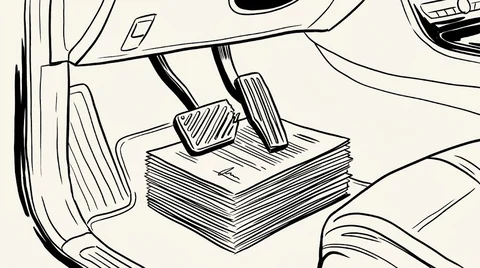
02 Pensions are paid more for more contributions, less for less contributions, and none for no contributions.
This sounds reasonable, but it is not.
First, it confuses the differences between market economy and social insurance; second, it confuses the differences between commercial insurance and social insurance; and finally, it confuses the different forms of social insurance.
Speaking only of social insurance, there are generally three pillars of pension insurance: first, the basic pension provided by the fiscal burden; second, the occupational pension insurance jointly paid by employers and individuals; and third, the individual pension account for personal savings. This sentence is completely correct for individual pension accounts, largely true but not entirely corresponding for occupational pension insurance, and completely untrue for basic pensions.
Basic pensions are borne by taxpayers to provide basic living security for low-income elderly people (as opposed to the minimum living allowance, it is universal and can cover most retired elderly people). Because this is public financial expenditure, the principle followed is: the lower the income, the higher the subsidy, the higher the income, the lower the subsidy, and no subsidy is provided when a certain income level is reached.
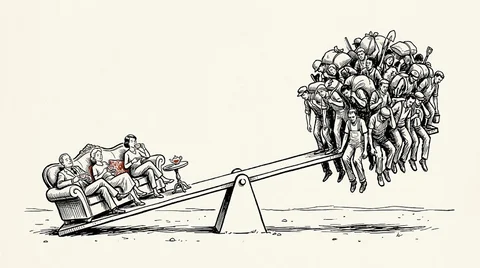
Currently, the receipt and payment of retirement pensions in China are not equal and do not come entirely from the pension insurance fund, with a considerable proportion coming from fiscal subsidies. The subsidy principle does not follow the rules of the world, but is exactly the opposite: the highest subsidy is for the highest-income retirees within the system, with an average of over 3,000 yuan/month; the middle-income enterprise retirees receive an average subsidy of over 500 yuan/month; and the lowest-income farmers receive an average subsidy of less than 200 yuan/month.
03 The low-income elderly in the city are worse off than farmers, why don't you say that?
Yes, so a universal basic pension system should be established.
We often say 'raising the basic pension for farmers', not just for rural elderly people, but for all low-income elderly people, but most rural elderly people happen to belong to this group. If you care about the low-income elderly in the city, you should call for raising the basic pension for urban and rural residents.
04 If you don't pay, you can receive a pension. What if everyone doesn't pay in the future?
First, the amount of the basic pension is not high, and according to China's economic situation, 600-800 yuan/month is appropriate. Thresholds and steps should also be set, such as eligibility to receive if the retirement income is below 3,000 yuan/month, and the lower the income, the more you receive. Of course, you can accept not getting a thousand yuan a month when you are old.
Secondly, it can be compulsory to pay. Social security is essentially similar to taxation, and social security around the world is basically compulsory.But the payment ratio should be reduced, such as reducing the current employer plus individual total of 24% to about half, to reduce the burden on enterprises and workers, including taxpayers' burden on the system. With a basic pension, the replacement rate of occupational pension insurance is not necessary to be so high.
Finally, even if everyone really doesn't pay occupational pension insurance, compared to the current situation in China, it may not be a bad thing: there are currently more than 300 million retired elderly people in China, and at a standard of less than 1,000 yuan/month per person, the Chinese government can fully afford it, which can not only alleviate the upcoming pension crisis, but also greatly reduce the burden on enterprises and employees, and greatly promote economic development and personal consumption.
05 Where do you get the money to raise farmers' pensions? Do you pay?
First, in addition to the pension insurance fund, the government also has a large amount of fiscal subsidies for pension payments every year (see the second item).
There is a serious inequity in the distribution here. According to the latest data from the Ministry of Finance in 2023, 22 million retirees within the system received subsidies of over 800 billion yuan, with an average of over 3,000 yuan per month; 120 million enterprise employees received subsidies of over 700 billion yuan, with an average of over 500 yuan per month; while the lowest-income 170 million urban and rural residents (farmers) only received subsidies of over 300 billion yuan, with an average of 177 yuan per month. If all pension fiscal subsidies are cancelled, this money is enough to establish a 600 yuan/month universal stepped basic pension system, covering 80% of the retired elderly.
In other words, the current pension subsidy method in China is wrong. The portion paid by employers and individuals should not be subsidized (more paid, more received), but should be entirely used for urban and rural pension insurance for low-income people.
In addition, the proportion of pension expenditure in China currently accounts for a much lower proportion of overall expenditure than in developed countries, and also much lower than in many developing countries, and there is still considerable room for improvement. Currently, China's fiscal expenditure is about 30 trillion yuan a year, even if another 1 trillion yuan is used to raise farmers' pensions alone, the proportion of pension expenditure is still at a low level.
06 Farmers have land and can make a living by farming.
Farmers do not truly own the land, and the value of land use rights is generally very low. In terms of rent, most places can only rent a few hundred yuan per mu per year, and many places cannot even be rented out at all. It is only a few dozen yuan per month, which is far from enough to make up for the thousands of yuan difference in pensions.
Many people think that rural elderly people can make a living by farming. Please note that we are talking about elderly people who are old and frail. Urban people can retire, and heavy manual laborers can retire early. Should farmers work until they die? If this reason is valid, should urban elderly people be given a broom and not be given retirement pay? Compared to employment opportunities in the city, farmers can't be said to have an advantage in farming. Many rural elderly people would rather go to the city to be sanitation workers than farm their own land. Doesn't this sufficiently explain the problem?
Finally, a mechanism can be established for rural elderly people to return land in exchange for higher pensions.
07 Farmers also have homesteads, but urban people don't.
Although urban people do not have homesteads, they have houses. In the rapid urbanization process in China in recent decades, the appreciation of urban people's properties far exceeds the value of farmers' homesteads—in terms of the dividends of the times/system, this is completely incomparable.
It should be noted that: the children of farmers entering the city are the main reason for the appreciation of urban people's properties. Nowadays, housing prices are falling, and the children of farmers are therefore burdened with heavy mortgage debts, becoming so-called 'house slaves'.
Urban people cannot buy farmers' homesteads, which is regarded as a 'special treatment' for farmers. In fact, this is not a privilege but a damage to farmers' rights. If your house is subject to purchase restrictions, is this beneficial or not?
08 Rural living costs are low, and you don't need to spend too much money.
On the contrary, in most items, the prices in rural areas are higher than in urban areas, because cities have economies of scale and can reduce costs to the lowest level. Whether it is quality, price, or variety, rural areas cannot compare with urban areas.
The reason why many people have the illusion that 'rural living costs are low' is because rural elderly people reduce their living needs to the lowest level and reduce their quality of life to the lowest level.
09 We have farmers here who are very rich, with rent and dividends.
I heard that every family in the city is a demolition household, and each family has several houses, and the rent alone is already more than enough, so why do they need a pension? Many urban people can only see the farmers on the outskirts of the city, and cannot see the farmers who are farther away and more common.
However, it should indeed be treated differently. As mentioned above, the basic pension should set an income threshold, and those above a certain level should be disqualified from receiving it. The 'income' here can include rent, land rental, collective dividends, and retirement re-employment income, etc.
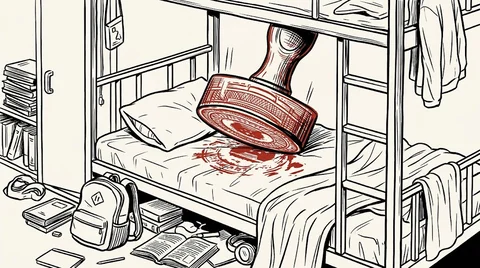
10 The door to enter the system is open, and you can't blame anyone if you don't take the exam?
The emperor takes turns, and it will be my turn next year. Why don't you become the emperor?
Everyone is rushing to enter the system, who will support the people in the system? Can such a system last?
Let's stop here. In fact, in the face of the reality that most farmers have a pension of less than 200 yuan per month, no reason is needed—no matter what caused it, it should be changed.
We are not trying to convince them, because in the face of interests, they cannot be convinced; we are going to use facts, logic, reason, and our voice to overwhelm them.