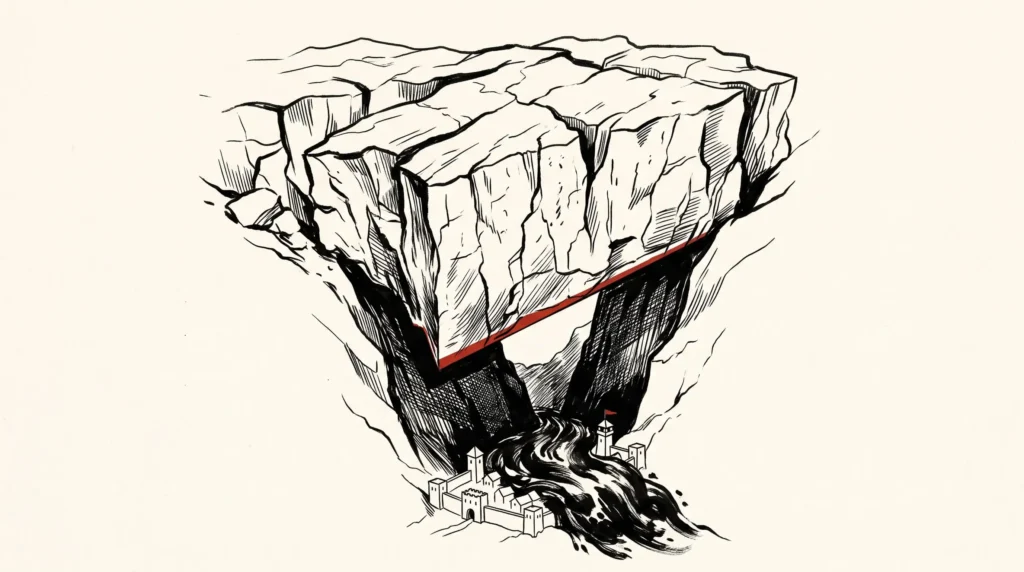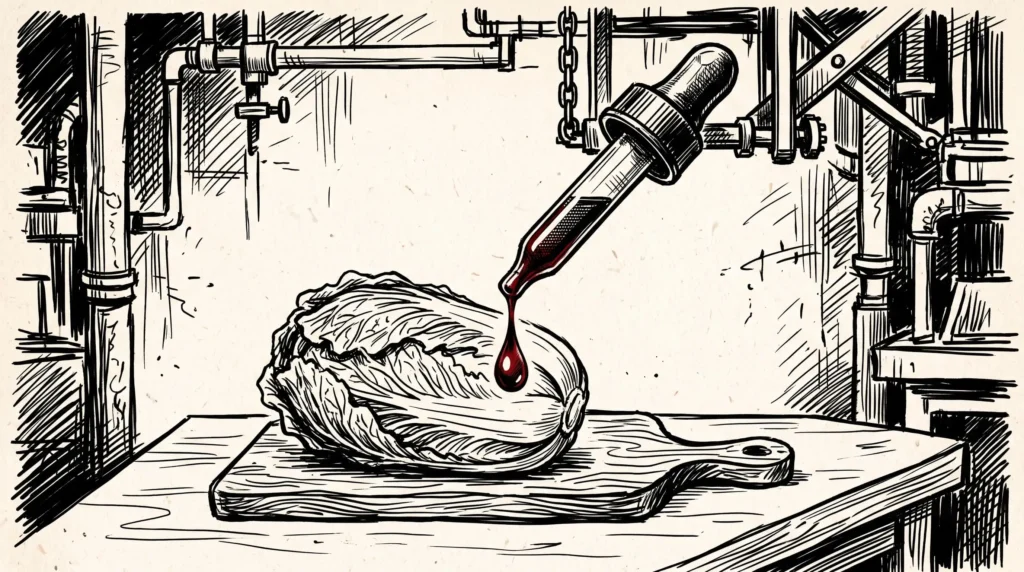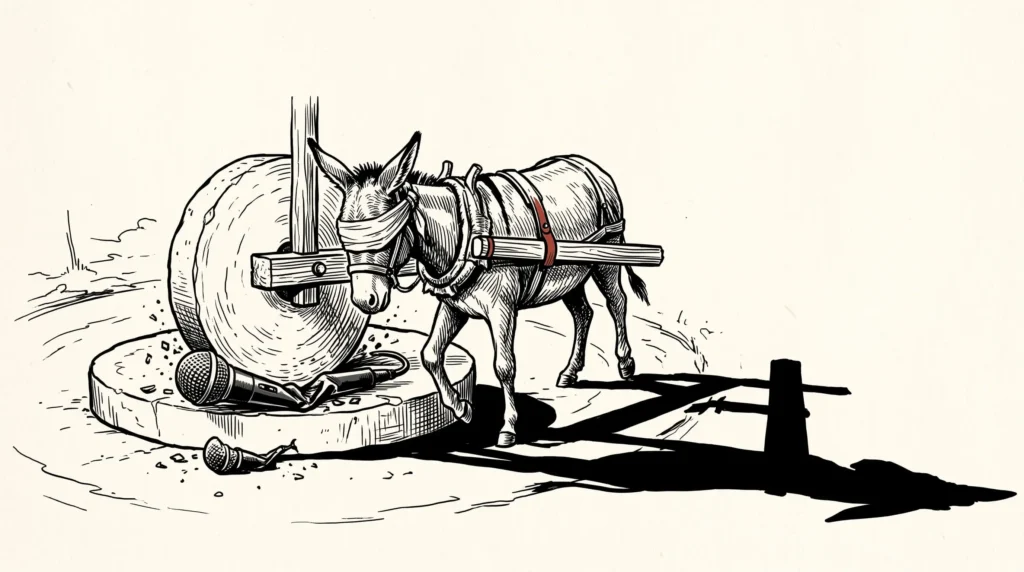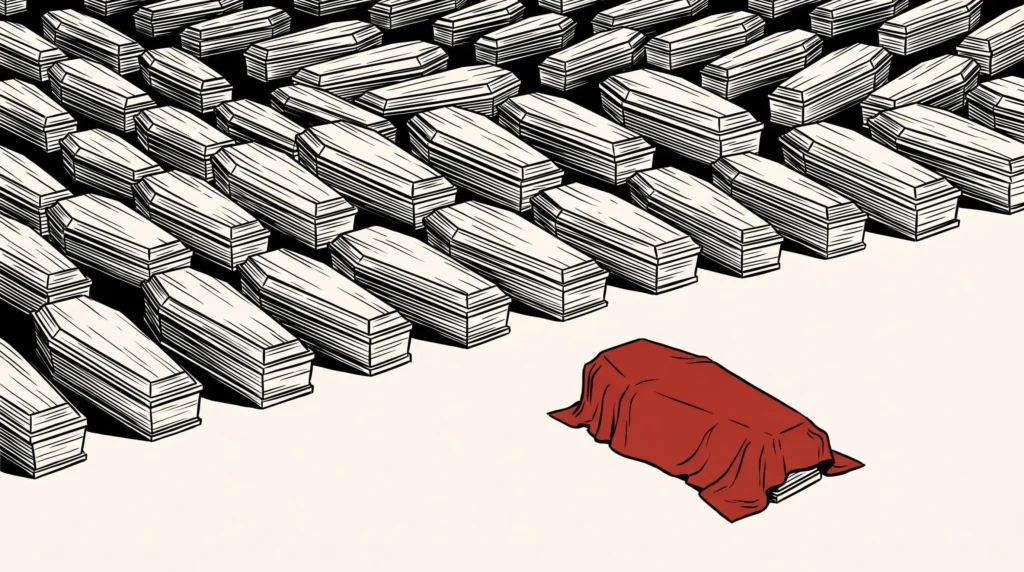
The right choice is never an easy one. Since 2018, China’s media space has been shrinking, and many journalists have chosen to change careers, remain silent, or leave. The wheels of history seem to be no longer moving forward, but rather retreating with dust. But Chai Jing is still there. She always speaks in the calmest tone, recounting the world’s most unfair experiences. She doesn’t sensationalize or shout slogans, but every word she says makes me, the listener, burst into tears. I am grateful—grateful that someone can still investigate with a pragmatic approach and can still tell these stories in Mandarin. Grateful that she, with first-hand information, has let the world know what happened back then.
Related reading:
1. Introduction: Starting from a Vanishing Figure
That video only existed for an hour.
The four-minute and thirty-second trailer was briefly released on WeChat Video and then deleted, with the reason being “violating content.” There was no detailed explanation, nor was there any way to explain it. It was Chai Jing’s moment of reappearance in the public eye after many years. A trailer for a documentary about terrorism and human choices, with a restrained voice and restrained visuals, talking about complex issues, but with a quiet tone.
Many people missed it before they could even open it. I rewatched that video from an overseas platform. At that time, I was scrolling through the comments while watching. There was a simple sentence: “Thank you for still doing the news.” I remember that moment, there was a long-lost feeling—as if a familiar voice had gently come from afar, without shouting, just quietly saying “I’m still here.”
Chai Jing was one of the reasons I started learning journalism. Her tone is always unhurried, but every sentence is about wanting to figure something out—an illness, a disaster, a choice that is not understood. When she speaks, she doesn’t make you feel like you’re being educated, but simply reminds you that some questions are worth asking again.
For many years, she was silent for a long time. This time, she chose to respond to the violence and fear in reality with a documentary on the other side of the world. Not shouting loudly, nor returning to the spotlight, but continuing to do what she is familiar with—seeing, recording, and questioning.
I am writing this article not to prove anything, but simply to leave a record. When many voices disappear, we can always remember that those who once tried to speak out are still continuing to ask questions somewhere.
2. She Was Once the Voice of Conscience in This Country
The year Chai Jing entered CCTV was 2001. She was twenty-five years old, did not yet have a journalism degree, but had already shown a rare sensitivity and insight. She did not walk into the news scene as a blank slate. As early as eighteen years old, she was already the host of “Gentle Night” on a local radio station in Hunan, and with her calm tone and sincere language, she became a popular voice at the time. At twenty-two, she hosted her own television program, “New Youth,” and began to learn to bring words from the late-night radio waves to the bright camera lens.
These early experiences may not be dazzling, but they laid the foundation for her later journalistic style—restrained, not interrupting, and not pre-establishing a position. She recalled in “Seeing” that she was still a temporary worker at the time and did not have a CCTV entry permit. She often edited the film until three or four o’clock in the morning, and then had a kind director pass the videotape through the iron bars of the east gate. When she got home, the elevator had long stopped running, and she could only climb up to the tenth floor step by step. She did not complain, but simply wrote it down, as if describing an ordinary day.
During her ten years at CCTV, she hosted “News Investigation” and “Face to Face,” and later had her own interview program, “Seeing.” She has been to women’s prisons, intensive care units, mining towns, and rural classrooms; she has reported on the dark side of the college entrance examination, the rights of AIDS patients, the hidden pain of homosexuals, and also reported on the death of a little girl and the silence of a female prisoner. These topics are almost impossible to appear in today’s Chinese television news, but during that period, she completed them with extreme empathy and restrained language.
“Seeing,” published in 2012, became a summary and reflection of her ten years of journalistic experience. This book has no slogans and no conclusive conclusions; it simply presents individual characters and events, allowing readers to experience the weight of them themselves. She wrote about the suicide of students at Shuangcheng Elementary School, saying: “I saw the place where the child died, and I felt pain. This kind of pain should not be formatted.” She wrote about her interview experience in the women’s prison, mentioning that the female prisoner who killed her husband said to her: “I don’t feel like you are interrogating me. I just feel like you are really listening.”
That kind of language is a softness that few journalists can maintain. But it is precisely this softness that allows her to penetrate the cold and hard surface of the system and see the wounds deep in human nature. There are no slogans in the book, no accusations; she almost never talks about “how it should be,” but repeatedly raises questions. And these questions are sometimes more real than the answers.
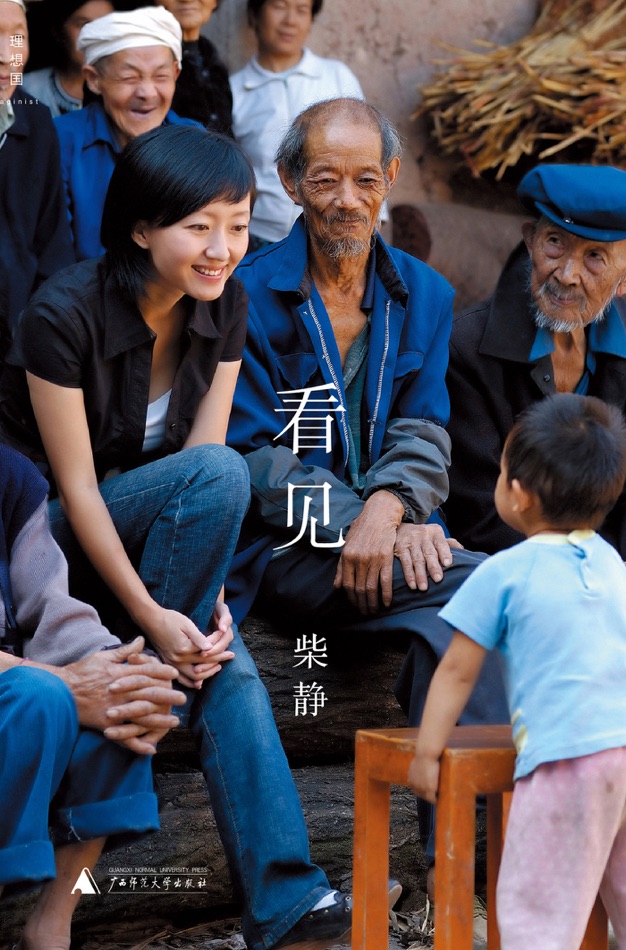
“Seeing” sold three million copies in the year it was published, which is an extremely rare achievement for a journalist’s notebook with quiet writing and no sensationalism. But the real impact of that book is not its sales, but the model of a journalist it brought. That model is: not exaggerating on camera, nor occupying the high ground on viewpoints, but being on the scene, in the story, confused and sad like everyone else, but still willing to keep asking questions.
In the eyes of many young people who later embarked on the path of media, Chai Jing is not an idol, nor a “success story”; she is a possibility—in an extremely limited space, how a person can still remain honest and maintain respect for people.
3. Under the Dome: The Former Peak and Her Turning Point
On February 28, 2015, “Under the Dome” was first released online. This documentary, independently produced, narrated, interviewed, and self-funded by Chai Jing, focuses on China’s increasingly serious air pollution problem. It does not rely on CCTV’s broadcast channels, but is distributed through online platforms. Within 24 hours, the number of views exceeded 100 million. Many people called it “China’s moment of truth.”
The opening scene of the video is simple: Chai Jing stands in front of a black background and says in a calm tone: “This is a personal feud between me and the smog.” She tells the story of her daughter being diagnosed with a benign tumor at birth, and takes this personal experience as the starting point for her investigation of pollution. The film is interspersed with her year-long investigation, dozens of interviews, and on-site filming, with rich data, clear structure, and plain language.
For many Chinese viewers, such a film that can tell the truth and is rich in emotion and professional standards is a rare realization of journalistic ideals. The then Minister of Environmental Protection, Chen Jining, said in public that he had watched the film and also sent a message to thank Chai Jing. Mainstream media also quickly followed up, and some party media, including the People’s Daily, even published comments and interviews. At that moment, a possibility seemed to emerge: China’s public issues might be able to re-enter the public discourse through the form of documentaries.
But this window closed almost at the same time.
Within 48 hours of the film’s online release, major platforms quietly removed “Under the Dome” without any announcement. Search results were cleared, and the original links jumped to “this content violates regulations.” This change was so rapid that it caught people off guard. At the same time, doubts arose online. Some criticized the data cited in the film as not authoritative enough, and others questioned her for being too sensational; even more, some began to dig into the source of funding behind the film, believing that she had connections with foreign non-governmental organizations, implying that she “accepted American funds” and “used environmental protection to package political issues.”
These doubts were quickly amplified, shifting from technical discussions of the film to a judgment of Chai Jing’s personal stance and loyalty. A year later, she gave birth to a daughter in the United States and was again criticized by netizens as “fake patriotism” and “consuming China.” And all of this happened at a speed and intensity that far exceeded her expectations at the time.
From a journalist’s perspective, “Under the Dome” was originally a response to professional competence and social responsibility, but under the dual pressure of public opinion and policy, it turned into a collective denial of her by the public and the system. The Chinese news environment has become increasingly tight since the mid-2010s. Media outlets such as Southern Weekend, which were once known for their in-depth reporting, gradually declined, and investigative journalists either changed careers or turned around. Chai Jing’s experience is not an isolated case, but a microcosm of a trend: when a journalist tries to find a gap between the system and public opinion, they are often not understood, but suspected.
After “Under the Dome,” Chai Jing almost completely faded out of the public eye. She did not appear on camera again, nor did she accept any interviews from mainstream media. Until many years later, she started anew overseas, starting a new interview work as a “stranger.”
For many people, that silence is a symbol of disappointment. But for those like me who once entered the field of journalism because of her reports, it was not a giving up, but a profound reminder: in an era when the space for speech is gradually shrinking, speaking itself becomes difficult, and what price must be paid to choose to continue speaking.
4. After Leaving, What Did She Choose?
In 2017, Chai Jing moved to Barcelona, Spain, with her husband’s work. It was the first time she truly left Beijing, left the Chinese media circle, and left everything she was once familiar with. She mentioned in her later films that before leaving, she gave away several suits she had worn during her past interviews, saying that it was a ceremony of “returning to the fields after retiring from the army.” She thought she could calm down and live a normal life.
But life did not go as quietly as she had expected. A month after the move, a serious terrorist attack occurred in Barcelona, killing thirteen people and injuring more than a hundred. It was the first time she had been so close to a terrorist scene, close enough to hear the sound of people running away, and close enough to see the real people behind the data in the news. She later said that the incident deeply stung her. That kind of sting did not come from fear, but from the instinctive reaction of a long-time journalist: something happened, and it must be figured out why it happened.
Two months later, she began her investigation. The language was not her mother tongue, resources were limited, the team was very small, the production funds came from personal savings, and she also had to learn to build trust with interviewees in a foreign environment. The documentary “Strangers” began under such conditions.
The filming lasted for five years, visiting many countries, and recording the stories of former jihadists, witnesses of political movements, war victims, and immigrant families. She worked in English for the first time, entering the lives of others as a foreigner. But she always adhered to an attitude—not judging, not interfering, not pleasing the audience. She just asked questions, listened to the answers, and organized the stories, just as she had done in “News Investigation” in the past.
In the words of an interviewee, a father who had lost his three-year-old son said: “When will people start looking for the truth? Can only I do it? The father of a three-year-old boy who died? What training have I received?” Chai Jing did not answer in the documentary, but the camera gently lingered on her face. It was a familiar but more calm face. She later said that these words struck her heart—she could not pretend not to hear. She said: “I am a stranger in Europe, but twenty years of professional training taught me to seek answers.”
These words reveal her persistence and choices over the years. Even if she left the land where she was familiar with the language, even if she lost the platform and the spotlight, she is still a journalist. Not because someone asked her to do so, but because she knows that when someone is willing to speak frankly about their pain, recording is a response. The right thing may not change the world immediately, but there must always be someone to do it.
In an era when journalistic work has long been devalued as a tool of public opinion, and against the backdrop of many excellent journalists choosing silence, changing careers, or leaving, Chai Jing answered another question for us with “Strangers”: If telling the truth is no longer safe, then between speaking and not speaking, how should we choose? Her answer is to continue doing it.
5. “Strangers”: The Voice She Heard on the Edge of the World
On August 13, 2023, Chai Jing released the trailer for her five-year documentary on the WeChat video account “Strangers in Europe.” Her voice and images reappeared on the Chinese internet, eight years after “Under the Dome.”
This four-minute and thirty-second trailer has no bloody scenes and no provocative language. It talks about terrorism, a group of young people in Europe who are heading towards extremism. Chai Jing said in front of the camera: “Terrorism needs mystery to maintain itself. Expose it, and it will lose all control.”
This statement is not radical. It is neither an accusation nor a judgment, but more like a journalist’s work attitude—if you can’t stop something, then you should at least understand how it happened. But this attitude, in the current Chinese public opinion field, quickly encountered a cold wave.
In less than an hour, the trailer was taken down by the platform, with the reason being “the video involves violating content.” It was not explained what content violated the regulations, nor was any explanation allowed. After the removal, a large number of comments immediately poured into her old Weibo from seven years ago: “Should be banned,” “Female spy,” “Selling out the country for glory,” “Running dogs who accept Western funds.” Some of the comments came from real users, while others were obviously anonymous accounts that had been mobilized.
On Douban, a user named “Sunflower Life” published a long article, asserting that Chai Jing “actively belittled the image of Chinese people in order to gain Western recognition,” and compared her to a “yellow skin, white heart” defector. The first episode of the film has not yet been broadcast, and the conclusions about her “incorrect stance,” “manipulating emotions,” and “receiving foreign funds” have already filled the webpage.
This phenomenon is not new. In the current Chinese social media environment, once a person is labeled as “suspicious of stance,” all her past will be redefined. The support and praise that “Under the Dome” once aroused are now also erased. “I never liked her,” “I knew there was a problem back then,” “She can’t be whitewashed”—these words appear in the comment area, becoming a new moral correctness.
But what is truly worrying is not just these attacks themselves, but that they came so quickly and so without evidence. The documentary trailer had just been released, and the first episode had not yet been broadcast, but the conclusion had already been formed. It is not directed at the work, but at the person. It is not suspicion, but conviction. It is not discussion, but denunciation.
In such an environment, how should a journalist exist? Not only can’t they speak out sharp criticism, but even mild questions are regarded as malicious; even if they remain silent, they will be considered not actively praising enough. In a polarized and defensive context, even “trying to understand the other party” will be regarded as betrayal.
However, amidst such rejection and attacks, some people still quietly found the trailer and left a message under YouTube: “It’s really great to know that you are still doing the news,” “Teacher is still there, and there is still hope in this world.” These voices are small but persistent. They don’t shout, nor do they sensationalize, but in a quiet corner, they softly say: “We haven’t forgotten you.”
6. The Re-emergence of Bans and Silence
Her book was also taken down.
This month, a publishing company in Beijing issued a brief notice: Chai Jing’s “Seeing” was immediately stopped from being published and completely recalled due to “quality issues.” The notice did not specifically explain what the so-called “quality” refers to, nor did it point out which part of the book needs to be corrected or deleted. It’s like an old file, quietly dragged into the recycling bin, covered with a lid, leaving no trace.
For readers familiar with this book, it is not a work that advocates radical positions, nor is it a collection of any political criticism. It is just a journalist’s working notes—a series of on-site records, the echoes of conversations with people. There are no enemies in the book, only people’s experiences and choices: how the wife of a miner who died in a mining accident supports her family, how a female prisoner recalls the night she killed her husband, how a boy makes the decision to commit suicide.
Such a book is deemed “no longer suitable for publication,” which is difficult to understand, but it seems to have become a matter of course in today’s context. Because she is Chai Jing, because she is still speaking.
Since the period of “News Investigation,” she has adhered to the scale of “people” in an almost stubborn way. Beyond those grand narratives and performance reports, she always tries to find the position of the injured. In 2003, the SARS epidemic broke out, and she entered the ward seven times, not to become a “brave journalist,” but because she wanted to know how patients live their lives and whether doctors can sleep at night. She wrote: “It’s not that I see more, but that I am willing to keep watching.”
And such a person, in today’s China, is defined as the source of “risk.”
From “Under the Dome” being banned to “Seeing” being taken down, from the social media’s humiliation of her to the complete reconstruction of her personal image, ten years have passed. During these ten years, she has not publicly defended herself, nor has she participated in any confrontation of political positions. She is just in a foreign country, continuing to record people’s stories, using the language and methods she can master, to complete what she thinks needs to be done.
However, even this kind of “continuing” is regarded by some as “not being content.”. Her new documentary “Strangers” had just released a trailer, and it was reported, deleted, and criticized; online public opinion quickly labeled her as a “female spy” and a “Western mouthpiece.” A Chinese journalist, going to understand the roots of European terrorism, has become a danger in her own country.
She did nothing wrong, but simply adhered to the basic responsibilities of journalism. But in a system that can only have one narrative, any voice that does not conform, even if it is mild and professional, will be regarded as a threat.
We have witnessed how a good person was pushed to the edge of language step by step. Once, her voice was one of the calmest and most convincing voices on television, and it was the starting point for many young people to choose the path of journalism. Her questions are never sharp, but they can always penetrate the surface of words and point directly to the human condition. Such a journalist should not become the enemy of public opinion.
But this is also the greatest tragedy—in contemporary China, what a journalist can do is no longer to discover the truth, but to struggle to maintain the possibility of being heard.
And in the eyes of us readers, she is not just a journalist. She is a kind of memory, a witness to the ideal of journalism. She makes us believe that between power and silence, someone once chose honesty and tenderness.
Today, her name still exists, but it cannot be publicly spoken; her books are still being read, but they no longer appear in bookstores; her documentaries are still circulating, but they are not being broadcast in her motherland.
But she has not withdrawn.
In a small apartment in Europe, in an environment where language is not understood and resources are limited, she still picks up the camera and turns on the recorder to ask those questions that she thinks should be asked. Not to prove anything, nor to return to the public eye, but simply because she thinks it is right.
And this “thinking it is right” is the rarest and most precious thing in our time.
7. Conclusion: She is Still Seeing, and We Cannot Pretend Not to See
Chai Jing has always had a great influence on Chinese journalists. Many people, like me, chose to major in media because of her.
When I was still a student, I repeatedly read “Seeing,” watched her interviews and replayed her questions late at night. It was not simply learning, but more like a guide—she taught us how to see, how to listen, and how not to make judgments hastily. She made us understand that a journalist should not only be a mouthpiece, but also a person who can exchange glances with others.
Many years later, she left China, but she did not leave journalism. What she is doing now may be more difficult and more remarkable. She is talking to former jihadists, interviewing those who have experienced the Russian-Ukrainian war, visiting witnesses of the CCP’s various political movements, and also the daughter of the double agent—these are valuable and impossible topics to complete within the wall. She also reported on the Zhu Ling case and interviewed Zhuang Zuyi, the wife of a US diplomat. She said: “I am trained, I am a professional.”
Seeing her say and do this makes me feel a kind of indescribable hope—it turns out that in this era that is being swallowed up by censorship and suspicion, there are still people who remember what news is, and there are still people who remember why we chose this path in the first place. This kind of persistence is not a high-profile resistance, but a constant coordinate. It tells us: no matter how bad the environment is, meaningful things are still worth doing.
I once watched her interview Yang Bin. The star prosecutor who was once commended by the system was excluded because he criticized the judicial system, and eventually studied at a law school overseas. He said: “The reason why we have retreated all the way is because we are too afraid.” This sentence is very heavy and very accurate. When fear replaces belief, even the most basic questioning becomes a risk, and we are not far from collapse.
Han Xiu also accepted Chai Jing’s interview. She said that if every Chinese person made the right choice, China would not be what it is now.
But the right choice is never an easy one. Since 2018, China’s media space has been shrinking, and many journalists have chosen to change careers, remain silent, or leave, and the space for speech is also constantly being compressed and rewritten. The wheels of history seem to be no longer moving forward, but rather retreating with dust.
But Chai Jing is still there. She always speaks in the calmest tone, recounting the world’s most unfair experiences. She doesn’t sensationalize or shout slogans, but every word she says makes me, the listener, burst into tears. I am grateful—grateful that someone can still investigate with a pragmatic approach and can still tell these stories in Mandarin. Grateful that she, with first-hand information, has let the world know what happened back then.
People will not forget her reports, will not forget the people and scenes she has recorded, and will not forget her deep respect and honesty.
In a system where only one voice is allowed to exist, I think of a sentence I once saw:
“If sharp criticism completely disappears, mild criticism will become harsh; if mild criticism is not allowed, silence will be considered malicious; if silence is also not allowed, not praising enough will be a crime. Then, in a world where only one voice is allowed to exist, the only voice that exists is a lie.”
Now, she is still seeing. And we, too, cannot pretend not to see.
We cannot pretend not to see everything she has recorded, nor can we pretend not to see how this era treats her.
She has never failed the trust of her information providers. She is the conscience and backbone of Chinese journalists. She has never been silent, and we should remember her, and also remember the courage to “keep watching.”
Author: The Other Shore Kingdom of Luna. Hello, I am Luna, a citizen journalist, and I also do news and research on the history of news. I am currently studying media, democracy, and human rights. This blog mainly shares stories about democracy and human rights in Asia.
Discover more from 自由档案馆
Subscribe to get the latest posts sent to your email.