

More than two years after the adjustment of the COVID-19 prevention and control policies, the epidemic prevention facilities have been idle for a long time, and some makeshift hospitals have entered the stage of auction and demolition. According to public resource trading platforms across the country, since 2024, many places have been promoting the demolition of isolation sites such as makeshift hospitals and health stations.
As temporary medical facilities to deal with the COVID-19 epidemic, makeshift hospitals are not the "main battlefield" for emergency treatment and treatment. Their primary purpose is to isolate infected people and block transmission. After the adjustment of the epidemic prevention policy in December 2022, the makeshift hospitals, which were converted from public facilities such as stadiums, took the lead in restoring their original functions, and some makeshift hospitals were converted into sub-designated hospitals. What needs to be considered for demolition are the remaining long-term idle makeshift hospital projects. These makeshift hospitals are mostly temporary buildings built with containers and prefabricated houses in the open areas outside the city.
The funds for building makeshift hospitals mainly include central and local financial funds, special bonds of local governments, etc. Public resource trading platforms across the country show that makeshift hospitals are mostly state-owned assets held by government agencies such as health and health authorities or companies with state-owned assets background. In order to avoid damage and waste during demolition, all regions regard the recycling and utilization of materials and equipment as an important link.
According to the bidding documents from various places, there are roughly two ways of handling them in different cities. Some places require the project contractor to implement protective dismantling of materials and equipment with reuse value, and hand over some materials to government departments to coordinate state-owned enterprises for recycling, or transfer them to relevant government departments for reuse, and the remaining valuable materials are handled by the contractor; some places clearly stipulate that the dismantled materials are used as a means of payment and belong to the winning bidder, and the winning bidder provides demolition, clearing and site restoration services.
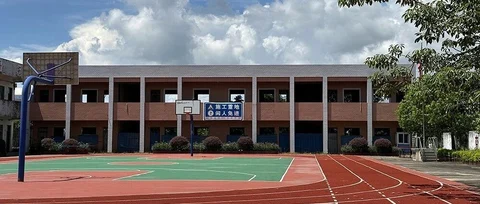
The latest case appeared in Dongguan, Guangdong. The Dongguan Ecological Park Health Center auctioned off its assets into multiple projects. The Guangdong Public Resource Trading Platform shows that on March 3, 2025, Guangdong Yongsheng Renewable Resources Recycling Co., Ltd. won the Dongguan Ecological Park Health Center cable disposal project with a transaction price of 5.927 million yuan.
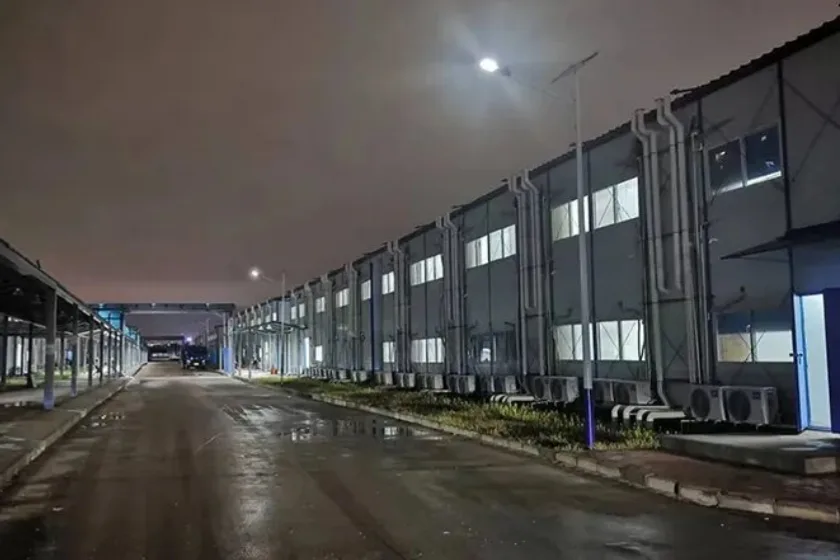
Photo: Dongguan Songshan Lake Ecological Park Health Center makeshift hospital. Photo: Guangdong Science and Technology Media Center
The Dongguan Ecological Park Health Center is a makeshift hospital built in 2022. In May of that year, the Management Committee of Dongguan Songshan Lake High-tech Industrial Development Zone decided to build a dormitory project in Songshan Lake Ecological Park, with a construction area of about 55,000 square meters, built more than 2,000 dormitories, providing more than 3,000 beds; in November of the same year, the local government converted this project into a makeshift hospital and a designated hospital, eventually forming 13 groups and 36 double-story prefabricated building complexes, including 1,745 patient rooms, which can accommodate about 5,000 people.
The makeshift hospital is equipped with basic daily necessities. The bidding documents of the Dongguan Ecological Park Health Center show that the auction asset list lists hundreds of items, including 1,469 water heaters, 1,601 air conditioners, 813 fire extinguishers, 1,185 toilets, 5,941 single beds, surveillance cameras and hundreds of cameras, as well as computers, networks and power distribution facilities, and building facilities.
The demolition of makeshift hospitals involves several steps. Before the listing and auction, the property owner will hire a third-party organization to conduct an asset assessment and formulate a recovery reserve price with reference to the assessment price results. For example, in January 2025, the dismantling of materials from the Wenchang makeshift hospital in Hainan started an open quotation, stipulating that the reserve price for recycling scrapped containers was 300 yuan/piece, the reserve price for recycling scrapped air conditioner outdoor units was 320 yuan/piece, the reserve price for recycling scrapped air conditioner indoor units was 80 yuan/piece, the reserve price for recycling scrapped water heaters was 10 yuan/piece, and the reserve price for recycling scrapped toilets was 130 yuan/piece. On top of the sum of all assets, a project bidding control price is then formed.
The demolition of a makeshift hospital in Shushan District, Hefei, Anhui, announced the auction results in February 2025, and the buyer was determined. The asset assessment report of the project shows that the makeshift hospital was built with containers and was completed in December 2022. The indoor office equipment and household appliances have not been used, and the comprehensive new rate of various equipment is 60%.
During the COVID-19 prevention and control period, "it is better to be prepared than not to be prepared" was a phased policy guidance. All regions concentrated resources and rushed to build makeshift hospitals, and a makeshift hospital with thousands of beds could often be built within 7 to 10 days. Due to the tight time and heavy tasks, some projects lacked a complete approval process, which also had a certain impact on the subsequent disposal.
The "Property Certificate" of the makeshift hospital in Shushan District shows that the asset holder is the local health and health authority. During the asset assessment, the property owner did not provide the general contracting contract and invoices, as well as the invoices, details and instructions for the use of containers and office equipment to the assessment party. Therefore, the relevant disputes are the legal responsibility of the property owner.
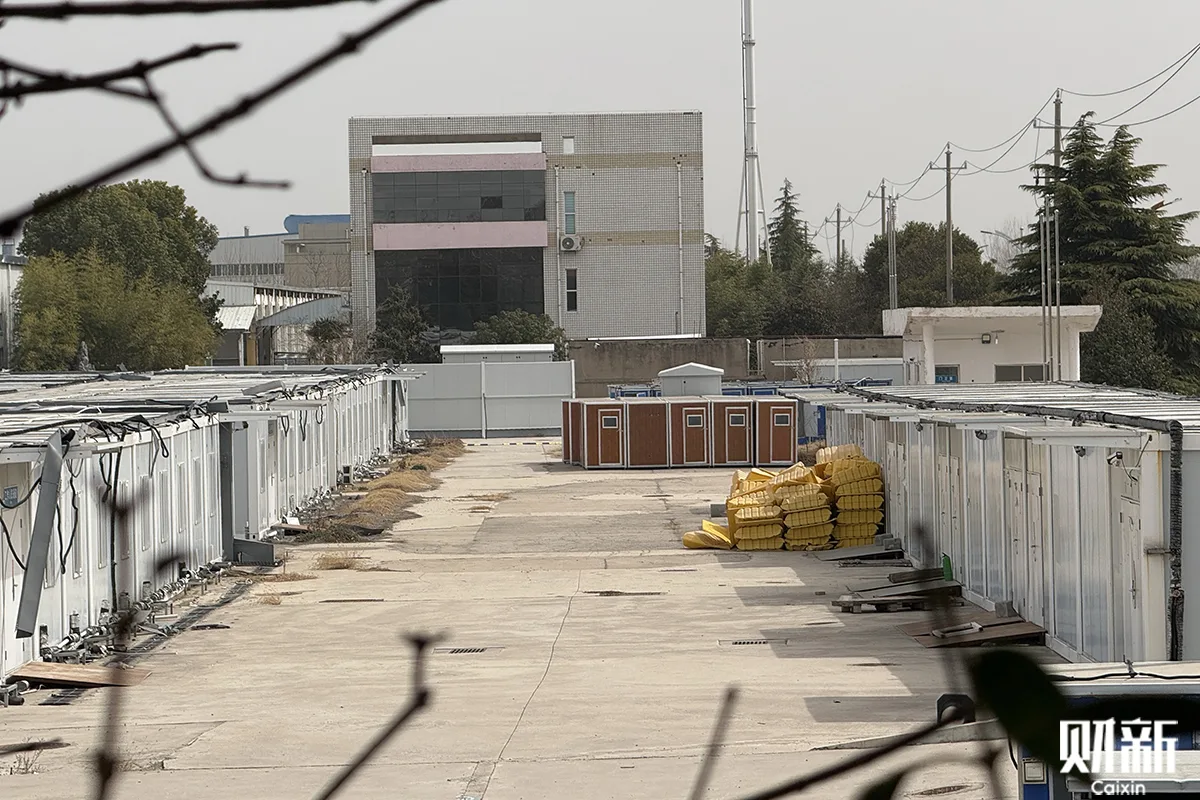
On March 12, 2025, Zhengzhou, Henan, Zhengzhou Airport Economic Zone makeshift hospital, the hospital is empty and dilapidated. Photo: Caixin Chen Liang
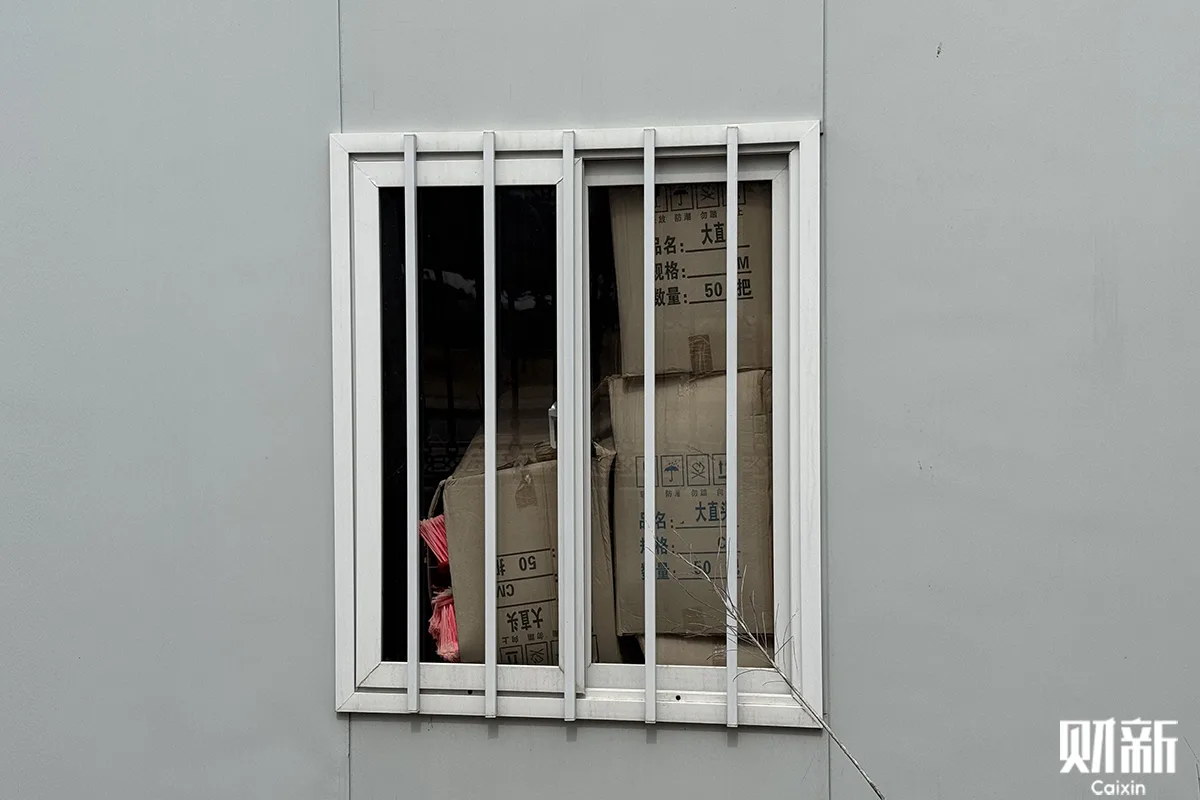
On March 12, 2025, Zhengzhou, Henan, Zhengzhou Airport Economic Zone makeshift hospital, the empty makeshift hospital is piled with boxes of electric kettles. Photo: Caixin Chen Liang
Make-shift hospitals in different regions have appeared in multiple listings. The auction for the demolition and disposal of the makeshift hospital in Shushan District, Hefei, was held twice. For example, from April to August 2024, the asset demolition project of the makeshift hospital in Ganzhou, Jiangxi, was listed and auctioned three times; from July 2024 to January 2025, the Hepu Health Station in Shantou, Guangdong, was listed and auctioned three times. Caixin was unable to confirm the auction results of these two makeshift hospitals through public channels.
The Dongguan Ecological Park Health Center project has experienced four failed auctions. In October 2024, the Management Committee of Dongguan Songshan Lake High-tech Industrial Development Zone first issued a demolition bidding announcement, intending to auction the prefabricated houses and the internal air conditioners, water heaters, bathrooms, beds, bedside tables, etc., as well as the power transformation, fire protection, sewage pipe network facilities and reinforced concrete as a whole, with a starting price of 25.203 million yuan. After the first failed auction, the listing price of the assets continued to decline. By the fourth auction in January 2025, the listing price had dropped to 20.132 million yuan.
In the fifth listing, the seller divided the assets into three projects: cables, prefabricated houses and machinery and equipment, and listed them for bidding separately. Among them, the cable disposal project includes power cables, box-type substations and green plants, with a starting price of 4.327 million yuan; the starting prices for the prefabricated houses and machinery and equipment disposal projects were 11.055 million yuan and 4.75 million yuan respectively. Except for the cable project, which successfully confirmed the buyer and achieved a premium transaction, the other two projects failed to be auctioned.
In the auction market, factors such as insufficient demand, excessively high prices of auction items, insufficient attractiveness of auction items, or a poor market environment may lead to failed auctions. Dongguan did not explain the reasons for the multiple failed auctions. After the first auction failed, the makeshift hospital in Ganzhou and the Hepu Health Station in Shantou also lowered their reserve prices in subsequent listings.
As a product of dealing with major public health events, the economic and social benefits of makeshift hospitals have triggered extensive social discussion. For example, in September 2022, the National Development and Reform Commission issued the "Notice on Issuing the Third Batch of Central Budgetary Investment Plans in the Field of Health and Health". This notice shows that the total amount of central budgetary investment in the health and health field in the third batch is 26.521 billion yuan. Among them, the budgets of 20 provinces and cities include 70 makeshift hospitals, health stations and other isolation sites, with a single project fund ranging from 30 million to 50 million yuan, and the cumulative fund is 2.716 billion yuan.
It takes some time for the central funds to be distributed to the local governments. When the COVID-19 prevention and control policies have already changed, some makeshift hospitals have just completed the application procedures and have not yet started construction. Whether to build or not has put local governments in a dilemma. (See the Caixin.com report "70 isolation site projects involve more than 2.7 billion yuan in central funds. Should makeshift hospitals be built or not?")
After the adjustment of the epidemic prevention policy, all parties have proposed the issue of "reusing makeshift hospitals". In June 2023, the Health and Health Commission of Changshou District, Chongqing, replied to the proposal of the CPPCC members, saying that the local government had allocated and recycled the remaining medical supplies and some infrastructure in the makeshift hospitals to reduce idleness and expiration damage. After the medical function is gradually withdrawn, the local government also plans to reuse the houses, either to restore them to factories for rent, or to convert them into rehabilitation nursing homes, Chinese herbal medicine processing plants, etc.
During the same period, the Ningjin County Government of Xingtai, Hebei, replied to the proposal of the Xingtai Municipal Committee of the Democratic Progressive Party, saying that the county had organized elderly care service institutions to conduct inspections and evaluations of the makeshift hospital in Ningjin County. The service institutions believed that the safety indicators such as the seismic design of the building structure did not meet the standards, and the fire protection facilities and the difficulty of adapting to the aging transformation were very difficult, and it was not recommended to transform the makeshift hospital into elderly care service facilities. The Ningjin County Government also responded that it had unified the medical beds in the makeshift hospital to designated medical institutions, carried out a comprehensive disinfection treatment of all facilities and materials in the warehouse, and temporarily retained the makeshift hospital.
In July 2023, the General Office of the State Council issued the "Guiding Opinions on Actively and Steadily Promoting the Construction of 'Dual-Use' Public Infrastructure in Super-Large and Extra-Large Cities", which proposed that large cities should embed emergency functions for sudden public events such as public health when building and transforming facilities such as homestays, tourist hotels, medical institutions, and storage bases, and build a number of "dual-use" public infrastructure.
This is a measure taken by the government to make up for the shortcomings in emergency response capabilities and deal with possible public events in the future, summarizing the experience of COVID-19 prevention and control. Public information shows that some places have incorporated the houses that were used as makeshift hospitals during the epidemic and have certain conditions into the construction of "dual-use" facilities through upgrading and reconstruction.
The number of makeshift hospitals is huge, and the conditions for transformation and reuse are different. The truly tricky ones are the temporary buildings built in the suburbs. These buildings have a large land area, remote locations, and simple facilities, and there are many objective difficulties in reuse, which tests the government's decision-making ability.