In 1996, Panama, the world’s most important port country, issued an international tender. They wanted to find a ‘white knight’ as soon as possible for the two most important ports at both ends of the canal, Balboa and Cristobal.
This was not the first time Panama had handed over port operations to private companies.
Panama’s first private port was built by the American company SSA Marine in 1992. Later, Taiwan’s Evergreen Marine took over the second port.
After the tender announcement, three companies from the United States, Hong Kong, and Japan immediately bid. After several rounds of bidding, the Hong Kong company won the 25-year franchise for the two ports:
Li Ka-shing’s Hutchison Whampoa.
It was also this fair and just international bidding that won Panama a reputation for a reliable business environment. After Hutchison, they successfully attracted the Singapore Port Authority to operate the Rodman port on the Pacific coast.
Since then, Panama has formed five major ports, which constrain and compete with each other, growing stronger through their own capabilities.
And Li Ka-shing, who won the Panama ports, pricked the nerves of American politicians and the media. The words they used to curse him were much dirtier than the words Chinese people use to curse him now.
The Americans believed that Hutchison Whampoa represented China in controlling the Panama Canal, inserting a nail in the backyard of the United States, thereby threatening the strategic security of the United States.
At that time, Li Ka-shing would still argue, saying that he didn’t even have a gun, so how could he control the canal? He also made an analogy:
If I buy a house on Hong Kong Island and another house in Kowloon, does that mean I control the entire Hong Kong underwater tunnel?
1
In fact, at that time, the U.S. State Department commissioned Ambassador Gutierrez to Latin America to initiate a political review of Li Ka-shing.
In October 1999, the political review of Li Ka-shing was officially completed. The Americans found that Hutchison’s subsidiary in Panama not only had no investment from mainland China, but also had no Chinese executives, and the instructions were actually issued from the UK.
Even Li Ka-shing himself was insignificant in the business in Panama. The American report contained this sentence:
We have found no indication that Mr. Li has participated in H-W’s strategic planning with regard to the canal.
(We have found no indication that Mr. Li has participated in H-W’s strategic planning with regard to the canal. )
Hutchison’s entry into Panama not only had no Chinese factor, but was instead a layout of British capital. Mr. Li Ka-shing has connections with Beijing, but the more important relationship comes from:
Number 10 Downing Street (the British Prime Minister’s residence) support.
One month after the political review of Li Ka-shing was released, on November 30, 1999, Clinton said at a White House briefing that Hutchison Whampoa’s management of the ports at both ends of the Panama Canal would not pose a threat to U.S. security. What China wants to show the world in the Panama River area is that it is managing effectively and fairly. I think they want to show the world that they are a responsible partner.
It can be said that it was Clinton’s statement that ended the domestic concerns in the United States about Hutchison, and Hutchison’s operations in Panama could continue.
And Clinton’s unusual praise and trust for China was, of course, for a reason. What happened between China and the United States in 1999 should be remembered by all Chinese people. In the face of great humiliation, China rationally chose to resolve the dispute through diplomatic channels.
Clinton’s release of Hutchison was more like ensuring its own absolute security, and then going with the flow to sell favors and appease the grievances suffered by the Chinese.
2
Hutchison’s 28 years in Panama were 28 years of diligent and conscientious work.
The first thing they did when they entered Panama was to hire a large number of local employees. Except for senior executives, they left 99.9% of the positions for locals.
Hutchison itself calculated a bill. They paid $650 million in taxes to Panama over the years, not including dividends. They have replaced facilities and equipment three times, spending $1.7 billion. The two original docks, which were poor and white, were transformed into the most lively and inspiring ports in Latin America, with a total throughput of 1.8 million TEUs. This is equivalent to the total cargo volume of the Panama Canal:
Four-tenths.
The locals say,
Hutchison is Panama’s largest foreign exchange engine.
Under the leadership of Hutchison, the Panamanian government and other operators have also vigorously developed infrastructure, with more than 8 million TEUs transported from here to all parts of the world every year. Panama can earn at least $800 million just from tolls.
It was because of Hutchison’s diligence that they won a 25-year franchise renewal in 2021.
But Trump’s words still shattered the tranquility of the canal. On Christmas Day in 2024, Trump publicly declared that Chinese soldiers were stationed in the Panama Canal, and he later stated publicly several times:
Will definitely take back the Panama Canal.
CNN also sent a reporter to the Panama Canal, wanting to find the Chinese army commanded by Li Ka-shing that Trump said, but of course, they found nothing.
But Panama and Hutchison were already fish on the chopping board.
Less than three months after Trump spoke out about the Panama Canal, Hutchison announced an important merger. They would sell their core assets in global ports for $22.8 billion to:
BlackRock-TiL Consortium.
3
Trump’s coveting of the Panama Canal largely came from the instigation of Wall Street giant Larry Fink. Larry Fink is the CEO of BlackRock.
As soon as Trump took office, Larry Fink took the initiative to promote the acquisition of the Panama business:
As long as BlackRock buys the ports at the beginning and end, it doesn’t even need to use knives or guns, and it can directly take over the Panama Canal.
For many years, Larry Fink has been coveting Hutchison. Before this, he believed that Hutchison’s stock price was less than one-third of its book value:
It’s so suitable for bottom fishing.
The negotiation progress of this century transaction was extremely fast. Li Ka-shing personally came forward, and his eldest son Li Zeju participated in the negotiation. The parties reached a $22.8 billion deal within a few weeks through video conferences and phone calls.
CK Hutchison originally had 52 ports. In addition to the 2 ports in Panama, there were also ports in Mexico, Spain, the United Kingdom, the Netherlands, Indonesia, Malaysia, South Korea, Thailand, and Pakistan. Even the berths in Shanghai and Ningbo were also sold.
In the end, only a few terminals in Hong Kong and Yantian, Shenzhen, which were the largest in scale, were retained.
The price offered by BlackRock made the Li family unable to refuse.
$22.8 billion, almost the same as the current market value of the entire CK Hutchison, is 13 times the expected revenue of CK Hutchison’s port business in fiscal year 2024. Currently, the average valuation of international mainstream ports is 10 times EBITDA, which is equivalent to a premium of 30%.
The Li family can not only directly get nearly $20 billion in cash, but more importantly, they have escaped from the impact risk of Trump.
Bloomberg said that this is Li Ka-shing’s in his life:
One of the boldest transactions.
A reporter from the New York Post said that this is the most crazy acquisition case he has ever seen in his career:
The craziest acquisition case.
This case, which could only have been written in ‘Currency Wars’, has actually been realized.
4
Larry Fink, who won the core ports of CK Hutchison, has been regarded as a national hero in the United States. Especially in the eyes of traders, Larry helped their group achieve the biggest political counterattack in history.
The U.S. Trade Representative’s Office had a proposal in February this year. The U.S. government wants to charge high service fees to Chinese ships and related operators entering U.S. ports, with a maximum single fee of:
$1.5 million.
Capital has no borders, but ports have sovereignty. As the saying goes in ‘Let the Bullets Fly’:
Killing people is about killing their hearts.
Master Tang’s butt was hanging on the tree until he died.
On the other side of the ocean, Li Ka-shing naturally became a person who sold out national interests. After ‘Don’t let Li Ka-shing run away’, he once again became the target of criticism, and even the company’s performance meetings were afraid to be made public.
From March 13 to 17, Hong Kong’s Ta Kung Pao published three consecutive commentaries, from ‘Business Map and National Strategy Going Against Each Other’ to ‘Entrepreneurs Should Have a Sense of Home and Country’, with increasingly severe wording, and even directly stated: If you don’t turn back, you will be nailed to the pillar of historical shame.
The commentary pointed out a way out for Li Ka-shing:
Those great entrepreneurs who shine in the annals of the nation are all like great generals, firmly and bravely safeguarding national interests and national righteousness.
The only problem is that Li Ka-shing is not willing to be written in the annals of the nation.
Huang Lisong, the former vice chairman of the Shantou University Board of Directors, once said that at that time, they suggested that even if the university was not named Li Ka-shing University, the auditorium in the center of the school should be named ‘Jiacheng Hall’, but Li Ka-shing said no.
Later, they came up with an idea to temporarily name it ‘Weiming Hall’, and then change it to ‘Jiacheng Hall’ when Li Ka-shing agreed in the future.
Still rejected by Li Ka-shing. He once joked:
It’s not good to put it on and then erase it in the future. (CDT editor’s note: No authoritative source for this sentence was found)
5
The Americans’ political review of Li Ka-shing back then had a sentence that was very unexpected and even hard to believe:
We have found no indication that Mr. Li has participated in H-W’s strategic planning with regard to the canal.
He laid out the ports only because of the steady cash flow of the ports for decades, which gave Hutchison more room to maneuver in other businesses. If necessary, he will also sell the ports without hesitation.
In 2006, Hutchison took out 20% of its shares at once and sold them to the Singapore Port Authority for $4.4 billion. After 2018, they sold off again, and Hutchison went from the world’s largest port operator to the sixth.
Li Ka-shing has no nostalgia for the title of King of Global Ports.
By the way, the Singapore Port Authority, which took over Hutchison at a high price, later divested the ports, but has never been able to find a suitable opportunity.
In Li Ka-shing’s eyes, ports are only about business. Doing real estate in China and doing tap water business in the UK are the same logic; his every move is just buying high and selling low.
But now, the world has long diverged. That ideal society of ‘the wind can enter, the rain can enter, but the king cannot enter’ is long gone, and may never have existed.
In ‘Records of the Grand Historian: Biographies of Wealth’, it is said that after Fan Li helped the King of Yue to wash away the shame, he sailed on a small boat and drifted on the rivers and lakes, changing his name. In Sima Qian’s eyes, a pure businessman is:
Managing industries, hoarding goods, adapting to changes, and pursuing profits with the times.
But Pericles of ancient Greece said a sentence, which was later carried forward by Lenin and Trotsky:
If you don’t go looking for politics, politics will come looking for you.
This is very similar to what a lawyer friend of mine said. He said that small cases talk about law, medium cases talk about background:
Big cases talk about politics.
Li Ka-shing’s major investment decisions often coincide with the turning points of the political cycle, which is not a coincidence. Li Ka-shing believes that he is doing a wave, but he should know that the wave is often created by politics.
From Clinton’s release to Trump’s net, the calm of decades seems to have given many people the illusion.
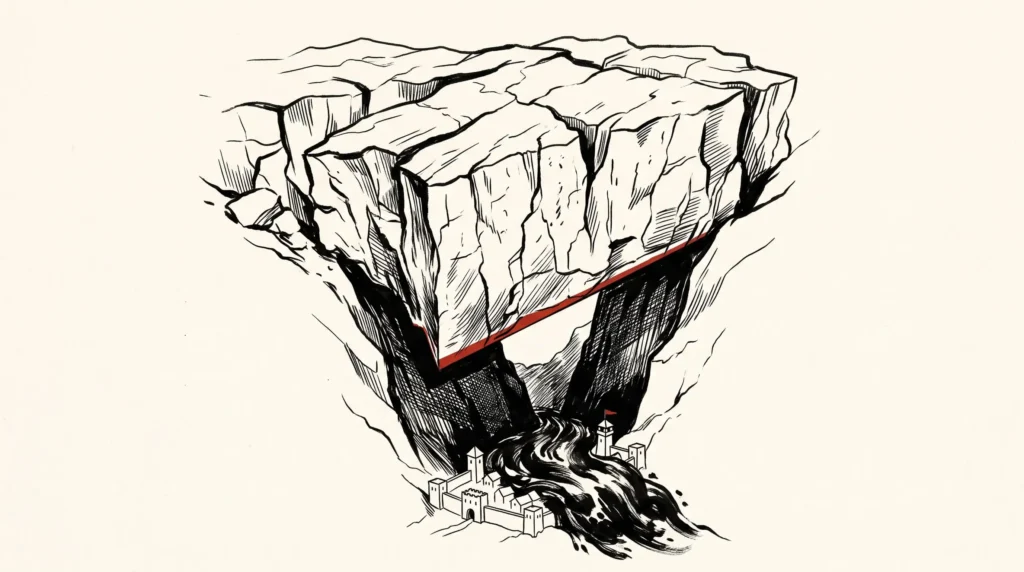
Although the world is vast, it can no longer accommodate Fan Li’s small boat. When capital collides with the great power game, no matter how smart an entrepreneur is, in the torrent of history, they are like ordinary people, like rootless duckweed, and it is difficult to control their own destiny in the cracks.
What’s interesting is that in the Panama port transaction, only China and the United States are arguing.
The transfer of a company that is related to the lifeline of the national economy can only hear the voices of China and the United States. Panama, the real owner of the port, has remained silent.
In a jungle society, the prey has no right to speak.
Discover more from 自由档案馆
Subscribe to get the latest posts sent to your email.