

Recently, a news story about an actor being deceived and forced to engage in illegal activities abroad sparked heated discussions. Many people, upon reading it, exclaimed: "Isn't this human trafficking? It must be severely punished!" However, upon reviewing our current "Criminal Law", it was discovered that the article on "Human Trafficking" has actually disappeared! For a moment, everyone was stunned: What exactly is going on? Does it mean that only women and children are considered victims of trafficking and need protection, while adult men do not? This article will take everyone on a thorough review, from legal history to current regulations, to see what "amazing operations" our country has gone through.
1. First, let's take a look at: "Human Trafficking" in the 1979 version of the "Criminal Law"
Review of the legal provisions: Article 141 of the 1979 "Criminal Law"
Those who traffic in human beings shall be sentenced to imprisonment of not more than five years; if the circumstances are serious, they shall be sentenced to imprisonment of not less than five years.
As early as 1979, our country's "Criminal Law" clearly stated "Human Trafficking", emphasizing: Regardless of gender or age, as long as you traffic in 'people', it's a crime! Although the law at that time was not as detailed as it is now, it could at least provide a unified umbrella of protection for all victims (whether male, female, adults, or minors).
2. Protection Upgrade: The promulgation of the "Decision on Severely Punishing Criminals Who Traffic and Kidnap Women and Children" in 1991
Review of the legal provisions: The 1991 "Decision on Severely Punishing Criminals Who Traffic and Kidnap Women and Children"
For those who traffic and kidnap women and children, the statutory penalty was significantly increased: The starting sentence changed from the original imprisonment of not more than five years to imprisonment of not less than five years and not more than ten years; there are six aggravating circumstances that can result in imprisonment of more than ten years, up to life imprisonment or the death penalty.
For the first time, the "Crime of Purchasing Trafficked and Kidnapped Women and Children" was added: imprisonment of not more than three years, criminal detention, or public surveillance.
Why was this change made? Because the crime of trafficking women and children was rampant at the time. In order to respond to social reality, the 1991 decision greatly increased the punishment for trafficking women and children. However, at this time, "Human Trafficking" and "Trafficking Women and Children" became parallel relationships—the former was the "general version", and the latter was the "special protection version".
3. 1997 Revision: The crime of human trafficking was "abolished", only retaining the "crime of trafficking women and children"
Review of the legal provisions: 1997 "Criminal Law"
Article 240 Trafficking in Women and Children
Article 241 Purchasing Trafficked Women and Children
(The "Human Trafficking" in the original 1979 "Criminal Law" was deleted)
When the "Criminal Law" was revised in 1997, after discussion, the legislators believed that the situation of trafficking men was relatively rare, and considering the special protection of women and children, they ultimately chose to "only retain the crime of trafficking women and children" and abolished the "crime of human trafficking". As a result, the "general version" of human trafficking disappeared, while the "special version" of trafficking women and children was retained and severely punished.
4. Forced application? The "Crime of Forced Labor" is also difficult to cover comprehensively
After the "crime of human trafficking" was abolished, a dilemma arose in practice: If the perpetrator deceives or kidnaps an adult man, intending to sell him abroad to do hard labor or engage in other illegal activities, but is caught before he is officially "sold"... What crime is this?
Some people say: "Then use Article 244 of the "Criminal Law", the Crime of Forced Labor to manage it." But the problem is that the starting sentence for the crime of forced labor is relatively low (less than 3 years), and it focuses more on the actual "forced labor" behavior, or at least the cooperation of "accomplices". If it is only in the trafficking and transportation stage, and forced labor has not yet been actually implemented, it is easy to have loopholes in conviction.
Review of the legal provisions: Article 244 of the 1997 "Criminal Law", "Crime of Forcing Employees to Work"
Later, in the 2011 "Amendment to the Criminal Law (VIII)", it was changed to "Crime of Forced Labor", and the maximum sentence was also raised from 3 years to 10 years.
Even with the increased maximum sentence, it still seems somewhat inadequate for cross-border trafficking, deceiving men to engage in telecommunications fraud, organ harvesting, and other new types of crimes.
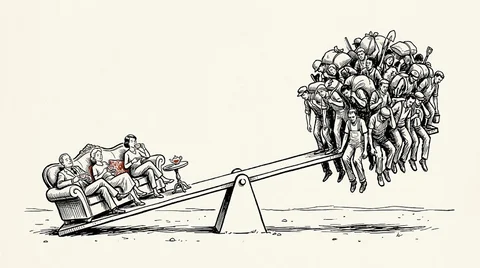
5. Are the buying and selling of adults not subject to control? Legal protection should not have "gender bias"
Many people will ask: Is there any way to manage the trafficking of adult men now? The answer is: You can "exhaust" the existing crimes to convict, such as kidnapping, illegal detention, forced labor, organizing prostitution, etc., depending on the specific behavior. But these crimes are relatively "fragmented" and do not have the same broad coverage as "human trafficking", nor are they as direct and forceful as "trafficking women and children".
From the perspective of legislative spirit, we do not encourage "abuse of crimes" in the criminal law. However, for the act of buying and selling "people", which seriously challenges human dignity and treats people as commodities, relying only on these existing "scattered" crimes does have loopholes—especially when forced labor has not yet been actually implemented or any criminal purpose has not been achieved, whether and how to convict is very tricky.
6. Behind the "shock": What kind of legislative thinking do we need?
- Restore or re-establish the "crime of human trafficking"?
Some scholars suggest integrating the current Article 240 (Trafficking in Women and Children), Article 241 (Purchasing Trafficked Women and Children), Article 244 (Forced Labor), and even Article 262 (Abducting Children), and establishing a broader and more unified "Crime of Buying and Selling People", regardless of whether the other party is male, female, adult, or child, any buying and selling behavior for the purpose of exploitation should be severely punished.
- Balancing special protection and general protection
Of course, it is undeniable that women and children are indeed more vulnerable in terms of physiology and social attributes, and the risk of being harmed is higher, so their protection can maintain aggravating circumstances or special provisions, but this does not mean that other groups should be completely excluded.
- Enlightenment from international conventions
The 2000 "United Nations Convention against Transnational Organized Crime, and the Protocol to Prevent, Suppress and Punish Trafficking in Persons, Especially Women and Children" clearly emphasizes that "trafficking in persons" is the recruitment, transportation, harboring, or receipt of persons for the purpose of exploitation. Regardless of gender or age, as long as it is "treating people as commodities" to buy and sell or transfer, it falls within the scope of severe打击 by the international community. Our country is also a signatory to this protocol.
7. Conclusion: It is not only women and children who need to be protected
When you find that there is only the "crime of trafficking women and children" in the current "Criminal Law", but not the "crime of human trafficking", don't be surprised, this is a "deliberate" legacy of our current legislation. Everyone needs protection, adult men, the elderly, and even other groups not included in specific crimes should not be ignored.
With the development of society and the frequent occurrence of cross-border crimes, future revisions to the criminal law or judicial interpretations may consider filling the gap of "buying and selling people". After all, a person being trafficked and sold is the most naked trampling on human dignity, how can the protection of the law be discounted because of differences in gender or age?
Special Note:
I start the discussion with the latest article by Teacher Luo Xiang, and if you have any questions, please consult Professor Luo Xiang, a well-known law professor at China University of Political Science and Law. All opinions are from the internet, and I am not responsible for any of my statements, which are all for the sake of storytelling.