

Summary of Voices:
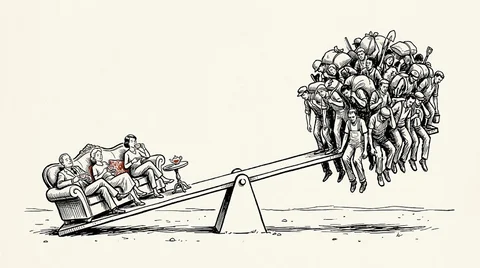
Japanese people are educated from a young age to be self-reliant: starting from elementary school textbooks, the basic national conditions of Japan's small land area and lack of resources are repeatedly emphasized, constantly instilling the independent idea of relying on oneself, and integrating the awareness of ownership throughout the textbooks, so that Japanese people understand from a young age: in any case, they must never take anything that does not belong to them. Therefore, even if a company fails in its operation, the operator first examines his own responsibility, does not blame others, and will not go to the relevant government departments. In extreme cases, even when they really cannot live, most Japanese people choose "self-sacrifice" and rarely harm others. In contrast, what would happen in China if the same great recession occurred?
This article is from "China Reform"
The "balance sheet recession" theory proposed by Japanese economist Kozo Yamamura, although it has made an important contribution to explaining the long-term recession of the Japanese economy, also has some flaws. The Japanese prescription he prescribed - "active fiscal policy" - not only cannot solve the real problems facing the current Chinese economy, but may also mislead the Chinese government at all levels, causing us to miss the opportunity for reform and repeat the mistakes of Japan's "lost three decades."
This article is by Professor Wei Jianing
I. There are several flaws in Kozo Yamamura's "balance sheet recession theory"
Kozo Yamamura's "balance sheet recession theory" believes that the main reason for the long-term stagnation of the Japanese economy is due to companies' "reluctance to borrow", rather than the previous mainstream view that banks were "reluctant to lend". He analyzed that during the Great Recession, the goal of Japanese companies shifted from "profit maximization" in textbooks to "debt minimization" in reality; and on this basis, Kozo Yamamura proposed: it was "active fiscal policy" that revitalized the Japanese economy. And therefore, he believes that this important "discovery" points directly to the "holy grail of macroeconomics."
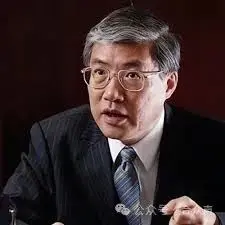
Kozo Yamamura
However, after comparing the actual situation of the Japanese economy, it is not difficult for us to find that his theory and policy recommendations have the following flaws.
(1) The cooperation between Japanese banks and enterprises is not a "consensus of striving to repay loans", but a "conspiracy of hidden information."
Kozo Yamamura pointed out that during the process of Japanese companies repairing their balance sheets, they reached a certain "consensus" with the banks, and both parties did not publicize it, with companies working hard to earn money through exports and quietly repaying bank loans. "Japanese companies always present a bright and beautiful image to external media and analysts, ...... in order to divert external attention from the balance sheet, ...... once the company's balance sheet information is exposed, the bank will naturally cut off its capital chain."
Kozo Yamamura believes that this is an important reason why domestic and foreign experts, scholars, and media professionals have failed to discover the secret of the "balance sheet recession". We believe that it is this so-called "consensus" between banks and enterprises that has actually turned into a "collusion" between banks and enterprises, and both banks and enterprises have a strong motivation to "hide information", leading to the financial regulatory authorities failing to grasp the true situation of non-performing assets in the Japanese banking industry for a long time, causing the disposal of non-performing assets to be delayed, and further prolonging the economic recession in Japan.
(2) Japanese companies' export repayment is not a subjective choice, but a heaven-sent opportunity
Kozo Yamamura pointed out that during the Great Recession in Japan, Japanese companies' export performance was still very outstanding, enabling them to repay bank loans. We believe that this is due to the efforts of Japanese companies themselves, but also due to the heaven-sent opportunity of the objective environment:
On the one hand, the continuous depreciation of the yen has improved the price competitiveness of Japanese export products; on the other hand, it is due to China's accession to the World Trade Organization (WTO), which has accelerated globalization, and Japan has taken advantage of China's reform and opening up.
First, an important reason why Japan was able to maintain continuous rapid export growth during this period was the continuous depreciation of the yen. Especially since the implementation of the "zero interest rate" policy in 1999, the Bank of Japan has maintained an ultra-loose monetary policy, and even when the Abe government proposed the "three arrows", the depreciation of the yen was still an important booster for promoting exports. According to data from the Bank for International Settlements (BIS), since 2000, the real effective exchange rate of the yen has depreciated by 53.2% from the 1962-2022 global trade trend index, thereby promoting the increase in the proportion of Japanese goods and service exports to GDP from 10.4% to 18.2%.
Second, after China joined the WTO in 2001, globalization accelerated, and the world economy entered a period of great prosperity, and the growth rate of international trade began to exceed the growth rate of the world economy. According to World Bank data, since 2000, the proportion of trade in global GDP has risen from 50.7% to over 60%. This has brought Japanese companies a continuous stream of export orders, not only promoting the exports of Japanese local companies, but also increasing the profits of Japanese companies' overseas investment, thereby making it possible for Japanese companies to ("quietly") repay bank loans.
(3) "Active fiscal policy" is not an effective "remedy" to overcome the recession, but instead forms a large amount of "ineffective investment"
Kozo Yamamura pointed out that "the Japanese government's fiscal policy has become the main force to prevent economic contraction during the balance sheet recession", and "excessive fiscal stimulus is not a concern during the balance sheet recession". Based on this, Kozo Yamamura suggested that government departments borrow on a large scale to replace the leverage of the enterprise sector and the resident sector. However, according to multiple on-site inspections of Japan in the past, we have seen with our own eyes that the actual effect of Japan's implementation of "active fiscal policy" is really not satisfactory:
On the one hand, it has led to a high level of government debt in Japan, making the proportion of Japanese government debt to GDP exceed 250%, the highest among the G7 countries.
On the other hand, a large amount of infrastructure investment has led to repeated construction, some facilities have far from reached the expected use effect, and some facilities are accompanied by huge hidden debts(future daily maintenance costs).
(4) The Japanese economy's recovery from the Great Recession relied on institutional reform, not stimulus policies
In his book "The Great Recession", Kozo Yamamura repeatedly denies the significance of structural reform, believing that the main reason for the long-term recession of the Japanese economy is that companies are "reluctant to borrow" in order to repair their balance sheets, and that the Japanese economy recovered from the recession because the Japanese government implemented an "active fiscal policy". We hold the opposite view on this. We believe that the main reason why the Japanese economy was finally able to emerge from the "Great Recession" was precisely the result of the efforts of successive governments since the Hashimoto cabinet to promote institutional reform.
First, in 1996, the Hashimoto cabinet vigorously promoted government reform and compressed administrative institutions. The Hashimoto cabinet started with the reform of the government itself, reducing the total number of Japanese government departments from 22 "ministries" (ministries and commissions) to 12, and transforming from the past "centered on ministries" to "centered on the cabinet". Among them, the most reform was the abolition of the Economic Planning Agency (equivalent to China's National Development and Reform Commission), and the "Ministry of International Trade and Industry" was changed to the "Ministry of Economy, Trade and Industry".
Second, in 1998, the Obuchi cabinet implemented the "financial big bang" reform, which effectively promoted financial liberalization. From 1996 to 2000, the Hashimoto Ryutaro and Obuchi Keizo cabinets successively promoted the "financial big bang" reform, and in five years, they revised more than 40 financial laws and regulations. The Obuchi cabinet, following the ideas of liberalization, fairness, and internationalization, broke the various access restrictions between banks, securities, trusts, and insurance, realized the marketization of rates, strengthened the competition in the financial industry, and separated the financial supervision function from the Ministry of Finance, established the Financial Supervisory Agency, which later evolved into the current Financial Services Agency, and implemented comprehensive and unified supervision of the entire financial industry. The most noteworthy reform was that Japan accepted the painful lessons of the bubble economy period and vigorously strengthened the independence of the central bank, and the monetary policy decision-making mechanism was changed to be independently decided by the Monetary Policy Committee of the central bank.
Third, in 2002, the Koizumi government vigorously promoted the "financial regeneration" reform to solve the problem of non-performing assets in banks. For a long time after the collapse of the bubble economy, the problem of non-performing assets in the Japanese banking industry had not been effectively solved, which not only forced the central bank's monetary policy to continuously "release water", but also seriously affected the lending enthusiasm of both banks and enterprises. Until the Koizumi government came to power, under the leadership of Heizo Takenaka, he vigorously promoted the "financial regeneration" reform and completely solved the problem of non-performing assets in banks. Koizumi proposed that "there is no economic recovery without structural reform"; Takenaka divided the reforms at that time into two categories: one was "passive reform", that is, resolving non-performing loans and reorganizing financial institutions; the other was "active reform", proposing that "anything that can be done by the private sector should be done by the private sector". The former reform enabled Japanese financial institutions to gradually recover their health and effectively resist the impact of the 2008 global financial crisis; the effect of the latter reform can perhaps be seen from a small matter: the Japanese government's competent authorities opened up the market access for taxis, but the taxi industry association did not want to lower taxi fares, and as a result, there was a situation where the supply of taxis exceeded the demand.
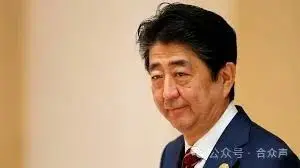
Shinzo Abe
Finally, in 2012, the Abe cabinet launched the "three arrows" to encourage private enterprise investment. The "third arrow" of Abe's "three arrows" is actually reform. The Abe cabinet even drew on the successful experience of China's reform and opening up and proposed the concept of "strategic special zones". We once inspected some "strategic special zones" in Japan and found that these so-called "strategic special zones" were actually learning and imitating the classic practices of setting up special economic zones in the early days of China's reform and opening up. Even Japanese government officials and experts and scholars themselves do not deny it. In 2014, the Abe cabinet further emphasized that reform should take precedence over fiscal expansion and published an article in the Financial Times saying, "My 'third arrow' is to defeat the demons that are holding the Japanese economy hostage", and clearly proposed to implement "structural reform" for the Japanese economy.
Therefore, the reason why the Japanese economy was finally able to emerge from the shadow of the "Great Recession" was the continuous promotion of reform, not the so-called "active fiscal policy".
The famous economist and Dean of the Tsinghua University School of Economics and Management, Professor Qian Yingyi, has personally signed the edition of "Qian Yingyi's Dialogue", which has been listed on Nanxiang Bookstore with a Douban score of 9.2! This is a sincere and informative dialogue record, and the interviewees are all people who have achieved the ultimate in some fields. The reason why they can become industry leaders lies in their vision and endurance that penetrates time.
II. Looking at Kozo Yamamura's "Japanese Prescription" from the Differences between China and Japan
Recently, Kozo Yamamura gave a wonderful speech in Hong Kong, China, and at the same time prescribed his "Japanese prescription" to solve the current economic problems in China - implementing an "active fiscal policy". His suggestion is not without merit, but it cannot solve the "difficult problems" facing the Chinese economy.
(1) The phenomenon of "reluctance to borrow" among Chinese enterprises is mainly not to repair the balance sheet
Kozo Yamamura's "balance sheet theory" points out that after the collapse of the Japanese bubble economy, many companies began to repair their balance sheets for a long time, and then collectively "lay flat" and stopped borrowing. Nowadays, Chinese companies have also rarely seen the phenomenon of companies being "reluctant to borrow". Based on this, Kozo Yamamura suggests that "when companies do not borrow money, the government must borrow money".
However, although China and Japan have both experienced the phenomenon of "reluctance to borrow", the reasons behind it are very different. Currently, the phenomenon of "reluctance to borrow" among Chinese private enterprises is not to repair the balance sheet, nor is it to pursue "debt minimization", because current Chinese companies are not as sensitive to the balance sheet as Japanese companies. We believe that the root cause of the "reluctance to borrow" of enterprises is insufficient confidence. Due to the instability of private enterprise policies, the continuous reduction of international market orders, and the unsatisfactory domestic business environment, even if they can get bank loans, they have nowhere to invest and cannot repay them.
First, compared to the strong credit constraints of Japanese companies, Chinese companies are relatively less sensitive to the balance sheet. Second, the investment confidence and investment index of private entrepreneurs are continuously weakening. In recent years, the Chinese public opinion field has often seen erroneous statements such as "eliminating private ownership", "private enterprises selling out the country", "private enterprises leaving the market", and "state-owned enterprises advancing and private enterprises retreating", which have seriously hit the investment enthusiasm of private enterprises. The "China Enterprise Operating Conditions (BCI) Index" of the Cheung Kong Graduate School of Business shows that the financing environment and investment prospects of Chinese private enterprises are not optimistic at present.
(2) Although Chinese companies also want to "repay loans through exports", they are facing the challenge of "de-globalization"
In Kozo Yamamura's theory, in order to repay loans, Japanese companies worked hard to increase exports to obtain foreign exchange, thereby gradually repaying bank loans. However, due to the "de-risking" de-globalization policies adopted by some countries, the export orders of Chinese companies are constantly decreasing. Since the main production capacity of China's manufacturing industry is for export services, most of the orders in the past came from the European and American markets. Once the market "decouples", there will inevitably be "overcapacity". And because economics talks about "effective demand", which is demand with the ability to pay. If exports are blocked, companies go bankrupt, employees lose their jobs, and incomes fall, then relying solely on "internal circulation" cannot solve the crisis of overproduction. Faced with this situation, it should be a wise choice for companies not to borrow.
(3) The government's high debt and limited fiscal expansion capacity
Kozo Yamamura's prescription for China is to implement a "large-scale fiscal stimulus policy". However, there are significant differences between China and Japan in this regard. First, looking at the three periods after the war in Japan: during the high-speed growth period, the government debt was zero; during the medium-speed growth period, government debt began to appear; during the low-speed growth period, the government debt was high. However, unlike Japan: as early as the high-speed growth period, the Chinese government was already heavily in debt. Now, even if it wants to implement an "active fiscal policy", it may not be able to do so.
Second, another difference between China and Japan is that: although the Japanese government is heavily in debt, most of it is central government debt, while the debt scale of local governments in Japan is relatively small. Moreover, although Japan is a unitary state, it implements "local autonomy", and the central government is in principle not responsible for the debt of the lower-level government. In stark contrast, China is a unitary state, and in the minds of many local officials, the central government is ultimately responsible for the debt of local governments. Under the condition that local governments lack self-discipline, it will inevitably lead to serious moral hazards of local governments and eventually drag down the central finance.
The famous economist and Dean of the Tsinghua University School of Economics and Management, Professor Qian Yingyi, has personally signed the edition of "Qian Yingyi's Dialogue", which has been listed on Nanxiang Bookstore with a Douban score of 9.2! This is a sincere and informative dialogue record, and the interviewees are all people who have achieved the ultimate in some fields. The reason why they can become industry leaders lies in their vision and endurance that penetrates time.
III. Lessons from Japan's "Great Recession" and Their Implications for China
In summary, the real driving force that propelled Japan out of the "Great Recession" was the continuous promotion of reform, not "active fiscal policy", and even less "loose monetary policy".
(1) Lesson 1: Facing the crisis can overcome the crisis
To cure a disease, you first need to admit that the body is unwell and go to see a doctor; secondly, you need to find the right doctor and make a correct diagnosis; then you need to prescribe the right medicine and grasp the medicine; after that, you may also find it difficult to swallow the medicine because it is too bitter; finally, after taking the medicine, you still need some time to produce the medicinal effect and gradually see the effect.
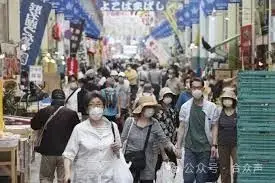
An important lesson from Japan's "Great Recession" is that: initially, the Japanese government was slow to admit that the Japanese economy was sick.
In the early days of the bubble economy's collapse, the Japanese government was still in the illusion of the past high-speed growth period and the false prosperity of the bubble economy, and was unwilling to admit that the Japanese economy was sick. One important sign of this was that the Japanese government strongly supported the World Bank experts to write the 1993 annual report, the title of which was "East Asian Miracle", which advocated the "East Asian model" and emphasized the "role of the government"; however, less than two years later, in 1995, Japan experienced the "Jusen crisis", and some professional financial institutions that were established during the bubble economy period to provide loans for real estate went bankrupt and closed down one after another.
Later, the Japanese government began to admit that the Japanese economy was sick, but thought it was only a short-term economic cycle phenomenon, that is, just a headache and a cold, and there was no need for surgery. Therefore, it continued to adopt Keynesian policies for stimulation, and the only difference was whether to use monetary policy or fiscal policy effectively.
It was not until the late 1990s that the Japanese government realized that there was a problem with the Japanese system, and the root of the problem was in the Japanese government itself. Therefore, the Hashimoto government implemented "administrative system reform" in 1996, streamlining and compressing the 22 ministries (equivalent to China's ministries and commissions) to 12; secondly, the Obuchi government implemented the "financial big bang" reform in 1998, which greatly strengthened the independence of the central bank; thirdly, during the Koizumi government, Heizo Takenaka vigorously promoted financial reform to solve the problem of non-performing assets in banks; finally, the Abe government proposed the "three arrows", and the third arrow was reform. It's just that Chinese experts and the media mostly only pay attention to the "first arrow" (monetary policy) and the "second arrow" (fiscal policy), but ignore the most important "third arrow" (institutional reform).
It was because the Japanese government first started with its own reform and persistently promoted market-oriented reform that the Japanese economy gradually emerged from the recession. Therefore, what saved the Japanese economy was neither monetary policy nor fiscal policy, but institutional reform. The former two are at best a coordination of promoting reform, and are by no means the protagonists.
(2) Lesson 2: Prepare for a rainy day, prevent crises, and protect the bottom line of people's livelihood
Since the collapse of the bubble, although Japan has experienced long-term development stagnation and deflation, and also experienced political turmoil, with almost a new prime minister every year for about ten years, and even the Liberal Democratic Party, which had been in power for a long time after the war, was once forced to step down. However, Japan did not experience major social unrest, and there was no social turmoil. The reasons for this are nothing more than the following points:
First, in the "lost three decades", although the domestic economy in Japan continued to slow down, overseas assets increased significantly, and the growth of GNP was faster than the growth of GDP. Therefore, when necessary, Japanese companies can transfer foreign funds back to the country to repay domestic debts. Second, Japan established a relatively sound social security system as early as the high-speed growth period. Therefore, although the economy continued to decline in the "lost three decades", many companies went bankrupt, and a large number of people were unemployed, the daily life of the people could still be guaranteed to a certain extent, and at least people would not starve or freeze to death.
Again, although Japan is a unitary state, it implements local autonomy and adheres to "requestism". That is to say, no matter what difficulties local governments encounter, even if the government debt is high, as long as they do not apply to the central government, the central government will not take the initiative to help. If it is like this between governments, it is even more so between citizens. Therefore, the Japanese are accustomed to doing their own things and rarely ask for help from others.
Finally, Japanese people are educated from a young age to be self-reliant: starting from elementary school textbooks, the basic national conditions of Japan's small land area and lack of resources are repeatedly emphasized, constantly instilling the independent idea of relying on oneself, and integrating the awareness of ownership throughout the textbooks, so that Japanese people understand from a young age: in any case, they must never take anything that does not belong to them. Therefore, even if a company fails in its operation, the operator first examines his own responsibility, does not blame others, and will not go to the relevant government departments. In extreme cases, even when they really cannot live, most Japanese people choose "self-sacrifice" and rarely harm others.
In contrast, what would happen in China if the same great recession occurred?
This is why we have repeatedly reminded the Chinese government to be vigilant about crises over the years: in 1994, it was proposed that crisis management should be highly valued; in 1995, it was proposed to be vigilant about financial crises and establish a deposit insurance system; in 2003, it was proposed to prevent the risk of local government debt, especially the risk of hidden debt; in 2005, it was proposed to prevent the real estate bubble, "never repeat the mistakes of Japan"; in 2009, it was proposed to prevent the risk of local government platforms and be vigilant about the risk of excessive lending by commercial banks to local government platforms; in 2016, it was proposed that in the transition period, preventing risks should be put in the first place, and the risks faced by governments at all levels when real estate prices fall should be prevented.
(3) Can China avoid repeating Japan's mistakes?
As mentioned earlier, the real reason why Japan was able to emerge from the economic predicament of the "lost three decades" was that successive Japanese governments, such as Hashimoto, Obuchi, Koizumi, and Abe, started with the reform of the government itself, persistently promoted reform, and strove to overcome the constraints of the old system, break the barriers of interest groups, and allow the market to play a more active role in resource allocation. According to Japan's "lessons from the past", the only way for China to avoid repeating Japan's mistakes is to: firmly seize the heaven-sent opportunity of the new round of technological revolution, hold high the banner of reform and opening up, and go all out to promote a new round of reform and opening up. As long as we take solid actions and comprehensively deepen reform and opening up, we will surely be able to obtain new reform dividends and drive new growth.
First, according to our calculations in 2018, the efficiency loss, fairness loss, and welfare loss caused by unfair competition in China currently account for about 22% of GDP every year; if we can effectively promote competition policies and truly achieve fair competition, we can obtain "fair competition dividends", and the GDP growth rate can increase by at least 2 percentage points every year.
Second, if we can promote the reform of the high-speed rail system, the reform of local state-owned enterprises, and the reform of state-owned financial institutions, we can effectively resolve the debt risks of high-speed rail, the debt risks of local governments, and the risks of state-owned financial institutions, thereby obtaining "risk resolution dividends".
Finally, the market economy is the private economy. If we can establish an evaluation committee in the National People's Congress, provide state-owned enterprise data from the State-owned Assets Supervision and Administration Commission of the State Council, and provide private enterprise data from the All-China Federation of Industry and Commerce, and then compare and evaluate them one by one by industry - in areas where private enterprises can do better with lower costs and higher efficiency, state-owned enterprises should resolutely withdraw - let state-owned enterprises concentrate on doing areas that private enterprises cannot do and cannot do well. By "private enterprise advancing and state-owned enterprise rising", we can obtain "layout adjustment dividends".
In short, as long as we can achieve a new round of ideological emancipation, we can promote a new round of reform and opening up; if we can promote a new round of reform and opening up, we can bring new economic growth, and the Chinese economy can avoid repeating Japan's mistakes and realize modernization and common prosperity as soon as possible.