


Source: Huaxia Times Net Reporter Zhang Mei Chen Feng
On October 14, a seminar on the prevention and governance of profit-seeking law enforcement was held in Beijing. The seminar brought together experts from the legal academic and practical circles to discuss the causes, harms, and governance suggestions of the phenomenon of profit-seeking law enforcement.
The profit-seeking law enforcement discussed at the meeting refers to the law enforcement behavior of law enforcement agencies that violates the principles of law and justice in the process of law enforcement, out of the pursuit of personal or departmental interests. This behavior takes various forms, such as arresting enterprises or individuals in other places to seek profits, and even freezing and transferring their property; some local governments and departments issue assessment indicators for fines and confiscation of income, leading law enforcement officers to over-enforce the law in order to complete the indicators; in addition, there are law enforcement officers who abuse their power in the process of law enforcement, arbitrarily impose fines, and seal up, and even threaten the survival of enterprises.
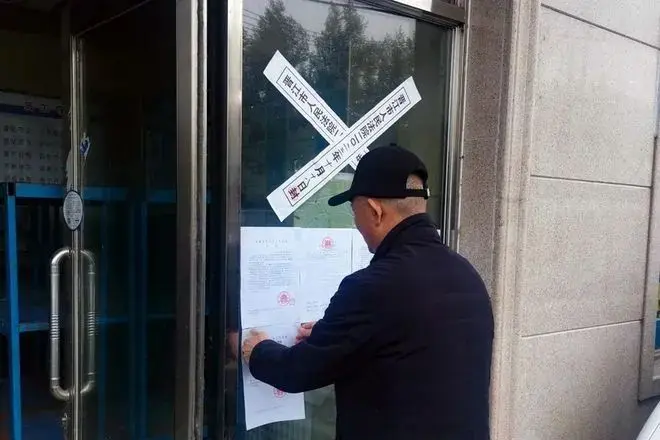
Legal experts attending the meeting suggested that cross-regional law enforcement and case handling are not absolutely impossible, but it is necessary to set up a system of higher-level jurisdiction and joint superior approval, and to standardize the authority to take restrictive measures against the personal freedom of private enterprise executives. At the same time, it is recommended that the state level should launch special rectification actions as soon as possible, establish a system of accountability for the main officials, and curb the chaos of cross-regional profit-seeking law enforcement.
Standardizing enterprise-related law enforcement is of concern
Profit-seeking law enforcement is not a new problem, but it has received more extensive attention against the background of current economic development.
At the end of September, the meeting of the Political Bureau of the Central Committee emphasized helping enterprises overcome difficulties and proposed to standardize law enforcement and supervision behaviors related to enterprises.
On October 8, Zheng Shanjie, Director of the National Development and Reform Commission, mentioned that it is necessary to standardize the administrative law enforcement behaviors of administrative law enforcement units related to enterprises, and resolutely prohibit illegal cross-regional law enforcement and profit-seeking law enforcement.
In addition, the "Draft Law on Promoting the Private Economy" also has relevant provisions on standardizing enterprise-related law enforcement and supervision behaviors.


From the perspective of real cases, the phenomenon of "deep-sea fishing law enforcement" is prominent. Some judicial organs and law enforcement agencies illegally and irregularly go to other places to seal up, freeze, and even fine the property of enterprises and individuals, and the heads of enterprises are arrested. Such cases occur from time to time. For example, the social e-commerce in Hangzhou has attracted many law enforcement agencies from other places to enforce the law.
Lawyers share multiple typical cases
At the seminar, Yan Lidong, a lawyer from Beijing Huaxiang Law Firm, shared several cases.
The first case is a company in Hangzhou that sells "Yao Bath Packs" online, which sells regular products produced in Jinxiu, Guangxi. According to relevant information, the public security organ of a certain county in Chongqing conducted a three-month secret investigation before the criminal case was filed, and then filed a case of fraud on the grounds that Chen Moumou in the local area purchased 1,682 yuan of "Yao Bath Packs" and claimed that they were ineffective. Subsequently, more than 300 police officers were dispatched to Hangzhou to arrest the company, arresting 155 people, with an alleged amount of up to 200 million yuan. It is understood that the case currently has problems such as arbitrarily lowering the filing standards, lacking the procedures for handling cases in other places, and the law enforcement officers illegally collecting and keeping the property involved in the case in violation of the "Seven Regulations" prohibiting the pursuit of profit by public security organs. Due to the fact that the public security organs have used templates with standard answers to make interrogation records, the procuratorate has withdrawn the interrogation records of more than 100 suspects and will no longer present them. This is a typical case of profit-seeking law enforcement and "deep-sea fishing".
The second case is that a small loan company in Beijing was targeted by a case-handling agency in a certain place in Ningbo. Although as many as 85% of the borrowers had no property losses, dozens of people were still arrested on the charge of fraud.
The third case is that a health product company in Guangdong was reported in a certain county in northern Sai for one person buying 2,000 yuan of products, and the company's directors, supervisors, and senior executives and employees were all arrested. The amount involved is said to be several hundred million yuan.
The fourth case is the collection of appraisal fees for collectibles, which was determined as fraud. A so-called "collector" in a certain county in Henan found an auction company in Shenzhen, Guangdong, and claimed that he had collections that needed to be entrusted for auction. The auction company required him to evaluate and appraise his collections, and according to industry regulations, a certain appraisal fee was required. After the "collector" in the place where the case-handling agency paid an appraisal fee of 5,000 yuan, the case-handling agency quickly filed the case, and then arrested 47 employees of the auction company across provinces. Currently, the cases have been tried separately, and the defendants who have been sentenced in the first instance have been sentenced to huge fines, and at the same time, their illegal gains have been confiscated, and assets of tens of millions have been seized and frozen.
Yan Lidong said that from these four cases, a common point was found: the case-handling agencies handled these cases across provinces, and the jurisdiction was very weak, and even the possibility of artificially establishing jurisdiction cannot be ruled out. It is a bit like the role of a "professional victim" to help the case-handling agency establish a jurisdictional link. These cases all involve economic crimes and can be sentenced to fines. This is the origin of the term "deep-sea fishing" in criminal cases.
At the seminar, the case of Ruide Youth (Zhuhai) Health Management Co., Ltd. suspected of fraud also attracted attention. In mid-August this year, the Zhengzhou Intermediate People's Court held a hearing on the case. The prosecution alleged that Ruide Youth "fabricated the efficacy of the instrument, arbitrarily combined more than a dozen instruments into different packages for sale, and used domestic instruments to impersonate imported instruments, defrauding thousands of people". It is understood that at the time of the hearing, there were 25 defendants standing in the court, all of whom were enterprise management personnel.
According to relevant personnel of Ruide Youth Company, the Zhengzhou Public Security Bureau filed a case against the company on September 6, 2022, but in fact, it had investigated the company three months earlier. The company's senior executives were secretly photographed by the police when they went out to eat. When the case was filed, the company's personnel, business model, and accounts had already been thoroughly investigated, so the company's personnel were arrested in a concentrated manner as soon as the case was filed.
The Zhengzhou police called the company's customers one by one, asking them to report the case to the local public security organ on the charge of fraud, and claiming that the reporters could get a refund. Those who did not follow the requirements were bombarded by the public security telephone and their relatives and friends.
Relevant personnel of Ruide Youth said that after carefully studying the details and evidence of the public security case handling, the company's legal team questioned that the case might have the problem of cross-regional profit-seeking law enforcement. "The company's account has billions of deposits. If the company does not have so much money, it will not attract such a disaster, and most of these deposits are the advance deposits of customers." he said.
Legal experts analyze the root causes behind it
Wang Jing, Associate Professor of the Law School of Beijing Normal University, pointed out that there are differences between criminal cases and administrative law enforcement. In terms of the root causes, the financial difficulties of local governments are an important factor in profit-seeking law enforcement. After the lack of land finance, local departments will decompose indicators and tasks, including obtaining fines through law enforcement. Although the two lines of revenue and expenditure are clearly stipulated, in fact, the implicit return of finance and other situations have broken this system.
Wang Jing believes that from the perspective of supervision and relief, although administrative law has supervision means such as administrative supervision and audit, the winning rate of the people in administrative litigation is low. At the same time, the promotion of the Administrative Law Code is delayed due to the economic environment, including the lack of legal norms for administrative procedures and the lack of sufficient control over the operation of public power.
Wang Jing said that in the issue of jurisdiction, the emergence of e-commerce has made jurisdiction complicated. The traditional rule of determining jurisdiction based on the place where the illegal act occurred is difficult to apply in the network environment. The current method of whoever files the case first and investigates first as long as there are victims has loopholes, which may lead to profit-seeking law enforcement. For example, some places may carry out unreasonable law enforcement against leading enterprises and cross-regional operating enterprises.
Chen Bing, Deputy Dean, Professor, and Doctoral Supervisor of the Law School of Nankai University, believes that profit-seeking law enforcement is not a completely new problem. The "fishing" law enforcement mentioned before can also be considered a kind of profit-seeking law enforcement. In addition, the implementation of administrative law enforcement activities objectively has a demand for interests, but whether this "interest" is for public interests or for other purposes, or whether it is in the name of public interests to carry out illegal purposes.
Chen Bing said that while we are vigilant and condemn profit-seeking law enforcement, especially the abnormal phenomena of law enforcement and supervision of certain enterprises involved in cases, we should also see the normal law enforcement based on statutory duties, or even criminal investigations. In some cases, the latter method is more conducive to protecting the interests of the parties. For example, in cases involving infringement of trade secrets, criminal investigations that meet the statutory standards may be more efficient and more able to recover the legitimate rights and interests of the infringed parties in a timely manner. For this reason, we do not agree with over-interpreting or even overturning the protection function of regulatory law enforcement agencies in the operation of the market economy, which is not very comprehensive and objective for the agencies. The key is to achieve normalized, accurate law enforcement in accordance with the law, systematically design and configure the whole process of regulatory law enforcement system, and there should also be supervision and inspection of regulatory law enforcement itself.
Suggestions for urgent rectification to curb illegal chaos
For governance, Chen Bing proposed to start from the enterprise itself and the system level. Enterprises should enhance compliance and risk response. The system should be optimized, the boundaries of administrative and criminal connections should be clarified, the behavior of law enforcement subjects should be standardized, and the constraints on power should be strengthened to prevent the abuse of power.
Xue Jun, Professor and Doctoral Supervisor of the Law School of Peking University, proposed that one of the possible root causes for the recent increase in profit-seeking law enforcement is the financial difficulties faced by local governments, and the corresponding elasticity of legal system interpretation and application is too large. To fundamentally curb this problem, it is necessary to effectively guarantee the basic needs of local finance, otherwise, local governments will have extra motivation to carry out profit-seeking law enforcement in order to obtain financial funds.
Xue Jun mentioned that in terms of specific governance measures, the first is to standardize the authority to seal and freeze the bank accounts of enterprises during the law enforcement process. In many cross-regional law enforcement cases, the bank accounts of the enterprises involved are arbitrarily frozen and sealed, which seriously affects the normal operation of the enterprises. Many enterprises can only be forced to compromise and settle the matter in this situation. This authority should be strictly limited, especially when the court is required by the public security or administrative law enforcement departments to seal and freeze bank accounts, there should be strict control measures, and it should be carried out in accordance with the law and regulations, and the necessity of relevant measures should be strictly reviewed. The second is to standardize the authority to take restrictive measures against the personal freedom of enterprise executives. Once the enterprise executives are taken restrictive measures, it is likely to lead to the paralysis of the enterprise's operation, and even the enterprise will collapse. The state should clarify the investigation of enterprise executives involved in the case, but when it is not clearly determined that they are guilty and responsible, they should take more moderate measures such as paying bail and being released on bail. In this regard, it is recommended that the two highs can issue relevant judicial guidance opinions to make clear and specific provisions on this issue.
Xue Jun said that for cross-regional law enforcement and case handling, it is not absolutely impossible, but it is necessary to set up a system of higher-level jurisdiction and joint superior approval. In addition, it is recommended that in the near future, the state level should launch special rectification actions as soon as possible to address the issue of cross-regional profit-seeking law enforcement, establish a system of accountability for the main officials, that is, if the law enforcement departments in relevant areas have cross-regional profit-seeking law enforcement and abuse of law enforcement power, the main officials in the area should be held accountable. For cross-regional profit-seeking law enforcement, a high-level open complaint reporting channel should be opened, and for cases reported in real names, it should be implemented and feedback should be given. Launching special rectification work can convey the determination and confidence of governance, and the accountability of the main officials can restrain the organized and instructed profit-seeking law enforcement behavior, and opening the complaint reporting channel can allow the public to participate in supervision and form a deterrent mechanism.
Guangdong explores ideas to curb and standardize cross-regional profit-seeking law enforcement
In the practice of optimizing the business environment and curbing profit-seeking law enforcement, the experience of Shenzhen, Guangdong Province, can be used for reference.
According to the "Guangdong Provincial Conditions Internal Reference" released by the Guangdong Provincial Conditions Survey and Research Center in April 2024, it is understood that in recent years, Guangzhou, Shenzhen, Dongguan and other cities in the Pearl River Delta have become high-incidence areas for cross-regional law enforcement. Taking Guangzhou as an example, since 2023, nearly 10,000 enterprises such as Pupu, Yijiankang, and Jiujun have encountered cross-regional law enforcement. Most of these enterprises are private enterprises, and most of the cases have obvious profit-seeking law enforcement motives.
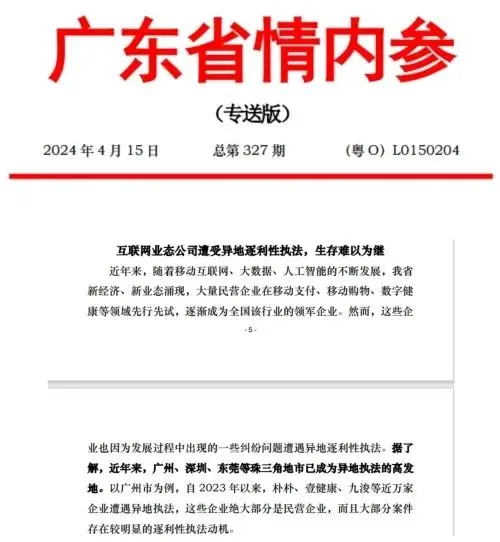
The internal reference of Guangdong Province stated that Henan dispatched more than 1,600 police officers to handle cases across provinces. The Public Security Bureaus of Jiaozuo and Shangqiu, Henan Province, dispatched more than 1,600 police officers to Guangzhou to "deep-sea fishing" the subsidiaries of Yijiankang Group. Originally, the total amount involved was only more than 600,000 yuan, but the case-handling personnel in Henan successively froze 64 accounts of the group and froze 758 million yuan. According to Yijiankang, hundreds of employees have been questioned by the police, dozens of people have been criminally detained, dozens of accounts have been frozen with a limit, and dozens of accounts have been completely frozen, involving funds of hundreds of millions of yuan, "the listing is in vain, and the enterprise is on the verge of bankruptcy". The internal reference of Guangdong Province stated that Henan dispatched more than 1,600 police officers to handle cases across provinces. The Public Security Bureaus of Jiaozuo and Shangqiu, Henan Province, dispatched more than 1,600 police officers to Guangzhou to "deep-sea fishing" the subsidiaries of Yijiankang Group. Originally, the total amount involved was only more than 600,000 yuan, but the case-handling personnel in Henan successively froze 64 accounts of the group and froze 758 million yuan. According to Yijiankang, hundreds of employees have been questioned by the police, dozens of people have been criminally detained, dozens of accounts have been frozen with a limit, and dozens of accounts have been completely frozen, involving funds of hundreds of millions of yuan, "the listing is in vain, and the enterprise is on the verge of bankruptcy".

Yijiankang Chairman Pi Taotao
The "Guangdong Provincial Conditions Internal Reference" suggests that the Guangdong Provincial Government organize relevant local governments to establish a special working group to supervise and restrict cross-regional law enforcement cases in Guangdong in accordance with the law.
On the one hand, Guangdong Province actively promotes the response experience of Shenzhen, establishes an emergency coordination and handling mechanism for criminal cases of private enterprises outside the province, standardizes the law enforcement and case handling cooperation procedures of cross-regional public security organs in Guangdong, and clarifies that cross-provincial cross-regional law enforcement cases should be handled by the Guangdong Provincial Public Security Department unless they are assigned by the Ministry of Public Security.
Shenzhen promotes enterprise compliance management in terms of prevention, encourages private enterprises with conditions to establish enterprise compliance management systems to avoid criminal risks from the source; in terms of rights protection, it protects the legitimate rights and interests of private enterprises involved in criminal cases in other places in accordance with the law, standardizes the law enforcement and case handling cooperation procedures of cross-regional public security organs in Shenzhen, resolutely says "no" to the behavior of cross-regional law enforcement agencies arbitrarily arresting entrepreneurs and frequently sealing up enterprise account funds in Shenzhen, and establishes an emergency coordination and handling mechanism for criminal cases of private entrepreneurs outside the city to help the enterprises involved in the case respond in accordance with the law.
On the other hand, Guangdong Province further standardizes the mandatory measures involving property rights, and suggests that the Provincial Public Security Department and the Provincial Local Financial Supervision Bureau form a linkage mechanism, stipulating that if cross-regional law enforcement needs to freeze the accounts of private enterprises in Guangdong Province, it must be approved by the Provincial Public Security Department, and it cannot easily freeze the accounts of private enterprises across provinces based on a letter from the public security organs of other provinces. For operational property involved in the case that is not suitable for sealing, seizing, and freezing, while ensuring the normal conduct of investigation activities, the relevant parties are allowed to continue to use it reasonably, so as to minimize the impact on the legitimate production and operation of enterprises.
And Liang Jianwei, a researcher from the Research Group of the Counselor's Office of the People's Government of Guangdong Province, led the writing of the article "Cross-provincial profit-seeking law enforcement is becoming increasingly serious in our province - private enterprises are deeply harmed and strongly reflect", which directly stated the profit-seeking law enforcement problems faced by many enterprises in Guangdong, and put forward suggestions such as promoting Shenzhen's experience, conducting research and putting forward targeted suggestions led by the Provincial Procuratorate and Public Security Department, standardizing mandatory measures involving property rights, and guiding enterprises to strengthen risk prevention.