Declaration
Personal opinions · Do not represent any organization or unit
On the Chinese Internet, the discharge of nuclear wastewater from Fukushima has aroused very strong emotions. Even the name of the nuclear wastewater discharge has become a focus. Both the management of the Fukushima nuclear power plant, TEPCO, and the most authoritative nuclear safety agency – the International Atomic Energy Agency (IAEA) – use radioactive wastewater, which translates to Chinese as wastewater containing radioactivity, or nuclear wastewater.
However, on Chinese social media, when discussing whether the Fukushima nuclear wastewater discharge will have a significant impact on the environment, some people insist that what Fukushima discharges is not nuclear wastewater, but must be called “nuclear sewage“, and using nuclear wastewater is to evade the important issues.
To delve into why it must be called nuclear sewage, the general answer is that what Fukushima produces is not the cooling water from the normal operation of a nuclear power plant, but rather sewage formed after direct contact with the nuclear fuel of the reactor, containing multiple radioactive elements, and naturally cannot be given the same name as the nuclear wastewater produced during the normal operation of a general nuclear power plant. Otherwise, wouldn’t it be confusing?
It sounds reasonable, and we can also see the term nuclear sewage in the relevant plan materials for the Fukushima nuclear wastewater discharge. For example, the Chinese schematic diagram of the discharge plan:
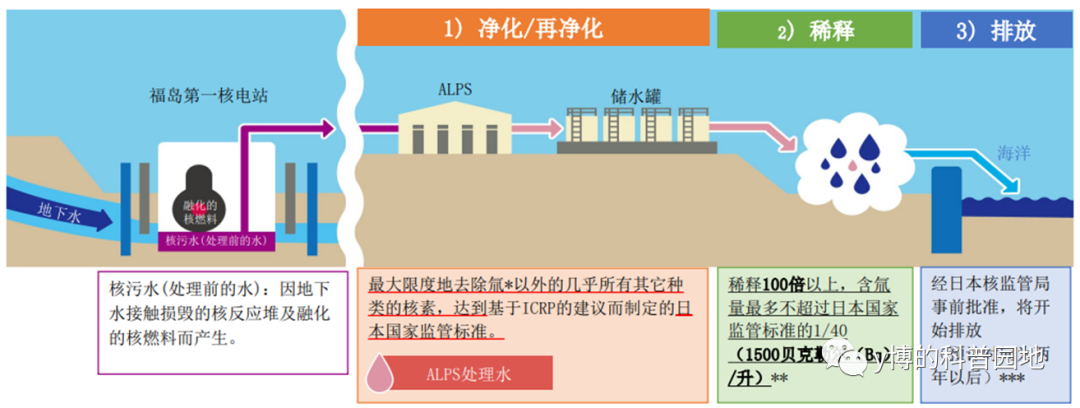
The original source of the wastewater clearly states nuclear sewage, and it also explains that it is produced by direct contact with the nuclear reactor.
Using sewage (contaminated water) here also makes sense. From an environmental science perspective, wastewater refers to water that we have used. Whether it’s for living or industrial production, whether it’s taking a bath or burning a boiler, the water that has been used will be called wastewater. Sewage is contaminated with pollutants, such as spraying pesticides during agricultural production, which enters the surrounding water bodies, thus polluting these water bodies. When the degree of pollution exceeds a certain standard and poses a threat, it is called sewage.
The wastewater currently discharged by the Fukushima nuclear power plant originally came from cooling water, groundwater, or rainwater directly entering the reactor, being contaminated by radioactive substances, and forming sewage.
However, the statement of discharging nuclear sewage ignores a key part: the nuclear sewage that was originally formed is not what is currently being discharged. The Fukushima nuclear power plant uses ALPS – a system that adsorbs and filters 62 kinds of radioactive substances – to purify the nuclear sewage until all radioactive substances except tritium (ALPS cannot treat tritium) meet international discharge standards. This treated water is what the Fukushima nuclear power plant will discharge.
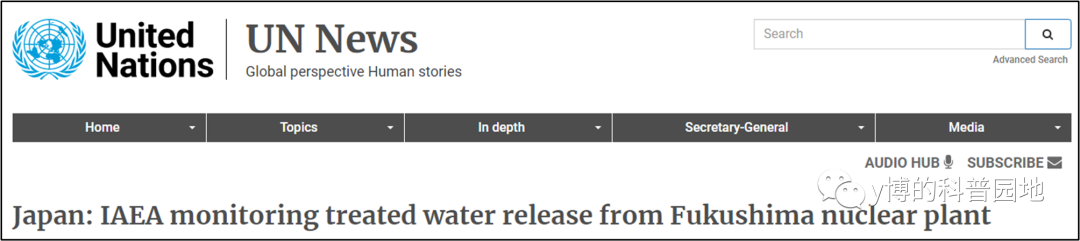
This is also why the United Nations and the IAEA often use treated water or ALPS treated water in the matter of Fukushima nuclear power plant discharging nuclear wastewater:
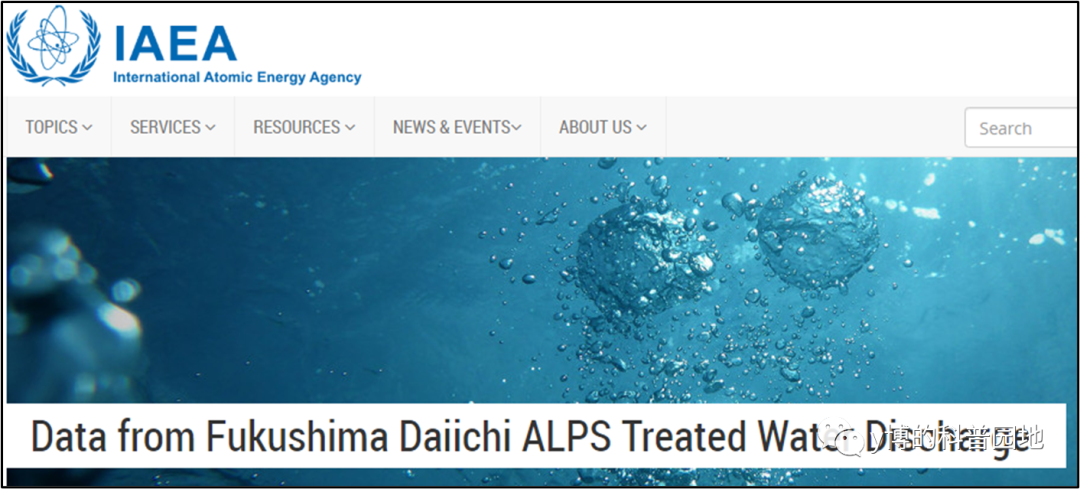
Should these treated water or ALPS treated water still be called nuclear sewage? Note that sewage should be contaminated to an extent that poses a threat to human health or the environment. Pollutants exist in any water body to varying degrees. Tap water may contain residual chlorine from disinfection, and may also contain bacteria and viruses. Even bottled drinking water cannot be 100% only H2O molecules, and may contain a small amount of microplastics, etc. But we will not call these sewage because the amount of pollutants does not pose a threat to the specified use.
Therefore, whether these treated waters are called nuclear sewage or nuclear wastewater, the key should be to look at the degree of nuclear pollution in the treated water. In fact, this is what we should pay more attention to, rather than getting entangled in a false name.
The specific standards for Fukushima’s discharge of ALPS treated water were established several years ago. Before discharge, ALPS is used to reduce radioactive substances other than tritium to the lowest possible level, meeting discharge standards, while tritium is diluted with more than 100 times the amount of seawater to meet discharge standards.
This is not just a theoretical inference based on the working principle of ALPS, but is supported by actual data. The first batch of ALPS treated water to be discharged came from the K4-B water storage tank group in Fukushima. This group of water storage tanks has not only been tested for radioactive substance content by TEPCO, the operator of the Fukushima nuclear power plant, and the Japanese nuclear regulatory agency, but the International Atomic Energy Agency (IAEA) has also organized multiple laboratories to compare and analyze the K4-B samples.
Including laboratories under the IAEA, and third-party laboratories in Switzerland, the United States, France, and South Korea, the test results are highly consistent with TEPCO, and also clearly show that the radioactive substances exceeding the standard in the ALPS treated water to be discharged are tritium, and the content of other radioactive substances is far below the discharge standards:
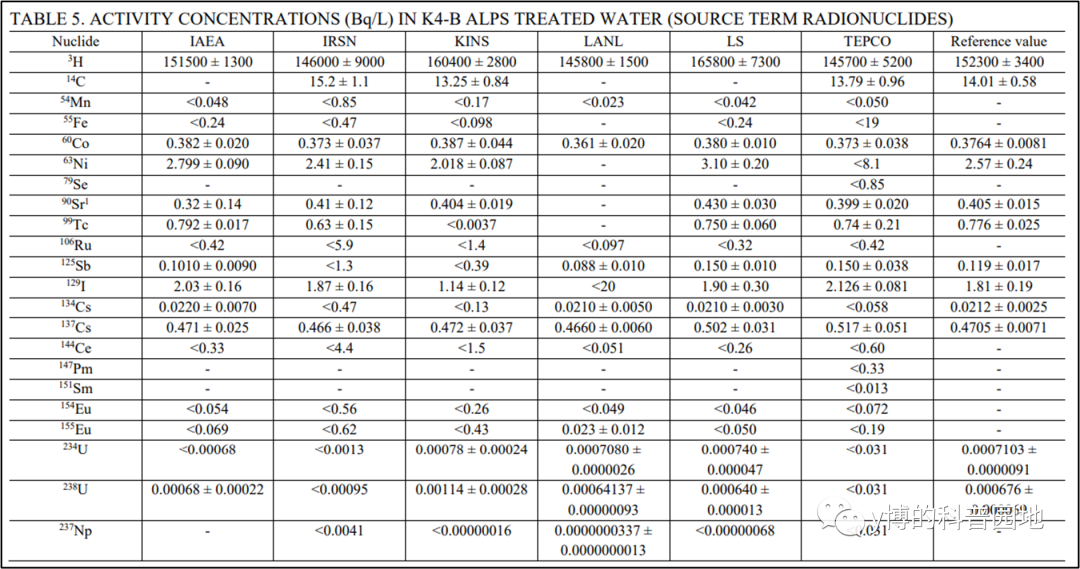
Taking cesium-137 (Cs137), which is often hyped online, as an example, “Fukushima discharges nuclear sewage because it contains cesium-137 and other radioactive elements that are not present in regular nuclear wastewater”, the online big Vs who have made such solemn declarations should have seen a lot of them these days. However, multiple laboratory tests show that the cesium-137 content in the first batch of ALPS treated water to be discharged is only 0.5 Bq/L. This is not only lower than the international discharge standard of 90 Bq/L, but even far lower than the FDA’s upper limit of 7.4 Bq/**L** for drinking water.
In addition, before being discharged into the sea, these ALPS treated waters will also be diluted by more than 100 times. If we calculate this dilution factor, the cesium-137 content when entering the sea should be below 5 Bq per cubic meter, while the background value of cesium-137 in the Pacific Ocean is about 2 Bq per cubic meter. Do you really think this will affect the environment?
The cesium in the environment mainly comes from past nuclear tests. A paper published in “Chinese Radiation Health” in 1994 investigated the cesium-137 content of water sources in the Jiuquan area about 10 years after China stopped atmospheric nuclear tests, and compared it with other areas:
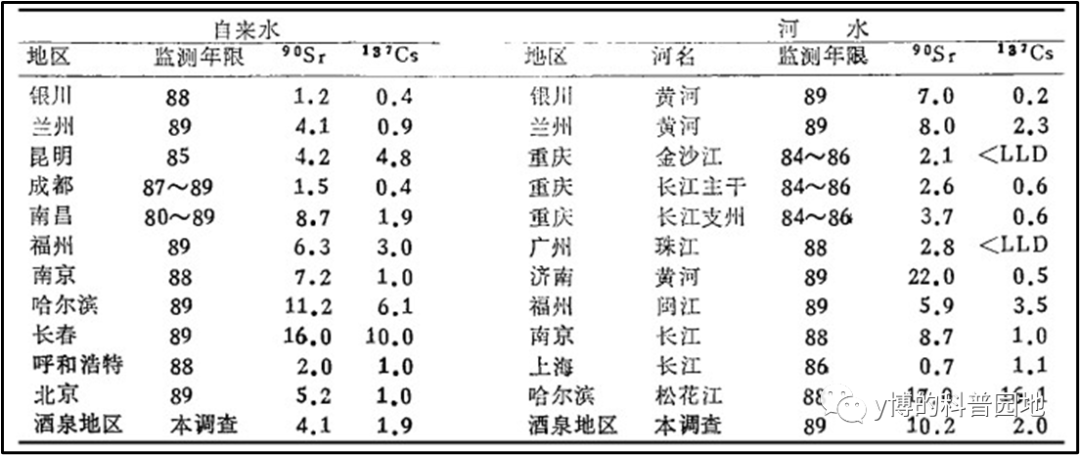
The unit in the table is also Bq per cubic meter. In some places, the cesium-137 content in tap water and river water exceeds 5 Bq per cubic meter. Are these all nuclear sewage?
From the above data, it can be seen that the ALPS treated water discharged by Fukushima, although its source is in direct contact with nuclear fuel, does not mean that the pollution caused by the contact with nuclear fuel will always exist in it. If we refer to the logic of this sewage being eternal, if people living in the middle and lower reaches of the Yangtze River take water from the Yangtze River, are they all using the sewage produced by people in the upper reaches?
The ALPS treated water discharged by Fukushima, because radioactive substances other than tritium have been removed to within the discharge standards, is essentially a kind of tritium water, and the radioactivity almost completely comes from tritium. And this kind of tritium water is also the wastewater that general nuclear power plants will produce and discharge during operation.
There is also no so-called statement that if wastewater is safe, it should not be discharged. If this fallacy can be established, not to mention the discharge of tritium-containing nuclear wastewater during the operation of nuclear power plants, shouldn’t domestic wastewater and industrial and agricultural wastewater all be prohibited from being discharged?
China and other countries with nuclear power plants have all formulated national standards for the discharge of nuclear power plant wastewater:
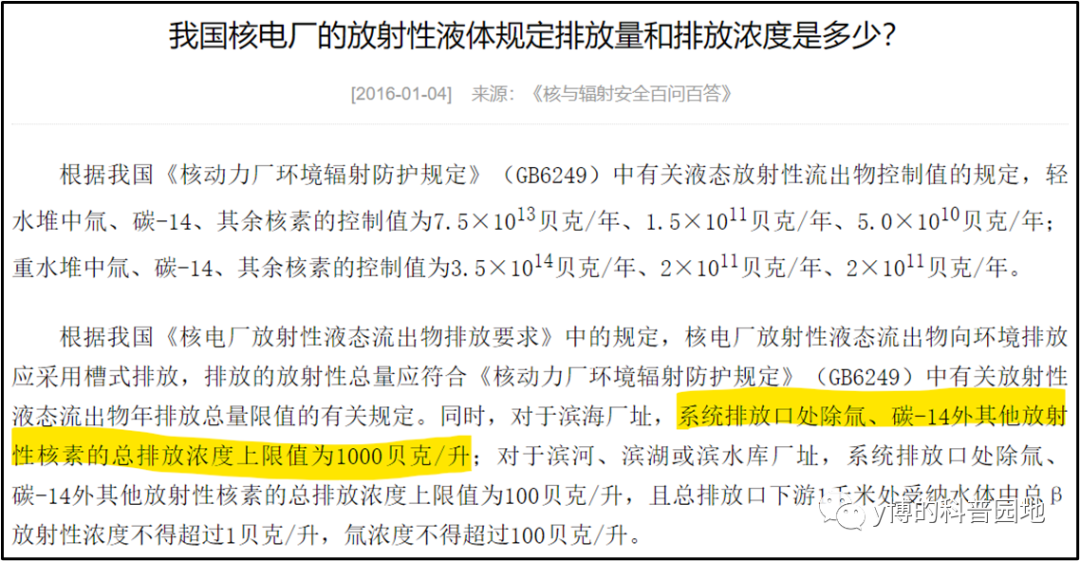
For coastal nuclear power plants, the upper limit for the total concentration of radioactive substances discharged, excluding tritium and carbon-14, is 1000 Bq/L. The ALPS treated water discharged by Fukushima, even without 100 times dilution, the remaining radioactive elements excluding tritium add up to less than 20 Bq/L, of which carbon-14 contributes more than half.
Therefore, for those who firmly believe that it must be called nuclear sewage instead of nuclear wastewater, my question is which specific radioactive element’s presence and content determines that it must be nuclear sewage, and what differences exist from the nuclear wastewater produced by nuclear power plants operating normally around the world?
If there is really concern about the safety of the Fukushima nuclear power plant’s discharge, instead of criticizing others for saying nuclear wastewater instead of nuclear sewage, it is better to go to the IAEA website to see the real-time discharge data:
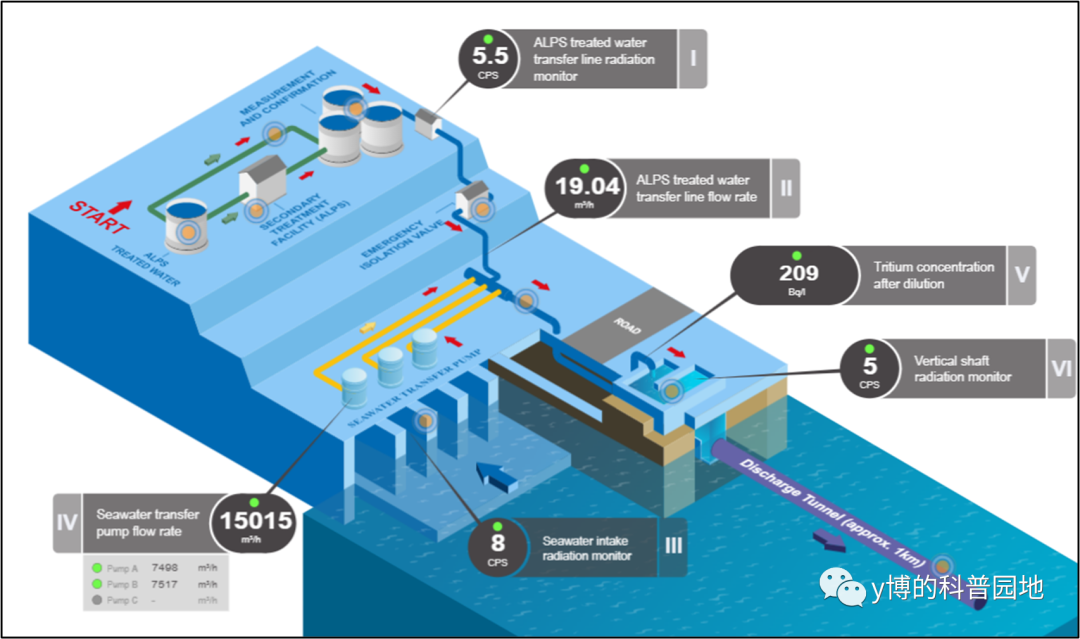
Each green dot indicates that the system is operating normally and the discharge volume meets international standards. Although the real-time data is provided by TEPCO, the IAEA will also conduct third-party testing, but it cannot be done in real time.
I don’t know how those people who are clamoring online that nuclear sewage will destroy the world live their lives on a daily basis. At least for me, if an international authority tells me that it meets international standards, and also provides a large amount of open, multi-party verified data, I will not have higher requirements, nor will I casually scold others for poisoning the world.
Discover more from 自由档案馆
Subscribe to get the latest posts sent to your email.