Regarding the issue of Fukushima nuclear wastewater, I think it’s necessary to clarify the whole story.
This matter dates back to March 11, 2011.
Fukushima Nuclear Disaster
On that day, a magnitude 9 earthquake occurred in the eastern waters of Japan, triggering a super tsunami. In nature, this was a natural disaster, and Japan was the first victim. Even if earthquakes could be predicted (who can predict them?), the nuclear power plants on the east coast couldn’t be relocated in time. So the tsunami surged to the east coast, including the Fukushima nuclear power plant.
Why was the Fukushima nuclear power plant built on the east coast? I guess it has something to do with ocean currents. According to the direction of the ocean currents, the cooling water discharged by the Fukushima nuclear power plant will be diluted and dispersed, flowing to more distant places, minimizing the impact on the country and neighboring countries.
Note: Whether TEPCO was at fault, this case has been going on for many years and may continue to be appealed to the Supreme Court of Japan. The current court ruling is that the person involved is not guilty. Of course, the families of the nuclear disaster victims (some people died) are definitely not satisfied.
After the core melted down, it must be cooled immediately, otherwise, it is likely to produce even greater destructive consequences similar to Chernobyl. The fastest way is to directly pour seawater into it for cooling.
Note that this is the main source of the Fukushima nuclear wastewater: seawater that directly enters the core and comes into contact with radioactive substances (in addition, there is also contaminated groundwater). During the Fukushima nuclear disaster, it is said that 150 tons of nuclear wastewater were produced every day.
At that time, in the most urgent situation, due to insufficient preparation of storage facilities, a small portion of these nuclear wastewater was discharged into the sea, about dozens of tons.
Therefore, many people still criticize, citing the discovery of excessive radioactivity in fish in the coastal areas of Fukushima—although these situations have long since passed. I have also said that this is a problem from the nuclear disaster 12 years ago, and the Japanese side needs to handle it properly, and the responsibility cannot be shirked. But it is a different matter from today’s wastewater discharge, let’s not talk about it for now.
150 tons of nuclear wastewater per day, has been stored in tanks for 12 years, and the number of tanks is increasing.
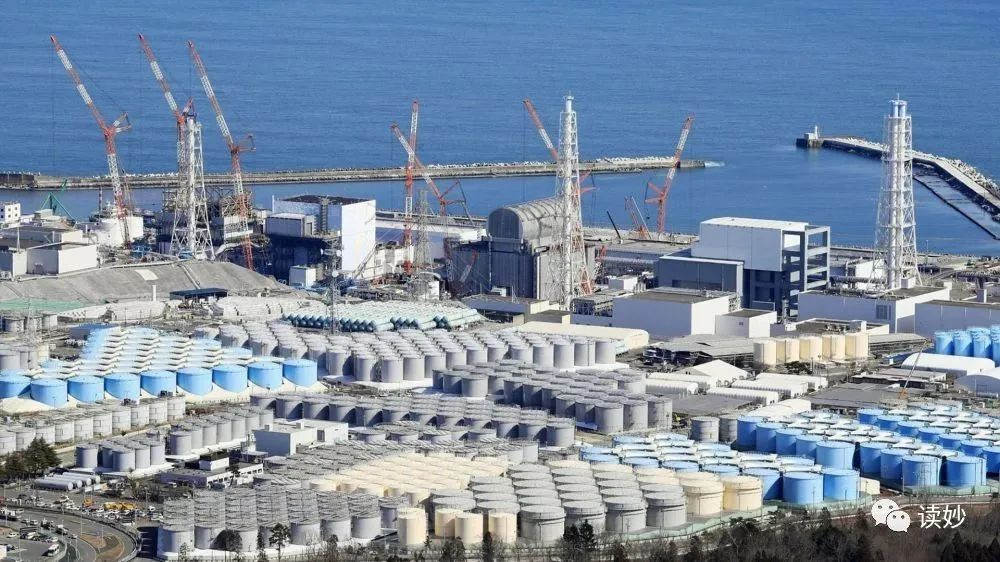
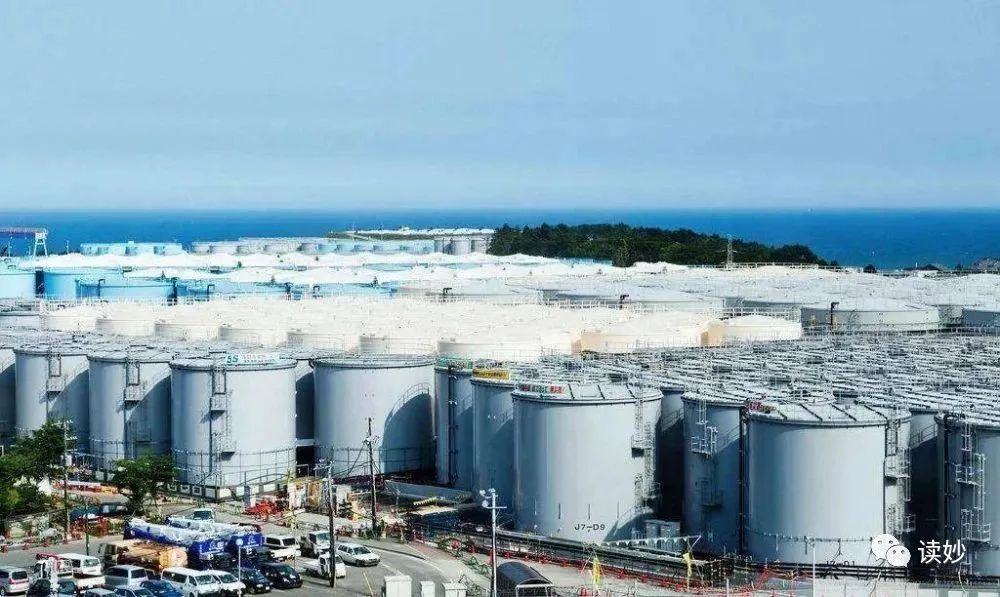
Fukushima Nuclear Wastewater Storage Tanks
Wastewater Treatment Plan
After the disaster, TEPCO has been studying how to treat this accumulated nuclear wastewater. They have proposed a total of 5 plans:
1, Steam Treatment
Use high temperature to evaporate the water (including tritium) in the nuclear wastewater and volatilize it into the sky. Then the radioactive substances will condense and precipitate, and then be buried or otherwise treated. This is a method, but the disadvantages are obvious, high-temperature evaporation requires a lot of energy, and there are greenhouse gases.
2, Hydrogen Removal Method
Use chemical reactions to separate tritium and hydrogen from the wastewater. This can remove tritium, but it requires a large amount of high-purity hydrogen (unsafe) and a large amount of energy. It was also rejected.
3, Burial Method
Bury the nuclear wastewater deep underground.
4, Rock Core Method
Inject the nuclear wastewater into the rocks.
The 3rd and 4th plans sound unreliable.
5, Sea Discharge Method
Of the above five plans, the Japanese government discussed them with the International Atomic Energy Agency (IAEA). The IAEA believes that, except for the steam method and the sea discharge method, the other three plans are unprecedented in the world and no one has tried them, and the risks are very high.
Compared with the steam method and the sea discharge method, the steam method is very expensive and inefficient (imagine burning water dry, and pouring it directly, which is faster?), the sea discharge method is simple, cheap, and safe enough. What’s important is that the cycle is also short, and it can be completely discharged in only 30 years, which can basically be solved within a generation.
Therefore, the international community and the Japanese government finally favored the sea discharge method. Let’s talk about the principle of the sea discharge method and why it is safe.
Principle of Sea Discharge Method
First, let’s write a few more sentences to popularize a basic common sense:
Most nuclear power plants in the world are built on the coast, mainly because they need a large amount of water to cool the reactors. Cooling water circulates through the reactor and is then discharged back into the sea. This discharged water usually contains trace amounts of tritium.
There are several reasons why nuclear power plants are often built on the coast.
First, the ocean provides a large amount of relatively cool and consistent water. This is important for nuclear power plants because they need to keep the reactor at a constant temperature to operate safely.
Second, the ocean is a good place to discharge cooling water because it dilutes tritium and other radioactive isotopes.
Third, the terrain of the coast is usually flat, making it easy to build roads and other infrastructure.
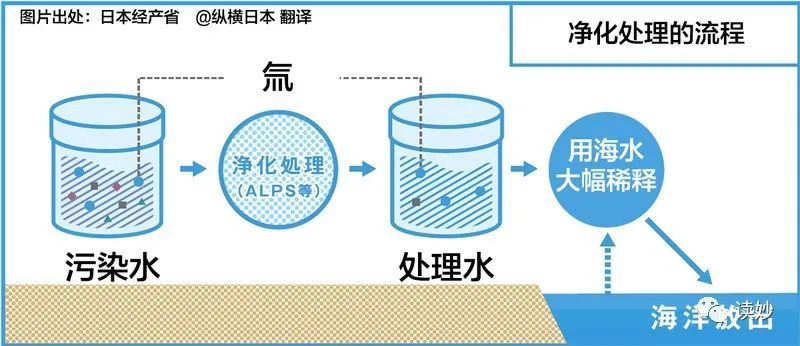
The year after the nuclear disaster, in 2012, Japan’s Toshiba Corporation developed a treatment and purification system, the “Advanced Liquid Processing System” (as shown below), which can filter out all 62 radioactive elements in the wastewater. TEPCO bought three such devices, with a daily processing capacity of 250 tons.
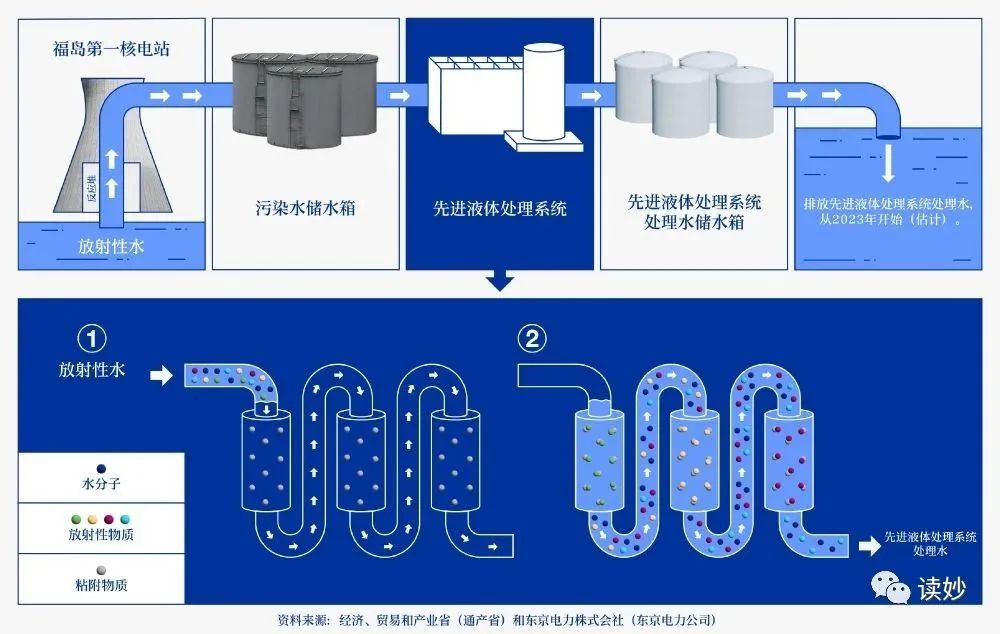
As can be seen from the picture, this purification system can only not purify one substance: tritium. What is tritium, how does tritium exist in nature and in the human body, and how much is there, see the picture below.
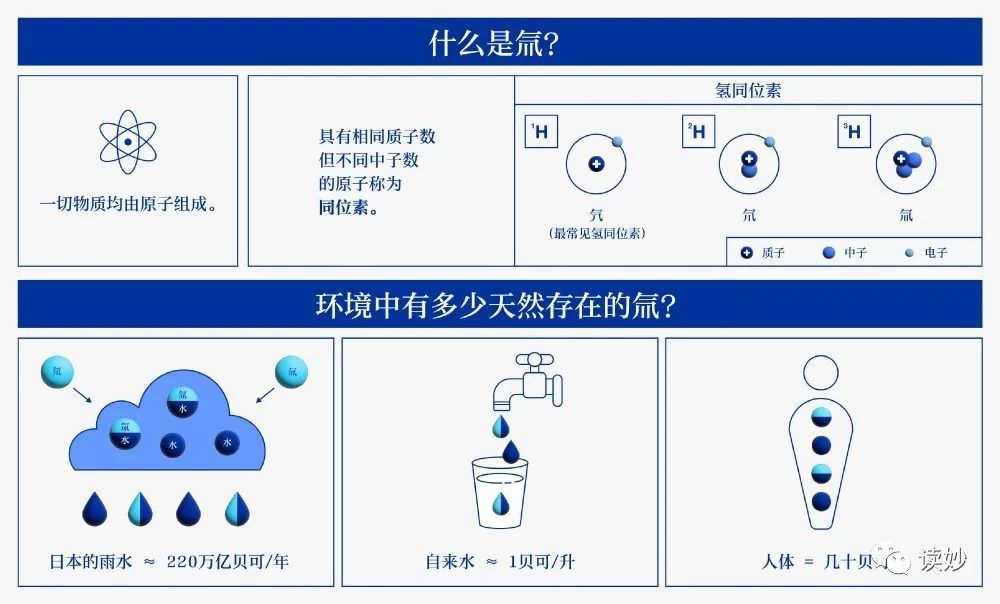
To completely separate and remove tritium from the wastewater, with the current technological level of mankind, it is not only costly but also very difficult (and unnecessary). But even so, as mentioned above, Japan has indeed considered some methods of separating tritium elements and has established a research team for this purpose to study specific technical solutions, but it was not successful in the end.
In short, the nuclear wastewater, after purification treatment, becomes “nuclear wastewater”, which is actually the same in composition as the cooling water discharged by normal nuclear power plants—except that the tritium content is seriously exceeded.
What to do? The method adopted by Japan is: dilute the wastewater with more than 100 times the amount of seawater (note that it is seawater, not tap water or river water), so that the tritium content can be greatly reduced to the emission standard.
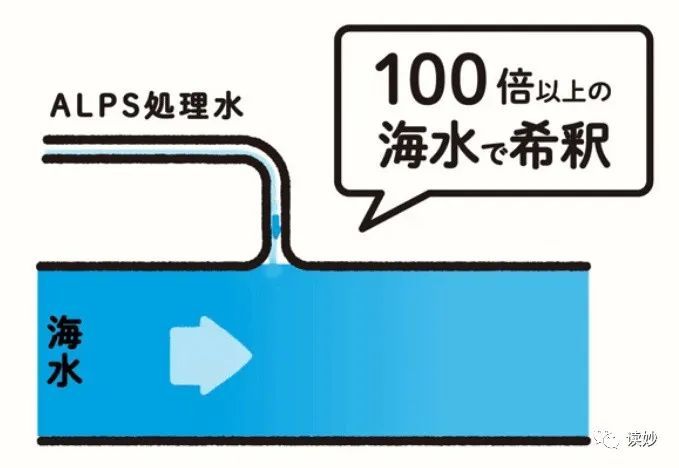
Although it is said to be 100 times seawater dilution, it may actually be far more than that. There is a data point that in the final emission system, every 6 liters of nuclear wastewater is mixed with 4 tons of seawater before being discharged into the sea. This is thousands of times.
How much tritium content is in the finally diluted “discharge water”?
According to the standard designed by Japan, it is 1500 becquerels per liter, which is 1/7 of the drinking water safety standard defined by the World Health Organization. The WHO standard is about 10,000 becquerels/liter of tritium concentration.
Of course, the tap water provided by most countries is far below the WHO standard in terms of tritium concentration. But this does not mean that the WHO standard is unsafe, nor can it prove that the tritium concentration of the water discharged by Fukushima in Japan is not safe enough.
Moreover, after being discharged into the sea, it will continue to be diluted by the vast Pacific Ocean—just like the tritium-containing cooling water discharged by all nuclear power plants in the Pacific Rim countries.
Therefore, the conclusion of the Japanese government is: this water can be discharged into the sea without any problems.
Note: Some people also exaggerate that this discharge water can be drunk. This statement is indeed exaggerated. It is only to emphasize the safety of the discharge water in terms of tritium concentration, and whether it can be directly drunk, there are many other factors, such as: seawater cannot be directly drunk.
As for some people asking: Why doesn’t Japan discharge nuclear wastewater into rivers? Or for irrigation? The same is true: seawater cannot be poured into inland rivers, nor can it be used for irrigation.
Specifically, Japan’s discharge plan is:
After purification to remove 62 radioactive elements
A total of 1.37 million tons of treated wastewater,
Discharge 500 tons per day,
Lasting 30-40 years.
Then the nuclear power plant is decommissioned.
United Nations Agency Review and Scientist Opinions
This plan has been submitted to the United Nations and reviewed by the International Atomic Energy Agency since 2021. The IAEA established a working group composed of 11 scientists, one of whom is an expert representing the Chinese government.
This working group, representing both the United Nations and their respective governments, went to Fukushima, Japan, to conduct on-site inspections, sampling, and analysis, and issued a report to demonstrate whether the Fukushima sea discharge plan itself is reasonable and feasible, and whether the actual discharge water produced according to the plan meets international discharge standards.
This inspection activity lasted for 2 years. The scientists’ work was indeed very meticulous and responsible. They took water samples from each storage tank, mixed them evenly, and sent them to the IAEA’s affiliated laboratories and several other European and Asian civilian laboratories for testing. The results confirmed that, according to Japan’s plan and the above-mentioned filtration system treatment, the water quality of various radioactive elements is far below international standards, only 1% of the standard.
A detail needs to be noted: The Chinese expert in the working group has never come out to express any opposition to Japan’s treatment plan. Not only him, but almost all authoritative nuclear energy and environmental scientists in China have not publicly expressed opposition.
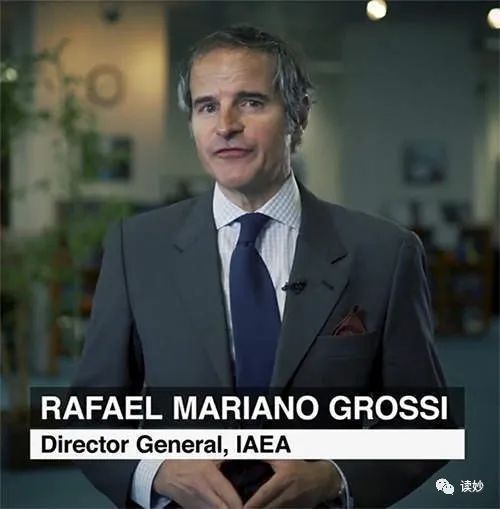
Therefore, the IAEA working group (including Chinese experts) unanimously reached a written conclusion: Japan’s nuclear wastewater treatment is qualified, and the plan is approved. IAEA Director General Rafael Grossi even said in a video:
The nuclear wastewater treatment method chosen by Japan is “technically feasible” and “in line with international practice”; however, due to the extremely large amount of nuclear wastewater at the Fukushima nuclear power plant, it is a “unique and complex case”.
Related report PDF file download:report-4-review-mission-tepco-and-meti.pdf (iaea.org)

IAEA official website statement screenshot
Generally, normal people will draw at least two conclusions here:
First, the nuclear wastewater discharged by Japan has been purified and treated.
Second, the technical plan for purification and treatment has been recognized by international experts, including China.
Of course, the recognition of the technical plan does not mean that the plan will be accurate and effective during the implementation process. It also requires strict monitoring and supervision. However, most of the disputes we see online now do not actually involve the implementation of the plan. What everyone is arguing about is still whether the “discharge” itself is reasonable.
However, the plan that has been recognized by authoritative scientists, what do you base your argument on to say it is unreasonable?
I have seen that almost all the opposing opinions have ignored the “purification” link in the above “sea discharge method” plan. They are repeatedly repeating: How can wastewater containing dozens of radioactive elements be directly discharged into the sea?! Some people are even more extreme, saying that the wastewater contains highly toxic cesium-137, and it will spread throughout the Pacific Ocean in only 57 days…
Where did the dozens of radioactive elements come from? Where did the cesium-137 come from? They have all been purified before entering the sea.
See, their views and facts have produced a huge mismatch. This is the key to the problem. What is the point of discussing opinions that are divorced from the facts? The opposition or criticism of those netizens is not discussing the problem, but emotional venting, or, a Cultural Revolution-style criticism.
On April 13, 2021, the Japanese government held a relevant ministerial meeting and formally decided to discharge the treated nuclear wastewater from the Fukushima Daiichi Nuclear Power Plant into the sea, and it is scheduled to start discharging two years later (this year).
According to the Japan Broadcasting Association (NHK), before the discharge, the Japanese side will dilute the nuclear wastewater to one-fortieth of the Japanese national radiation concentration benchmark value, which is equivalent to one-seventh of the drinking water radiation safety standard set by the World Health Organization (WHO).
After the Japanese government made this decision, the US State Department quickly issued a statement supporting Japan’s decision, saying that Japan “appears to have taken “measures that are in line with globally recognized nuclear safety standards”, and the US side expects the Japanese government to continue to coordinate and communicate with the international community in monitoring the effectiveness of the discharge. US Secretary of State Blinken also tweeted “thanking” Japan for its decision.
How to explain this “seemingly strange” position of the United States?
According to the post of blogger @MLRS270:
Let’s take a look at the ocean currents of the Pacific Ocean:
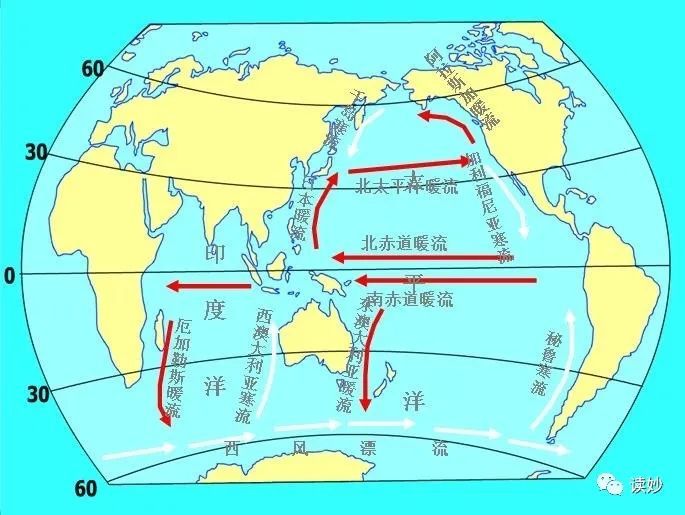
I think, seeing this, as long as the minds of friends are still normal, they can understand: the United States, which bears the brunt, disregards the safety of 300 million American citizens, and is “so assured” of Japan’s discharge of nuclear wastewater, there can only be one explanation:
Between position and science, they choose to believe in science.
Besides, are there any other explanations?
Finally, let’s look back at the follow-up impact of the Fukushima nuclear disaster 12 years ago:
According to monitoring, there is still some radioactive pollution remaining in the waters near Fukushima, but most of it is already below international standards and natural background levels.
The accident at the Fukushima nuclear power plant in 2011 led to the largest release of man-made radioactive substances into the ocean. These radioactive substances are mainly isotopes such as iodine-131, cesium-134, and cesium-137, which entered the ocean through the atmosphere and water bodies.
Some early studies predicted that these radioactive substances would cause serious harm to marine life, but later studies found that the actual impact was not that great. This is because these radioactive substances are rapidly diluted, diffused, and deposited in the ocean, and are masked by other naturally occurring radioactive isotopes (such as polonium-210 and potassium-40).
Currently, in the waters near Fukushima, iodine-131 has completely decayed and disappeared, while the concentrations of cesium-134 and cesium-137 have also dropped significantly, below the safety standards of Japan and the international community. Of course, the impact of the Fukushima nuclear disaster on the marine environment still needs to be continuously monitored and studied.
However,
According to reports from Japan’s Nikkei and Kyodo News, the European Union will completely lift import restrictions on Japanese food, including Fukushima seafood, in mid-July, and will no longer require Japan to provide radiation substance testing certificates for these foods. It is expected that Norway, Switzerland, and other countries that have introduced similar measures in conjunction with the EU will also follow suit.
The United States has already lifted the import restrictions on Japanese agricultural, forestry, and aquatic products and food after the Fukushima nuclear accident in September 2021.
In the face of natural disasters, human power is often difficult to be perfect. But science is the only way to help us avoid disasters, deal with disasters, and minimize the impact of disasters. Disasters are unfortunate, but when the disasters are over, let the past be the past, learn from the lessons, face the future, and don’t confine ourselves and be self-defeating.
Discover more from 自由档案馆
Subscribe to get the latest posts sent to your email.