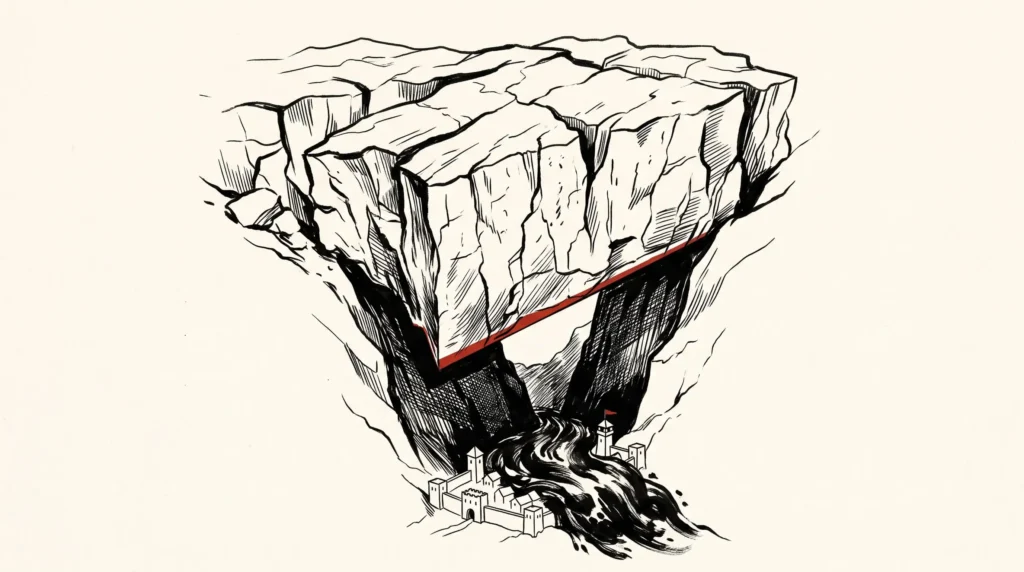

Zhuozhou, flooded by the flood
The floods in the north have touched the hearts of the people. Of course, disaster victims need disaster relief supplies, but what is different this time is that many celebrities deliberately bypassed rescue platforms such as the Red Cross and sent supplies directly to the disaster area.
On August 4, Zhao Liying donated a large amount of food, mineral water, sanitary napkins, etc. to Zhuozhou, accurately to the village, and was personally escorted by her cousin. Previously, as the Hebei Tourism Promotion Ambassador, she was once criticized for reacting too slowly, but this donation was widely praised: carefully selected supplies urgently needed by the disaster victims, delivered directly, without any prelude, and only knew when the supplies arrived. Some people praised her for this: “This is true love, not posing, but people who do practical things.”
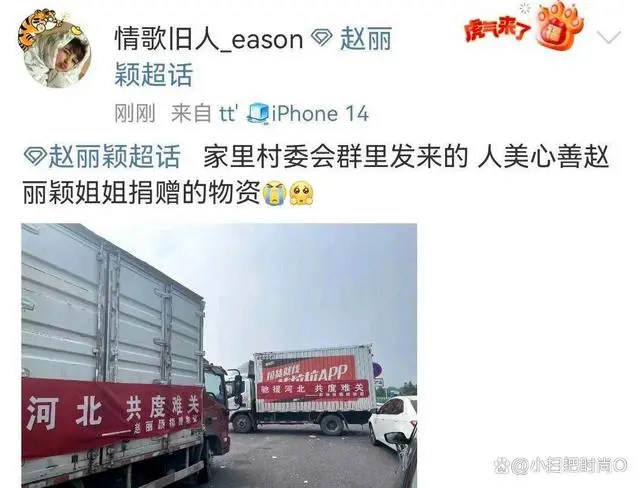
She is not the only one doing this. Another Hebei-born celebrity, Wang Baoqiang, was seen on August 5 personally escorting six trucks of supplies at the Dingxing service area in Baoding, and it is said that he hadn’t slept for two days.
After the flood disaster, Jia Nailiang, a celebrity from Harbin, urgently allocated more than 30,000 self-heating pot boxed meals and 150,000 bottles of mineral water, and sent them to various parts of his hometown, Heilongjiang, to alleviate the food shortage after the disaster, and even 50 water pumps. Before that, on August 4, he also donated 60,000 catties of rice and 6,500 liters of cooking oil to Fuping, Hebei.
What is different from previous acts of kindness is that this time, most of the celebrities issued them in their own names and “personally rescued the disaster”, which won many people’s praise of “very practical and very powerful”. However, why did they do this?
Originally, the actor’s job is acting, and disaster relief is not what they are good at. It is enough to leave it to professional institutions. However, there is a special social mentality in China: people will feel that with the same amount of supplies, if you deliver them personally, it can prove your moral sincerity. In other words, people don’t like dealing with impersonal institutions, but prefer face-to-face “friendship”.
Correspondingly, there is a widespread lack of trust in intermediary institutions in society: many people say that the reason why Zhao Liying and Wang Baoqiang’s direct delivery seems “sincere” is because they bypassed the intermediary platform, “avoiding the embezzlement of donated materials”.
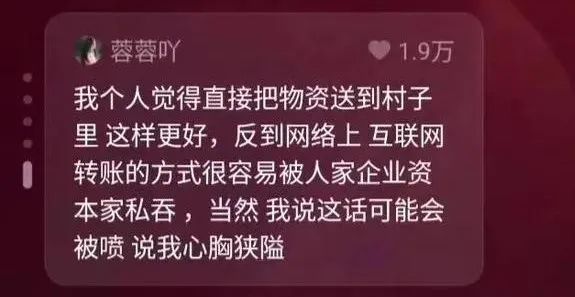
This is not just a few people’s thoughts. In the past few years, the Guo Meimei incident and the Wuhan lockdown rescue have repeatedly hit the public image of the Red Cross, making people suspect that there is serious corruption and lack of transparency within this organization, and even the professional ability of rescue is not good. Then why should we believe that it can do well this time?
Coincidentally, the performance of the Red Cross this time seems to once again prove that the public’s distrust of it is justified.
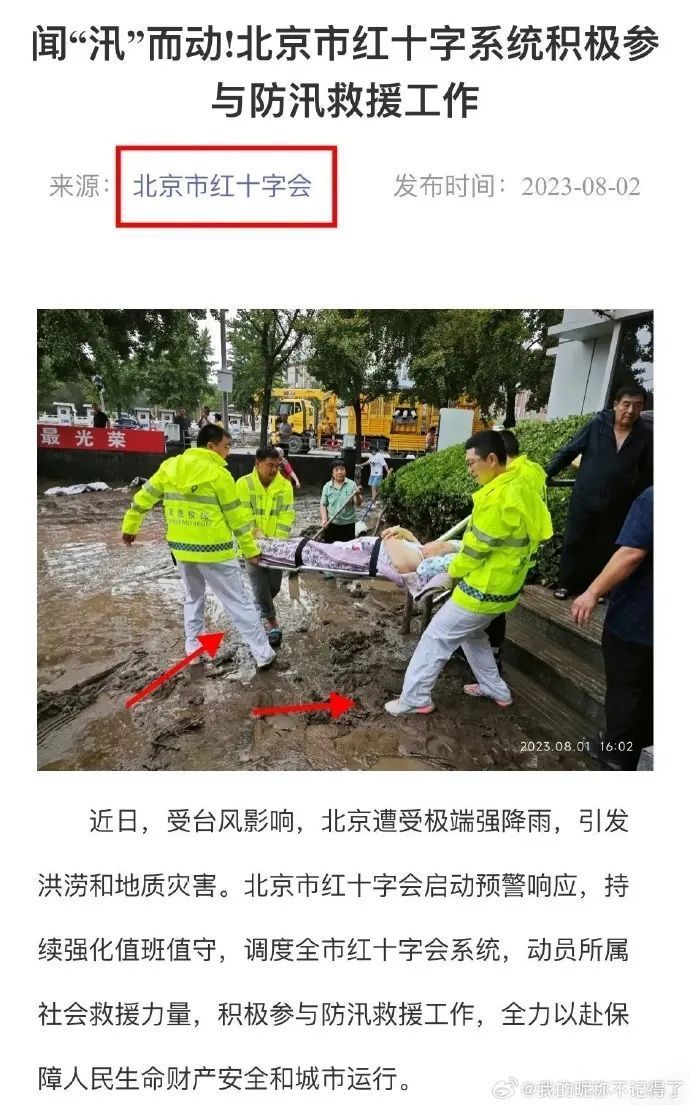
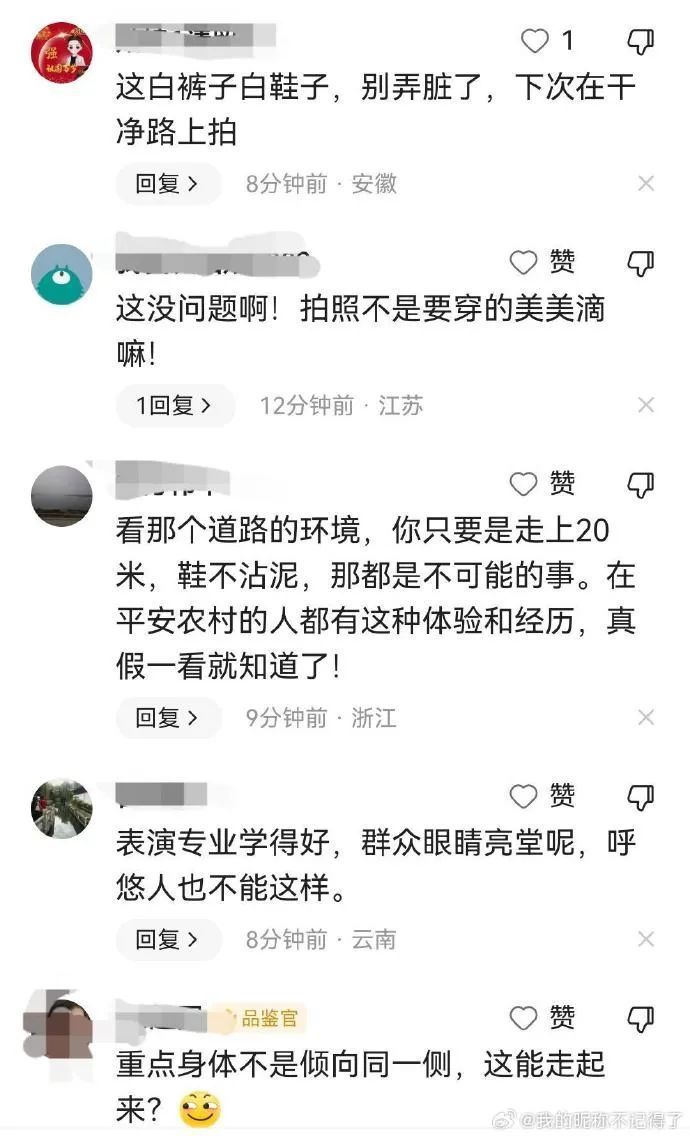
A flood control and rescue report by the Beijing Red Cross was ridiculed for being staged, because the staff’s pants and shoes were obviously clean and bright. Some people mocked that this “moved themselves and disgusted others”, and others saw the trick: “The dirty clothes in the back are temporary workers, and the clean clothes in the front are those with编制 (official positions), it’s clear at a glance.”
Some people dug up a detail of the Red Cross: the price of the supplies on the donation list was not only expensive, but also did not meet the needs of the disaster victims (for example, they sent suits in such hot weather), and the legal representative of the supply provider was actually the same name as a member of the Beijing Red Cross Standing Committee. Are there really such coincidences in the world?
After reading these inside stories, the following populist sentiments must be able to resonate with countless people:
Therefore, in disaster relief and emergency situations, in many cases, what we should prevent most is not the disaster victims and the poor. In many cases, what we should prevent is precisely some people with power, money, and influence.
Never test human nature, and never think that people with power, money, and influence can all have a conscience and all have goodwill towards disaster victims and the poor.
But wait a minute, aren’t those celebrities also “rich and powerful”? Why are they trustworthy?
This suspicion, rather than being directed at the “rich and powerful” by the people at the bottom, reflects their distrust of the agency.
Traditionally, Chinese people’s sense of trust often comes from close interpersonal relationships in a familiar society, just like you naturally trust your relatives and friends (otherwise, “killing the familiar” would not become a problem), but the agency is completely different. It can only win people’s trust by its professionalism and transparency.

In other words, the key here is to establish a “commission-trust system”: you entrust the relevant matters to experts, entrust your trust, and let the other party complete what you cannot do or cannot do well. The most typical scenario is surgery: no matter how anxious the patient’s family is, they have no choice but to completely trust the doctor and wait for the results outside the operating room.
Originally, this is part of the modernization process: with the increasing complexity of social division of labor, some agencies have emerged, providing professional services and allowing the whole society to operate more efficiently. However, this process has never been completed in China. Why? The most important point is that in many fields, this “commission-trust system” has not been established for a long time.
The reasons for this are complex. Sometimes the public itself is not yet adapted (it took more than a hundred years for doctors to get patients to accept and learn to become “qualified patients”, and it has not been completely completed), and sometimes the agency itself lacks professional ability, but the more thorny problem is its lack of transparency in operation.
To be precise, transparency is not a necessary prerequisite for establishing this sense of trust. Still taking hospital surgery as an example, the patient’s family cannot watch the scene in the operating room, and even if they watch it, they may not understand it, but they can only entrust their trust. In other words, the real cornerstone of this “commission-trust system” is actually professionalism based on professional ethics, which is why the Hippocratic Oath is the starting point for every medical worker.
However, for agencies like the Red Cross, the situation is different. For most ordinary people, they really don’t know where its “professionalism” lies, and it is even more difficult to trust it under the circumstances of opaque operation: that is an institution involving donations and materials. It is your duty to distribute them well, but if you don’t know where your money is spent, how can you trust you in the future?
More importantly, the Red Cross has a special semi-official status in China. In the past few years, those things have been exposed one after another, and it seems that it is still unscathed. In other words, credibility is not the foundation of its existence, and it does not have enough motivation to respond to public concerns and be responsible to every client. Do you want transparency? Then do it for you.
Since the official institutions cannot fulfill their mission, the opportunity will inevitably be given to others. At this time, celebrities have both financial resources and motivation, and their staff and fan groups have considerable organizational and coordination capabilities. During the Kobe earthquake in Japan, the first to appear at the scene of the disaster relief were the underworld, and of course there were also many religious charitable organizations. However, in the environment allowed in China, celebrities have been proven to be the real organized force.
Therefore, in this case, it is not surprising that celebrities personally rescue the disaster: they not only cater to the public’s will, bypass the unpopular intermediate links, but also win a better public image – on the disaster relief supplies they donate, they will write their own names, not the Red Cross logo, and of course, the recipients will only thank them and not the Red Cross.
However, although this is indeed “doing practical things”, not to mention how much time and energy the celebrities have invested, they were not originally professional disaster relief personnel, and what is more critical is that: they lack coordination with each other. It happened during the Wenchuan earthquake that many people went to the disaster relief spontaneously, but they fought their own battles without coordination, which was not only inefficient, but sometimes even added to the chaos for professional rescue personnel.
I also admit that under the disaster, it is always a good thing that someone is willing to rescue, and their moral sincerity does not need to be doubted. However, the problem is also here: due to the distrust of the formal mechanism, people turn to trust the celebrity’s such a personalized informal mechanism, which in the end not only hinders the development of professionalism, but also makes the “commission-trust system” unable to be established for a long time, and it is also difficult to deal with more complex challenges.
Discover more from 自由档案馆
Subscribe to get the latest posts sent to your email.