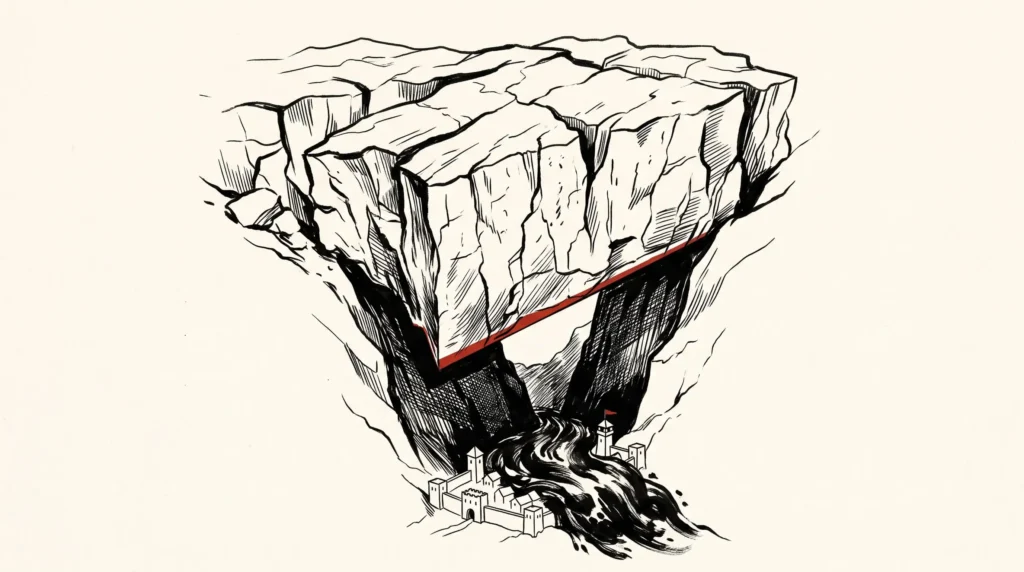
Countries with the most innovative and dynamic youth are also where young people are most active in starting businesses.
Main points:
- The difference between the number of new jobs created each year from 2020 to 2023 and the number of graduates was -2.49 million, -2.2 million, -4.49 million, and -5.82 million, respectively. In other words, over 15 million new graduates did not find jobs in those years.
- The enterprise cancellation rate in 2022 was approximately 10%, which means that about 10% of employed workers faced layoffs or unemployment, accounting for approximately 25 million young people.
- In addition, since the pandemic, over 14 million young migrant workers have returned to their hometowns due to unemployment. The cumulative number of unemployed young people (aged 16-40) over the three years is about 54 million. Of course, a considerable portion of them have since found re-employment or flexible employment.
- The number of graduates in 2025 will increase by 3 million compared to 2022, reaching nearly 20 million. Overall, the period from now to 2030 will be the most severe period for employment since China’s reform and opening up.
- The current difficulty in finding employment is mainly due to the setbacks faced by the private economy, digital economy, and service industry. Therefore, improving the market environment and promoting the development of the private economy, digital economy, and service industry remain the only channels to solve the employment problem.
- Employment is the primary goal of economic development and the most accurate barometer of economic development achievements. GDP growth that cannot effectively solve the employment problem cannot be regarded as effective growth.
- A society with a promising future must be one where young people actively create and realize their dreams, rather than all being on the path to taking civil service exams.
I. The Three Unemployment Peaks in New China
Since the founding of New China, there have been three unemployment peaks.
The first was between 1973 and 1979, when a large number of educated youth returned to the cities, leading to an employment crisis.
At that time, there were over 15 million returnees awaiting placement, plus about 5 million unemployed people in urban areas, graduates from universities, and demobilized soldiers, resulting in over 20 million unemployed young people.
This accounted for about 17% of the urban labor force at the time (115 million), or over 30% of the young labor force.
The large-scale unemployment of young people indicated that it was caused by the Cultural Revolution interrupting schooling and recruitment, which was essentially caused by the ‘Three Transformations’ and the establishment of a planned model, which indiscriminately eliminated private enterprises, unilaterally developed a system of ownership by the whole people, and suppressed the development of the service industry, among other fundamental issues.
Faced with the severe employment situation, Deng Xiaoping, Hu Yaobang, and others, the leaders of the new era, proposed the ‘Three Doors’ to solve the employment problem.
That is, in addition to expanding the scale of recruitment by state-owned enterprises, it is also necessary to allow the establishment of collective and individual private enterprises to solve the unemployment problem.
After adjustments, around 1981, over 22 million new jobs were created nationwide, and the employment problem of urban youth was resolved. China’s private economy also began to emerge and gradually grew into an important component of the economy.
The second was the ‘layoff wave’ brought about by the reform of state-owned enterprises from 1998 to 2001.
After the 1990s, state-owned enterprises began to suffer large-scale losses. In 1998, the loss rate of state-owned enterprises nationwide reached 55%, with a total profit of negative 7.2 billion, the lowest level in history.
Therefore, the new government launched a three-year program for state-owned enterprises to overcome difficulties, with the main directions being ‘encouraging mergers, regulating bankruptcy, laying off workers, and reducing staff and increasing efficiency’.
During this period, over 26 million state-owned enterprise employees were laid off, accounting for about a quarter of the total number of state-owned enterprise employees at the time.
In addition, over 10 million people were laid off from collectively-owned enterprises, and the total number of laid-off urban workers exceeded 36 million. At that time, the total number of urban labor force was about 230 million, and the unemployment rate was about 15.6%.
Faced with the severe layoff problem, the government actively supported re-employment while encouraging the development of the private economy. During this period, private enterprises created about 50 million jobs, which not only basically helped laid-off workers achieve re-employment but also absorbed many rural migrant workers.
The third is since 2020, due to the comprehensive impact of the changing international economic environment and the unprecedented pandemic, resulting in employment problems. Detailed calculations of the scale of this unemployment will be provided later.
Compared with the previous two times, this employment crisis has two special features:
First, this is the first employment crisis to occur after the widespread urbanization of our country.
The current urban employed population in our country is nearly 6 times that of 1978 and nearly 3 times that of 1998. Therefore, even if the unemployment rate rises slightly, the total number of unemployed people is very alarming, and the social problems generated will be much more serious than before;
Second, the number of urban employed persons in our country decreased from 467.73 million in 2021 to 459.31 million, a decrease of 8.42 million, which is the first decrease since 1962.
This shows that the employment problem in our country has indeed reached a very prominent moment.
Overall, an employment crisis will occur in our country every 20 years or so. Although we are currently facing some problems, we should also see that this is the result of the economic laws themselves.
After a development cycle, the drawbacks of the economic growth mechanism and the domestic and international comprehensive environment will become apparent, thus causing some significant economic fluctuations, which in turn affect employment.
Each unemployment problem is a warning to past economic policies and development paths. Only by seriously addressing the real problems and effectively solving the problems with a reform attitude can we get out of the predicament.
II. The Gaps and Deficiencies in China’s Unemployment Statistics
Since 2018, the government work report has changed the ‘urban registered unemployment rate’ to the ‘survey unemployment rate’ for the first time, which is a huge progress in China’s unemployment statistics.
However, the survey unemployment rate also has a situation of distortion.
For example, data from the National Bureau of Statistics show that the national urban survey unemployment rate in April 2023 was only 5.1%, which is 0.1 percentage points lower than the end of 2019 before the pandemic.
This is obviously different from everyone’s actual feelings: in the more than three years since the pandemic, employment in society has not improved but has greatly deteriorated.
Why does the unemployment rate statistics appear distorted? The author believes there are several points:
First, our country has set the standard for ’employment’ too low.
The International Labour Organization defines that working 10 hours a week is considered employment, 15 hours in the United States, and 20 hours in France. In our country, it is only 1 hour, which is significantly lower than international standards.
The minimum hourly wage in our country is about 21 yuan. If you only work one hour a week, this means that you only have an income of 3 yuan per day, which is far below the UN’s minimum living expense standard of $1.9 per day, and obviously cannot be regarded as effective employment that can solve the problem of living.
According to the minimum employment standard in the United States, it means that workers can earn about $20 per day (the minimum hourly wage in most states is around $10), which covers basic food expenses without any problem, and this is effective employment.
Second, although the urban unemployment survey has begun to include rural registered residents, migrant workers often choose to return to their hometowns after becoming unemployed because they cannot afford the high cost of living in the city.
Therefore, the unemployment survey is difficult to sample unemployed migrant workers, and the unemployment of migrant workers will not be reflected in the unemployment rate.
The number of migrant workers entering the city in our country last year was still as high as 172 million, and the actual number of those returning to their hometowns due to unemployment is estimated to be around 12 million, which is a gray area in unemployment statistics.
Third, according to preliminary estimates, there are now as many as 200 million flexible workers in our country, accounting for about 40% of the urban employed population. How to accurately count their employment status is also a very big problem.
For this part of flexible workers, the social security participation rate is less than 20% (Guangdong has more than 20 million flexible workers, and the number of social security participants is only more than 3.2 million; Beijing has about 4 million or more flexible workers, and the number of social security participants is only 650,000). It is also difficult to observe their actual employment situation through indicators such as unemployment insurance receipt and unemployment registration.
Therefore, we cannot simply rely on official statistical data to measure the actual unemployment problem. We also need to infer China’s actual unemployment level from other statistical clues in order to truly understand the suffering of society and the confusion of young people.
However, many media outlets now use the 20.4% unemployment rate for the 16-24 age group announced by the National Bureau of Statistics in May as the unemployment rate for the entire youth group, which is also unreasonable.
In April, there were about 32.2 million people aged 16-24 participating in the labor market in our country, of which about 6.56 million were unemployed, accounting for 20.4% of the total.
Because the population in this age group (especially 16-20 years old) is relatively special, their labor participation rate is not high even if they do not go to school, and it has long been maintained above 18%.
Therefore, the change in the unemployment rate in this age group in recent years is actually not very large, only an increase of more than 1 million unemployed people compared to 2018, which does not reflect the actual employment difficulties of young people. We also need to comprehensively examine the employment problems of young people from a more comprehensive perspective.
III. Calculation of the Actual Unemployment Population of Young People (16-40 years old)
1. How many graduates cannot find jobs?
Graduates lack work experience and economic foundation, and have poor ability to withstand unemployment.
Therefore, the difficulty of graduates finding employment is the most important of all employment problems and is the ‘number one problem’ in China’s employment problems.
So, how many graduates specifically cannot find jobs?
The official has never had clear statistical data, and the economic circles also lack research, but we can make some inferences based on the difference between the number of graduates from secondary and higher education each year and the number of new jobs.
In economic statistics, the number of new jobs = the number of people employed for the first time in society (mainly graduates from secondary vocational education and higher education, and overseas returnees) + re-employment placement personnel – retirees.
According to statistics over the years, the number of re-employed personnel in our country each year is basically the same as the number of retirees, both around 5.5 million, which can be offset.
Therefore, the newly employed personnel are basically composed of graduates who are employed for the first time. The employment situation can be determined based on the difference between the number of newly employed personnel and the total number of graduates.
(The increase in the number of newly employed personnel and the growth trend of newly graduated students over the years, data source: Statistical Yearbook of the National Bureau of Statistics over the years)
Before 2013, our country’s economy was in a stage of rapid development, and the total number of newly employed personnel was generally greater than the total number of graduates.
For example, in 2007, the number of new jobs in our country was 12.04 million, while the total number of graduates of all types that year was 8.29 million. This means that it can not only meet the needs of all graduates but also accommodate a large number of surplus rural labor.
Between 2013 and 2019, the scale of graduates and the number of new jobs were both increasing, but the former grew faster. The number of new jobs and the scale of graduates were both around 13 million, and the supply and demand in the initial employment market were roughly balanced, which is a relatively ideal state.
However, after the pandemic, the employment situation has undergone a fundamental turning point.
On the one hand, the number of new jobs created each year began to decrease sharply. The number of new jobs in 2022 decreased by 1.48 million compared to 2019, which is only equivalent to 2010.
On the other hand, due to the past expansion of enrollment, the number of graduates from secondary vocational education and universities has increased dramatically, and the scale of overseas returnees has also become increasingly large. Last year, the number of graduates of the three types had reached 16.55 million, which is equivalent to twice that of 2007.
Therefore, the situation of severe shortage of jobs in the employment market has emerged.
Roughly estimated, in 2020 and 2021, about 2 million new graduates could not find jobs each year, accounting for about 15% of the total; the unemployment population of the 2022 graduates further increased to more than 4 million, and this year it has risen to more than 5 million, accounting for about 30% of the total, which is similar to everyone’s actual perception.
Considering that the economic situation in 2020 and 2021 was still good, although the employment of these two batches of graduates was delayed, the vast majority of them eventually found jobs.
In the past year or so, the economy has been poor, and most of the unemployed students in 2022 and the gap in 2023 may still be in an unemployed state. The accumulated number of unemployed people in these four batches of graduates should be around 10 million.
During the period of loose employment in the 2010s, graduates liked to seek jobs in the market, and the number of people applying for postgraduate entrance exams, civil service exams, and teacher qualification exams grew slowly. For example, from 2005 to 2016, the number of people taking the postgraduate entrance exam increased by an average of only 50,000 each year; while from 2019 to 2023, it increased by nearly 370,000 each year.
The increase in the number of applicants for other exams is also very large. In the past three years of the pandemic, the number of applicants for the national civil service examination increased by 1.21 million (from 1.29 million to 2.5 million); the number of applicants for the teacher qualification certificate examination increased by 2.64 million (from 8.8 million to 11.44 million, some junior college students can apply); the number of provincial exams also surged to more than 5 million.
These all show that in recent years, the job vacancies in the employment market have expanded by millions, and young people have to participate in various competitive examinations to find a way out.
(The number of applicants for postgraduate enrollment over the years, data source: Ministry of Education)
2. How many people are unemployed in their jobs?
In addition to the difficulty of finding jobs for those who are employed for the first time, the phenomenon of unemployment has also become increasingly prominent in the past two years.
First, the average number of employees of A-share listed companies has shrunk by 11.9% compared to before the pandemic.
A-share listed companies will disclose the number of employees each year.
Before the pandemic, the average number of employees of A-share listed companies in our country fluctuated between 6,500 and 6,600.
The average number in 2018 was 6,560, while in 2022, this number has dropped to 5,775, a decrease of 11.9%, of which the decline in 2021 and 2022 was the most obvious.
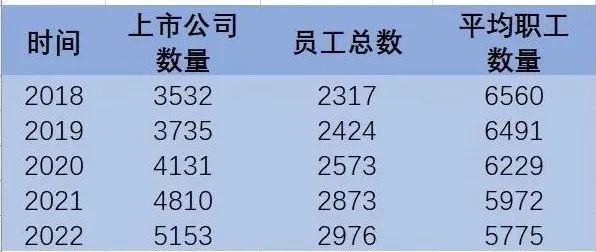
(Changes in the average number of employees of A-share listed companies, data source: China Listed Companies Association, Wind)
The number of layoffs in some of the technology companies we are most familiar with (although listed on the US or Hong Kong stock exchanges) is about the same scale. For example, the layoff rates of Tencent, Alibaba, Meituan, and Baidu are all around 9%.
The layoffs in the tourism, real estate, and education and training industries are even more serious.
For example, the layoff rate of Ctrip reached 27.3%. For another example, among the 57 A-share listed real estate companies, only 8 have an increase in the total number of employees, and 28 have laid off more than 20%, of which the highest layoff rate reached 73%.
Considering the benefits of listed companies, they are often better than unlisted companies of the same type. Therefore, the layoff rate of other companies should be higher.
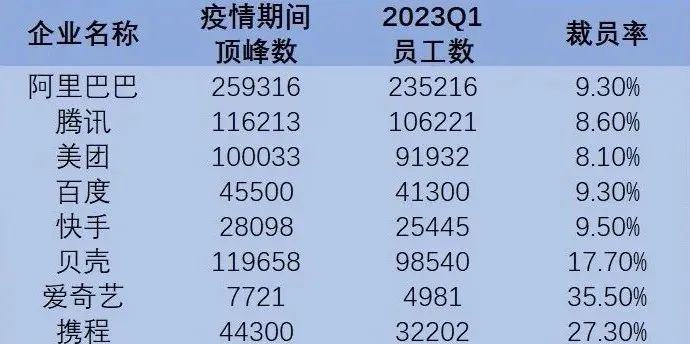
(Layoffs of technology companies and real estate companies since the pandemic, data source: annual reports of each company)
Second, the cancellation rate of small and medium-sized enterprises last year was about 10%.
Last year, 215,000 small and medium-sized enterprises in Shanghai were cancelled, accounting for 19.9% of the total number of enterprises in the city, while the number of cancellations in 2018 was only 51,000, an increase of more than 3 times; 94,000 small and micro enterprises in Guangzhou were cancelled, accounting for 13% of the total number of enterprises in the city, and in 2018, it was only 28,000, also an increase of nearly 2.4 times.
Overall, the cancellation rate of small and medium-sized enterprises nationwide should be at least around 10%, and the corresponding employment capacity will also decrease by about 10%.
(The number of micro-enterprises cancelled in Shanghai from 2016 to 2022, data source: Shanghai Municipal Market Supervision Bureau, Caijing Shiyi Ren)
Small and micro enterprises basically rely on job search websites for recruitment.
Judging from the number of active enterprise users on BOSS Zhipin, in the first quarter of 2022, there were 4.1 million companies. At the end of the year, it dropped to 3.6 million, a decrease of 12.2%, the largest drop in history.
This also shows that about 10% of the companies have been cancelled, or have stopped operating, or have suspended recruitment.
3. Estimated scale of overall youth unemployment since the pandemic
In summary, since the three years of the pandemic in our country, about 15 million secondary vocational and university graduates have not found jobs.
At the same time, about 10% of the employed workers in enterprises are unemployed, and this part of the 16-40 year old youth (Note 1) employed personnel is about 25 million (Note 2).
In addition, according to the research of Professor Lu Feng of Peking University, in the past three years, at least about 23 million migrant workers have returned to their hometowns due to unemployment. If 60% of them are young people, then this part is also about 14 million.
So, about 54 million more young people have become unemployed since the pandemic.
Of course, the above is only an estimate of the state of employment mobility, and it also means how many people have experienced unemployment or layoffs, but it is difficult to estimate the final scale of unemployment.
Because among these unemployed people, it is not ruled out that a considerable part have found jobs again, or have achieved re-employment through flexible employment (for example, the number of active Didi drivers has increased by more than 12 million in the past three years, and the number of takeaway riders, express delivery personnel, and delivery personnel has increased by about 8 million per month), but it is estimated that about half, or about 25 million to 30 million, are still unemployed.
That is to say, conservatively, the current absolute unemployment population of young people has increased by about 25 million to 30 million compared to before the pandemic. This is equivalent to about 6.2% to 7.5% of the total labor force participating in the employment market in this age group (402 million), or 2.8% to 3.4% of the total working-age population (880 million).
Considering that the employment of young people is concentrated in the emerging Internet, education, real estate, finance and other industries in the 21st century, and these industries have been hit the hardest in the past three years, it should not be too much to make the above inference.
(*Because it is very difficult to conduct unemployment research and estimation, and there is a lack of effective statistical clues, the above is only used to throw a brick to attract jade, and I hope that colleagues who pay attention to this issue will criticize and give advice on the inaccuracies.)
4. The employment problem will be more severe in the next few years
So is the youth unemployment problem temporary, and will it be solved naturally in two years?
Judging from various data, the employment problem in our country will be more serious than it is now in the future, for three reasons.
First, the new entrants to the employment group are mainly “post-05s”. These young people will almost invariably go to the cities to find jobs, and only a very few are willing to engage in agriculture. The employment pressure will be completely squeezed towards the cities, and the buffering effect of the countryside is gradually disappearing.
Second, in order to cope with the employment difficulties in the past two years, our country has further expanded enrollment, which has temporarily curbed the peak of employment, but will increase the employment pressure in the future.
It is estimated that by 2025, the total number of graduates from secondary vocational education and higher education will reach about 19 million, an increase of about 3 million compared to 2022 (secondary vocational education increased by 510,000, undergraduate and junior college students increased by 2.23 million, and graduate students increased by 330,000), and the demand for employment will reach an unprecedented peak.
And at that time, the optimistic estimate of the supply of employment positions is about 13.5 million, with a gap of at least 5.5 million.
Third, the economic growth rate of our country is slowing down, and it is becoming more and more difficult to create new jobs.
From 2008 to 2018, the average economic growth rate of our country was 7%, which could create 13 million jobs per year.
And the economic growth rate of our country in the future will drop to between 4% and 5%, and it is almost impossible to create more jobs than in the past.
Therefore, the next few years will be the most severe moment for the employment situation since the reform and opening up.
We must digest the unemployment stock of the past three years and face the fact that the demand for urban employment has reached a historical peak. On the other hand, the supply side has obviously narrowed, and the employment contradiction is more prominent than ever.
If this problem cannot be properly solved, and if 5 million young people continue to accumulate unemployment each year in the next 5 years, it means that by 2028, the society may accumulate about 50 million unemployed young people.
Then unemployment will become a widespread social problem, with one unemployed person in every four or five families, which will lead to a series of deep crises.
If it can be basically dealt with, after 2030, with the arrival of the retirement tide of the post-70s, the employment pressure in our country will be significantly reduced.
IV. Suggestions for solving the unemployment problem
So how to solve the current youth employment problem?
First, we should not expect to solve the employment problem by letting young people enter the “system”.
In 2022, state-owned enterprises recruited 760,000 fresh graduates, and the national and provincial examinations recruited about 100,000 fresh graduates, which is only equivalent to 5% of the demand for fresh graduate positions.
In the long run, the employment positions provided by state-owned enterprises and the government are continuously decreasing. Allowing the expansion of state-owned enterprises and the government will inevitably lead to institutional redundancy, inefficiency and losses.
Second, there is no way to solve the employment of young people through “rural revitalization”.
At present, the scale of rural economy in our country is very limited, and the total output value of agriculture in the whole country is only about 1 trillion US dollars, which can accommodate one or two million people.
And the economic development law of the world is that the countryside concentrates to the city, not the other way around.
Therefore, only by respecting the objective laws of economics and conforming to the trend of industrial development can we fundamentally solve the employment problem and create more jobs.
From the 45 years of reform and opening up, especially in the past 10 years, the employment trend in our country has the following three laws.
First, in terms of ownership, the increase in employment is basically created by the development of the private economy.
After the reform and opening up, the total urban employment in our country increased by 367 million, which was almost entirely brought about by the development of the private economy.
In the past ten years, for every 1% of GDP created in the country, state-owned enterprises can bring 1.85 million jobs, while private enterprises can reach 6.36 million.
Second, in terms of industry categories, the increase in employment is mainly brought about by the development of emerging industries such as the digital economy.
In the past 10 years, the digital economy has created about 200 million jobs for our country. Now, 8 out of the 10 employment fields most favored by young people are related to the digital economy.
Third, in terms of industry categories, the increase in employment is mainly brought about by the service industry.
In the past 10 years, the added value of the secondary industry has increased by 168%, but the employed population has decreased by 15 million compared to the peak period. However, the development of the service industry has brought about a social employment capacity of nearly 100 million.
In fact, the increase in unemployment in recent years can be directly attributed to the fluctuations in the development of the private economy, the digital economy and the service industry caused by changes in the comprehensive economic environment.
Therefore, if we want to truly solve the employment problem, we should start from improving the development environment of the private economy, the digital economy and the service industry.
Finally, it is particularly emphasized that we must thoroughly improve the market environment and encourage and support young people to start their own businesses.
In the past three or four years, affected by the international environment, economic policies and industrial policies, the enthusiasm of young people in our country to start their own businesses has greatly decreased. This not only increases the employment pressure, but also does great harm to our country’s innovation ability.
Before the pandemic, young people were proud of starting their own businesses. Although young people are not perfect and the science and technology innovation market is not very standardized, this phenomenon is gratifying.
Because young people starting their own businesses can not only solve their own employment and create jobs, but also promote technological revolution and industrial upgrading, which breeds the infinite hope of the country’s future.
Therefore, it is necessary to fundamentally reverse this situation, thoroughly improve the market environment, and let young people’s entrepreneurial dreams rekindle.
Looking at the world, the countries with the most innovative vitality are those countries where young people are most active in starting their own businesses.
A society with a future must be a society where young people are actively creating and realizing various dreams, rather than all on the road to the examination.
*Note 1: In the social and economic statistics of the National Bureau of Statistics, people between 16 and 35 are often called “youth”. However, the United Nations and many developed countries have gradually broadened the scope of youth to about 45 years old. Considering the extension of the average working hours in our country and the phased characteristics of economic development, this article takes the population aged 16-40 as youth. These people are a new generation who entered work after the expansion of universities and the Internet revolution, and their employment fields and employment habits are significantly different from those before.
Discover more from 自由档案馆
Subscribe to get the latest posts sent to your email.