Recently, Nanning, Guangxi’s financial innovation of “Huibo Parking” has sparked huge controversy online and has been criticized by many netizens.
The most eye-catching aspect is the charging standard.
This charging standard seems to be not much different from other cities, and the price level is also similar, but for overnight parking, many cities clearly stipulate a cap, for example, parking at night, 8 yuan or 10 yuan per time, and it’s just that much for a night’s parking.
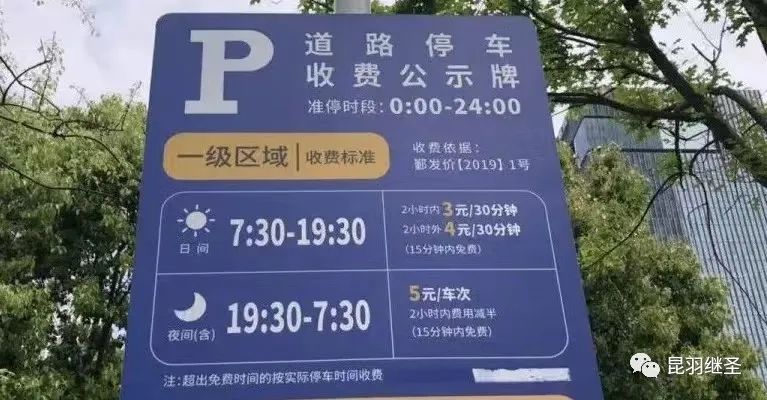
In a certain city in Zhejiang, the regional charging standard is 5 yuan per vehicle for overnight parking from 7:30 pm to 7:30 am the next day.
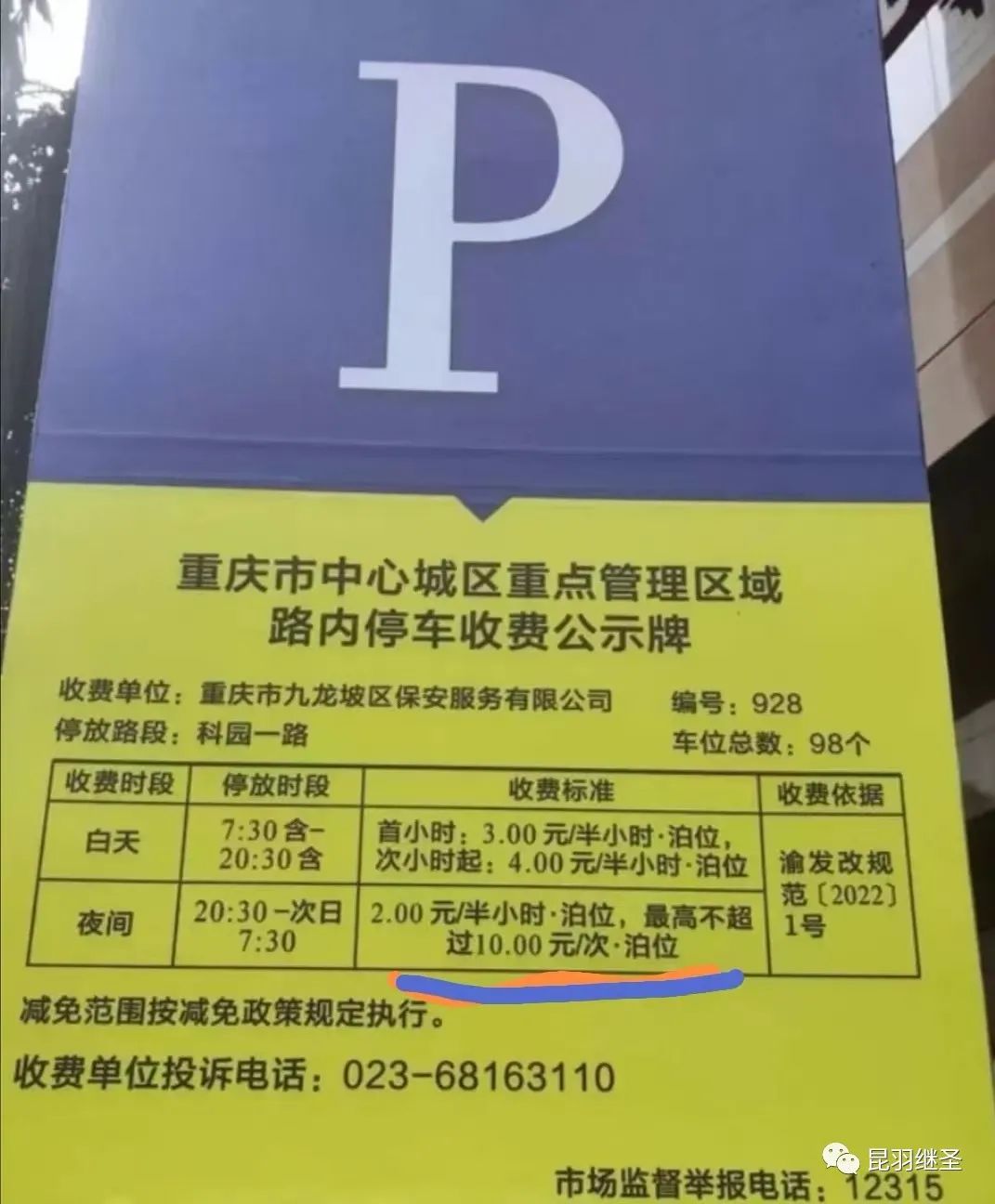
Looking at the parking charging standards in the key management areas of Chongqing city center, although it is also charged by half an hour, the maximum parking fee for each parking space at night does not exceed 10 yuan/time.
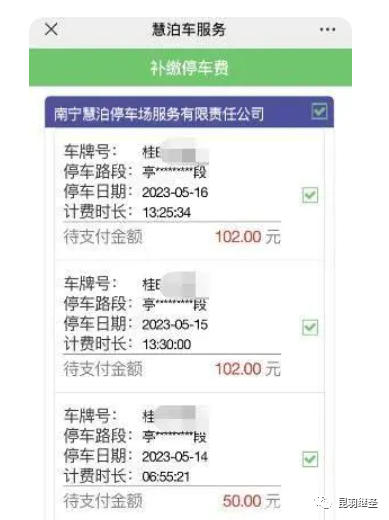
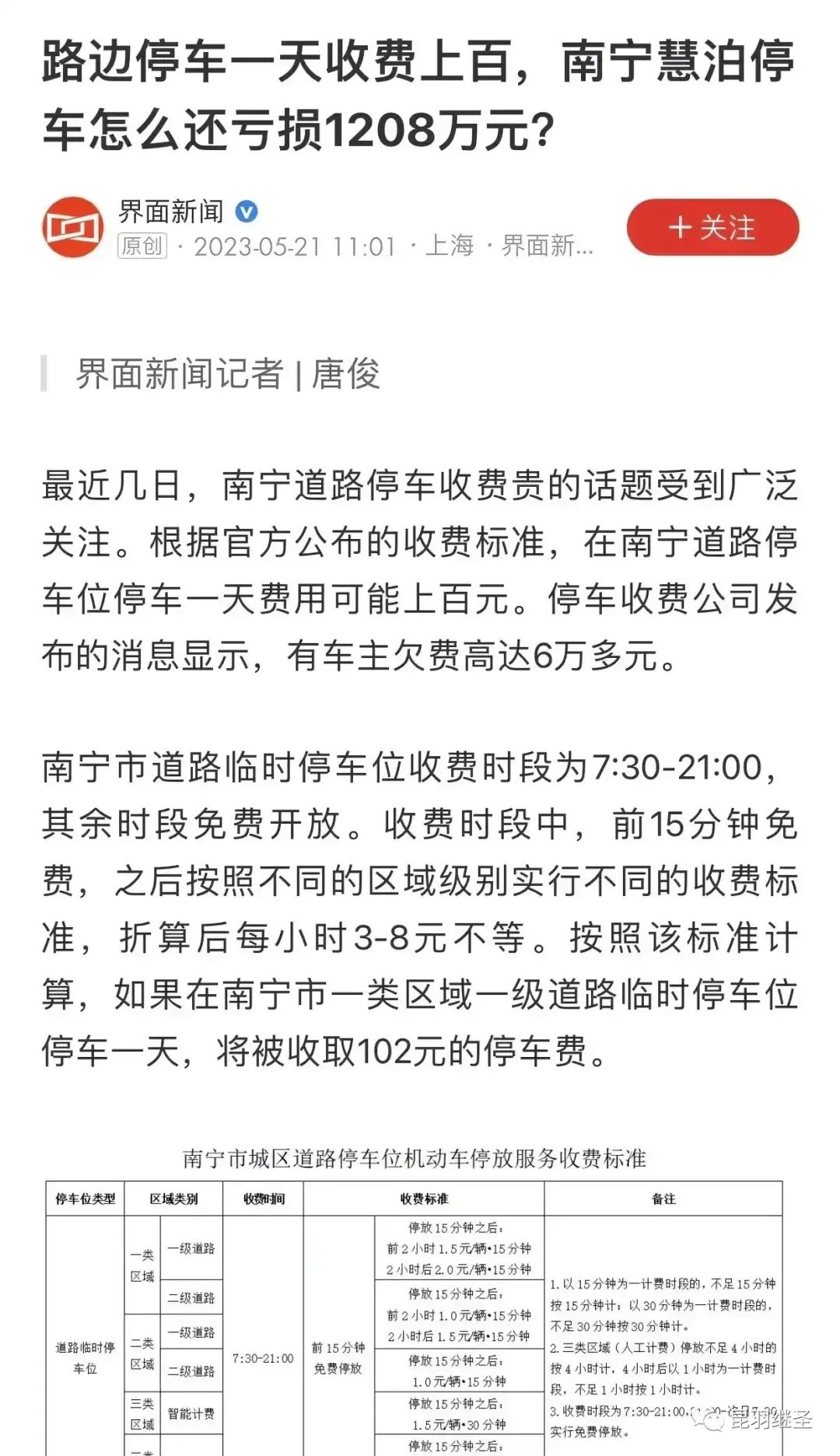
However, “Huibo Parking” has engaged in financial innovation. In order to successfully mortgage the parking space charging rights to obtain loans, regardless of day or night, its parking is charged by the hour, with no upper limit, thus creating a beautiful book charging data: the daily parking fee is as high as 102 yuan.
On May 16, 2023, a netizen parked for 13 hours, 25 minutes, and 34 seconds, and needed to pay a parking fee of 102 yuan to drive away their vehicle. As a result, some local netizens exclaimed, “Parking for a day” and “Working a day for nothing”.
It is said that this Huibo Parking has been doing this since 2021, with no upper limit on charging. It manages 30,535 in-road motor vehicle parking spaces and 36,908 meters of parking lanes, and operates 82 non-motor vehicle storage points.
In September 2021, Huibo Company also announced a batch of vehicles with unpaid parking fees, one of which owed as much as 63,990.5 yuan, ranking first. Even the 20th-ranked vehicle had unpaid parking fees of 29,954 yuan.
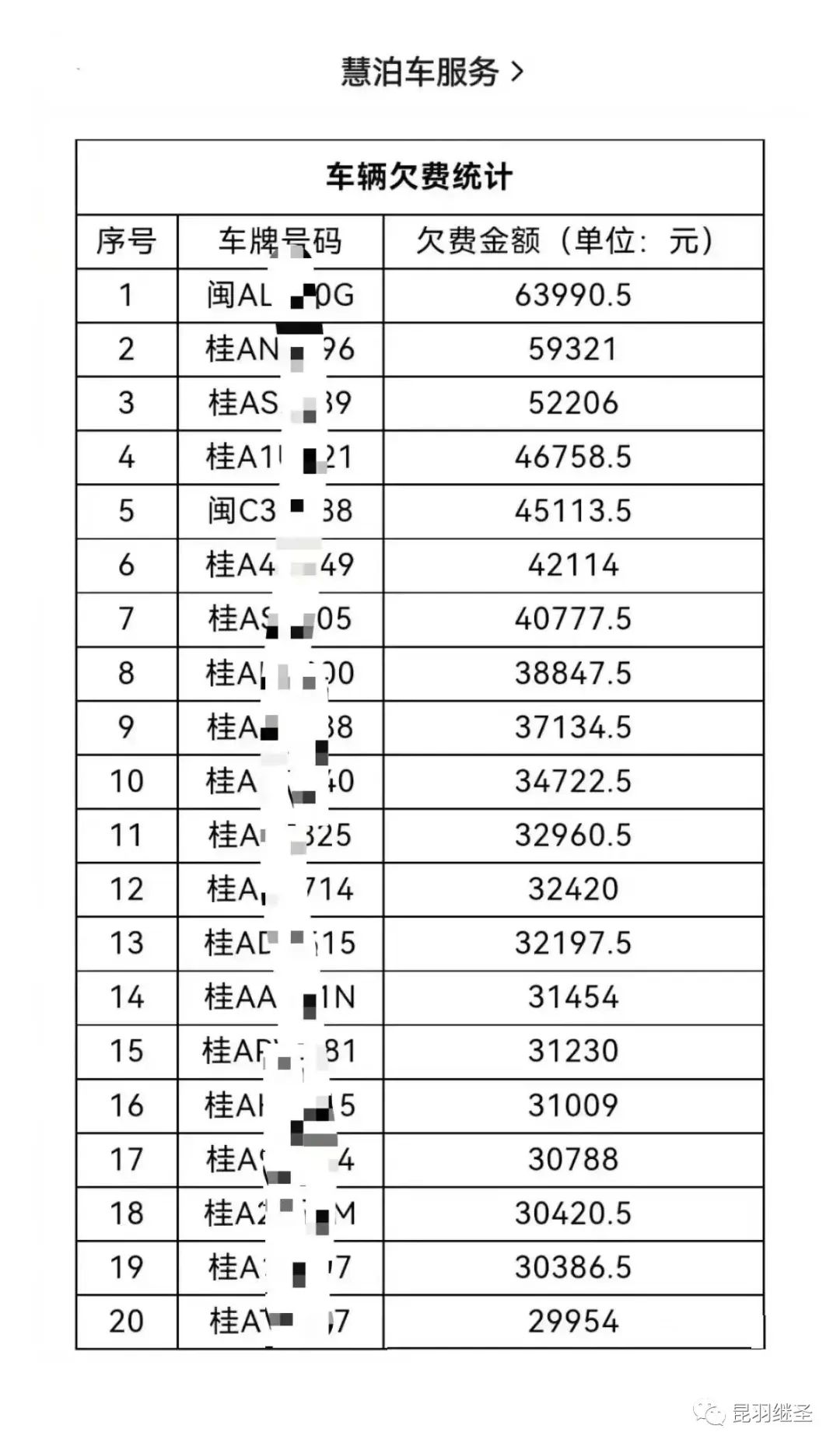
Does this Huibo Company’s charging comply with local charging standards?
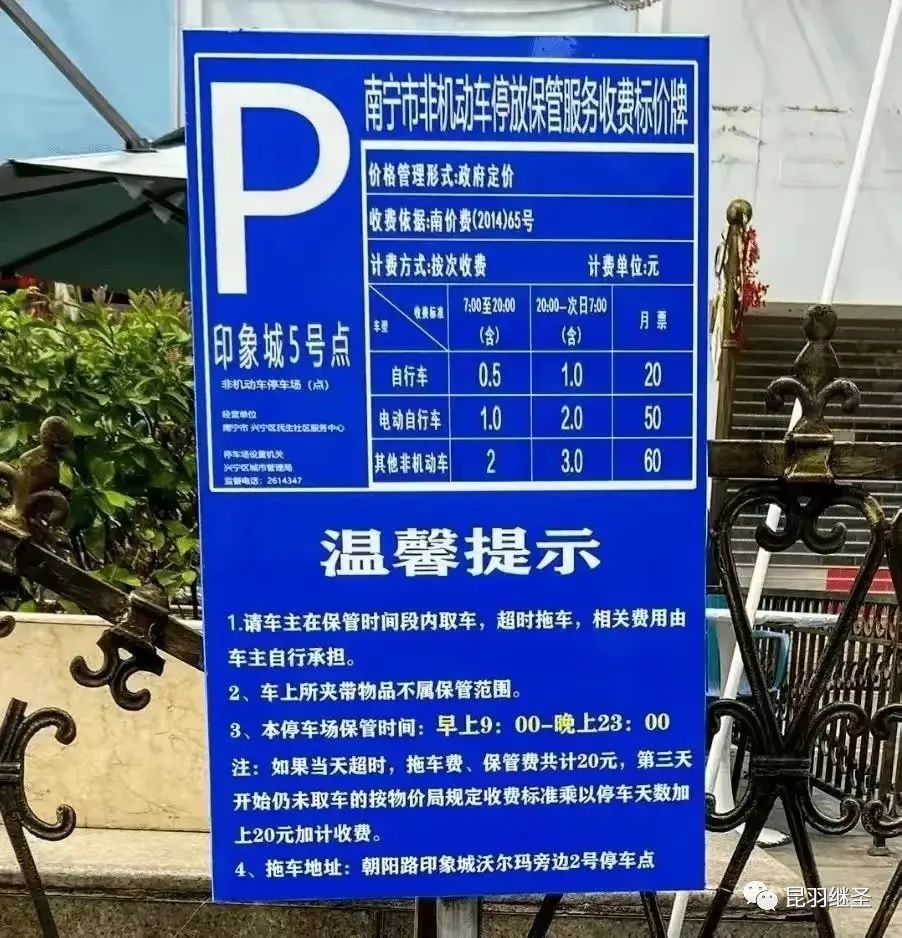
Some netizens have posted the local price tags, and it can be seen from the content that even bicycles, electric bicycles, etc., are charged by the hour. If you think hourly charging is too expensive, the local area also specially refers to the design of apps like Meituan and other apps, and has launched monthly packages – monthly tickets. For a bicycle, the monthly fee is 20 yuan; for an electric bicycle, the monthly fee is 50 yuan; and for other non-motor vehicles, the monthly fee is 60 yuan.
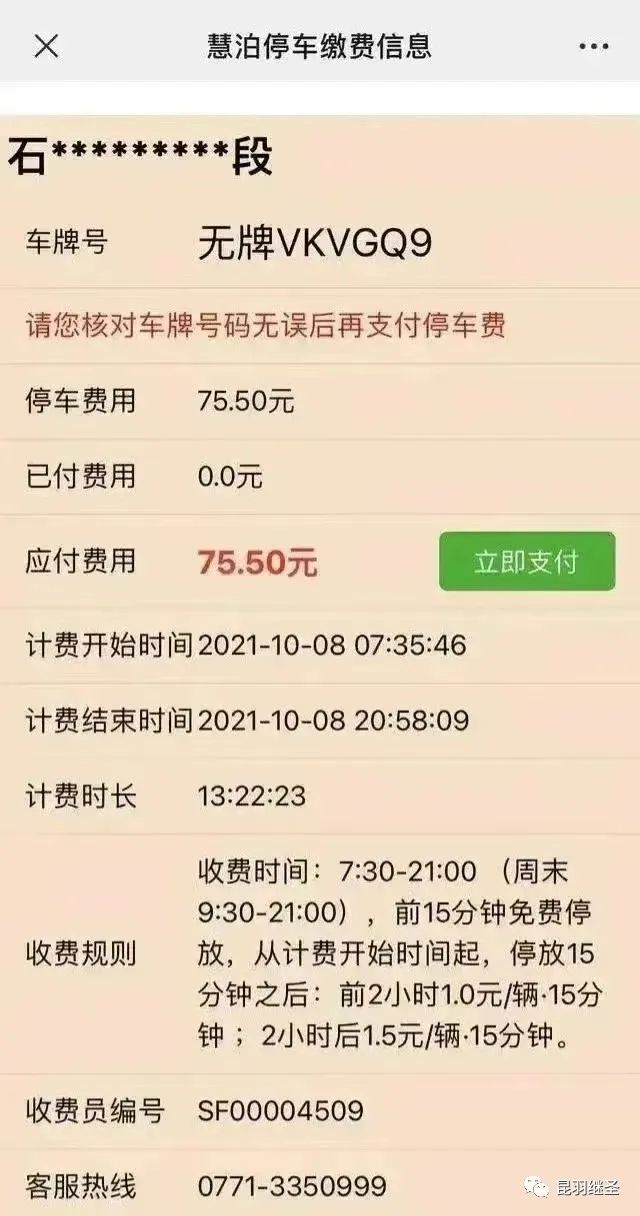
In response to netizens’ questions about whether the charging standards are reasonable, the Nanning Municipal Development and Reform Commission responded that the standard was formulated in accordance with relevant national guiding documents and the actual situation of the city, and has been implemented since March 2017 and has been continued to this day. According to the “Notice on Printing and Distributing the Charging Standards for Motor Vehicle Parking Services in Nanning Road Parking Spaces” (Nanning Development and Reform Regulation [2022] No. 4), Nanning City implemented new road parking space charging standards on March 15, 2022, and its charging standards are as follows:
【Class I Area Level I Road】
Free parking for the first 15 minutes.
After parking for 15 minutes: 1.5 yuan/vehicle·15 minutes for the first 2 hours; 2.0 yuan/vehicle·15 minutes after 2 hours.
【Class I Area Level II Road, Class II Area Level I Road】
Free parking for the first 15 minutes.
After parking for 15 minutes: 1.0 yuan/vehicle·15 minutes for the first 2 hours; 1.5 yuan/vehicle·15 minutes after 2 hours.
【Class II Area Level II Road】
Free parking for the first 15 minutes.
After parking for 15 minutes: 1.0 yuan/vehicle·15 minutes.
……
Indeed, there is no upper limit.
Subsequently, some netizens inquired about the “attributes” of Huibo Company and found that the company is a subsidiary of Nanning Public Transport Group, a wholly-owned state-owned enterprise.
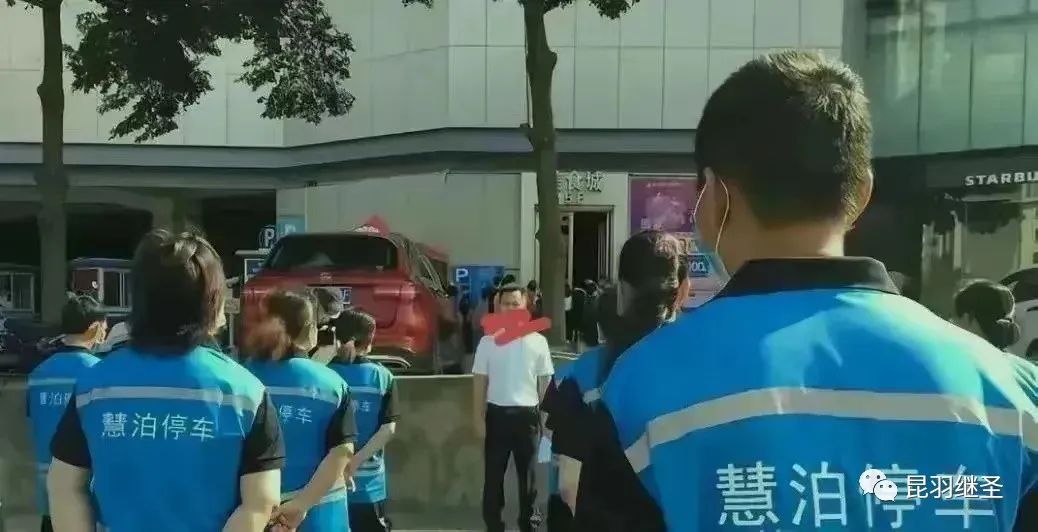
As a state-owned enterprise, the operating entity of Huibo Company, its accounts and income and expenditure should be supervised by the Nanning Municipal State-owned Assets Supervision and Administration Commission, the Municipal Finance Bureau, and the Municipal Audit Bureau. However, some netizens specifically inquired on the official website of the Nanning Municipal Government, but found that the “Nanning Administrative and Institutional Fee Catalog List” updated on November 30, 2022, did not list the parking fee of Huibo Company. In other words, the parking fees charged by Nanning Huibo Company may not have entered the financial channels.
There are rumors that Huibo Company may have outsourced the marked charging projects at a price of 20,000 yuan per road per year. Who did it give it to? Is this true?
Drawing lines on the road every day, charging motor vehicles, bicycles, and electric vehicles without an upper limit day and night, but in 2021, it lost 12.08 million yuan and was still owed wages by employees. It’s probably hard to believe, right?
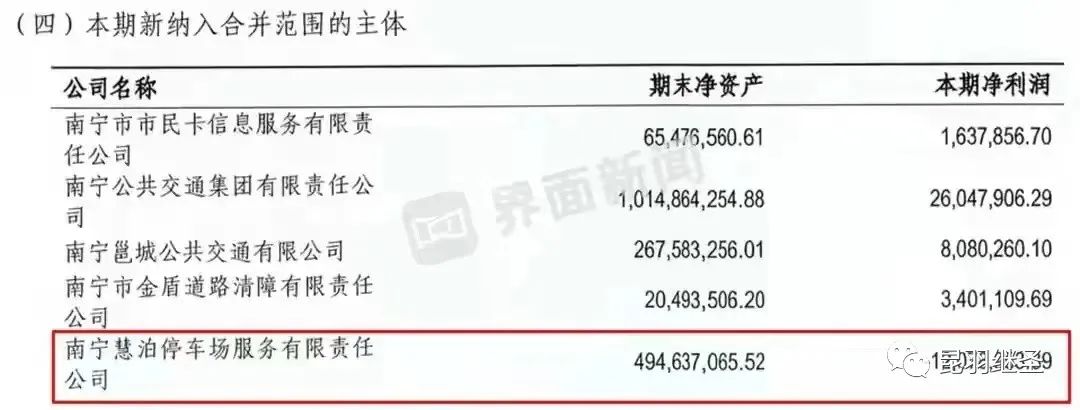
Previously, when netizens inquired about the company’s registered capital, they found that the actual paid-in capital was only 2 million yuan.
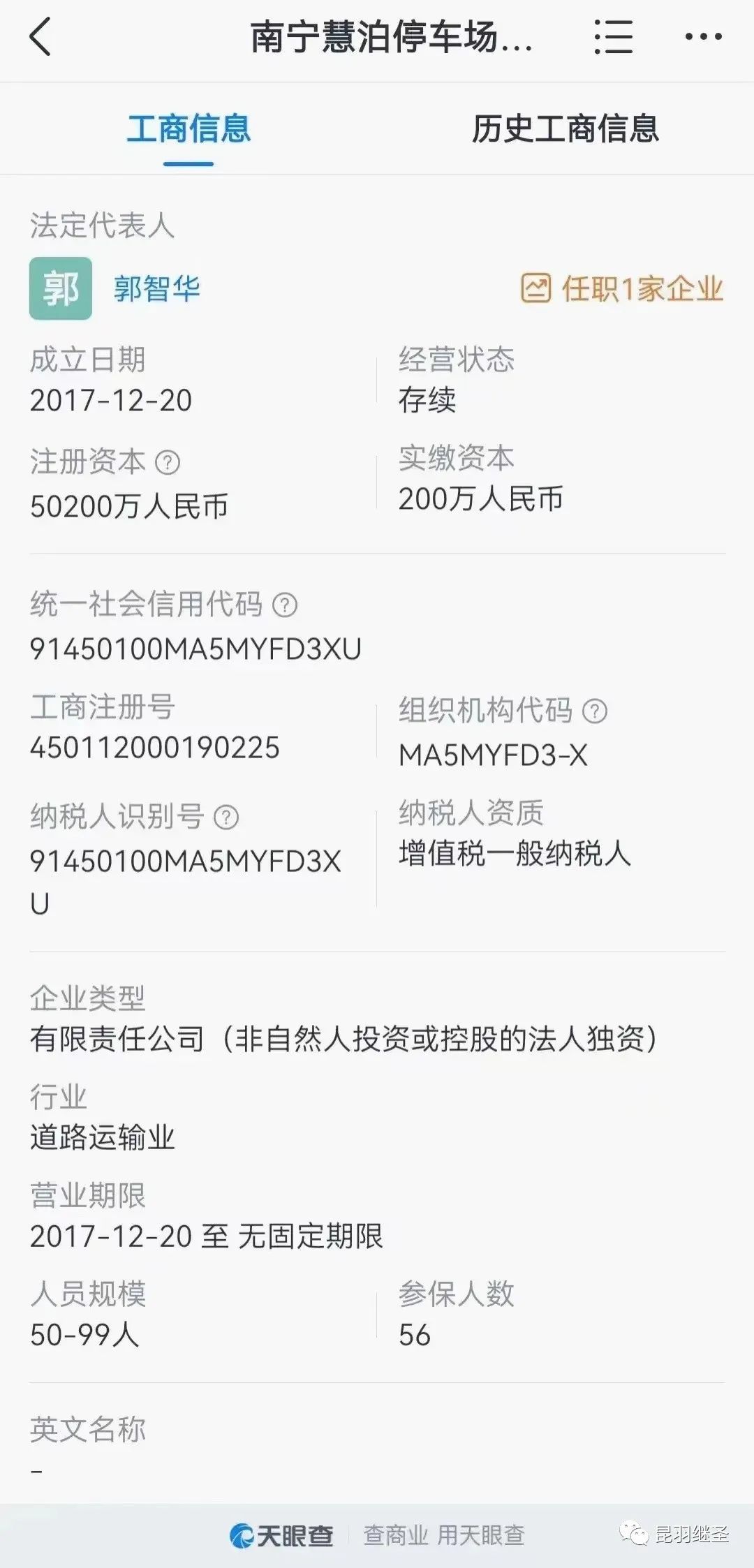
However, it is said that this information changed only half an hour later, and the actual paid-in capital has now become 502 million yuan.
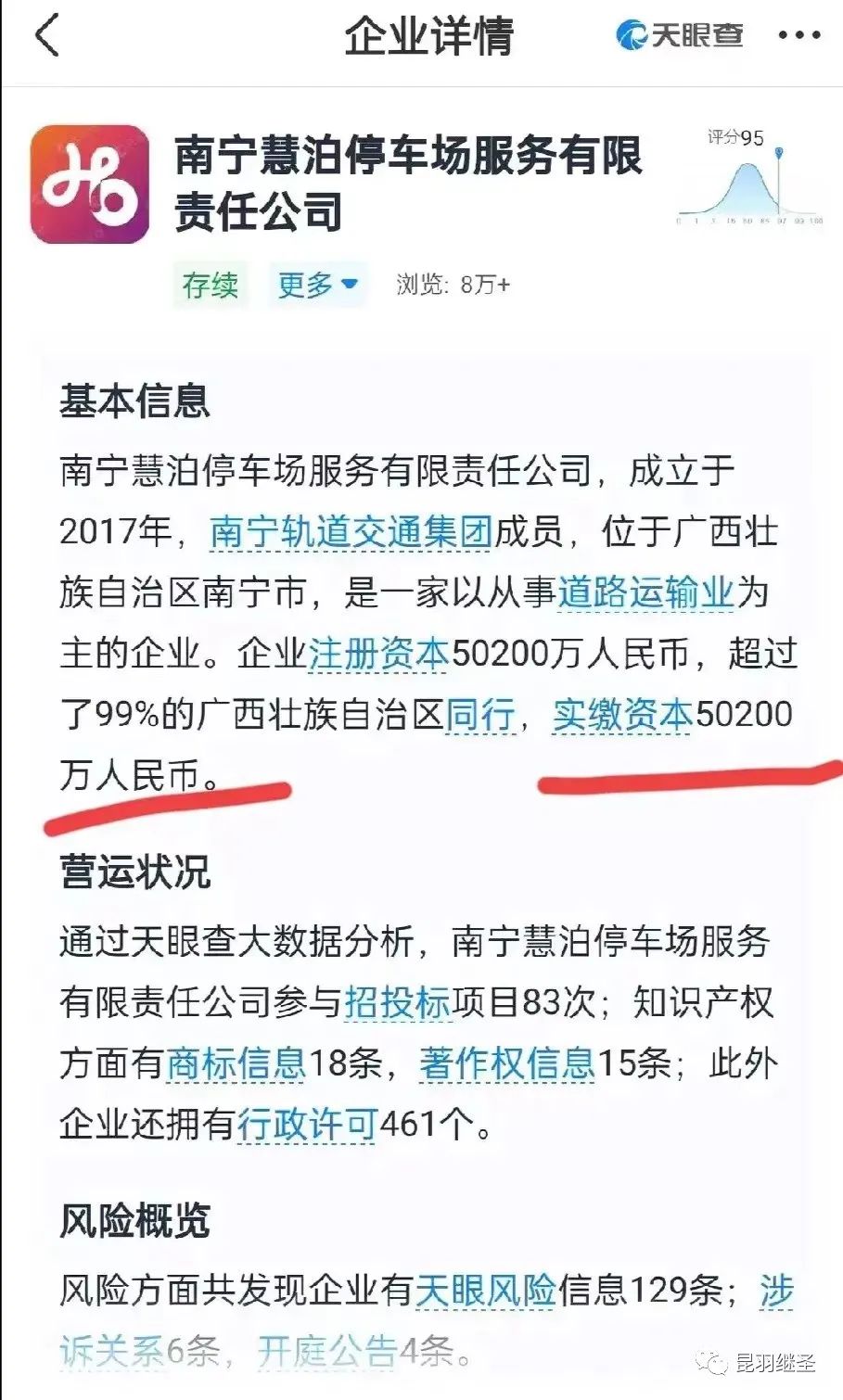
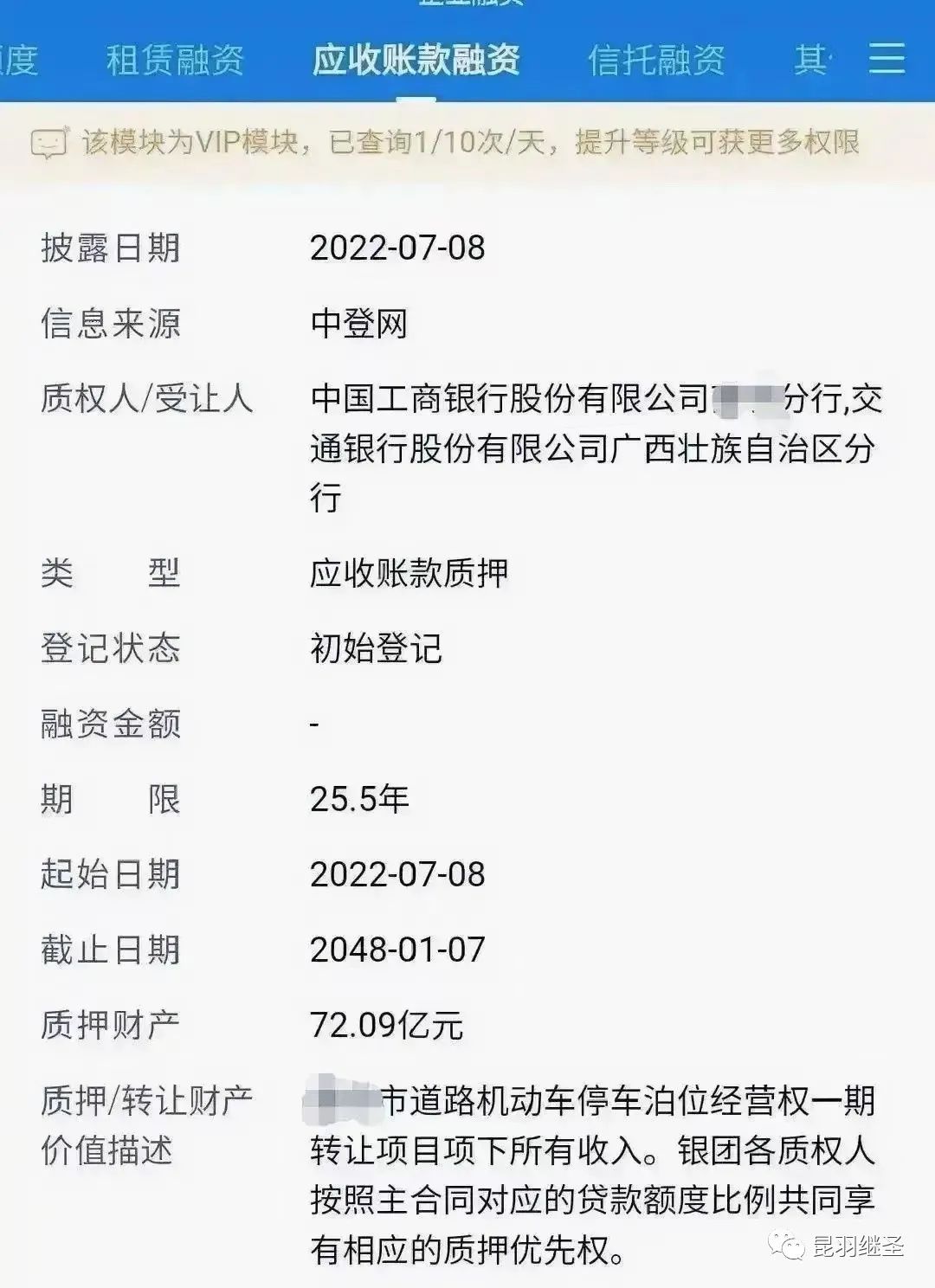
But even with a paid-in capital of 502 million yuan, it is not advisable to promote and encourage such financial innovation to pledge a quarter of the city’s parking spaces and the parking charging rights for the next 25.5 years to borrow 7.2 billion yuan from the bank. The public cannot help but worry that if this happens and many places follow suit, will there be so-called financial innovations such as “future land tax rights mortgage”, “sidewalk charging rights”, “air breathing rights”, and “farmland irrigation charging rights” in the future?
Moreover, what is even more incredible is that the local court has also reached a cooperation with Huibo Parking to use the method of “smart parking + court enforcement” to protect the collection of parking fees. I don’t know if this is due to the lending requirements put forward by the bank based on fund security for the 7.2 billion yuan loan, but this practice is indeed inappropriate and has a very bad impact. If parking fees are not paid on time, they will be included in the credit system, and even if they are developed, they may be on the enforcement list and the consumption restriction list, which will be widely questioned and seriously affect the credibility of the court.
It is said that this practice is a local innovation.
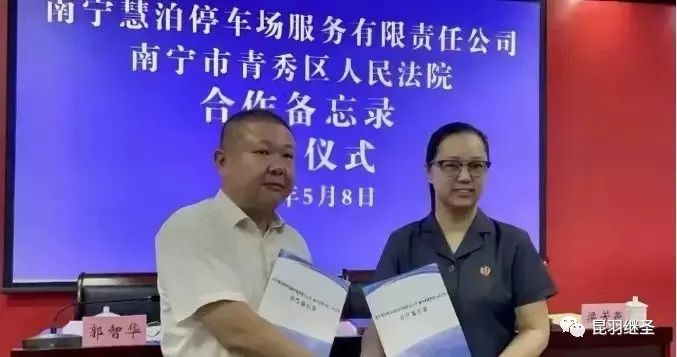
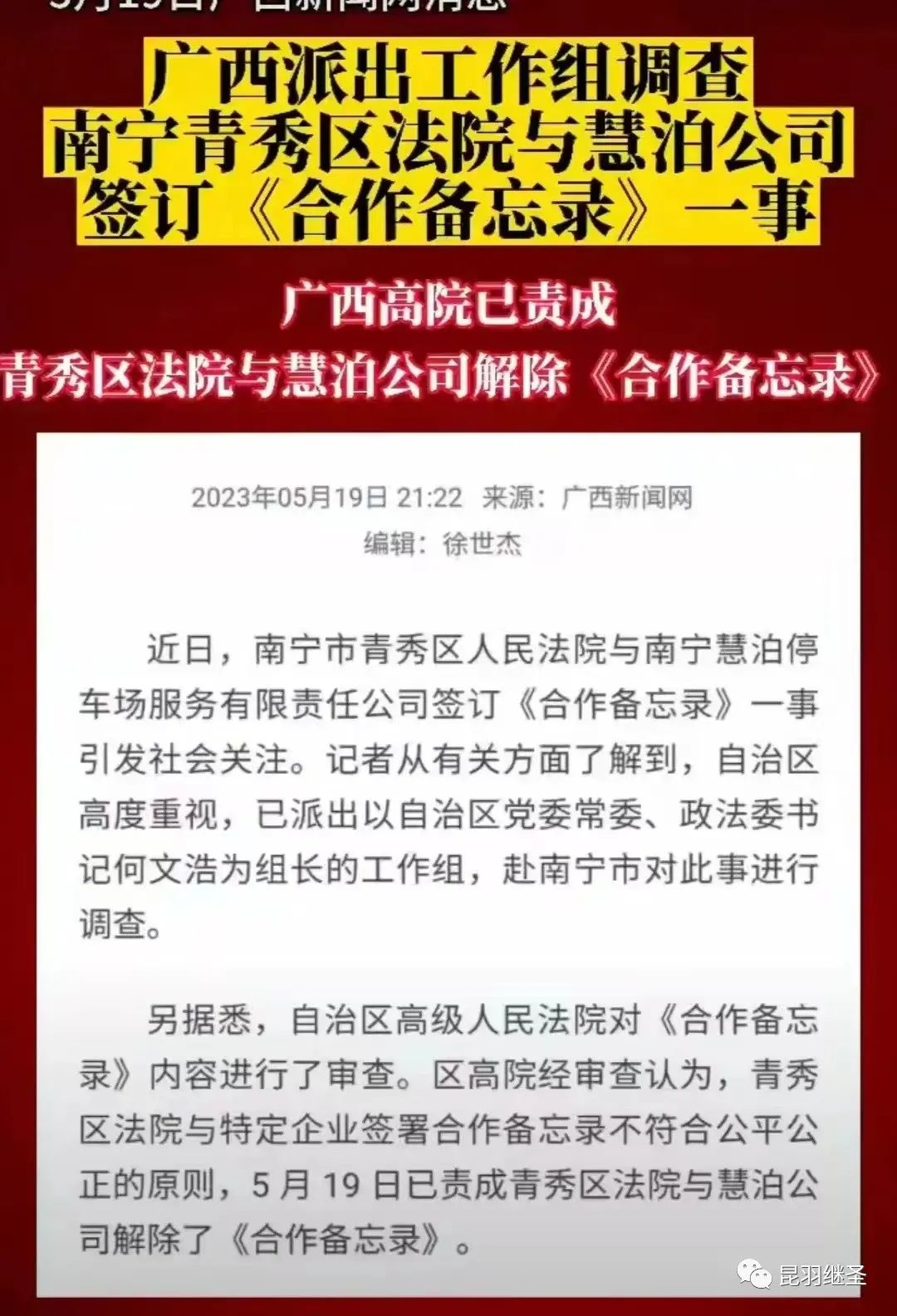
Fortunately, this measure was urgently stopped by the Guangxi Higher People’s Court, and on May 19, it instructed the local court to terminate the “Memorandum of Cooperation” with Huibo Company.
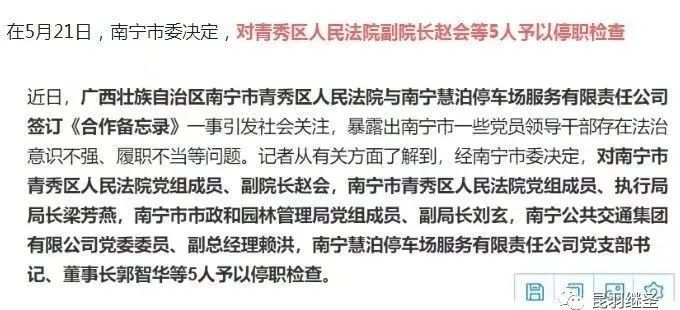
Subsequently, after the Nanning Municipal Party Committee decided, five people, including Zhao Hui, Deputy Dean of the Qingshan District People’s Court, Liang Fangyan, Director of the Enforcement Bureau, and Guo Zhihua, Secretary of the Party Branch and Chairman of Nanning Huibo Parking Service Co., Ltd., were suspended for inspection. Of course, this is only a suspension, a cooling-off period, not dismissal from public office, nor demotion.
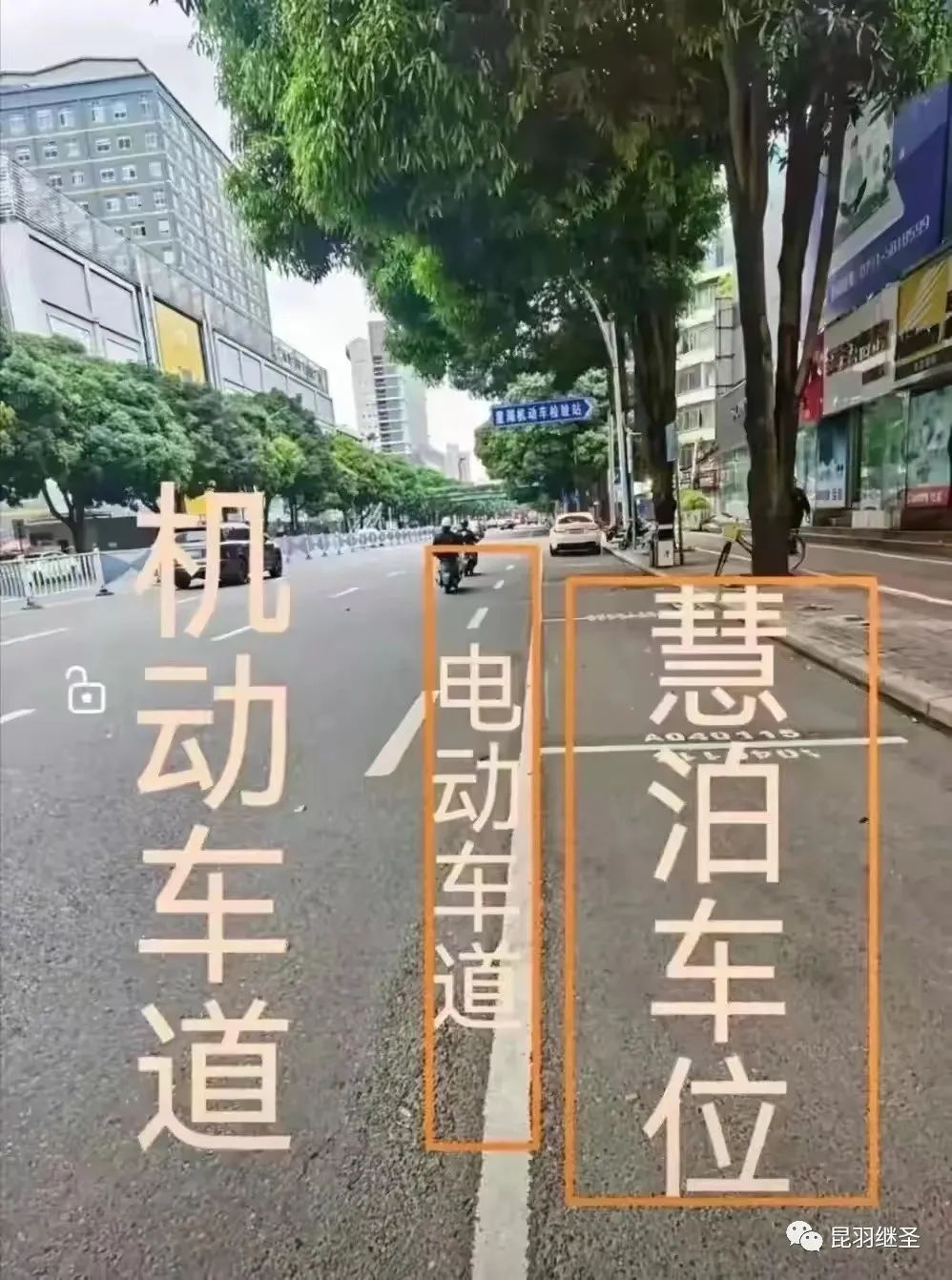
For the marked parking spaces of Huibo Parking, many netizens believe that the city roads, which are public welfare, have been marked and turned into parking spaces. However, the fuel surcharge is included in the cost of refueling motor vehicles, and the road maintenance fee has already been paid through the fuel surcharge. Therefore, when driving on public city roads, no other fees should be paid. In other words, this was originally a public road, but it was designated by a company to draw lines and charge fees, which not only involves repeated collection, but also does not pay to the state treasury, and also involves illegal occupation of public interests for charging.
Some lawyers also believe that the charging of “Huibo Parking” has no corresponding legal basis, neither administrative and institutional fees, nor site rental fees and service fees. Its roadside parking only charges fees but does not provide corresponding services, because in order to avoid liability, it clearly states on the receipts – not responsible for looking after the vehicles.
In addition, what the public is more concerned about is that Huibo Company has pledged a quarter of its parking spaces and the parking charging rights for the next 25.5 years, and borrowed a huge sum of 7.2 billion yuan. What is the flow and use of these funds? What will happen in the future if this company cannot repay the debt?
In the post-epidemic era, it is understandable that the finances of various places are tight, but if there is a lack of corresponding supervision and auditing in this process, such a large sum of money is equivalent to borrowing from the future, eating the food of future generations in advance. Will there be room for under-the-table operations in this process? Will someone take the opportunity to line their own pockets?
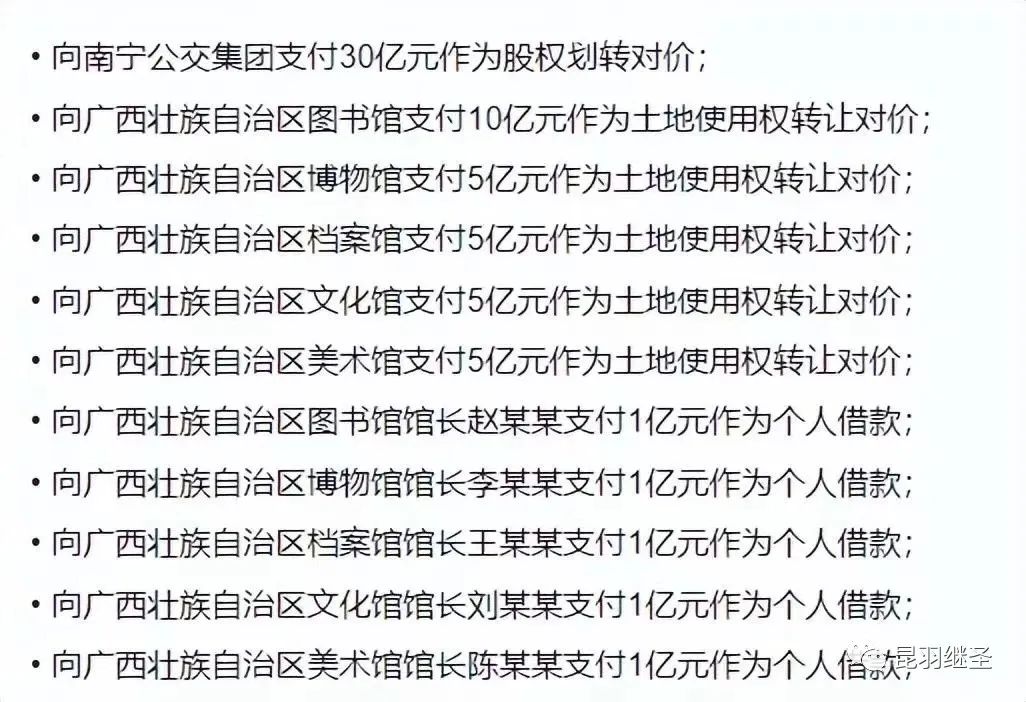
To this day, how have the large amounts of local debts across the country been formed? How have the 60 trillion yuan of city debt been formed?
Some places, in order to “ahead of schedule” development of the city, issue local bonds and city investment bonds without restraint, regardless of the local economic development situation, blindly pursue large-scale construction, repeat construction, and waste resources. Are there few such things?
For the sake of immediate interests, for personal achievements, and for private pockets, selectively ignoring healthy development, ignoring long-term planning, other cities have a dense subway network like a spider web, and they also want to have one, and they build many lines at once, regardless of whether the local economic strength can support the annual losses of the subway. Now that the income from selling land is lacking, how can the huge funding gap of annual losses be filled?
Will such a heavy debt burden be left to future generations?
In the post-epidemic era, economic recovery still needs time. The single-selling land finance is difficult to sustain, and the problem of local debt is becoming increasingly prominent. Facing the difficult situation, the difference is that Zibo City has chosen to improve the business environment, mobilize the whole people and the whole party to attract tourists and boost the economy, while Huibo City has chosen a way that may lead to “a decline in the living conditions of residents and a deterioration of the business environment” to align with “RMB” rather than “the people”.
Some things are really thought-provoking and thought-provoking.
Discover more from 自由档案馆
Subscribe to get the latest posts sent to your email.