01 The first-tier housing market collectively declined
At the beginning of May, this account analyzed the housing market in April for the first time, and the conclusion was:
Both new and second-hand houses have turned down.
As a bellwether of the housing market and regarded as the most resistant to decline in first-tier cities, the transaction volume of second-hand houses has collectively turned down. Especially in Beijing, the decline is greater than anyone else’s.
In Beijing, 13,928 second-hand houses were signed online in April, a decrease of 40.5% month-on-month.
The transaction volume of second-hand houses in Shanghai was less than 18,000 in April, a decrease of 26% compared to the 24,000 in March, and even lower than the 19,000 in February.
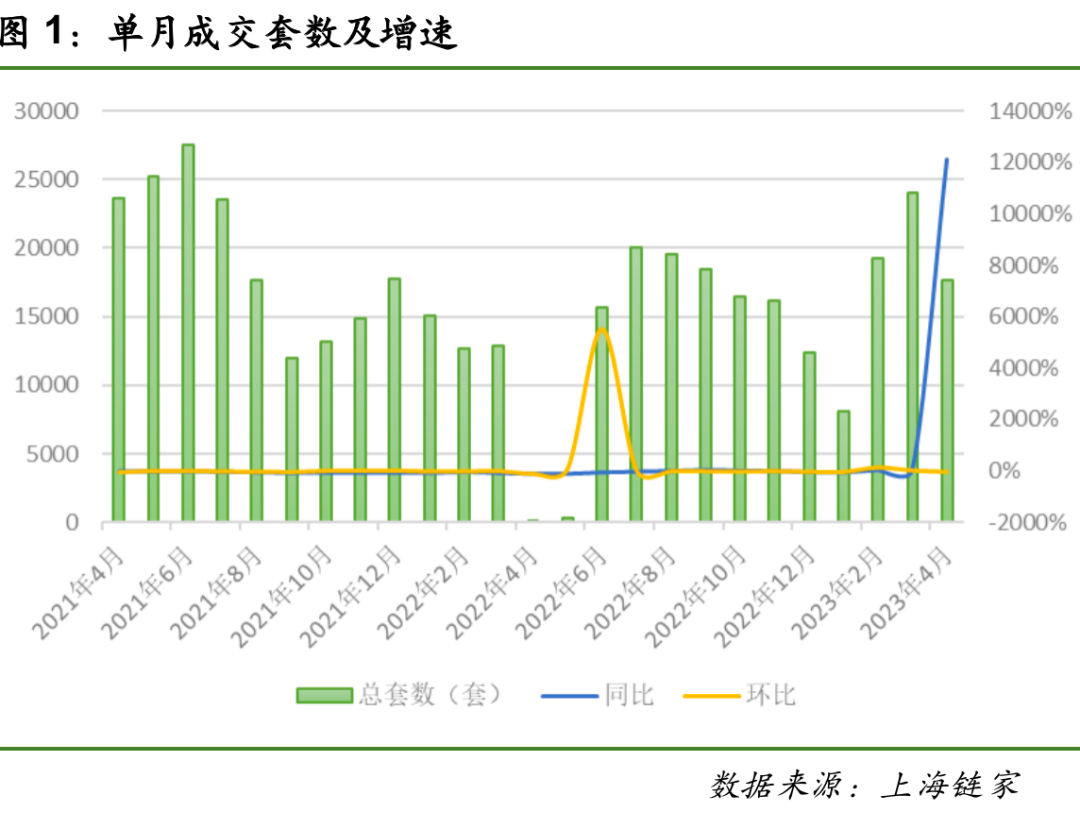
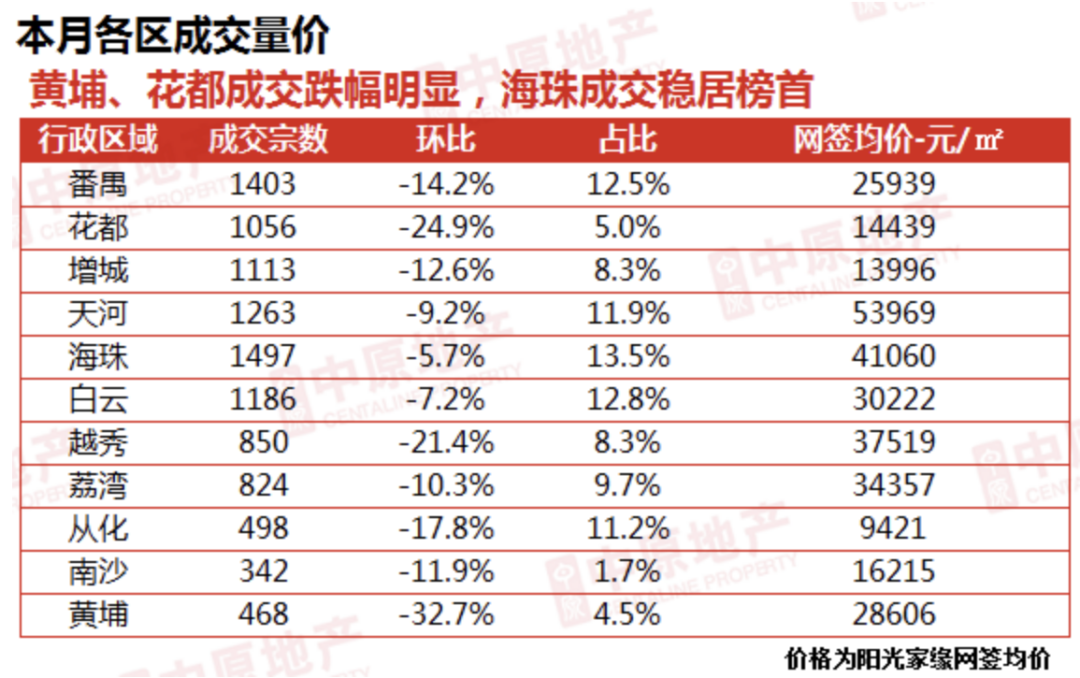
The transaction volume of second-hand houses in Guangzhou in April (self-service online signing + intermediary online signing) was 10,500, a decrease of 14.36% compared to the 12,260 in March. All 11 districts under its jurisdiction have declined.
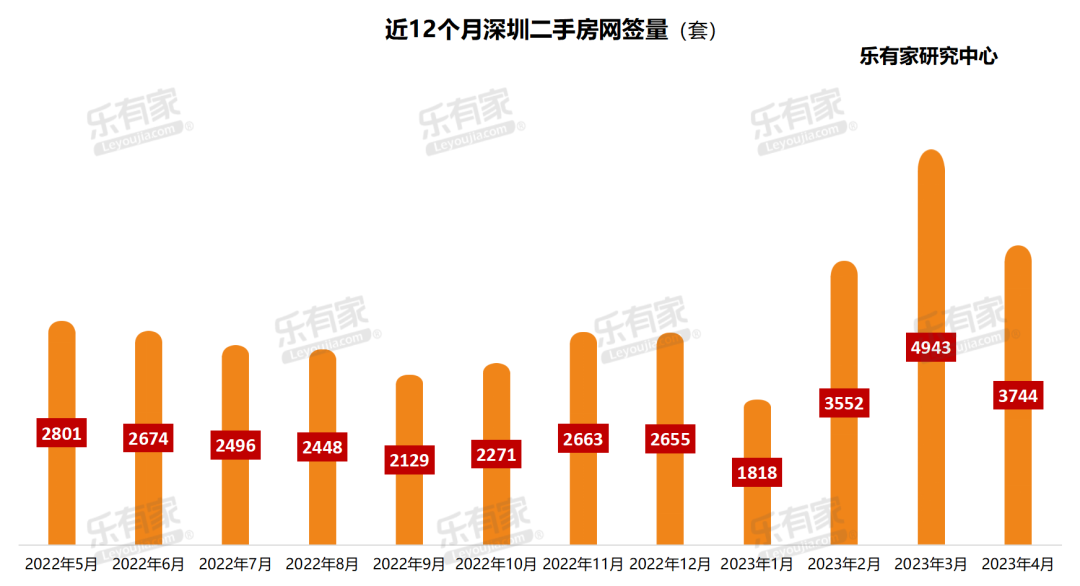
In April, 3,744 second-hand houses were signed online in Shenzhen, a decrease of 24% compared to the 4,943 in March.
As for strong second-tier cities such as Hangzhou, Nanjing, Wuhan, Suzhou, Xiamen, Chongqing, Chengdu, and Ningbo, without exception, they have all turned down.
The logic of the decline is different between first-tier and second-tier cities.
The logic of the decline in most second-tier and third- and fourth-tier cities is very simple.
The suppressed demand due to the mask factor was concentratedly released in the first quarter, creating a small climax in the first quarter, but this demand was almost exhausted in the first quarter.
And the new demand, due to the unsmooth recovery of income and employment, has not been formed, so the phenomenon of collective stagnation and lack of stamina in the transaction volume of the housing market in hot cities has appeared.
Why can’t new demand be formed? The main reason is that the recovery of income and employment is blocked, especially employment. Not only has it not recovered, but the unemployment rate of young people aged 16 to 24 has reached a new high in 6 months.
As for the first-tier cities, because their housing prices have reached a certain level, the main support for the housing market is the middle-class and above population.
The more important reason for the decline in first-tier cities is the lack of confidence and expectations under the uncertainty of the macro environment. The most powerful supporting data is the latest deposit and mortgage data released by the central bank.
02 The tide of early repayment of loans is staged
On May 11, the central bank released financial data for April, in which both deposits and mortgages decreased.
In terms of deposits, it has been increasing before. In 2022, the deposits of households increased by 17.84 trillion yuan, which is nearly twice that of 2021, which can be called revenge deposits.
And in 2023, in the first quarter alone, the deposits of the people increased by 9.9 trillion yuan, which is equivalent to the average annual increase from 2019 to 2021. The increase in deposits in one quarter is equivalent to the increase in deposits in the previous year.
And in April, household deposits decreased by 1.2 trillion yuan.
When deposits decrease, do you think everyone is taking them out for consumption and investment?
No.
If deposits are taken out for consumption and investment, then the transaction volume of the housing market should not turn down, and CPI should not be close to the critical point.
In other words, the decrease in deposits, the decrease in mortgages, and the lack of consumption, while the CPI is approaching the negative growth, means that the deposits are not taken out for consumption and investment, but for early repayment of loans.
The central bank disclosed that household loans decreased by 241.1 billion yuan in April, of which short-term loans decreased by 125.5 billion yuan, and medium- and long-term loans decreased by 115.6 billion yuan.
Short-term loans are mainly used for buying cars, consumption, turnover, etc., while medium- and long-term loans are basically mortgages.
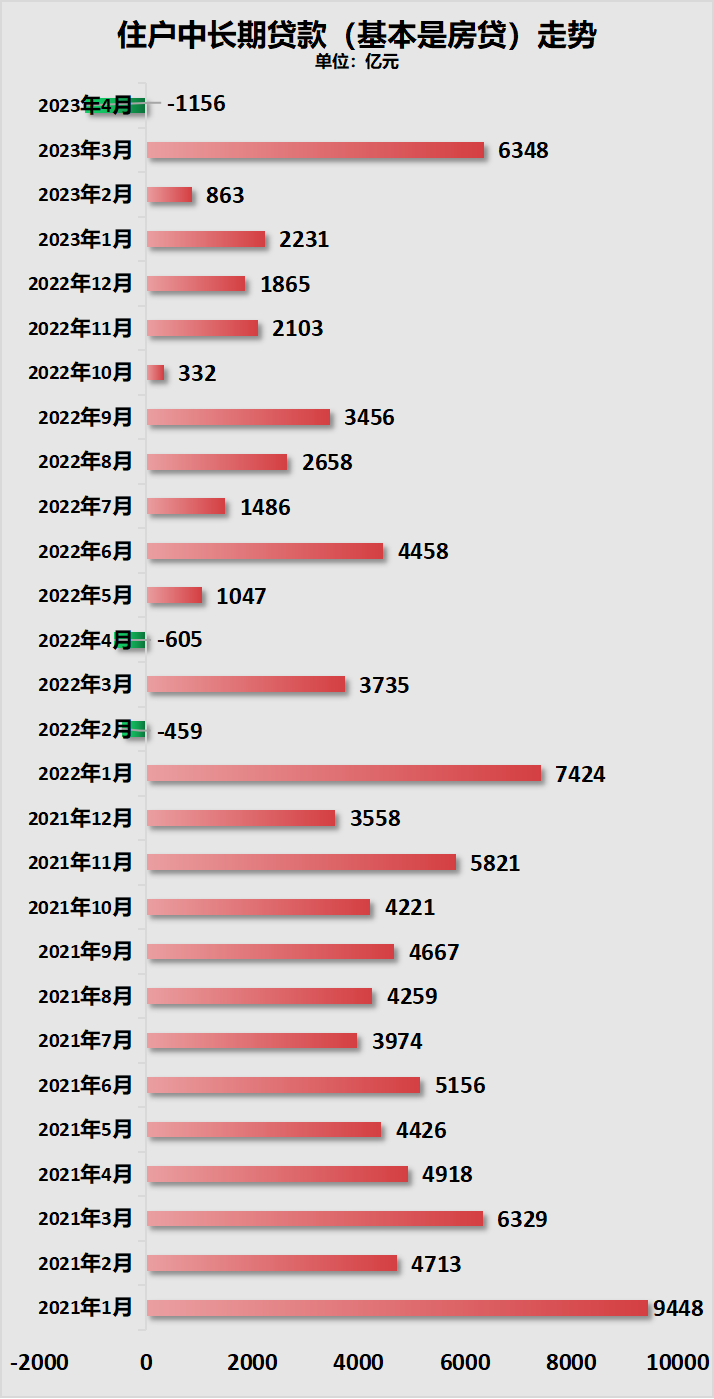
Illustration: City Finance; Data: Central Bank
In yesterday’s article, I have already explained that, in general, mortgages may not be negative.
Because no matter how bad the market conditions are, there will be transactions, and as long as there are transactions, there will be an increase in mortgages.
In April, the transaction volume of the housing market declined. Our psychological expectation was at most that the increase in mortgages was not as good as in March. In March, mortgages increased by 634.8 billion yuan. In April, it might increase by more than 400 billion yuan, but I didn’t expect the increase to be negative, decreasing by 115.6 billion yuan.
The negative growth of mortgages, combined with the decline in deposits, reflects that the CPI growth rate reflecting consumption has reached a new low in 26 months, approaching the critical point. Only one explanation is reasonable:
The scale of loan repayment is larger than the scale of loans.
This situation has only occurred in February and April of 2022 and April of this year in the past ten years.
Behind the tide of early repayment of loans is the lack of confidence and expectations.
The reason why there was a small climax in the first quarter was that under the improvement of the macro environment, everyone was overly optimistic about the progress of the recovery of the economy, income, and employment after the opening up.
However, four months have passed, and everyone suddenly realized that it was not the case.
First, the CPI growth rate continues to decline.
It has been below 2% for a quarter, and the year-on-year growth rate of CPI in April was only 0.1%. Generally speaking, when the CPI is consistently below 2%, there is deflationary pressure, not to mention that the current CPI is approaching the critical point.
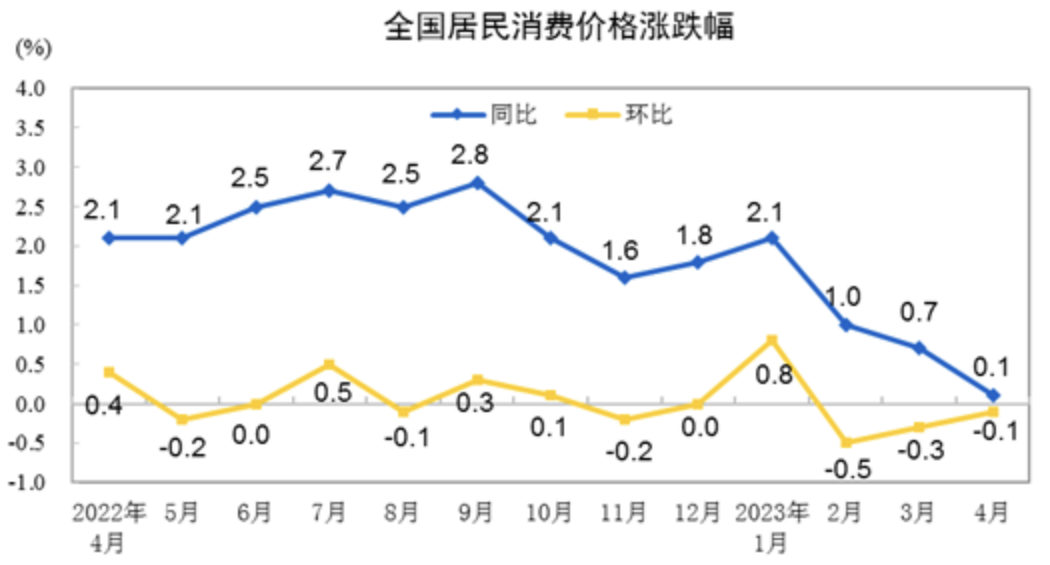
Source: National Bureau of Statistics
Second, although our overall employment rate has slightly decreased, it is 5.3%. However, the unemployment rate of young people aged 16 to 24 has reached a new high in 6 months.
Third, the social financing, which finally picked up, fell back in April.
In April, the increment of social financing was 1.22 trillion yuan, far lower than the expected 2 trillion yuan, and far lower than the 5.38 trillion yuan increment in March.
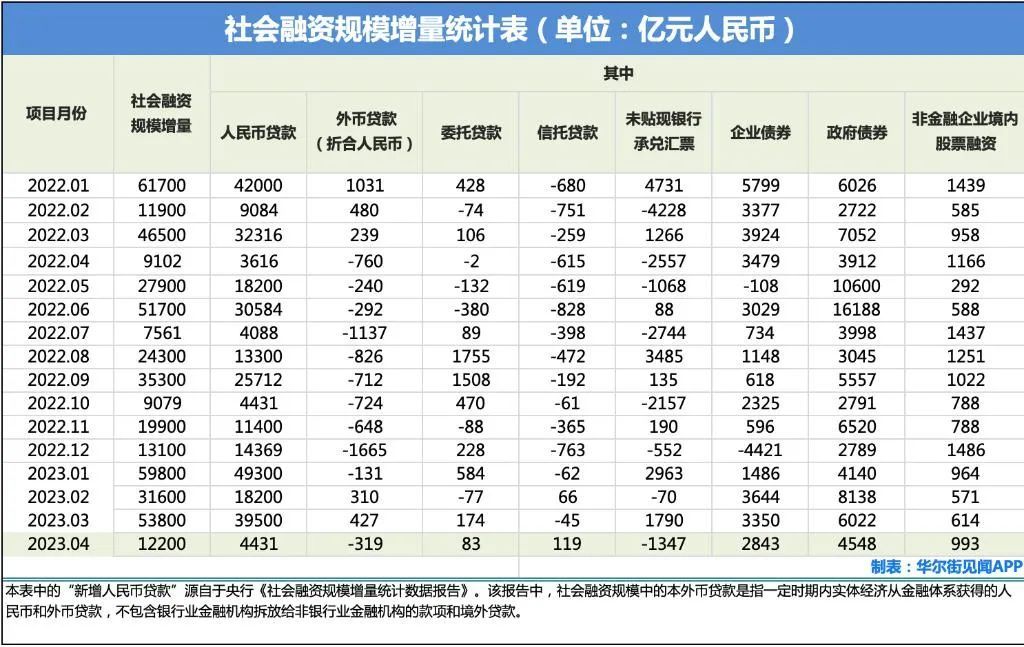
Social financing reflects the demand for money in the whole society. The decline in social financing means that although the printing press is still working hard to print money, not many people are coming to receive water, and the few who are coming to receive water, 93.3% are still state-owned enterprises, central enterprises, and city investment.
Simply put, it is difficult for banks to lend money. Behind it reflects that enterprises have no intention of expansion and weak production.
Fourth, the only eye-catching export data is also the result of sacrificing profits to a large extent.
Data from the General Administration of Customs show that in March, our exports increased by 14.8% in US dollar terms, and in April, they increased by 8.5%.
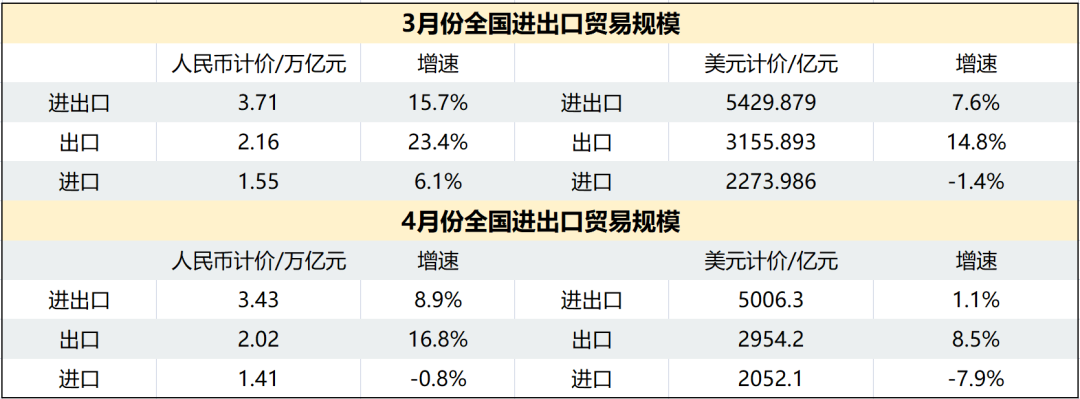
Illustration: City Finance; Data: General Administration of Customs
But this growth, combined with PPI, is actually due to the use of price advantages by lowering prices. In the first quarter, our industrial profits above designated size decreased by 21.4% year-on-year.
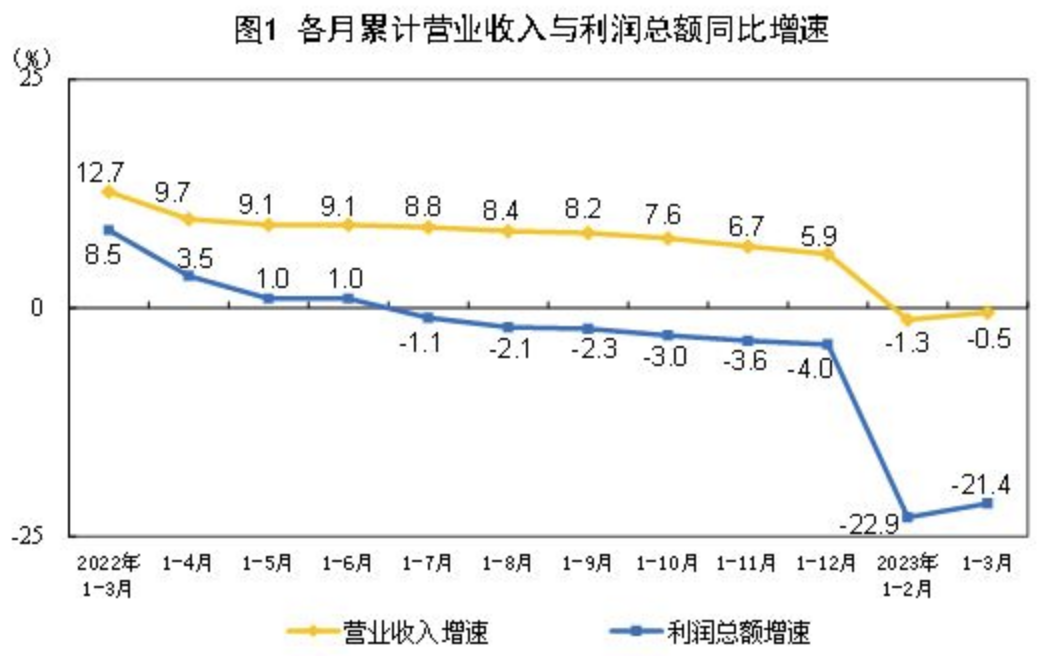
Source: National Bureau of Statistics
This method is difficult to sustain, because continuously lowering the ex-factory prices of industrial producers will continue to lower our industrial profits, increase the pressure on manufacturing, and affect the employment rate.
03 A new round of market rescue may be brewing
In fact, when the transaction volume in hot cities began to weaken in March, many cities couldn’t hold back and started a new round of market rescue.
Since March, cities represented by Xiamen, Zhengzhou, Shenyang, Hefei, Hangzhou, Guangzhou, Suzhou, and Shenzhen have started a new round of market rescue.
Judging from the transaction volume in April, none of the measures in any city can work.
However, we all know that the more useless they are, the more they will use them. A new round of top-down big moves may be brewing.
Recently, rumors of shantytown renovation have been circulating, because the Central Political Bureau meeting held not long ago mentioned that it is necessary to actively and steadily promote the transformation of urban villages and the construction of “dual-use” public infrastructure in super-large and mega-cities.
However, this rumor has been refuted.
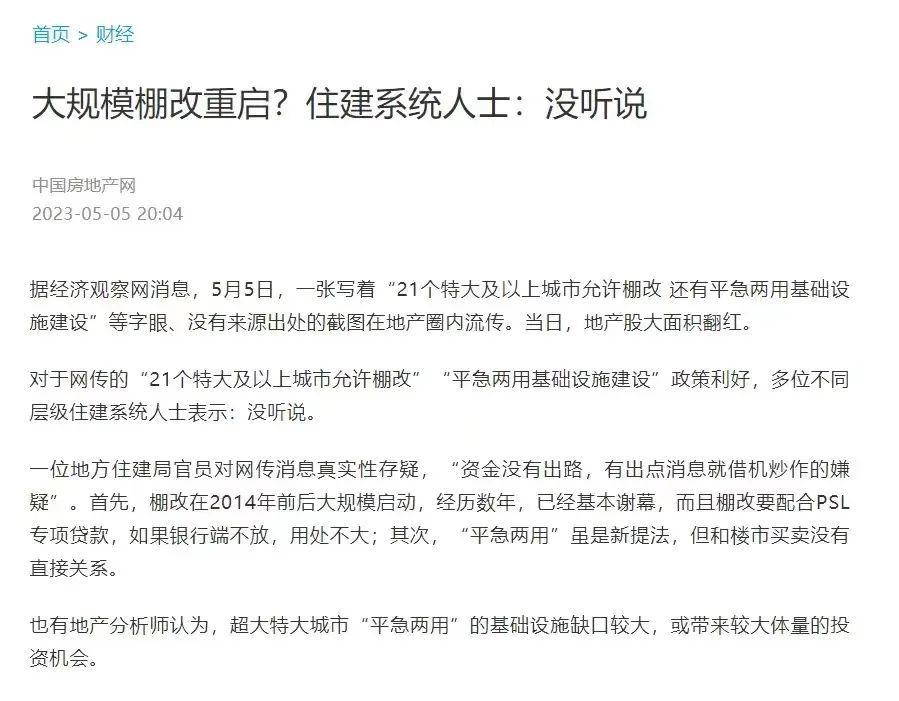
But it is undeniable that the current situation of the housing market will definitely lead to the introduction of big moves in the future.
However, as this account has repeatedly emphasized, before income and employment are completely restored, any tricks will not work.
More importantly, under the three years of masks, the mentality of many of us has changed.
I have already said in the analysis of the data of this year’s May Day.
This May Day is indeed the most popular May Day in history. The train stations, docks, scenic spots, mountains, and seaside are crowded with people, while in the urban areas, there are few people reading, few people looking at houses, and few people at home.
The essence behind this phenomenon is not that everyone’s income has recovered overnight. Instead, under the change of thinking habits, everyone no longer pursues adding pressure to themselves.
The three years of masks have made everyone understand many things, pursuing the current happiness and enjoyment, pursuing food, drink, and entertainment, pursuing praying to gods and worshiping Buddha, and pursuing a Buddhist life, which is more important than anything else.
Life is no longer about buying a car, buying a house, working hard, and being successful, but about living in the present.
As for buying a house, if you have the ability, buy it, and if you don’t have the ability, rent it. This is the general idea of the public. Many people will no longer, as before, empty six wallets and bear a lifetime of mortgage in order to buy a house.
This change is not my personal conjecture, but is felt through the reader’s comments on my various platforms.
The bursting of the bubble in Japan in those years changed the thinking of a generation of Japanese. Japan has also entered a low-desire society since then.
Will the three years of masks allow young people in China to enter a low-desire stage? It’s hard to say, but judging from the changes in the survey of consumption habits, even if it is not low-desire, at least they will no longer blindly pursue buying a house by leveraging.
Population peaking, urbanization rate peaking, supply exceeding demand in most cities, lack of expectations and confidence, and changes in mentality, under the comprehensive influence of these factors:
More than 90% of the cities in the country do not have the qualification to talk about rising housing prices in the foreseeable future.
Discover more from 自由档案馆
Subscribe to get the latest posts sent to your email.