Any popular occurrence is essentially a catharsis of social emotions. Initially, it is a collective unconscious, which then constitutes a contemporary narrative. The popularity of Zibo barbecue does not conform to the economic definition of popularity; it is neither scarce nor a new invention, nor does it represent a certain fashion. Its metaphorical significance lies in the expression of freedom by the common people “at this moment.”
It is said that the initiators of Zibo barbecue were those college students who were treated kindly during the pandemic. In May of last year, more than 12,000 students from universities in Jinan, Shandong, and other places were taken to Zibo for quarantine. The people of Zibo did not dislike them, were not afraid of trouble, and provided the students with good food and accommodation. On the last night before the students left, the local government specially invited the students to have a barbecue and agreed that when spring came next year, everyone would bring their friends to Zibo again as guests.
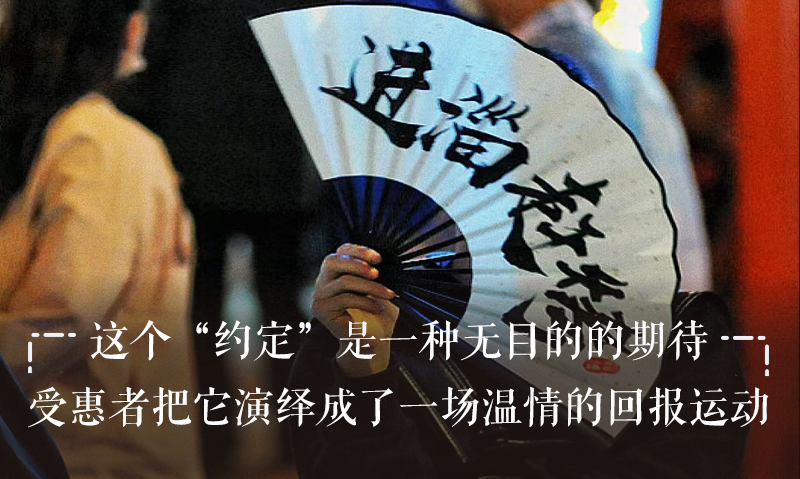
This “agreement” is a purposeless expectation, but in the end, the beneficiaries have interpreted it as a warm-hearted return movement. In the world of the Internet, college students have always been the most active fermenters of popular culture, the core elements of Gladwell’s so-called “law of the few” and “power of context.” They have imprinted a smoking emotion on the concept of “Zibo barbecue,” which has triggered a nationwide “post-epidemic empathy.”
The second-level detonator of the popularity is the local government of Zibo. They actively became accomplices of emotions. In the past three months, they have sent out barbecue consumption vouchers, launched special barbecue lines, organized and arranged barbecue volunteers, and even specially cooperated with the Jinan Railway Bureau to launch a “barbecue train,” giving away a commemorative gift package upon boarding.
These measures remind me of Guan Zhong, a Zibo native from more than 2,600 years ago. In those days, in order to attract merchants from other vassal states to do business in the remote state of Qi, Guan Zhong proposed “no tax for empty carts, no entry for those carrying nothing, to attract distant people.” He also specially set up guest houses to entertain merchants from various countries, one every thirty miles. Foreign merchants who came with one cart were provided with food, those with two carts were provided with fodder for their horses, and those with three carts were also provided with food for their servants. Since then, “merchants from all over the world flocked to Qi like flowing water.”
What makes people even more happy to see is that the Zibo government has carried out a liberation of control. They allowed barbecue stalls on the street, thus abandoning some of the powers of the urban management officers; they mobilized all civil servants, regardless of their positions and duties, to be on standby 24 hours a day, ready to be dispatched at any time; they opened the courtyards of 207 party and government agencies in the city, providing free parking and toilets for tourists. People also saw that the director of the Zibo Culture and Tourism Bureau “publicly apologized” for the fact that the number of tourists exceeded the reception capacity, and the secretary of the municipal party committee rode a shared bicycle to personally inspect the streets.
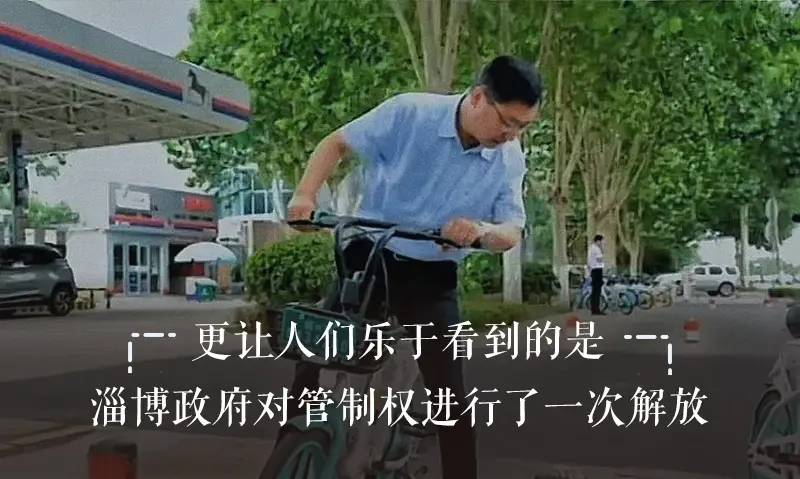
On the Internet, there are also complaints from local civil servants about “officials not being able to live,” but in the eyes of the public, this is a long-lost new atmosphere. When these measures are finally precipitated into a system, it may mean a certain specimen of government function reform.
Any nationwide carnival is based on the cost of participation. Eating barbecue in Zibo, a skewer of beef costs 2.5 yuan, grilled oysters cost 5 yuan, and the average cost per meal is about 50 to 75 yuan per person. Someone calculated that foreign tourists who went there together, including food, accommodation, and entertainment, would spend about 345 yuan/person for two days. Because of the proper price management, no news of cheating customers has been heard so far.
In a certain sense, Zibo barbecue is fulfilling people’s civilian imagination of the free market: goods that are good and cheap, a satisfying consumption experience, a market environment that is fair to all, and a humble and amiable “small government.”
Therefore, millions of people went there from afar to “vote” – in April, 4.8 million tourists came to Zibo. During the just-passed May Day holiday, there were about 200,000 tourists per day, and the Badaju Convenience Market in Zhangdian ranked first in the national scenic spot “queue list.”
On the surface, they are going to eat one or several barbecues, but in their subconscious, they are realizing a release and expression, participating in a small experiment of democratization. This was originally an extremely humble goal, but in today’s China, it is so precious.
You can never underestimate the silence and “voting with your feet” of the people. With the opening of the people’s wisdom today, any slogan or declaration cannot compare to a free barbecue. People do not need the sentimental “paternal love,” but only crave equality. People’s recognition of power has always been based on the common values of “people not deceiving me.”
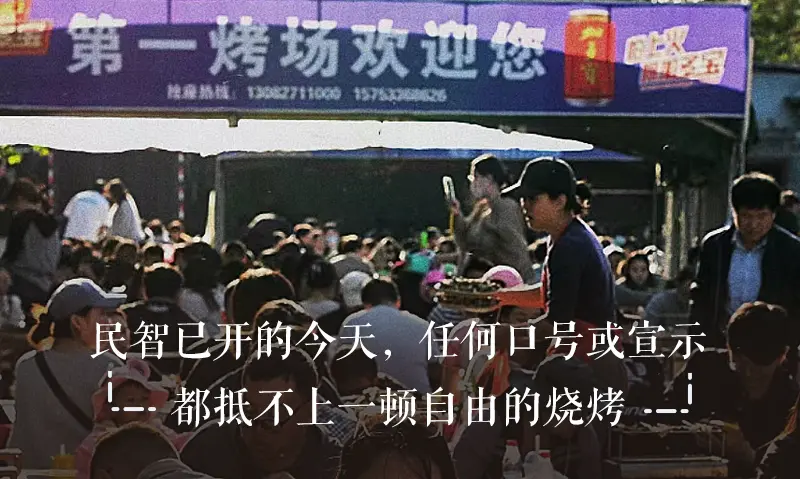
Looking back many years later, the popularity of Zibo barbecue is so absurd, but “at this moment,” it is the whole truth of China in 2023.
Discover more from 自由档案馆
Subscribe to get the latest posts sent to your email.