On the afternoon of April 20th, three young people from different parts of the country committed suicide by taking poison deep in the Tian’e Forest Farm in Shifang City, Sichuan Province. Following the Tianmen Mountain jumping incident on April 4th, this is the second suicide pact involving strangers in a month.
Unlike the previous incident, the information related to this case is extremely scarce: whether the deceased left a suicide note, what they experienced before their deaths, and why they chose to end their lives—at least for now, we know nothing. In the public sphere, the final silent cries of these young lives seem destined to be quickly drowned out.
The earliest disclosure of this matter came from “online rumors,” and the local Public Security Bureau responded that “it is not convenient to disclose this matter.” When the incident was finally reported yesterday, there was also a police reminder at the end: “To respect the privacy of the deceased, please do not disseminate related videos, pictures, and other information to avoid causing secondary harm to the deceased’s relatives.”
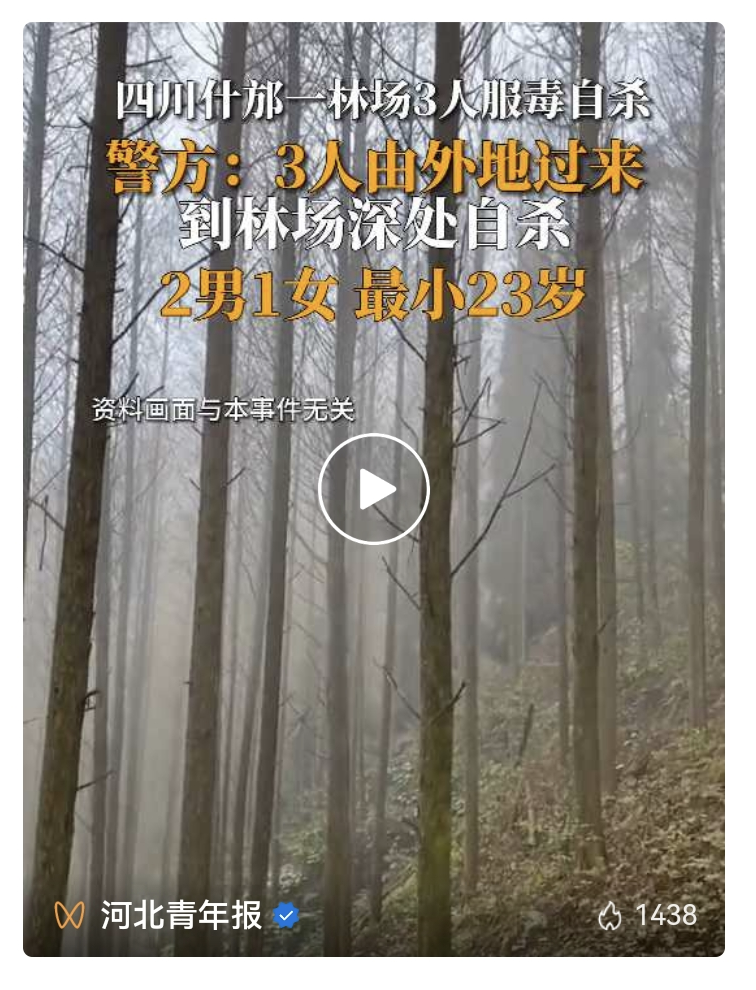
This is the most common approach in China when dealing with “negative events”: don’t talk about it, just let it pass as if it never happened, especially to prevent negative emotions from spreading, triggering imitation, and subverting the existing daily order. At this time, the emotions of the deceased’s family have become the most convenient reason.
It should be said that this consideration is not without reason. In 1774, after Goethe published the epistolary novel “The Sorrows of Young Werther,” German society was moved by the young man’s bitter resistance after awakening, and many people committed suicide for love. In 1903, Japanese high school student Fujimura Misao committed suicide at the Kegon Falls, expressing the painful “incomprehensibility” of the meaning of the universe and life in his suicide note. Although the police cut down the tree engraved with his suicide note and stopped issuing popular postcards with his last words, it still could not stop many people from coming here to worship and imitate this “philosophical suicide.” Within nine years, as many as 200 people committed suicide by jumping into the pool.
After the Tian’e Forest Farm incident, my first reaction was also to suspect that it was an imitation of the Tianmen Mountain suicide pact, but if so, the action was too fast. More likely, the three people this time already had similar circumstances and intentions, and it was just the actions of others that stimulated them to take the final action.
If this is the case, then the logical inference seems to be: news reports and public discussion may have accelerated their suicide. This is a dilemma that troubles journalists: reporting may add fuel to the fire; suppressing the report does not conform to journalistic ethics, and moreover, this kind of society that does not allow reporting makes people even more depressed.
Can avoiding discussion make things better? I don’t think so. Public discussion is essential, but whether the related discussion will stimulate social imitation is something that no one can control. Journalists cannot bear unlimited responsibility because the feedback chain of society is too long, and it is impossible to foresee and control every link, so it is impossible to take full responsibility for this.
Moreover, if you don’t report and block the news, does that mean society really won’t know? No, it’s just that the credibility of the media is gradually lost, and people turn to gossip to obtain rumors. The result of severe suppression is to further undergroundize this behavior, and the real reasons for the suicide pact cannot be openly discussed, let alone solved.
The difficulty lies here: “Public discussion may trigger imitation, but suppression cannot really solve the problem, so what should we do?” This gives rise to a response that is quite characteristic of China: on the one hand, controlling public discussion and keeping it secret, and on the other hand, trying to solve the problem quietly.
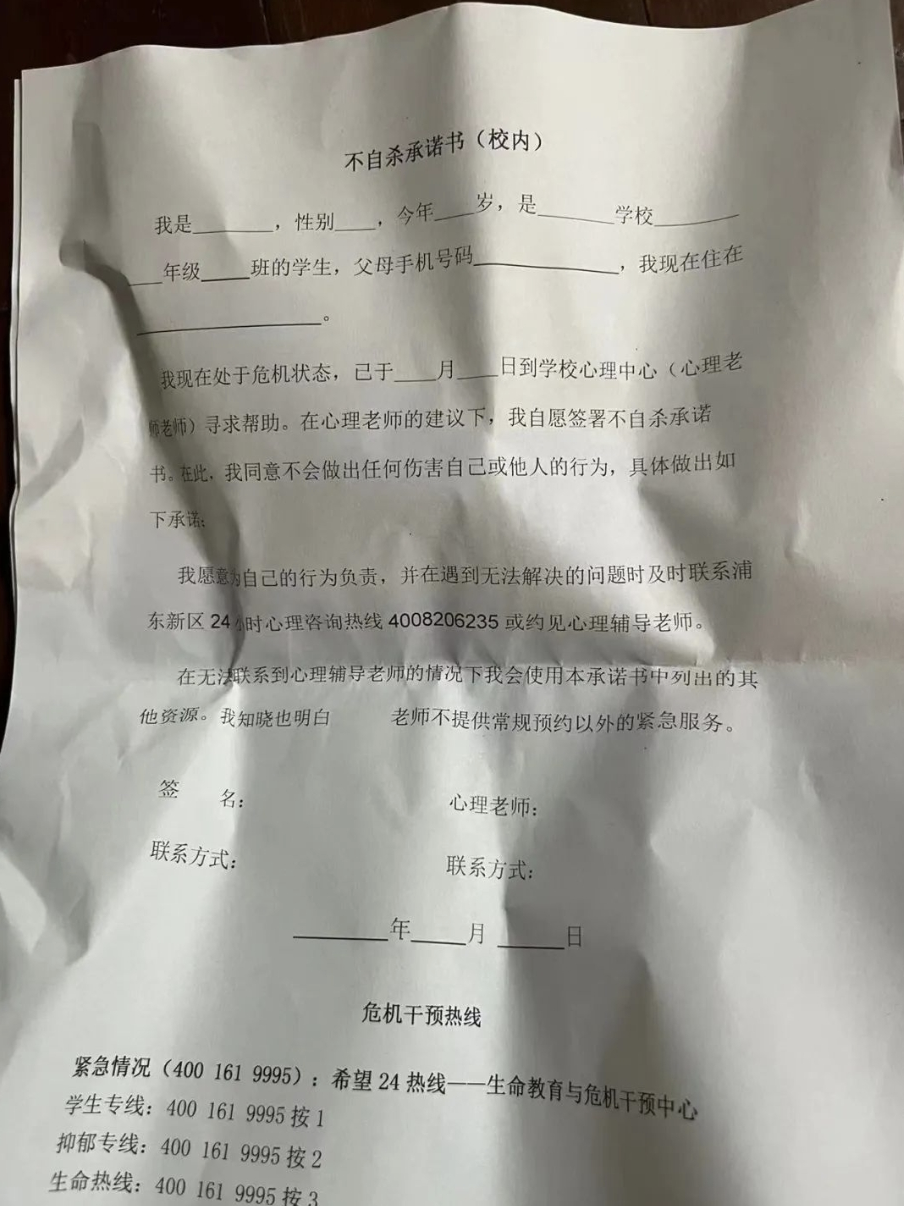
Every time such a tragedy occurs, there will be a wave of responses. Some teachers say that the requirements for students have been relaxed to “just don’t commit suicide.” Many schools are stepping up efforts to screen students with tendencies toward depression, strengthening psychological intervention, and even requiring students to sign “no-suicide pledges.”
Does this work? Yes, some students become even more depressed as a result.
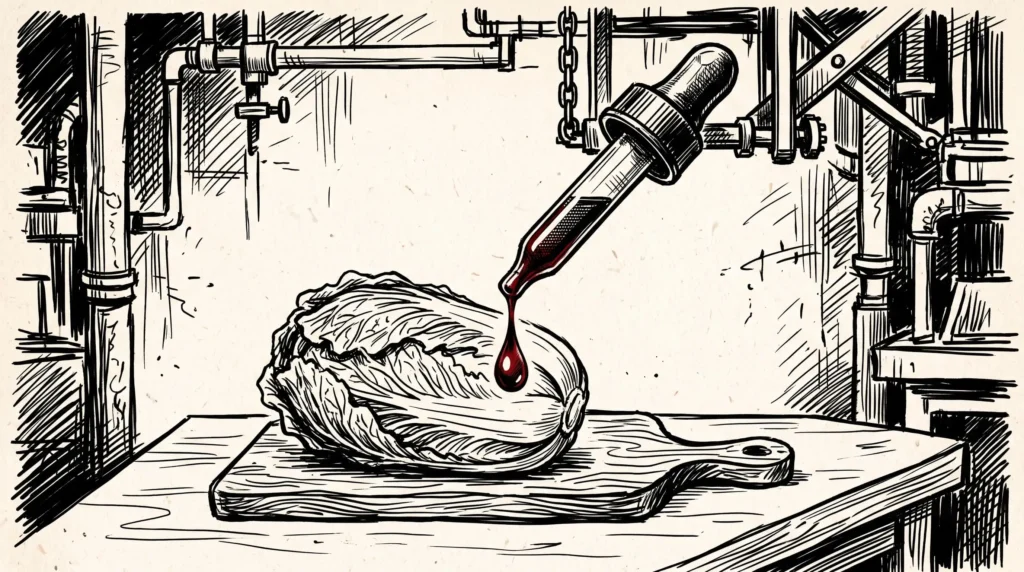
Some people complain that after such an intervention, the depressive emotions they had finally managed to control have erupted again. Signing a “no-suicide pledge” is of course useless; it’s just that with such a pledge, if something happens again, it’s considered a “violation” on your part, and at least the school can shirk responsibility. However, because of this, students are even more aware that the essence of this intervention is not to help themselves, but to coldly and ruthlessly absolve themselves of responsibility, allowing the system to operate and eliminate hidden dangers. This further deprives those who see this point of hope.
In our society, there is also a ubiquitous voice that believes that in order to prevent tragedies from happening again, it is necessary to “promote positive energy” and protect young people from negative influences. In the reports after the Tian’e Forest Farm incident, there was a comment that asserted: “There must be someone who incites young people to commit suicide.” But someone below asked: “Do we still need to be incited?”
This is the problem: those young people who made the suicide pact were neither impulsive nor necessarily overly pessimistic due to the incitement of others. On the contrary, it is entirely possible that this was their own, voluntary act after seeing the reality of society.
The reason why they can resonate with the public is also here. Too many people, although “struggling to live in this world with despair,” can understand the despair of survival. Under the video report of the Tian’e Forest Farm suicide incident, the most liked comment was: “The world is not worth it, don’t come.”
Therefore, the practice of treating those who commit suicide as abnormal, marginalized people and intervening in a targeted manner cannot succeed, because they are precisely normal people, and it is the society itself that is abnormal. This society does not care about the feelings of individuals, but only requires people to serve, to do a good job of population reproduction and material reproduction labor. If you want to escape service for any reason, you will be punished.
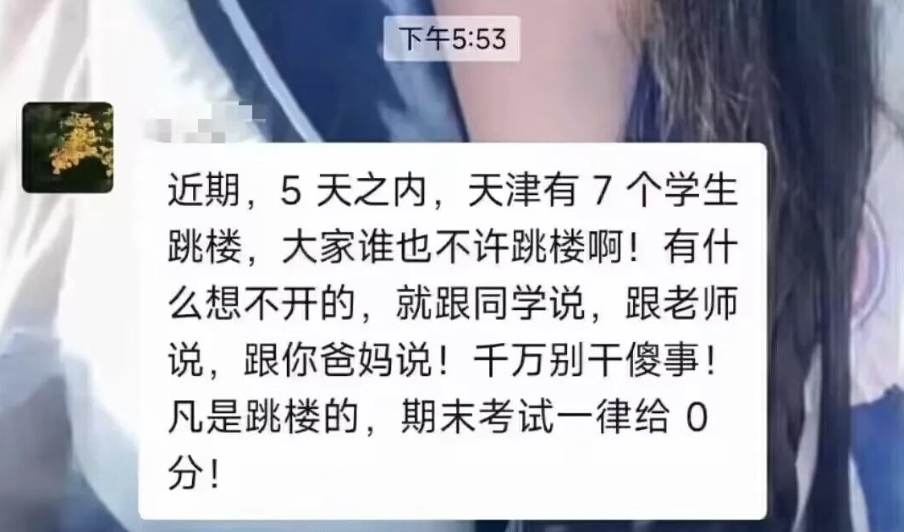
In a WeChat conversation circulating online, a teacher warned students not to have any suicidal thoughts, and no one is allowed to jump off a building, “Never do stupid things! Anyone who jumps off a building will receive a failing grade at the end of the semester!”
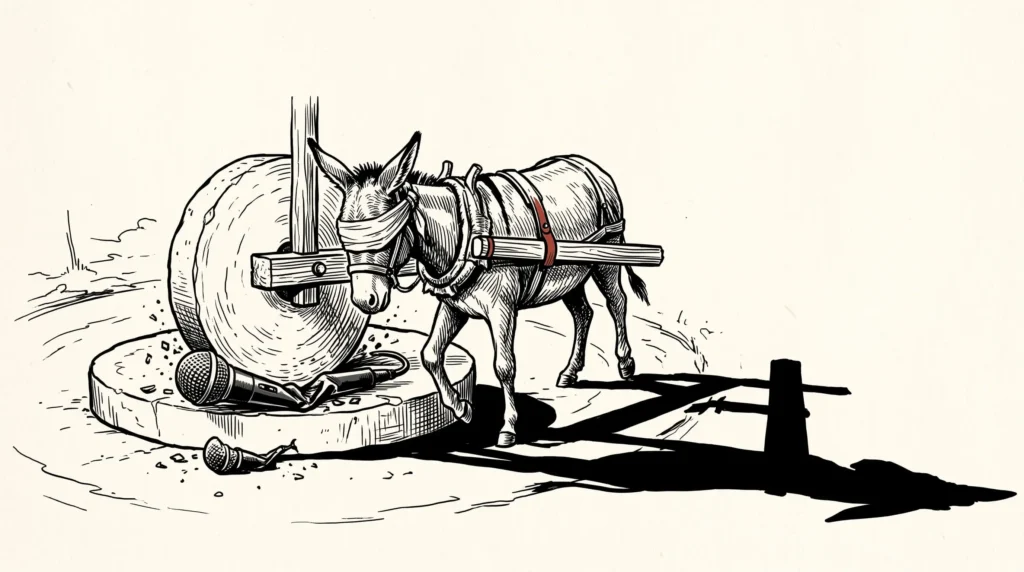
Whether this is an unconscious expression, a cruel joke, or even a fabricated meme, it does reveal the absurd truth of the current society: a life that is arranged has no exit mechanism, and anyone who wants to quit must be punished. In this sense, suicide is the most resolute resistance of a tool person after awakening.
In the past two days, many people have also mentioned a passage from Shi Tiesheng’s “I and the Temple of Earth”: “You say, you see through that death is something that doesn’t need to be done in a hurry, something that will not be missed no matter how delayed, and then you decide to live and try.” This is of course a calm “living towards death,” but in fact, it cannot respond to the current situation of tool people, and even the opposite, because in Shi Tiesheng’s case, “living” is the resistance to fate.
For humble individuals, life and death have different meanings. The novel “The God of Small Things” depicts the survival of such a small person: he is quiet, sensible, and does not disturb others, and can blend into the background of any place, so that “for an observer, he is almost non-existent.” It is conceivable that no one cares about his life or death, because “in the society in which he lives, a person’s death may be more profitable than his survival, and this is not his fault.” For him, death is a very peaceful thing, because it “is not dying, just not living anymore.”
In these two suicide pact incidents, at least one thing can be confirmed: they can only find people in the same situation as themselves to act together, but they cannot find people who can understand and support them. In this way, their mutual support becomes a process of constantly self-denying internal circulation. What seems strange is that this desperate introspection can bring a rare inner peace, a sense of liberation that has never been experienced before: “There is no hope, suddenly I feel that people are not anxious.”
The problem is not how bad their situation is, but that this strengthens their detachment from the outside world. Not being able to find their belonging in this world is more desperate than the lack of living conditions. At this time, another world may seem even more like a “home.” In this regard, this small group is actually their final belonging, even more important than life itself.
I originally hoped that even if they couldn’t find a home in this world, they could at least find a new path from the mutual understanding of the small group after finding each other, but it seems that this is too difficult for them. Suicide also requires action and execution. A person often cannot make up their mind, so some people say that the reason why some people haven’t committed suicide is not because of anything else, but because they are “lazy” and have put it off. However, if three or four people are together, they can execute it more firmly and make thorough arrangements in advance.
In the Tianmen Mountain incident, the four people also took poison before jumping off the cliff. General media analysis believes that this is for “double insurance,” indicating that they were determined to die, but I guess there is another consideration: to avoid becoming disabled if they didn’t die from the fall. The most regrettable and ironic thing is here: this group with a sense of belonging is even more determined to carry out suicide, and they put all their remaining energy into trying to leave.
These seem to be individual cases, but in my opinion, every such incident reflects the current spiritual crisis of society: the society in which we live is highly secularized, but lacks spiritual sustenance, and people find it difficult to find a sense of meaning in life. When this issue was mentioned before, some comments said that people who are desperate in their hearts should go to church for a while before committing suicide, but someone below replied: “There is no church.”
Of course, no society can eliminate the phenomenon of suicide, nor can it make everyone happy. Many private inner darknesses are difficult for even the most capable public institutions to intervene, but at least, when people want to seek help, let them have a choice, and when they are willing to speak out, there are also people who can listen, get a response, discussion, and attention.
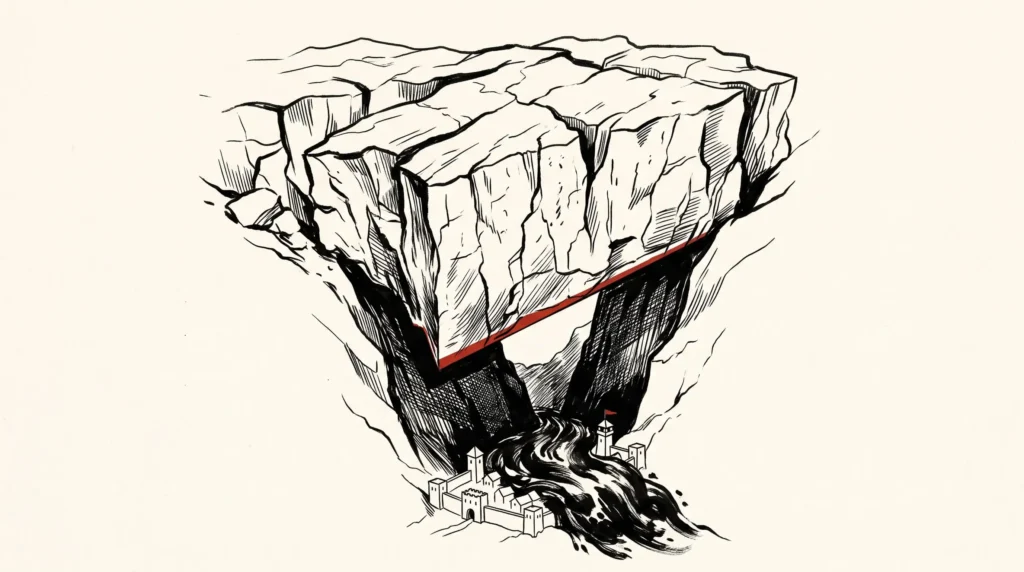
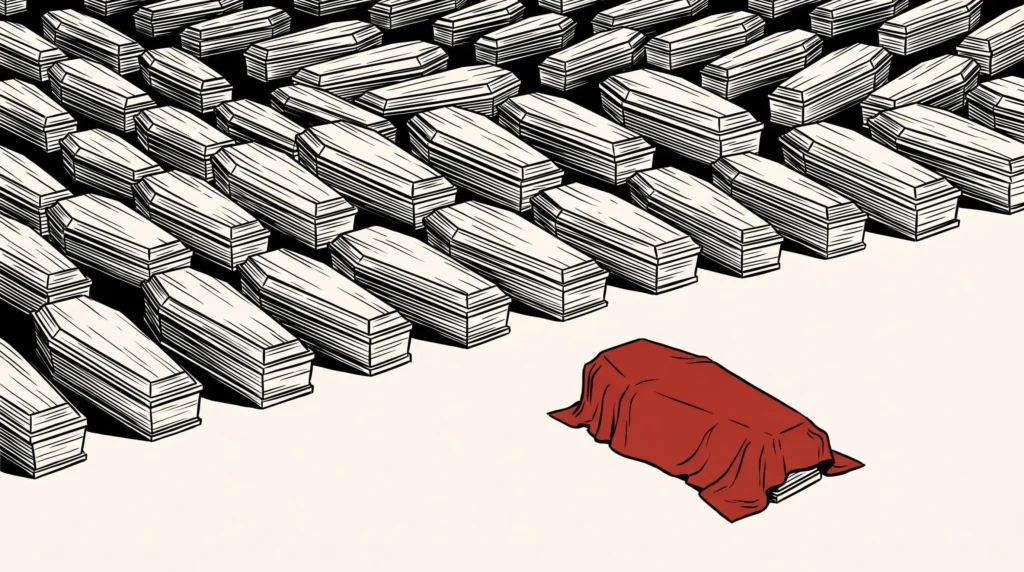
This is what I want to say: to truly solve the problem of suicide pacts, they first need to be seen, and their situation needs to enter the public eye. The truth may be uncomfortable, disrupt the daily lives of the living, and affect the smooth operation of the system. However, if we cannot see the specific people, it is impossible to reflect on the hidden structural problems.
Discover more from 自由档案馆
Subscribe to get the latest posts sent to your email.