At the beginning of the year, as local two sessions concluded, various provinces and cities successively announced statistical data related to health expenditures in 2022.
It is extremely rare that 22 provinces and cities disclosed the specific amounts of epidemic prevention and control expenses, which is the first time in three years.
Health economics experts are surprised by this. Some experts believe that “the government has always been very cautious about disclosing data on epidemic prevention expenditures, only mentioning the 1 trillion yuan special treasury bond project for epidemic prevention in 2020, and rarely mentioning other details, which are all rough figures.”
The public disclosure of some information on epidemic prevention expenditures allows us to take a glimpse and have a more macro understanding of the epidemic prevention and control in the past year.
From the perspective of epidemic prevention expenditure amounts, the top spenders in 2022 were Guangdong Province (71.4 billion yuan), Henan Province (48.93 billion yuan), and Zhejiang Province (43.51 billion yuan). Beijing topped the list in terms of per capita epidemic prevention expenditure—spending as much as 1.37 billion yuan per million people, and the proportion of epidemic prevention expenditure in local fiscal expenditure also ranked first.
In 2022, the government’s investment in health and health accelerated strongly, with an increase of 17.8%, surpassing the previous five years.
When the whole society is discussing “welcoming recovery”, the domestic health and health construction will also be integrated into the main wave of “great recovery”. After the policy is relaxed, will the government’s investment in epidemic prevention this year fall back? Will the focus of health and health expenditure shift accordingly, and what is the trend?
To this end, we have reviewed nearly fifty documents and reports and tried to answer with data.
Which region spent the most on epidemic prevention last year?
In the “Report on the Implementation of the 2022 Budget and the Draft Budget for 2023” (hereinafter referred to as the “Report”) released by the financial departments of various provinces and cities, it generally includes data such as the total health expenditure of the province in 2022, the health budget of the province in 2023, and related statements.
However, there are slight differences in the statistical caliber of each province: some provinces only disclosed provincial expenditures, provincial budgets, or provincial epidemic prevention expenditures, excluding the expenditures of subordinate cities and counties and the central government’s transfer payments. In the following text, unless otherwise stated as “provincial”, the remaining data are the total epidemic prevention expenditures of the entire province.
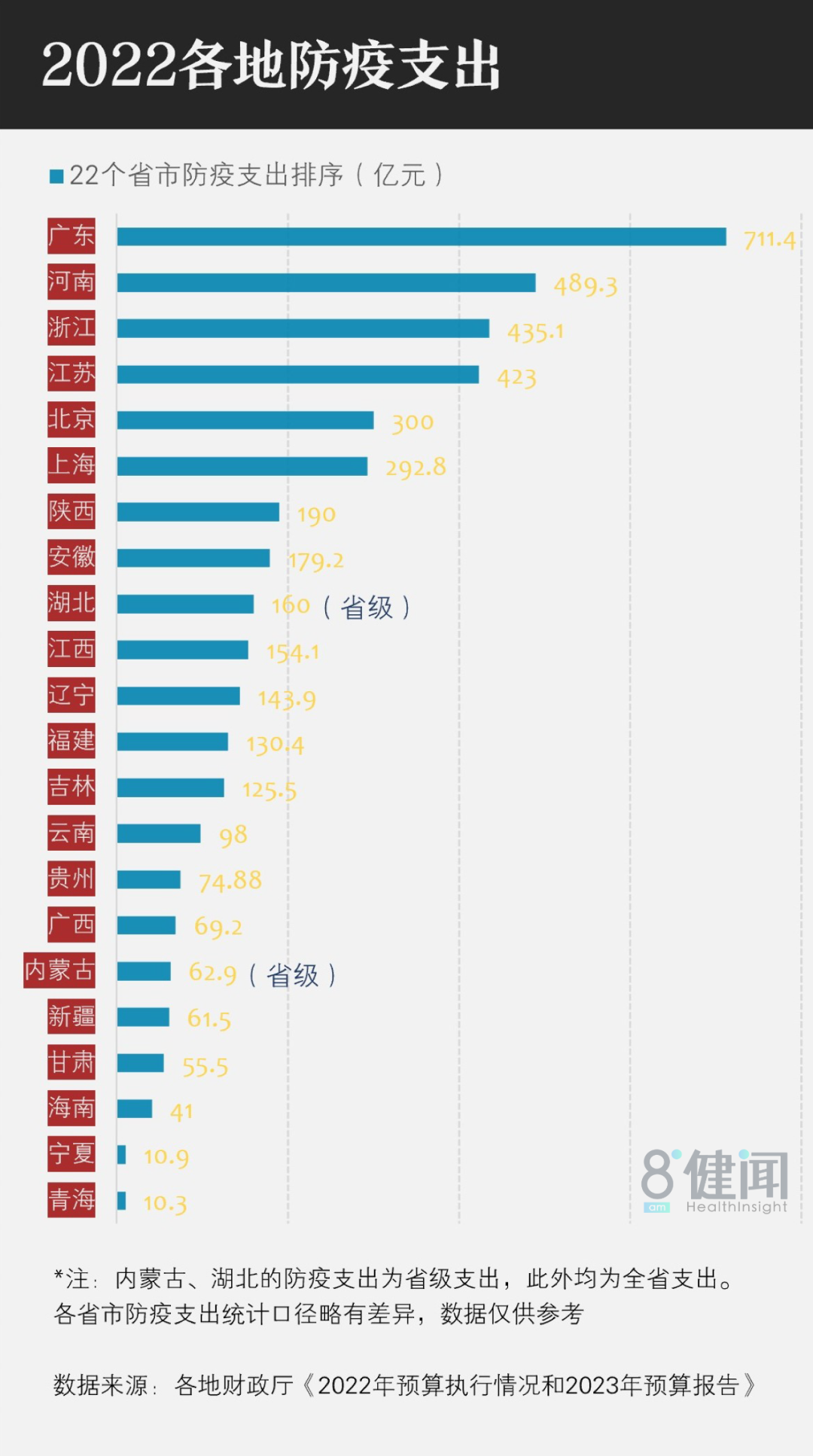
2022, statistics of epidemic prevention expenditures in 22 provinces and cities, made by: Shi Chenjin, the same below
If we sort the total amount of anti-epidemic expenditures disclosed by 22 provinces in 2022, we can get the above figure. As shown in the figure, the top three are Guangdong Province (71.4 billion yuan), Henan Province (48.93 billion yuan), and Zhejiang Province (43.51 billion yuan). Qinghai is the lowest, at 1.03 billion yuan.
Why is the difference in epidemic prevention expenditures so huge between different provinces?
An industry expert analyzed that the statistical caliber of each province’s anti-epidemic expenditures is different. For example, Guangdong Province clearly mentioned epidemic prevention expenditure items such as “comprehensive guarantee of vaccination, nucleic acid testing, and temporary work subsidies for medical staff”. Zhejiang Province included “quarantine facility construction and operation, and procurement of prevention and control materials” in the statistical scope.
From a volume perspective, the intensity of epidemic prevention investment in each province is significantly related to the local epidemic fluctuations.
Taking Guangdong Province as an example, its two first-tier cities—Guangzhou and Shenzhen—both experienced multiple rounds of local epidemics last year and adopted strict measures. In mid-March, Shenzhen implemented a 7-day “closed management” throughout the city. Throughout November, Guangzhou implemented “social-level epidemic prevention and control measures” of varying degrees, such as suspending public transportation in multiple districts. At the same time, Shenzhen was also the first pilot city to start large-scale nucleic acid testing, and the expenses naturally kept rising.
However, it is not comprehensive to only compare the total epidemic prevention expenditures of each province. Considering the different population bases of each province, per capita epidemic prevention expenditure can better reflect the intensity of fund investment.
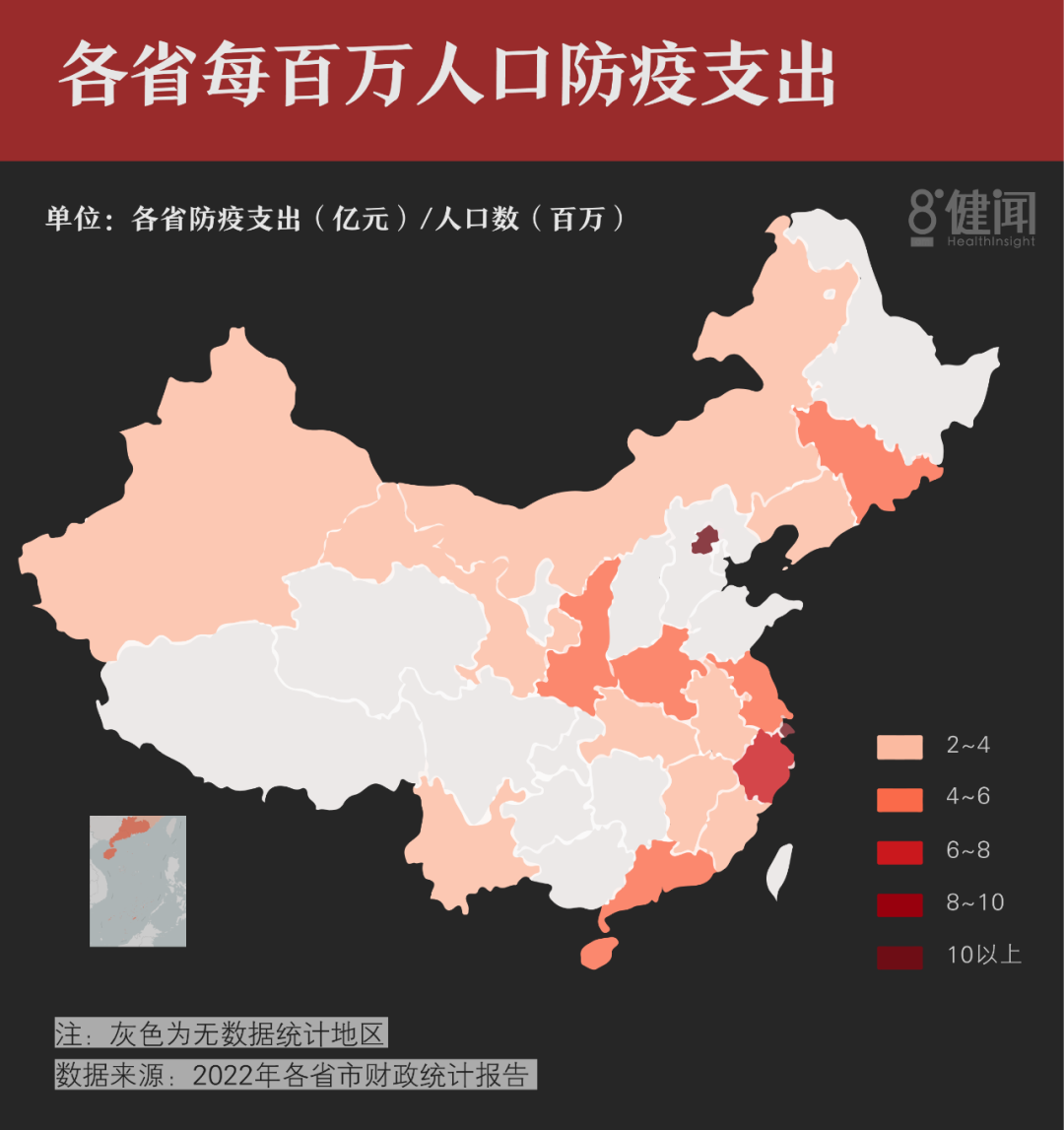
2022, per capita epidemic prevention expenditure statistics in 22 provinces and cities
From the perspective of per capita epidemic prevention expenditure, the top three provinces and cities are: Beijing (1.37 billion yuan/per million people), Shanghai (1.18 billion yuan/per million people), and Zhejiang (670 million yuan/per million people).
It can be found that although Guangdong Province has the highest total anti-epidemic expenditure, Beijing’s per capita anti-epidemic expenditure is 2.4 times that of Guangdong Province.
Before the optimization and adjustment of epidemic prevention policies, Beijing, like other major cities, experienced multiple rounds of local epidemics in 2022 and adopted quite strict epidemic prevention measures. For example, at the end of April last year, Beijing conducted three rounds of full-staff nucleic acid testing in 11 districts including Dongcheng, Xicheng, and Haidian. Some media estimated that if calculated according to 10:1 mixed sampling and testing once a week, Beijing’s expenditure for normalized nucleic acid testing would be about 298 million yuan per month.
In the first half of 2022, Shanghai implemented nearly two months of “static management throughout the entire area”. Shanghai mentioned in its statement on anti-epidemic expenditures: the municipal government arranged expenditures of 16.778 billion yuan for medical treatment, fever clinic renovation, vaccination, opening and operation of designated medical institutions,方舱hospital construction, procurement of diagnostic equipment, issuance of temporary work subsidies for medical staff, service guarantee for medical teams from other provinces and cities assisting Shanghai, and improvement of nucleic acid testing capabilities.
Shanghai also specifically mentioned: to support epidemic prevention and control in various districts and alleviate the contradiction between fiscal revenue and expenditure. A total of 12.5 billion yuan in subsidies for epidemic prevention and control was added and issued to the districts.
In addition to the population base, the proportion of epidemic prevention expenditure in local fiscal expenditure can also reflect the degree of local government’s investment in epidemic prevention.
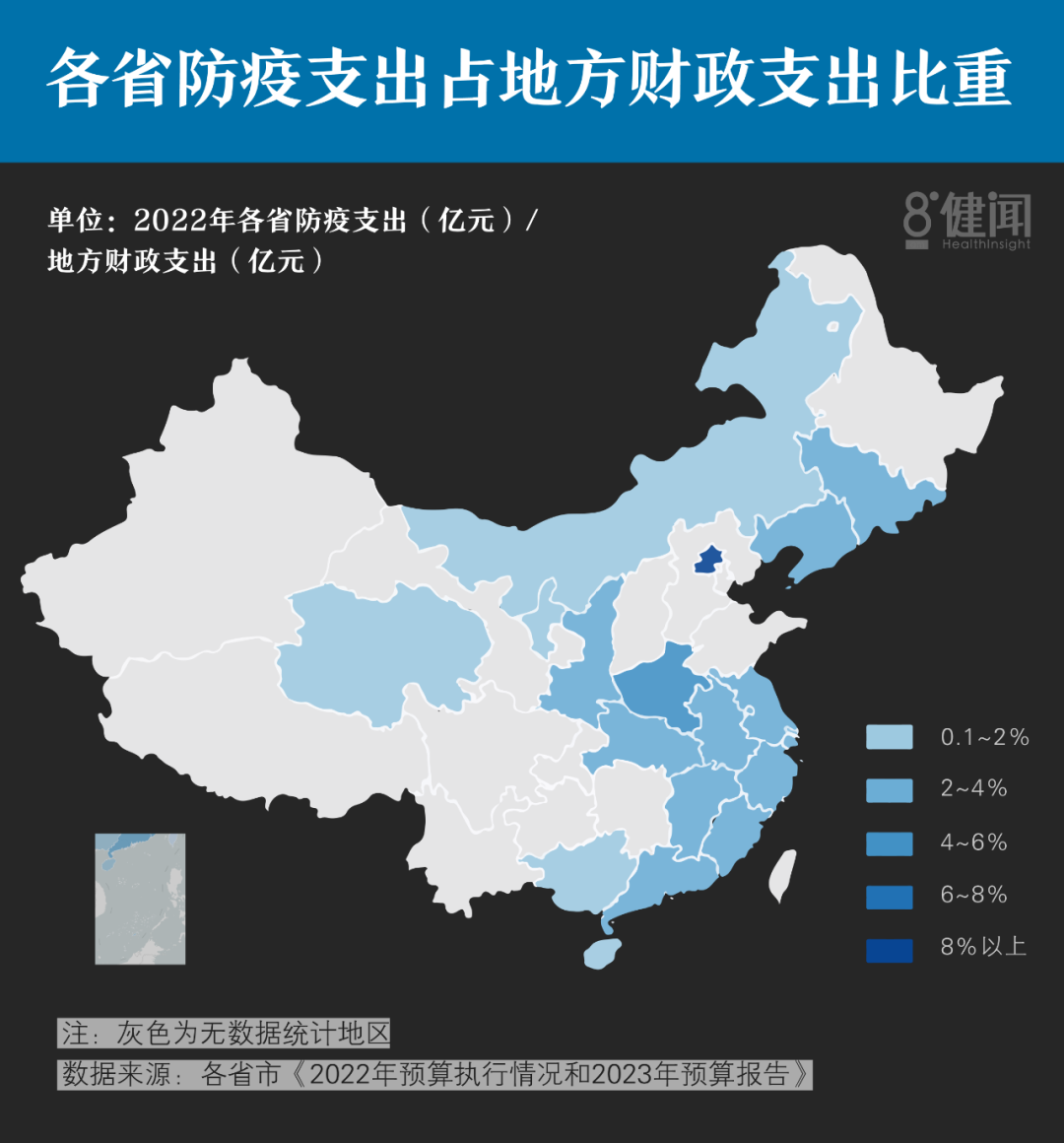
2022, the proportion of epidemic prevention expenditure in local fiscal expenditure in 22 provinces and cities
The top three provinces and cities in terms of the proportion of epidemic prevention expenditure in local fiscal expenditure are: Beijing (9.4%), Henan (4.6%), and Guangdong (3.8%). Beijing’s financial investment in epidemic prevention is twice that of Henan Province, which ranks second. Compared with Ningxia (0.7%) and Qinghai (0.5%), which are at the bottom of the epidemic prevention expenditure ratio, there is a difference of more than ten times.
Why did Beijing and Shanghai both experience large-scale infections, but Beijing’s epidemic prevention expenditure accounted for the highest proportion?
Some experts analyzed that Beijing carried out more public health construction projects during the epidemic, leading to more financial investment. For example, Beijing mentioned specific investment projects in the “Report”: supporting the construction of the new site of the Municipal Center for Disease Control and Prevention, achieving the construction of 1,558 negative pressure wards in the city, and continuously promoting the construction of public health prevention and control and treatment capabilities.
In addition, Beijing also mentioned in its statement on anti-epidemic expenditures: a total of nearly 30 billion yuan was invested in epidemic prevention and control funds throughout the year, especially increasing support for epidemic prevention and control funds in various districts, fully guaranteeing the financial needs for vaccination, nucleic acid testing, etc., and providing strong support for responding to multiple rounds of epidemic impacts.
Last year, the national fiscal health expenditure increased by 17.8%, the highest in five years
Last July, the national health expenditure in 2021, which soared to 7.55 trillion yuan, sparked controversy.
This unpopular statistical figure was compared with other data by netizens, and misunderstandings arose. The public felt puzzled by the “huge expenditure” of national health expenditure.
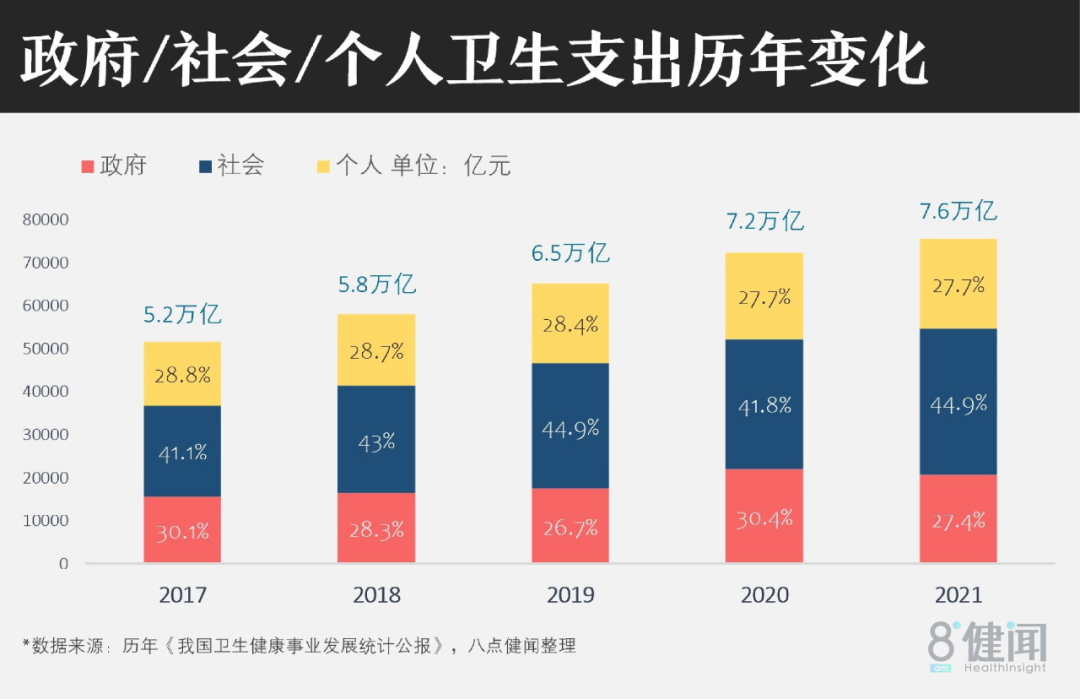
From a macro perspective, the total health expenditure calculated using the “funding source method” actually has three payers: the government, society, and individuals. This data measures how much money these three parties inject into the health field each year. Among these three, government health expenditure is the fiscal budget allocation of governments at all levels; social health expenditure includes medical insurance, commercial insurance, and other investments; and individual health expenditure is the medical expenses paid by residents themselves.
The proportion of the three has basically fluctuated around 3:4:3 in recent years. However, affected by the new crown epidemic, government health expenditure has increased sharply, especially in 2022.
On January 31, the Ministry of Finance’s official website released the “2022 Fiscal Revenue and Expenditure Situation”, which pointed out that in 2022, health and health expenditure was 2.2542 trillion yuan, an increase of 17.8% over the previous year.
Looking back,梳理 the data of the past five years can further reveal that 2022 was the year with the fastest growth in fiscal health and health expenditure in the past five years, and the year-on-year growth of 17.8% is not a small number. Under this growth rate, the total national health expenditure in 2022 will inevitably be affected.
An expert engaged in health data statistics once expressed a pessimistic view to Eight-Point Health News that government fiscal expenditure is closely linked to the economic level, and its proportion was originally showing a downward trend year by year. In addition, the economic situation is declining, and the fiscal pressure will increase sharply in the future.
In 2023, will the strong momentum of fiscal investment in health and health in various provinces and cities continue?
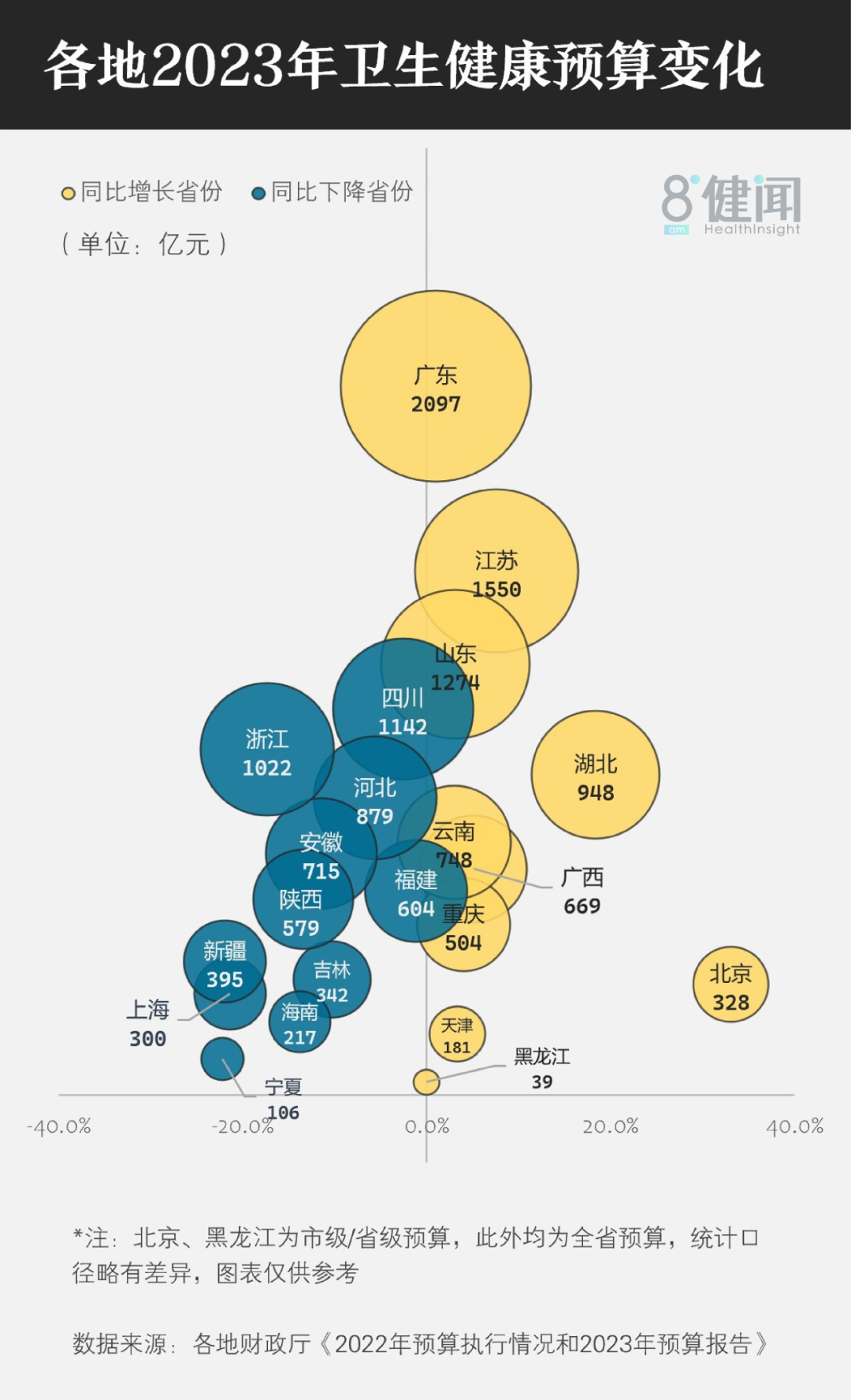
From the 2023 health and health budgets announced by many places, it can be seen that the average year-on-year decrease in the budgets of 21 provinces and cities is 3.0%, and the budgets of many places have shrunk. Among them, Ningxia’s budget decreased by 22.2% year-on-year, from 13.64 billion yuan in 2022 to 10.6 billion yuan, with the most drastic decline.
However, a detail is worth noting: the health and health budgets of 9 provinces still increased year-on-year. Beijing has the highest increase, reaching 33.1%, with a budget investment of 32.8 billion yuan.
According to conventional understanding, after a major epidemic, the health and health expenditure that once reached its peak will usually decrease. Why will some provinces continue to increase?
In this regard, Zhuang Yiqiang, director of Guangzhou Eli Lily Hospital Management Center (GAHA), pointed out that the 2023 budget is often formulated at the end of 2022. At this time, budget makers will still consider the continued impact of the epidemic, so the relevant budget for epidemic prevention has not decreased, and even considers increasing it.
In short, the health and health budget makers also cannot predict the shift in epidemic prevention policies and the “sudden disappearance” of the epidemic.
Where will health expenditures go in 2023?
Farewell to the epidemic, facing 2023, we want to know more: where will the health and health expenditures go next?
Obviously, with the change of the epidemic prevention and control situation in 2023, the expenses originally planned to flow into the field of public health, especially the emergency handling of sudden public health events, will inevitably decrease significantly, and many industry experts have also confirmed this view.
A researcher in the field of health said that the funds originally planned for vaccines, nucleic acid testing, subsidies for medical staff, quarantine facility construction, and procurement of prevention and control materials will be greatly reduced, but will not plummet to zero. If we look at it over a long period, the various proportions of health budget expenditures will gradually return to the pre-epidemic level.
What will really be greatly reduced are epidemic prevention expenditures such as nucleic acid testing and quarantine facility construction. A health economist pointed out to Eight-Point Health News that in the past two years, the construction of epidemic prevention and control systems in various places has become increasingly完善, and the equipment that needs to be purchased and the laboratories that need to be built are also gradually完善, but “major epidemic prevention and control and treatment system construction” is the key content emphasized by the 20th National Congress, and this part of the funds will not suddenly “disappear”, and systematic construction may still have long-term性.
If the variable of public health expenditure (epidemic prevention and control) is removed, the general direction of health and health expenditure will become clearer.

Keyword statistics of health and health expenditure in the 2023 budget reports of various provinces, the larger the font size in the figure, the higher the word frequency
By extracting the relevant entries in the 2023 budget of each province, we can see that: public health, medical services, public hospitals and other words are the next focus. In the budgets of many provinces, there are expressions such as: “deepening the comprehensive reform of public hospitals” and “implementation of major public health projects”.
In other words, the construction of public hospitals and the improvement of the public health system will be the key direction of expenditure. In this regard, a health economics scholar said: the focus returns to medicine itself.
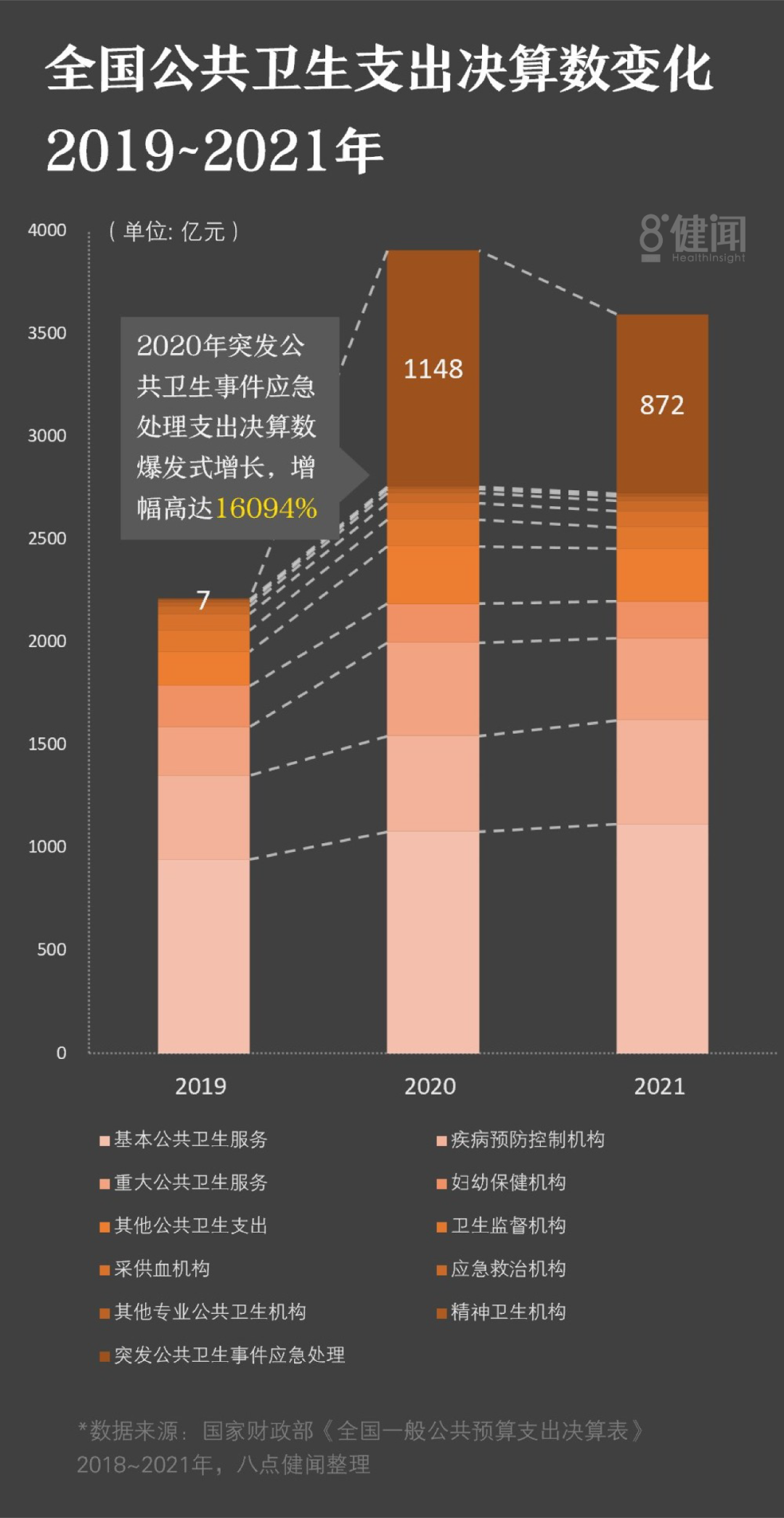
2019~2021, classification statistics of changes in fiscal public health expenditure
When the whole society is discussing “welcoming recovery”, there is no doubt that the domestic health and health construction will also be integrated into the main wave of “great recovery”, even if the direction of recovery has been permanently changed by the “lost three years”.
In the view of a senior health development research scholar, public hospitals will be a major item in the direction of health and health expenditure in 2023.
During the three years of the epidemic, large public hospitals once again demonstrated the role of bottoming out in reducing mortality and improving cure rates, which has led local governments to once again turn their attention to the construction of large public hospitals. In recent years, many provinces, including Shaanxi and Jiangsu, have stated that they will increase investment and construction of public hospitals.
For example, Xi’an once proposed to build 13 tertiary hospitals. Although one has been truly completed through integration and demolition, the investment in infrastructure will not decrease.
In addition, the old slogan of “strengthening the grassroots” is still being shouted, but after the brakes are restarted, the past direction seems to have failed.
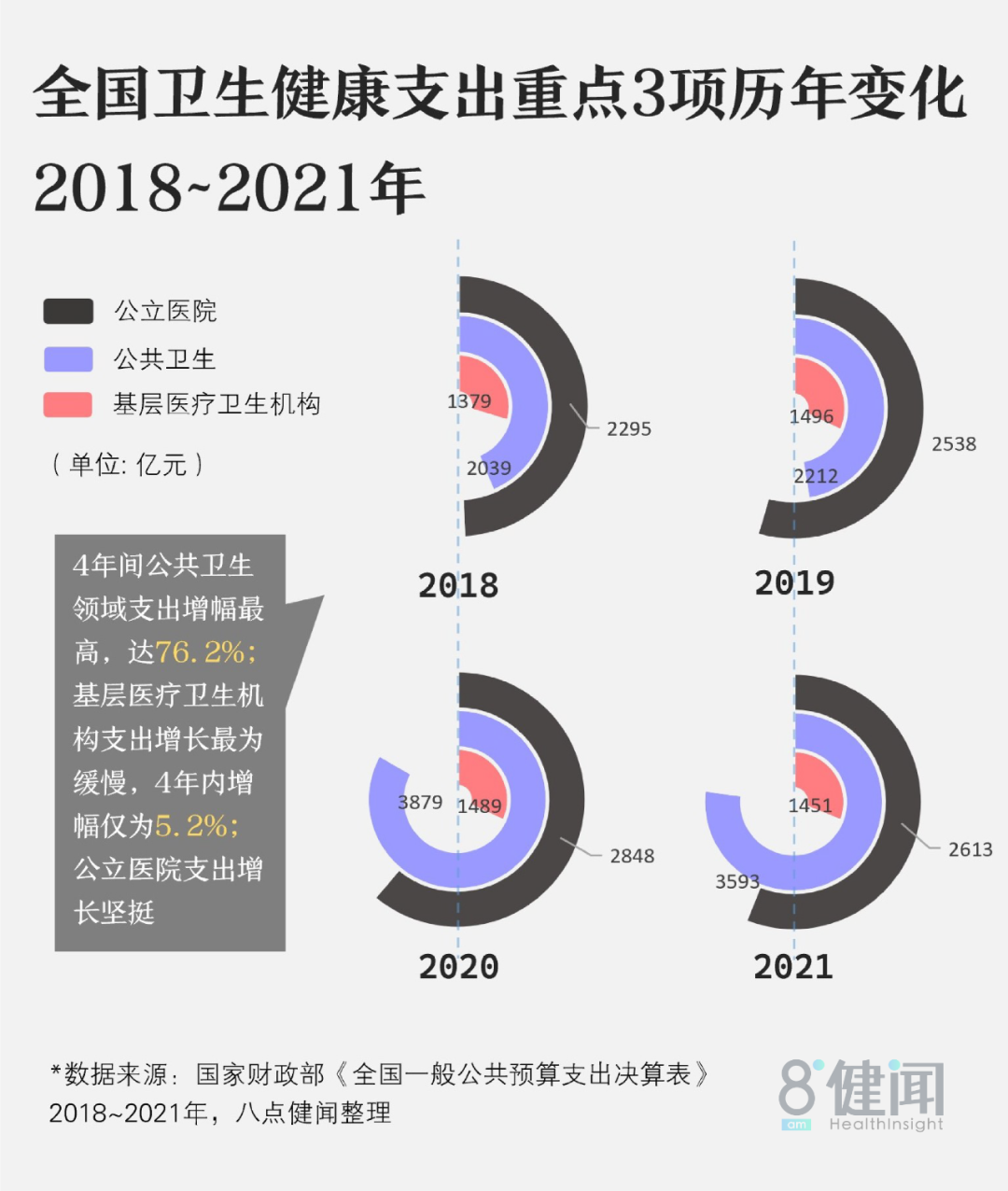
In the past four years, in the investment of fiscal funds in the field of public health,基层 medical institutions are the least valued
The above-mentioned scholar noted that the current work focus of various places this year is “building hospitals, not building基层”.
“This makes us very depressed, and the proportion of investment in基层 medical and health institutions this year may still decline.”
Discover more from 自由档案馆
Subscribe to get the latest posts sent to your email.