A reader in the Jishishan earthquake-stricken area sent me a screenshot of a document, which is the “Post-Disaster Reconstruction Clarification Paper” for the 6.2-magnitude earthquake in Jishishan, Gansu. Some of the disaster relief subsidy standards in it shocked me.
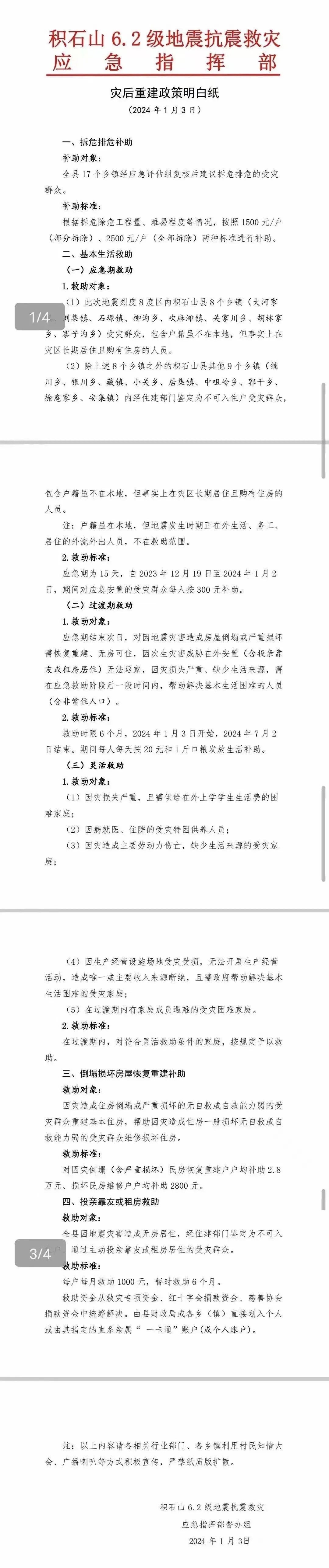
Perhaps because they were worried about shocking everyone, the above-mentioned document specifically stated that it could only be verbally communicated during meetings and broadcasts, and was strictly prohibited from being disseminated in paper form.
According to the provisions of this “Post-Disaster Reconstruction Clarification Paper”:
1. The living assistance standard for the masses in the disaster area during the emergency period is a total subsidy of 300 yuan per person from the occurrence of the disaster (December 19) to January 2.
2. For the masses in the disaster area who have no means of living due to the collapse of houses, they will receive a daily subsidy of 20 yuan + 1 jin of grain for 6 consecutive months starting from January 3.
3. For the reconstruction of houses that collapsed due to the earthquake, each household will receive a subsidy of 28,000 yuan. If it is for repairs, a subsidy of 2,800 yuan will be provided.
I did a simple calculation. If a household in the Jishishan earthquake-stricken area with a collapsed house has 5 people, then from the earthquake to June this year, they will receive a total of 19,500 yuan and 900 jin of grain.
In contrast, the per capita disposable income of rural residents in Gansu Province in 2022 was 8,229 yuan. Please note that this unit is year, not month. In a normal year, the disposable income of a 5-person household in rural Gansu is about 40,000 yuan. This year, they suffered an earthquake, and the government provides a subsidy of about 20,000 yuan for half a year. This is roughly how it is calculated. The basic principle is to “ensure basic living and not significantly decline due to natural disasters.” Of course, this refers to the part of eating and clothing.
For the earthquake-stricken area, the most difficult thing and the biggest expense is the house.
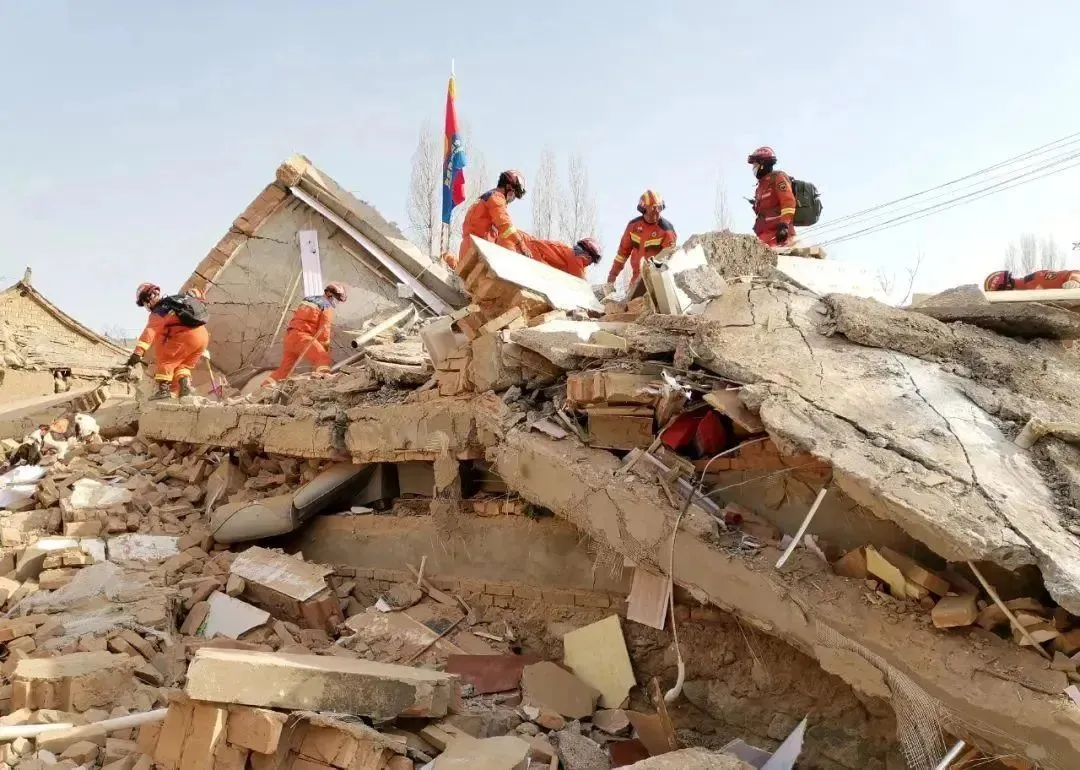
According to official reports, the Jishishan earthquake caused damage to 207,204 houses, with 14,939 collapsed. For these nearly 15,000 households with collapsed houses, there are two choices:
One is to rebuild a rural house on the original site that can meet the most basic living needs, which would cost about 100,000 yuan according to the situation in rural Gansu. The government will subsidize 28,000 yuan, and the remaining 70,000 to 80,000 yuan will have to be figured out by themselves. For rural Gansu, where the per capita income is 700 yuan per month, the pressure can be imagined. This doesn’t even include families with below-average income, and I don’t have the courage.
The second is to accept the local government’s policy of relocating to another place and move to the built commercial housing in the centralized resettlement site. The government will subsidize 100,000 yuan per household and provide a 100,000 yuan 10-year interest-subsidized loan.
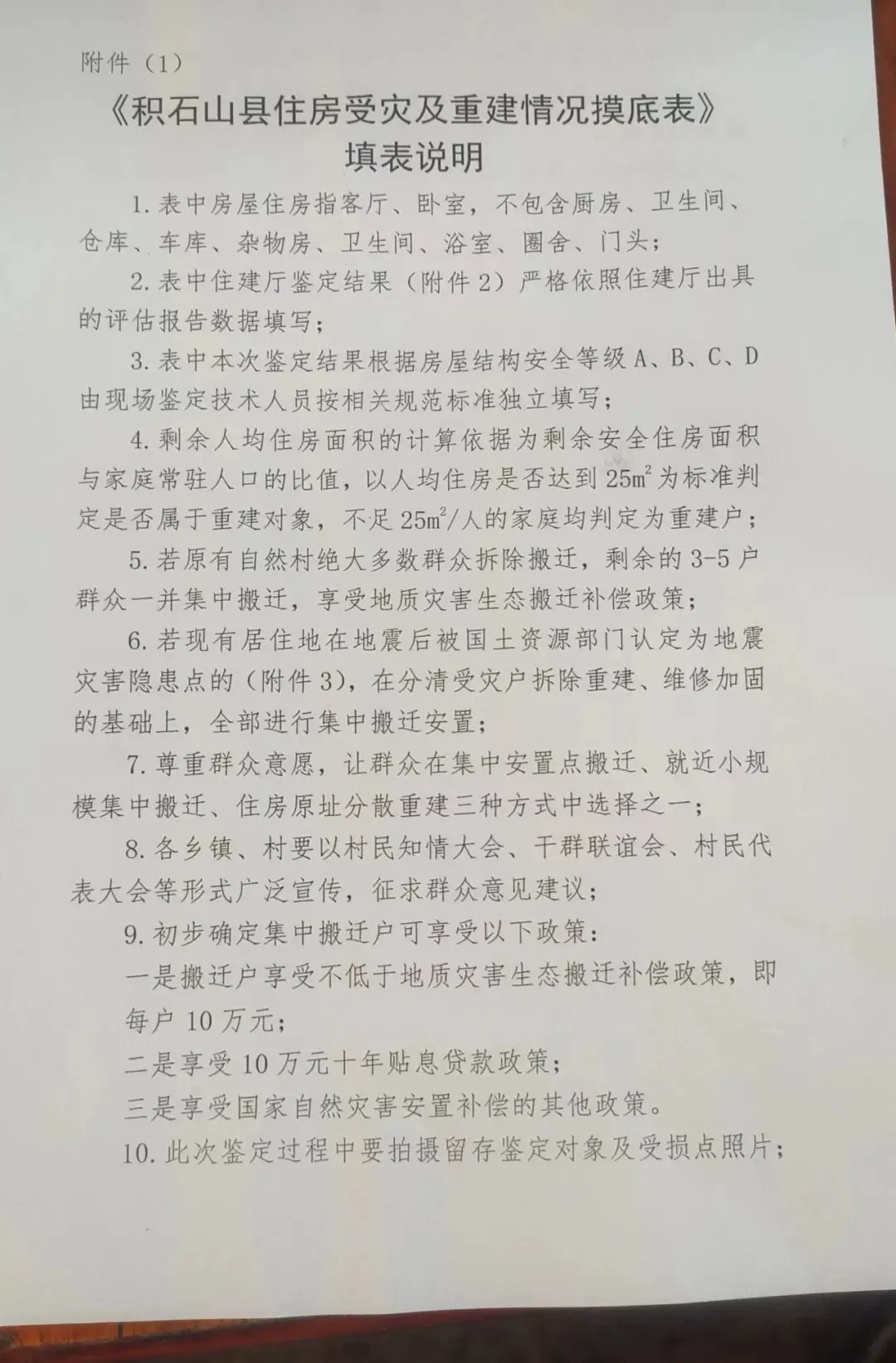
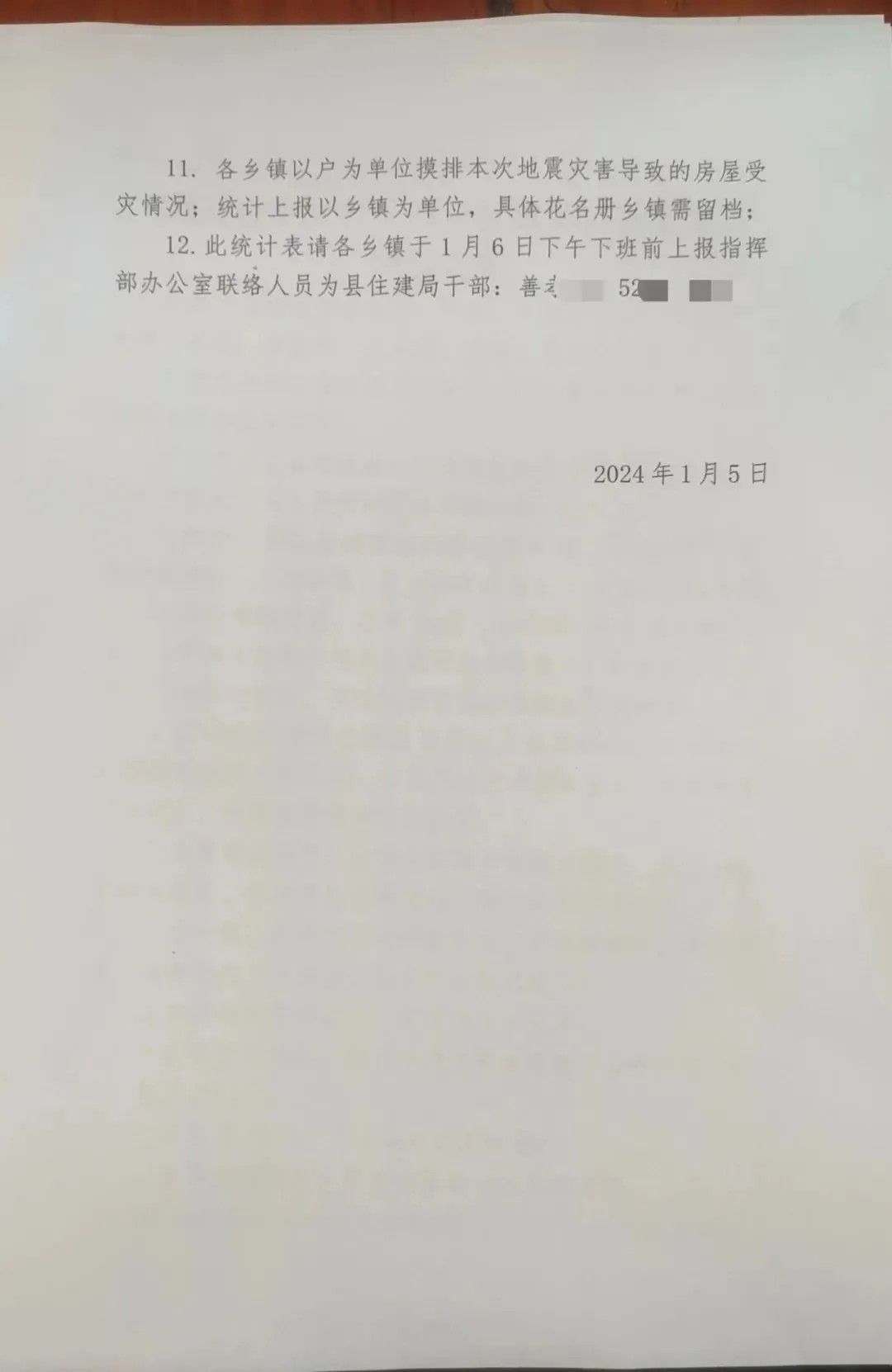
This policy seems good to outsiders, but according to local disaster victims, the relocation subsidy policy was not launched after the earthquake, but was promoted before, and even the subsidy standard was reduced from 150,000 yuan to 100,000 yuan after the earthquake. Villagers are not enthusiastic about this relocation plan because it comes at a cost. Taking this 100,000 yuan means giving up the homestead and farmland, and also having to take out a loan, which many people cannot accept.
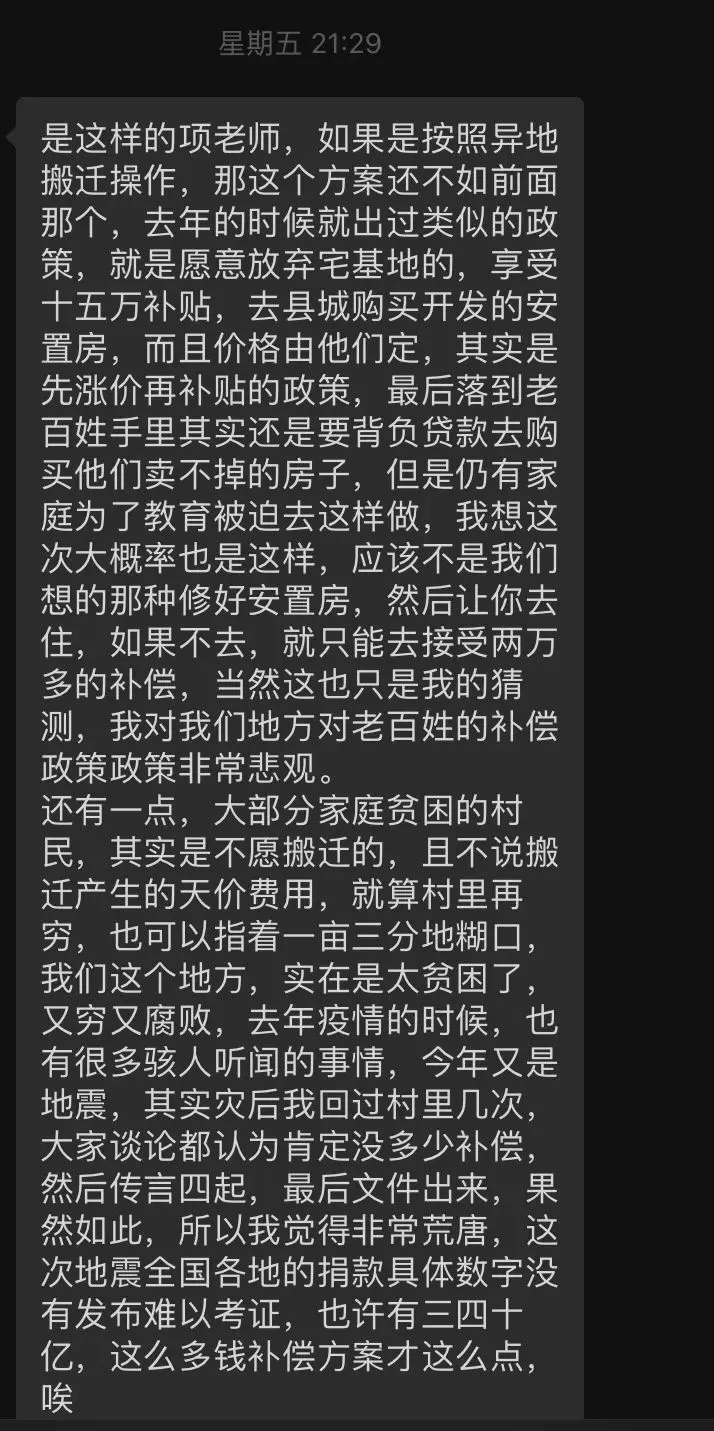
Of course, the total amount of donations mentioned by the above-mentioned villagers is inaccurate. According to the official data released by Jishishan County on December 25:
The county has received a total of 1.859 billion yuan in donations from all sectors of society and funds allocated by the central government after the disaster.
If all the disaster victims with 15,000 collapsed houses choose to rebuild on the original site, it will require a subsidy of 420 million yuan, and the repair of 207,000 houses will require a subsidy of 580 million yuan, adding up to consume 1 billion yuan. In addition, the living subsidies for 145,000 disaster-stricken people for half a year will also consume some funds (not exceeding 500 million).
In general, if the data is reliable, the above-mentioned donation funds and state allocations will not have much money left. If you want to improve the relief standards, the local finance has to pay. And what is the financial situation in Gansu, everyone is clear, which is also a more helpless situation.
Calculated in this way, the people in the Jishishan earthquake-stricken area will at least have their basic living guaranteed within half a year, but for families with collapsed or severely damaged houses, the losses caused by this natural disaster may take several years of hard work to recover. It is impossible to get rich from the disaster, and it is also difficult to maintain the living standards before the earthquake with the help of all parties.
It’s so difficult to encounter an earthquake at a living standard of 8,229 yuan per capita annual disposable income…
Discover more from 自由档案馆
Subscribe to get the latest posts sent to your email.