“Overcome fear and return to common sense.”
(1)
The gloom that lasted for three years, after the brief brightness of “a clear sky”, new worries began to appear.
The “New Ten Articles” initiated a real shift in the epidemic prevention policy, which also means that China will move towards a substantive “coexistence” stage. In the future, most Chinese people will experience the “epidemic” firsthand for the first time.
One of the most important changes is that the mandatory isolation of infected people and close contacts has gradually withdrawn, and the policy has allowed COVID-19 patients to be treated at home for the first time.
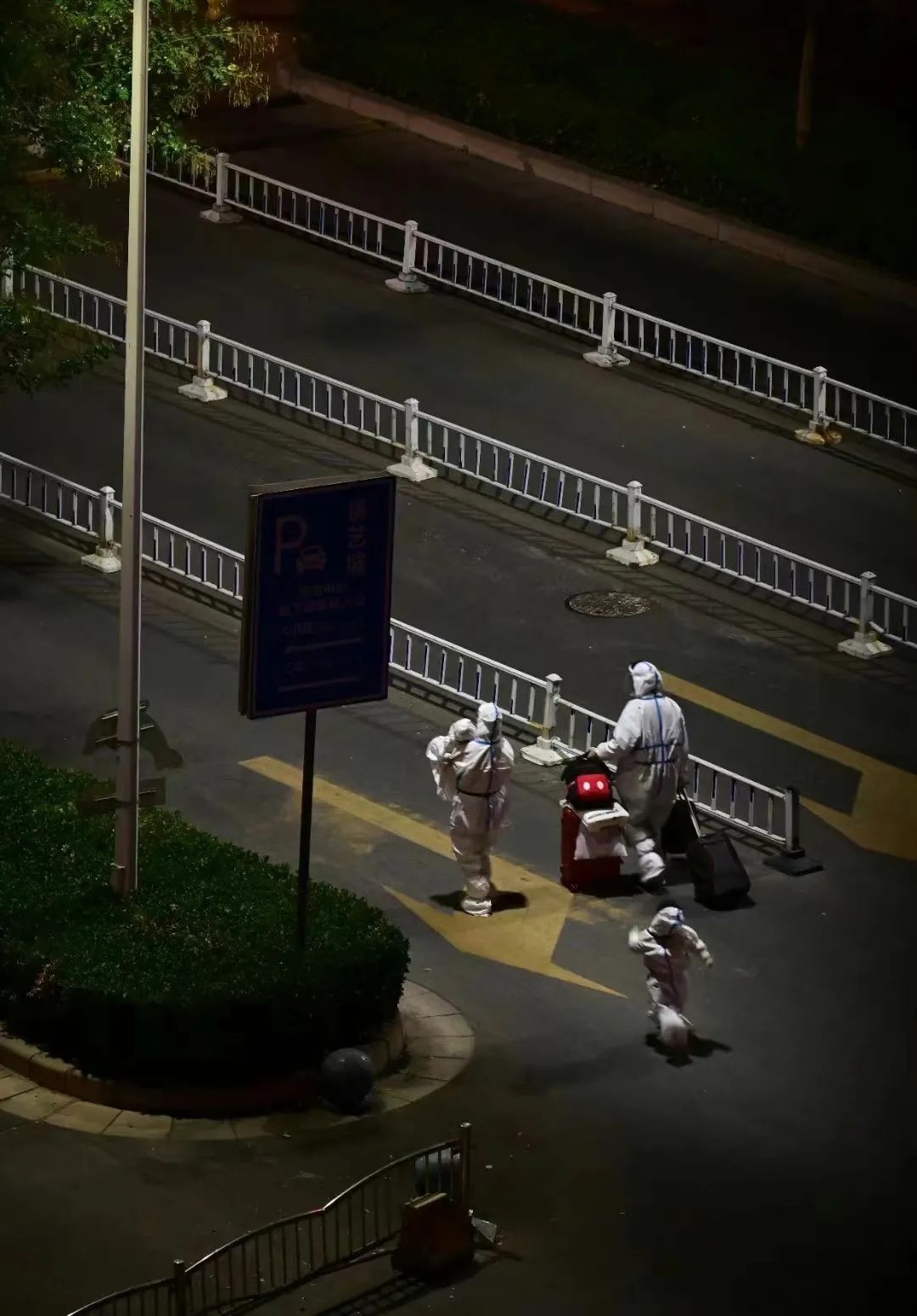
Previously, the fear of mandatory isolation places such as makeshift hospitals was common among the middle class. Especially for those with infants and young children at home, even a clean and orderly makeshift hospital environment is destined to be “uneasy to sleep and eat”.
What’s more, in addition to the positive propaganda of the mainstream media “dancing with the big whites”, there are countless narrations and images on Weibo and Douyin, revealing the chaotic, disorderly, and even dirty side of some makeshift hospitals.
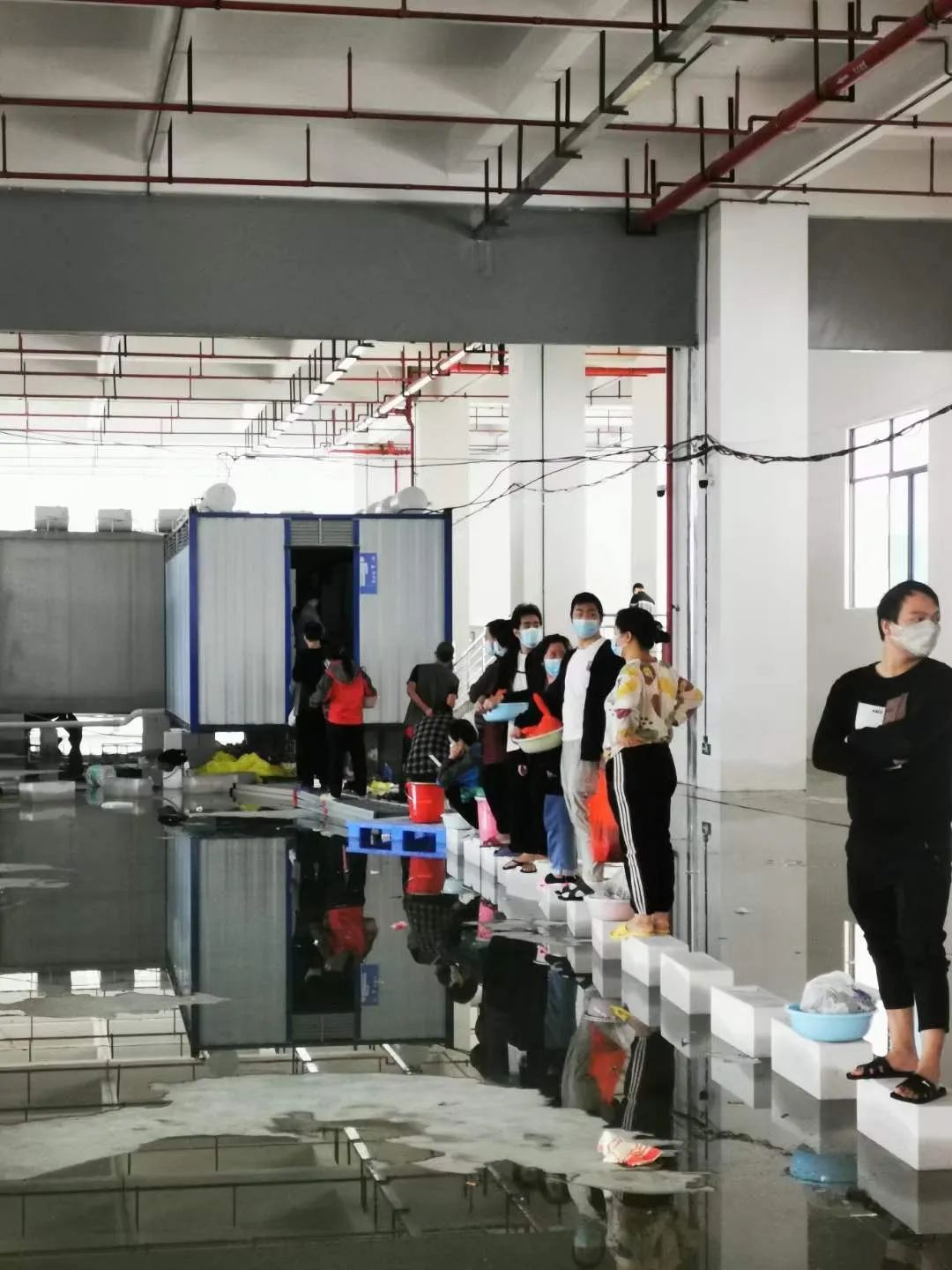
(In a makeshift hospital, patients are queuing up to use the toilet in the sewage)
After the fear of mandatory isolation is eliminated, more and more people are beginning to publicly share their experiences of “turning positive” – this is a very subtle change, and I think this change means that on the public psychological level, the “great sense of shame” that infection with COVID-19 brings to people is gradually fading.
A vivid detail is that before this wave of infections after the release of the “New Ten Articles”, even though the epidemic has lasted for three years, few people dared to share their experience of being infected in their real names on the public level.
It should be known that the absolute number of infected people in mainland China in the past three years is not small. We have experienced outbreaks in many cities with a population of tens of millions, such as Wuhan, Xi’an, Shanghai, Shenzhen, and Shijiazhuang.
Previously, ordinary people were unwilling to come forward to show their experience of being infected. I think the “sense of shame” imposed on individuals by the social atmosphere is a very important factor – you a “little positive person”, made us these people go to the makeshift hospital with you, and made the whole community have to stay at home for isolation; you “little positive people” are wandering around, which caused the whole city to be silent, shops to close, schools to stop classes, and epidemic prevention personnel to be exhausted…
I think we are not unfamiliar with all of this. For three years, how many times have there been collective denunciations and humiliations against positive patients?
Do you remember the girl in Chengdu who was subjected to cyber violence? She was stigmatized as an outsider, a prostitute, and a four-times-a-night woman just because the information from the epidemiological investigation showed that she had been to multiple bars in the early hours of the morning. The girl had to come forward to clarify under the surging online humiliation, and her first sentence was:
“Apologize to the citizens of Chengdu.”
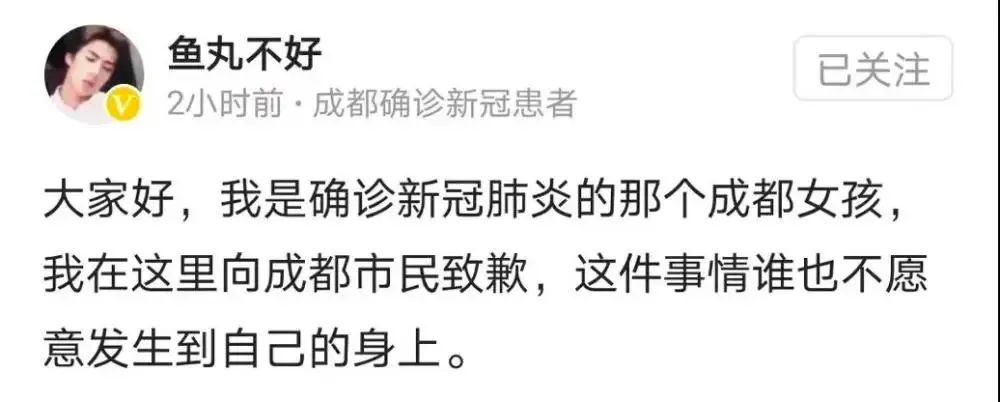
In an environment where a sick patient needs to apologize to the citizens, choosing to remain silent after being positive is undoubtedly a choice that conforms to the social survival strategy.
As ordinary people with limited power and narrow channels of expression, the public is not only afraid of the virus itself, but also the “social crisis” that comes with it – social death, social isolation, and social discrimination, all of which are psychological crises that any individual can hardly bear.
Eliminating shame is the only way for us to move towards the “post-epidemic era”.
(2)
In fact, not long ago, such a “sense of shame” was still common in the public’s psychological expectations.
Last month, a tragedy happened that left a deep impression on me. A lady committed suicide in a makeshift hospital.
Although it is not possible to simply regard being infected with COVID-19 and being forcibly isolated as the sole reason for her suicide, it undoubtedly exacerbated the lady’s inner crisis.
The report mentioned that she had told her relatives about her fear after being infected with COVID-19, and she said the day before her death:
“I don’t want to go back to my hometown for the New Year, I’m afraid of being gossiped about if I get infected with this virus.”
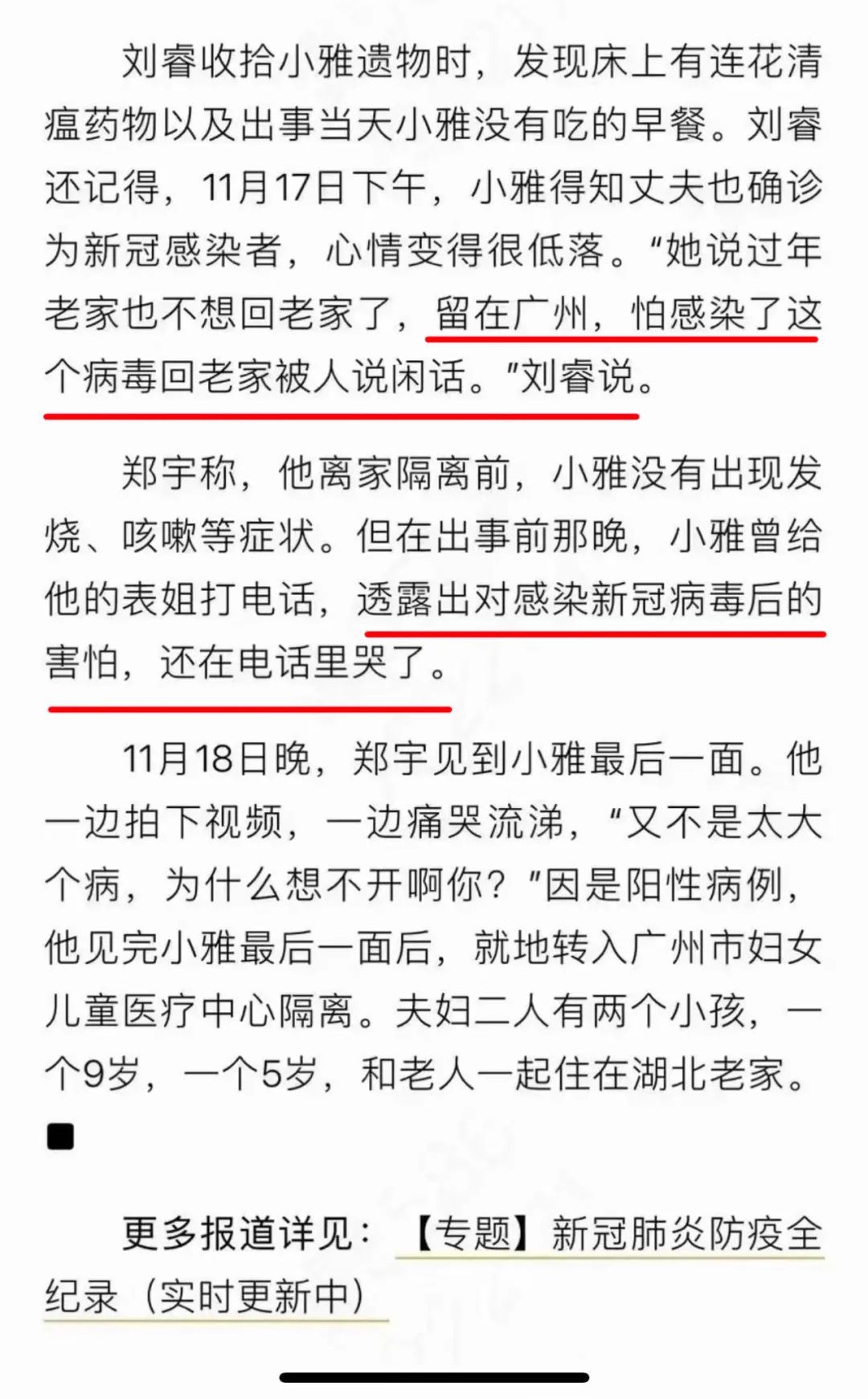
This report is very heartbreaking, and in addition to the heartache, there is a deeper regret and melancholy – we don’t know what kind of information led her to have such a fearful mentality towards COVID-19.
The fact we know is that Omicron’s toxicity is very low, even lower than that of the flu virus. Unfortunately, the fact we know does not mean it is a consensus for everyone.
Nowadays, people are already in the “algorithm era”, which on the one hand allows us to connect with people of the same kind more quickly and find people with the same interests. On the other hand, it is also subtly intensifying people’s division and solidifying people’s cognition.
Humans have never been as close to information as they are today, while also being confined within the walls that are within reach.
The opening of the Qatar World Cup, the stadium with 80,000 people was full, facing the fans who were not wearing masks and shouting and celebrating, there were many such questions in the Chinese comment area:
“Why aren’t you wearing masks?”

This actually represents two completely different questions. One is joking and self-deprecating, which represents not a question, but a shout: “Open your eyes and look at the world!”
The other is completely different, it really comes from a sincere confusion and cognitive subversion. The information they have been exposed to has been overwhelming in describing how the epidemic abroad is in dire straits and unbearable. How come it’s not like that in the lens?
A few days ago, I went back to my hometown and chatted with my relatives. When I mentioned that the kindergarten was closed again, I sighed and said that it would be better to open it as soon as possible, otherwise the children would soon go to elementary school, and would they always be taking online classes?
An elder corrected me very seriously: You can’t open it, if you open it, you’ll lose your life, and you’re still thinking about going to school? This disease can have serious sequelae, and now it’s called “little AIDS”…
This remark was echoed by many.
I later deliberately asked him, is this kind of day going to continue? How should it end?
The elder’s answer once again stunned me:
“Alas, it would be good if the Americans stopped. As long as the Americans stopped, the epidemic would end. The new variants now are all released by them…”
People in first-tier cities often have the illusion that the people around them and the cognitive level of their circle of friends represent the cognitive level of the vast majority of Chinese people – in fact, this is a big mistake. Beijing, Shanghai, Guangzhou, and Shenzhen add up to only a few million people.
In fact, you are the “minority” in that group.
By pointing this out, I don’t want to show off a kind of “cognitive superiority”, I just want to remind a reality that many people have ignored.
And we are all rooted in this “soil of reality”.
These days, when I browse my Moments, I often feel like a nurse in a makeshift hospital checking medical records. When friends, colleagues, and media teachers in Beijing are showing off their “two bars” in their Moments one after another, I am happy to see it.
Everyone shares two bars on social media and live streams the course of the disease, which is gradually becoming a “trend”. Frankly speaking, I think this is a “good phenomenon”.
Of course, it doesn’t mean that I hope everyone gets sick.
What I want to express is that when more and more friends share their experiences of being infected with the COVID-19 virus on social media, it can just heal a certain social crisis and invisibly dissolve the psychological “sense of shame” and fear associated with the previous label of “positive patients”.
Because the sharing of countless ordinary people can form a public atmosphere of “nothing more than that”, which, to a certain extent, can greatly alleviate the inner crisis of those who are still afraid of Omicron.
Even the name “little positive person”, which obviously has a discriminatory connotation, is also slowly dissolving under the self-exposure of more and more people. Its insulting smell begins to dissipate and gradually becomes a self-deprecating.
In essence, this is the demystification of the COVID-19 virus on the level of public opinion and social consensus.
We need such demystification, and we need to unite the consensus of the majority of people to cope with the next “infection peak”.
Financial tycoon Soros particularly advocates the “reflexivity” theory, and he became a billionaire in the capital market by using this theory.
The “reflexivity theory” can be summarized in one sentence: people’s expectations will lead reality to be interpreted according to expectations, and ultimately make expectations come true – even if the expectation itself is wrong, distorted, or even absurd.
Then, according to the “reflexivity” theory, if the public cannot face Omicron squarely, and talks about being positive with fear, trembling in the “sequelae fear” that is becoming more and more evil,
then the truly worrying crisis – the crowding out of medical resources – will definitely appear, and will continue to be a terrible vicious cycle.
These days, several pictures have been trending online, all of which show that beyond our cognitive boundaries, there is still a huge and vast world.
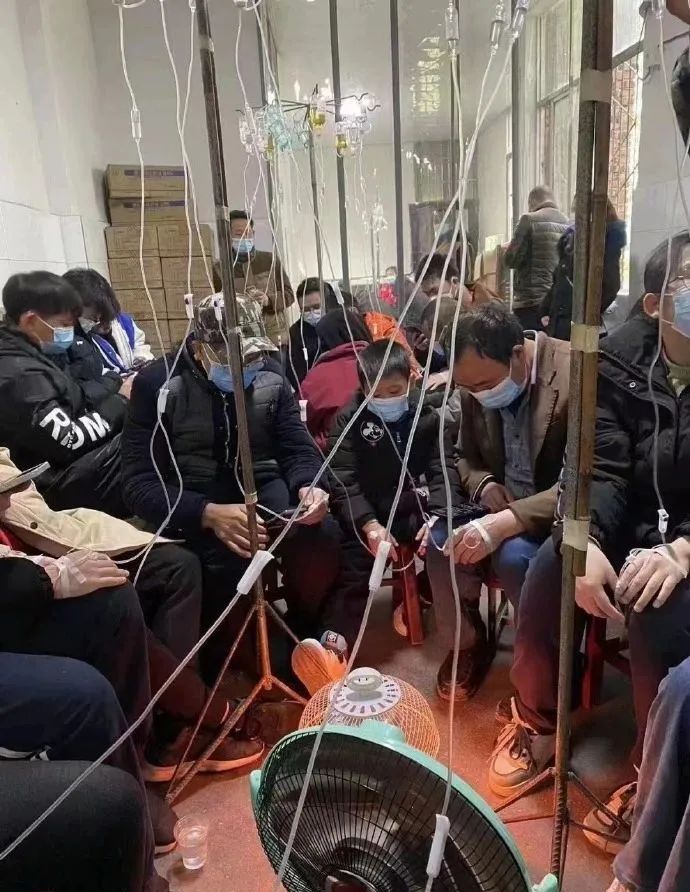
One is said to be a photo of a patient with a fever in a certain place “surrounding a fire to hang water”. And whether it is the response guidelines issued by the World Health Organization, or the COVID-19 medication guidelines issued by the National Health Commission and many top three hospitals in our country, they have never recommended that patients infected with Omicron be given intravenous fluids (according to the national conditions, these patients are likely to be given antibiotics).
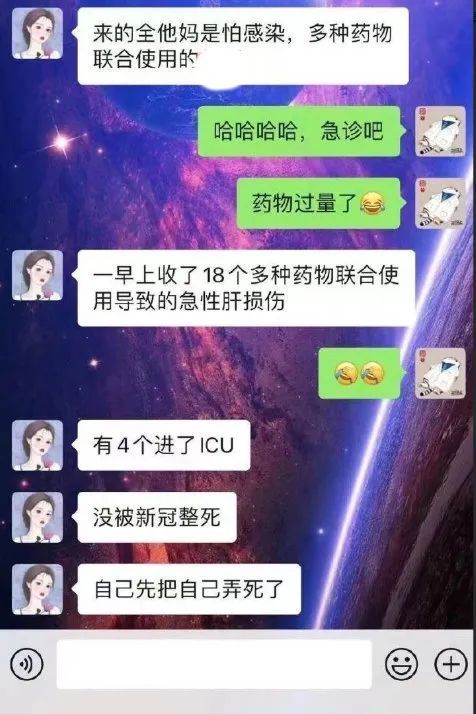
Another is a screenshot of a chat, showing that because many people are afraid of being infected, they take excessive doses of so-called “preventive drugs”, leading to acute liver damage.
Similar absurd examples are not new in the medical field. I have heard more than one doctor friend describe the same thing to me:
That is, many retired elderly people will try to get hospitalized in the hospital every winter, and ask for half a month of intravenous fluids, and many people are not sick at all – these elderly people just feel that diseases are frequent in winter, and I will come over and have two courses of intravenous fluids first, so that I can prevent them. It’s like before the virus launches an attack, I’ll put up a magic defense first.
From the doctor’s point of view, the reasons of these elderly people are particularly absurd.
But the reality we are in is: what you think is absurd is a consensus for others.
We must face the fact that outside our cognitive circle, there are still a great many people whose understanding of the COVID-19 virus is still at the stage of the original strains and the Delta strains, believing that it is a bad omen after being infected, and there are sequelae.
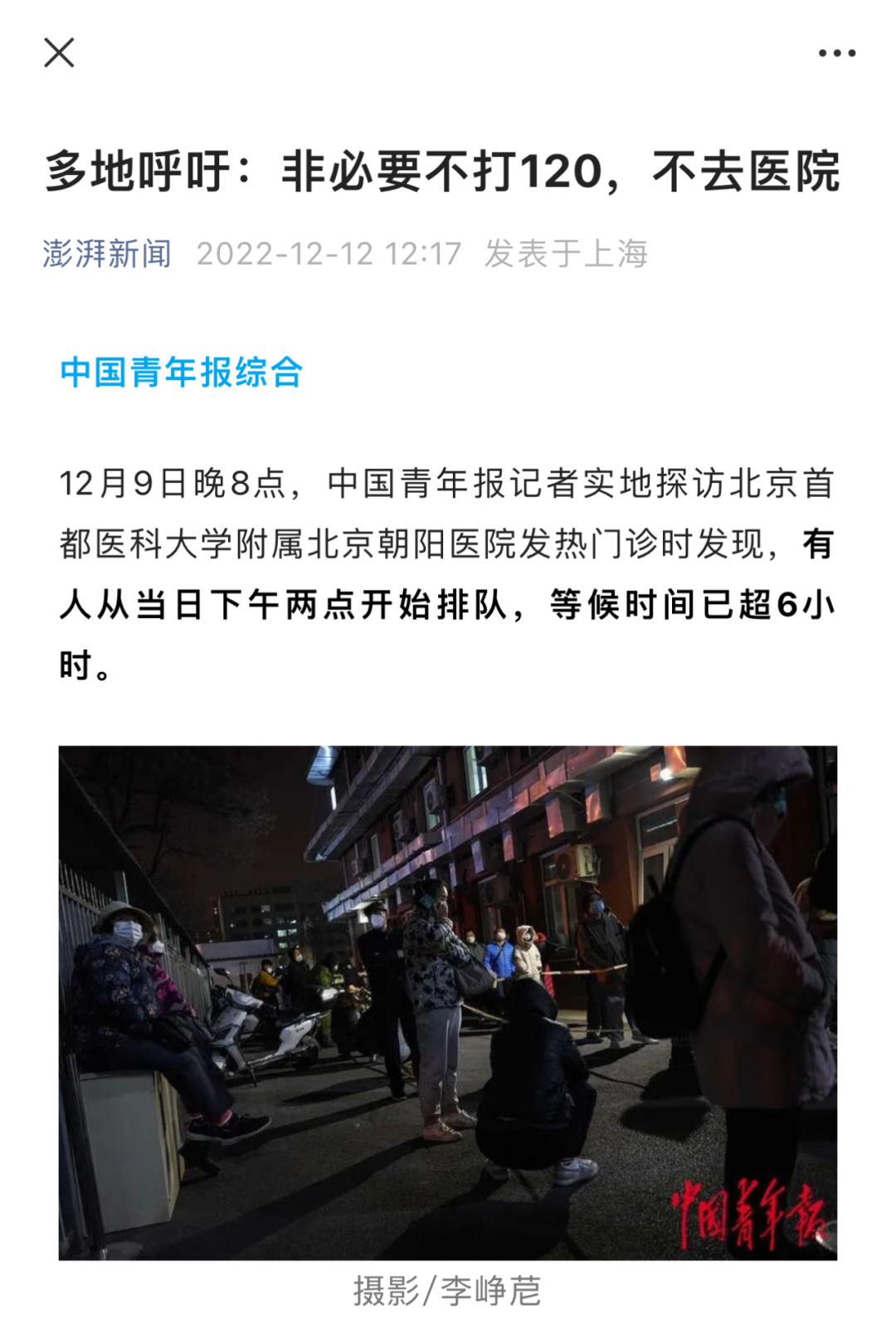
Many people have begun to call for everyone to leave the precious medical resources during the “infection peak” to infants, the elderly, and critically ill patients who really need them.
I think that only when the vast majority of people can face Omicron squarely, the vast majority of people believe that their immunity can overcome this self-limiting disease, and the vast majority of people believe that medical resources crowding out will not and should not happen – only then can we really avoid the real occurrence of medical resources crowding out.
Fear will infect fear. Similarly, courage will also support courage, and ideas will also influence ideas.
Overcoming fear is the only way for us to move towards the “post-epidemic era”.
(3)
“Always to comfort, often to help, sometimes to heal”.
All along, this sentence on the epitaph of Dr. E.L. Trudeau often appears in the sighs of doctors from different countries.
The reason why it can be passed down for a long time is, on the one hand, because this sentence shines with the humanistic care of doctors, and on the other hand, it says the limitations and helplessness of doctors in one sentence.
Coronary artery bypass grafting, organ transplantation, targeted drugs… Modern medicine is advancing by leaps and bounds, and it seems to be omnipotent. In fact, modern medicine has only just stepped into the door of the “medical universe”, and even this foot has not yet landed.
There are still too many diseases that cannot be cured, too many unknowns that remain to be solved, and even too many cures that we know nothing about.
In fact, from the perspective of species, bacteria and viruses are the true masters of the earth. They existed before humans and will also disappear after humans.
In the world that has already formed a global village, trying to “eliminate the virus” through a grand movement is an impossible task, just as it is impossible to eliminate flies and mosquitoes through a movement.
But not long ago, there were still a large number of people who distorted the central policy into “completely eliminating the virus”, and denounced all voices that tried to discuss as ulterior motives, and even attacked the experts and scholars who still explained the changes of the virus from a scientific perspective through cyber violence, and also invented insulting labels such as “lying bandits” to those with different opinions.
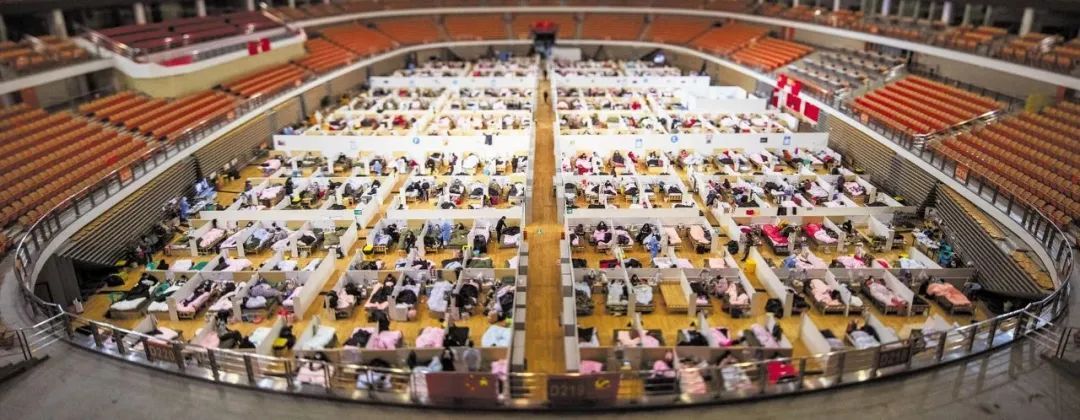
Therefore, the scientific issue of epidemic prevention was distorted into a “struggle of lines” and a “struggle of systems”. Many people viewed the epidemic prevention policy with a “struggle mentality” and further extremeized it into “we must be able to do what others cannot do”, and “only by completely eliminating the virus can we show our system advantages” and so on…
There are not only right and wrong in the world, and there are not only black and white in the world. In fact, this world has an infinitely broad “intermediate state”.

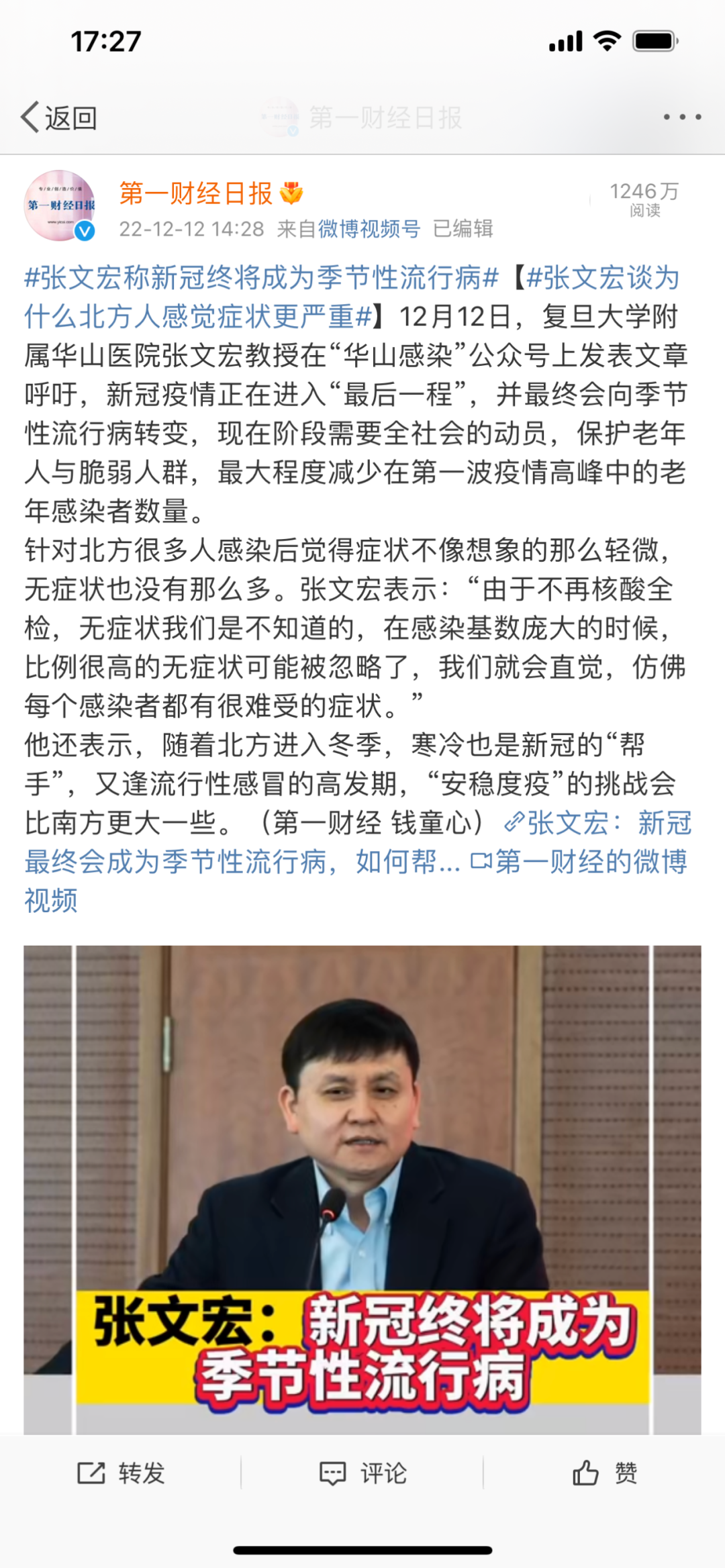
After a long time, we can finally see experts and scholars such as Zhang Wenhong and Zhong Nanshan speaking out intensively on the issue of epidemic prevention again in public opinion.
This means that the topic of epidemic prevention has finally been stripped of its political color and gradually returned to the scope of scientific, professional, and rational discussion.
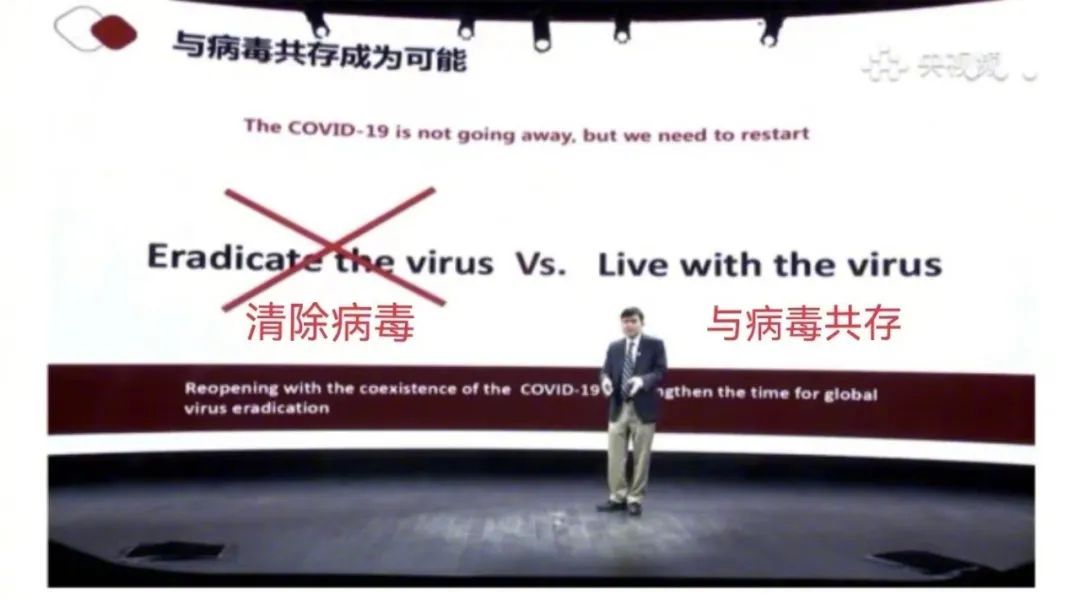
The previous silence of experts such as Zhang Wenhong is self-evident to those who know his previous experience. Dr. Zhang publicly mentioned long ago that we should be prepared for “coexisting with the virus”.
What was the result? Dr. Zhang was almost labeled as a “counter-revolutionary”, and countless people flocked to his Weibo to scold him as a “traitor and running dog” and “received black money from the Americans”, and was a “spokesperson for Western interests”.
And then, experts generally dare not speak out publicly anymore.
I think we should let science belong to science and politics belong to politics.
This should become the common sense of more people. What is common sense?

Common sense is 1+1=2, common sense is that gasoline cars cannot add diesel, even gasoline cars made in socialist countries are not allowed.
Returning to common sense is the only way for us to move towards the “post-epidemic era”.
Discover more from 自由档案馆
Subscribe to get the latest posts sent to your email.