This is a questioning of the current epidemic situation and policies. But before I start, I must make a lengthy preamble to clearly state my attitude to avoid misunderstanding.
The first preamble is that in August 2021, I wrote an article suggesting that we should start considering herd immunity. At that time, the virus had mutated to the Delta variant, but had not yet mutated to Omicron. However, at that time, the UK and the US had fully lifted the ban, and the herd immunity policy was working.
A typical case is the European Cup, where tens of thousands or even hundreds of thousands of fans gathered in the stadium, with little use of masks for protection, but did not cause strong consequences.
The results derived from the herd immunity policy of the UK and the US were later widely adopted by countries around the world. More than 100 countries in Europe, Australia, Singapore, Japan, and South Korea adopted the herd immunity policy one after another, and the world gradually entered an era of normalization. Vietnam, which adopted it later, did not cause social chaos, but instead, after opening up to society, gradually replaced many of China’s supply chain layouts and became the new economic darling.
Today, I am still in the “underworld”. But many of my family members have been infected, including my wife.
I have taken care of her for many days, and I haven’t even worn a mask. I don’t have any illusions, knowing that I will eventually get it sooner or later. Perhaps I am lucky enough to have no symptoms, which is really a great joy.
But in any case, and no matter what happens to me, I have no regrets and wholeheartedly support the implementation, and even the earlier implementation, of herd immunity.
As long as people are free, we can have many possibilities. We can seek medical treatment, we can escape from the world, we can hoard food and medicine to start a self-defense war, and of course we can self-isolate if we want, and hide for three or five years.
Freedom is the most precious thing in the final analysis. If I have made all the preparations and self-protection, and the god of death still wants to find me, then I have no regrets, life and death are destined, I want freedom. There are probably eleven thousand kinds of ways to die in a person’s life, and there will always be one that finds you, what is there to complain about?
The second preamble is that at the end of November, when the signs of opening up were very clear, I had a discussion with my colleagues at Iceberg, and the focus was on the word “opening up”. This is a very ambiguous word. Because agreeing to open up is, in fact, equivalent to agreeing to lockdown. If there are some criticisms of opening up at this time, it seems to be equivalent to agreeing to lockdown, or even to zeroing.
Therefore, we all believe that the so-called “opening up” is a very deceptive word, and it should not become a description of a policy. More accurately, it is a question of which epidemic prevention policy to adopt. Zeroing should never be a policy, lockdown should never be a means, and opening up should never be a choice.
From Wuhan, I have been a staunch opponent of lockdown. A responsible and capable structure, which is also subject to supervision, would never dare to put tens of millions of people in a state of helplessness, isolation, and self-reliance. Afterwards, the nationwide roulette-style lockdown, including super-large cities such as Shanghai, Chengdu, and Xi’an, medium-sized cities such as Yangzhou and Urumqi, and small cities such as Ruili, almost no city could escape, which is even more tragic than the past five thousand years and the vastness of thousands of miles.
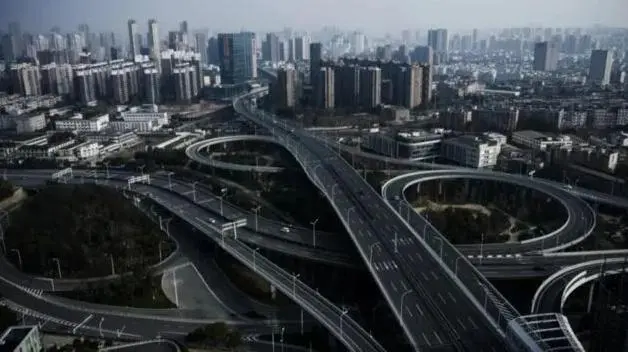
Therefore, all the lockdowns and semi-lockdowns are both lacking in legal basis and lack of rationality. Therefore, “opening up” is a deception, which to some extent conceals the evil nature of the lockdown policy.
The above two points, I want to clearly state an attitude: lockdown is unreasonable, and herd immunity is a policy that should have been implemented long ago.
1.
This winter is extremely harsh. In the past short month, we have heard endless bad news. In the news, the mother of Wang Jinsong, my favorite actor, the father of celebrity Fan Deng, the father-in-law of socialist economist Hu Angang, the designer Wu Guanying, and the former deputy editor-in-chief of China Youth Daily Zhou Zhichun… have all passed away.
What we see in the news is just a fine tip of the iceberg, and we don’t know how big the hidden part is under the iceberg.
Even if we look at this fine tip, the age range is very wide, there are centenarians, there are strong people in their forties and fifties, and there are also young people. Therefore, the virus does not only attack and kill a single group of people.
Because the standard for COVID-19 deaths has been temporarily revised, the number of people who actually died in this disaster will probably always remain a mystery. But the probability can still be calculated, but it is unlikely that such clear data will appear at the moment or in the short term, and it can only be left to virologists and future historians to study.
Many epidemic prevention enthusiasts will use the above data, facts, and situation to argue how correct zeroing and lockdown are, and how many Chinese people have been spared from the disaster by the so-called lockdown policy.
Stop. The above tragedies were not caused by how brilliant zeroing and lockdown were, but because the current policy is a policy of abandonment and indulgence. Strictly speaking, it is not even a policy, it is a mess.
First of all, stop playing word games, stop using the so-called number of articles, the so-called opening up, and other ambiguous words. Can we publicly and correctly use scientific terms such as “herd immunity” that conform to policy terminology?
So far, there is still no authoritative and public data to inform the public of the overall infection rate of society. NetEase once mentioned in an article that the National Health Commission mentioned in a telephone conference on the 21st that from December 1st to 20th, the cumulative number of infections nationwide was 248 million, and the cumulative infection rate of the population reached 17.56%. The infection rates in Beijing and Sichuan both exceeded 50%.
In a hospital in Shanghai where I went for medical treatment, the internal data told me by the doctor showed that the infection rate of all medical staff had exceeded 50% on the 22nd.
In a group of 15 people from all over the country where I am, 92% have been infected.
Everyone can estimate the number of infections by various means.
But the question is: why do we have to estimate it ourselves? Why can’t we make the infection data public and announce the implementation of the herd immunity policy?
The herd immunity policy is not a mess policy, it must have a clear plan and direction.
The current situation is obviously herd immunity without planning and management, and the whole country is scrambling to “reach the peak”. According to the monitoring of many media and data institutions, the number of infections is growing exponentially. But what is the purpose of reaching the peak? Under what management to reach the peak? What medical reserves are needed to reach the peak? What price will be paid to reach the peak? What accidents will occur during the peak, such as virus mutation, or as rumored in the past two days, the Delta variant still exists in the northern region?
It seems that no province or city, including China’s highest epidemic command agency, the Health Commission and CDC, has a clear goal or picture in mind.
Herd immunity has become a completely blind man touching the elephant process.
But the real herd immunity is obviously not such a disorderly, regardless of the cost, and scrambling to reach the peak. What proportion of the population needs to be infected to achieve the immune effect? What preparations and measures do the public need to make for herd immunity? What roles should the various levels of gov, public health departments, grassroots organizations, and communities play in the herd immunity policy? How should drugs be stored and distributed? How should high-risk groups be registered and protected? What different measures should be taken for different underlying diseases? How to prevent the virus from mutating again? How to distinguish between symptomatic and asymptomatic?
The preparations, emergency responses, and reserves required for herd immunity are extremely detailed and massive. Herd immunity is not to let the public fight with their bare hands, but to avoid a high rate of severe illness and mortality on the basis of sufficient drugs, medical care, and defense.
Publicly declaring the implementation of the herd immunity policy is both an announcement to the public and to enable the public to have a full and clear understanding, and to make full self-defense preparations while relying on national institutions.
The public is unconscious, unprepared, and ignorant; the once ubiquitous, arrogant, and arrogant “Big Whites” disappeared overnight, leaving the public with bare hands and the hospitals exhausted. Is this herd immunity, or is it a herd epidemic?
2.
This winter. This is winter.
In the past three years, we have been fully educated that winter is the time when the epidemic rebounds most violently.
But in late November, when winter had already begun, did we start to adopt the herd immunity policy?
I still insist on the rationality of the herd immunity policy. Summer is more reasonable than winter, which is a natural principle, and it is also a basic knowledge that we have learned in the three years of the epidemic.
But if the best time is missed, then entering herd immunity in winter is not unacceptable.
However, in the same vein, no matter when the herd immunity policy mode is entered, there must be sufficient preparations. And entering in winter, there must be more sufficient preparations.
So, the question is: why did we enter the herd immunity mode in November? What is the policy consideration behind it? What is the basis for making this decision? What preparations were made when making this decision? Were the medical institutions fully informed, trained, and supplemented? Are the drugs sufficient? Do high-risk groups have emergency mechanisms?
The guesses are varied. For example, before November, there had actually been a relatively large area of infection. For example, the results of nucleic acid tests were largely faked.
These may be guesses, or they may be rumors, and I don’t want to believe any of them.
But the answer I still cannot get is: why? Don’t we deserve an explanation?
Even if there is no explanation, I still accept it. But can the following facts be given a reasonable response:
The number of infections in the north is higher than in the south. Should the north receive sufficient medical resource support? The symptoms in the north are more severe than in the south. Can the authorities provide more sufficient guidance to inform the public in the north how to deal with more severe symptoms? What symptoms should be resolved in what way?
I have seen on many self-media platforms that funeral homes, including those in Beijing, are already operating at full capacity and the prices are high. Should the authorities also respond to this and find a way to solve it?
In the north, and in those provinces and municipalities with higher infection rates, can there be sufficient guidance to inform the public how to avoid self-infection as much as possible when taking care of infected family members? How can people like me, who have not been infected for many days after their family members were infected, avoid infection, or if it is unavoidable, is it possible to have asymptomatic infections? Can someone help me so that I can have sufficient self-protection and self-confirmation?
And even in the south, how should children and the elderly, who are easily infected, be protected? How should high-risk elderly people and patients with underlying diseases be protected as much as possible? What symptoms? What symptoms can be handled on their own, and what symptoms should be sent to the hospital immediately?
It is rumored that the symptoms of the elderly are not necessarily the same as those of the young and strong, and they may have a fever. Or some symptoms may overlap with underlying diseases. How to distinguish? Can someone help to distinguish?
All of these are related to winter. Why did we enter winter, only to feel the endless coldness of winter and the rampant spread of herd infection, and not feel any hope of immunity?
This winter, how does the herd become immune?
3.
I was ridiculed by my colleagues, who said I was a keyboard warrior.
I really feel ashamed. I started to propose herd immunity in August 2021, but when herd immunity really started, I was almost unprepared.
My vigilant wife prepared ibuprofen and an oximeter. But that’s all. With the help of many people, I finally got ibuprofen and paracetamol. But when we discussed in the group last night, someone else suggested that we need electrolyte water, and I was dumbfounded again – because I hadn’t prepared it either.
Dr. Miao Xiaohui said that after the epidemic was opened up, he shouted loudly: Calm down, calm down, how can antipyretic and analgesic drugs be missing? “As a result, as mature a problem as ‘how can air be missing’, it was unexpectedly and really maturely missing.”
He is a doctor. He is short of medicine.
I want to ask: why, after the decision to implement herd immunity, is there no preparation at all?
In July 2021, Zhang Wenhong was concerned about three issues: vaccination needs to be popularized, because although (the Delta variant at the time) could penetrate the vaccine, the vaccine played a full role in preventing severe illness and death. The elderly should be vaccinated as much as possible.
ICUs need to be built in large numbers, because even in Shanghai, ICU beds are in short supply.
Personal protection is also needed.
But after nearly a year and a half, the vaccination rate has not made a qualitative breakthrough compared to that time. Especially in the elderly population, there has not been sufficient vaccination.
According to the more authoritative medical media in China, “Medical World”, from March 2022 to mid-December, the full vaccination rate of the population over 60 years old in China only increased from 80.27% to 86.6%; the full vaccination rate of the booster shot for people over 80 years old was only 66.4%, and 15.153 million people completed the booster immunization, which is only 40%.
There are two different sets of data on ICU beds. In the general news reports, China had a total of 67,000 ICU beds in 2021, with 4.8 ICU beds per 10,000 people, while the United States had 34 beds per 10,000 people and Germany had 29.2 beds per 10,000 people. The report in the medical community said that 3,624 beds were added in 2021 compared to the previous year.
On November 17, Guo Yanhong, Director of the Emergency Department of the National Health Commission, proposed “to require ICU beds to reach 10% of the total number of beds”. What is the concept? That is to require the total number of ICU beds in the country to reach 143,000, with a shortfall of nearly 80,000, more than half.
But on December 9, the Joint Prevention and Control Mechanism of the State Council held a press conference, and Jiao Yahui, Director of the Medical Administration Department of the National Health Commission, said that currently, the total number of critical care medical beds in the country is 138,100, of which the critical care medical beds in tertiary medical institutions are 106,500. The level of critical care medical beds is close to 10 beds/10,000 people.
As a medical layman, I don’t know where the difference is between Director Guo and Director Jiao, and what the word games are in it. Judging from my instinct, in a year, when the whole country was in the heat of lockdown and nucleic acid testing, the ICU beds in the hospital doubled, which is simply a fantasy.
And on December 1, the Wall Street Journal reported that with more resources being invested in epidemic prevention in the past two years, the construction speed of China’s medical resources has slowed down since 2021. The growth rate of the number of intensive care beds slowed from nearly 9% the previous year to 5.8% in 2021.
Interestingly, in April this year, an article on the Observer.com opposing China’s “lying flat” made a judgment on the scarcity of China’s ICUs, “150 million people will not be able to be hospitalized after lying flat, and 3.5 people will compete for one ICU”.
The article clearly calculated:
“The proportion of ICU occupancy by critically ill COVID-19 patients during the peak of the epidemic in the United States is about 30.4%. According to this calculation, considering that the ICU density per 10,000 people in the United States is about 9 times that of China, if the ratio of cases in China and the United States is roughly the same, the occupancy rate of ICU demand in China during the Omicron peak will be 273.6%, so the shortage of ICU beds in China is about 173.6%. Considering that the median utilization rate of ICU in China is 75%, the shortage of ICU beds is 94,500, which is about 2.49 times the 38,000 ICU beds in China – that is to say, about every 3.5 patients compete for one ICU bed every day.
By this calculation, during the two-month Omicron peak period, according to the same number of days in ICU for patients admitted to ICU and the number of days of hospitalization for COVID-19 patients, the demand for 761,500 person-times in one epidemic wave cannot be met, and the ICU shortage for the whole year’s 3 waves of epidemics is 2,284,600 person-times. Considering the intermediate value of 20% of the mortality rate of more than 5 million ICU patients in the United States each year, the need to enter the ICU will not increase the mortality rate by a factor of two, which is 40% mortality, and the number of patients who will die in China due to medical squeeze and cannot enter the ICU will exceed 913,800 person-times.”
In short, the number of ICU beds has not increased on a large scale in three years, and even the growth rate decreased last year, which cannot meet the needs of this wave of herd immunity.
If vaccines and ICUs are a long-term project that needs to be prepared, then the most peculiar, but also the most common thing is the overall shortage of common cold and fever medicines in daily life.
The lack of antipyretic and analgesic drugs mentioned by Dr. Miao Xiaohui is the strange pain that most Chinese people are currently experiencing. China is the largest producer of antipyretic drugs, with ibuprofen accounting for one-third of the global output, and paracetamol accounting for 70% of the global output.
And now, from the north to the south, from the most resource-rich Beijing and Shanghai, to my hometown’s small county town, antipyretic drugs are being frantically snapped up.
This article in “Daily People”, “Why can’t we buy antipyretic drugs” clearly explains the whole process of why we can’t buy antipyretic drugs in the world’s largest antipyretic drug producing country.
The most important conclusion is very clear: the sudden shift, whether in production, circulation, or sales, has resulted in a complete system disorder.
It points to only one problem: no preparation.
I live in Shanghai, and my friends live in developed cities like Beijing, Guangzhou, Chengdu, and Hangzhou. We still have some resources, some connections, and some channels. Although it is difficult, we can still find ways to survive. But in the countryside, especially in the poor countryside, in the remote villages of Sichuan, Gansu, Guizhou, and Yunnan, what will happen if a large-scale infection occurs?
The medicines in rural hospitals are even more scarce, the manpower is even more tight, and the knowledge is even more lacking. There have been some reports, inch by inch fever, relying on intravenous infusion treatment… It’s heartbreaking to watch.
In the past few decades, due to urbanization and industrialization, a large number of young and middle-aged people in the countryside have moved to the cities. The hollowing out of the countryside does not mean that there are no people in the countryside, but that a large number of the people living in the countryside are the elderly and left-behind children. They are precisely the people who are most vulnerable in this wave of herd immunity.
The cities, which are too busy to take care of themselves, cannot see the countryside. But in this wave of epidemic impact that will last for several months, what will happen in the countryside? (Refer to Zhang Feng’s article, a small village in Henan, silently survived the “epidemic”)
I don’t know. Because the information is too scarce. What floods my circle of friends are all kinds of reactions after people have been infected, but I basically can’t see the countryside.
In the winter of 2019, the first case of COVID-19 infection appeared in Wuhan. In the winter of 2022, we finally entered herd immunity. What have we learned in the past three years?
The vaccine is penetrated, the ICU is still scarce, antipyretic drugs cannot be bought, and the countryside cannot be seen.
Three years, in front of the new coronavirus, we are still a naked child, a body without preparation, a patient without medicine. Is it a natural disaster? Or a man-made disaster?
4.
I frequently see a picture in my circle of friends: the efficiency of different vaccines in preventing infection announced by Hong Kong. Previously, Hong Kong only announced the efficiency against severe COVID-19/death, but now the data is comprehensive.
This data actually comes from a research paper published by the Faculty of Medicine of the University of Hong Kong in the international authoritative medical journal “The Lancet” in October 2022, comparing the Comirnaty mRNA vaccine and the inactivated vaccine of Sinovac.
I can’t understand the professional stuff, but what I see is the conclusion: two doses of vaccine are no longer enough to prevent Omicron, and the prevention efficiency of three doses of Sinovac in people under 60 years old is 51%; three doses of Comirnaty have an efficiency of over 70% in all age groups.
Adding the time factor, the more comprehensive data is that three doses of Comirnaty dropped from 89% 14 days after the injection to 77% six months later, which is still very effective protection. And three doses of Sinovac dropped from 36% 14 days after the injection to 8% six months later, which has basically lost its protective effect.
So, it is already very clear which vaccine is more useful, right? This is not a rumor fabricated by the American imperialism or any other foreign forces, right? This is the research done by the scientific and technological workers of our motherland, Hong Kong.
On December 22, 11,500 doses of Comirnaty vaccine, jointly developed by Germany’s BioNTech and China’s Fosun Group, arrived in Beijing and are expected to be injected into German citizens in China at the end of the year.
Vaccines are a sensitive story. In 2020, I hosted a news live broadcast program, and all discussions about vaccines were rejected by the platform.
There are two recent news about vaccines.
On December 20, at a press conference at the US State Department, a reporter asked the spokesman Price if there was any intention to provide vaccines to China. Price said very directly that we plan to help China control the epidemic as much as we can, which is in the interests of the international community. The United States is the largest donor of COVID-19 vaccines in the world.
At the next day’s regular press conference of the Chinese Ministry of Foreign Affairs, spokesperson Mao Ning said that the vaccination of booster shots (the third and fourth doses) is being promoted in an orderly manner, and the supply of medicines and test kits can generally meet the demand. The US aid was rejected.
The German magazine “Der Spiegel” reported on the 21st that German President Steinmeier said on the 20th that he could immediately provide hundreds of millions of doses of BioNTech vaccine (that is, Comirnaty) to China, and the German Federal Epidemic Prevention Authority is also willing to help. However, Beijing rejected Germany’s proposal.
Zeng Guang, a member of the high-level expert group of the National Health Commission and the former chief scientist of epidemiology at the Chinese Center for Disease Control and Prevention, said at a meeting on December 22, “Whether you have had two or three doses before, you can start the fourth dose. The fourth dose must change the vaccine and cannot use inactivated vaccines anymore.”
The efficiency of inactivated vaccines has been fully demonstrated in the fight against the epidemic in Hong Kong. It lags far behind in preventing infection, whether compared to the US Pfizer vaccine or the German Comirnaty vaccine.
In the previous section, it was mentioned that the vaccination rate for the elderly in China is actually very insufficient. If they could be vaccinated with the Pfizer vaccine or the BioNTech vaccine, their chances of infection would be very low within 6 months. Isn’t this a great opportunity to save a large number of elderly people?
In 2020, China provided a large amount of aid in the form of masks, nucleic acid testing, and other medical equipment to many countries, including Japan, Italy, and Iran. This left behind the good story of “Though mountains and rivers apart, the wind and moon are the same”. The gratitude of the recipient countries towards China was overflowing, and isn’t this a beautiful moment to enhance national relations?
Why can we aid other countries, but other countries cannot aid China? In natural disasters such as earthquakes, typhoons, and tsunamis, regardless of the country, including the United States, Germany, Japan, or China, they have gratefully accepted aid from other countries. Is there any difference in this matter of the pandemic?
The United States plus Germany, if we take the initiative, should be able to donate a dose of mRNA vaccine to every Chinese person. Then, based on a 77% infection prevention rate, how many infections would be reduced? Then, whether it’s ICU, or fever medicine, or rural medical care, many of the current tense medical pressures will be greatly relieved. Why not? What are we desperately defending? Isn’t it about human life, isn’t it about the people first?
5.
These days, I have mobilized many connections, found many people, and joined many groups, hoping to buy a box of Paxlovid, an antiviral drug for COVID-19, produced by the American pharmaceutical company Pfizer.
As always, I am a medical layman, and I shouldn’t be trying to get this medicine at all. Because I don’t know its pharmacological effects, when it should be used, or what it does.
This is the only thing I can do in desperation, or for comfort. My father, who is over 80 years old, lives in the countryside, and the medical conditions are poor. If he is infected, I am sure he will not have the opportunity to use this antiviral drug.
My plan is: if he is infected, I will take the medicine to see a doctor.
This medicine is very expensive and very difficult to buy. When I first saw information about this medicine, I immediately asked a doctor at United Family Hospital. He said that the hospital only has a small amount of stock and only provides it to patients with severe symptoms.
An article written by a doctor in Beijing, “From Pfizer’s Paxlovid to the Class Mobility of High-End Medical Care”, confirmed this statement. “Given the current medical squeeze… the more serious the underlying disease, the older the patient, the higher the possibility of buying the antiviral drug… Paxlovid is a dream that needs to be fought for, but is out of reach.”
That was in Beijing, the place with the richest medical resources in all of China. If it’s so competitive in Beijing, then in a township health center below a county, do you think there’s a chance to get this medicine?
In this matter, I have no world, no country in my eyes, only my old father. As long as I can get the medicine, I can be a despicable person. Moreover, I just want to buy it.
I have read many things, and this medicine is best used within five days of infection, and it is more effective for moderate cases.
There are many different opinions about this medicine. One says it’s distributed by Sinopharm, another says it’s distributed by Fosun Pharma, and another, which is now more widely accepted, is that it’s distributed by China National Pharmaceutical Group.
But regardless of who distributes it, the first thing that can be confirmed is: the distributor is a state-owned company. The second thing that can be confirmed is: the domestic supply is seriously insufficient. The third thing that can be confirmed is: the demand is very high.
In one group, I have seen at least five or six such messages: elderly family members with serious underlying diseases have been diagnosed with COVID-19 and have no medicine in the hospital. Therefore, the patients’ families are begging everywhere to find this medicine.
Another doctor in Beijing wrote in a post: They overcame all difficulties to import a batch of Paxlovid and saved many lives.
What do you want me to believe? I can only overcome all difficulties to get the medicine. What if I can’t get it then?
But I am very puzzled. If doctors all believe that this is an effective medicine, and the patients’ families are trying their best to find this medicine, shouldn’t all hospitals be equipped with this medicine?
We don’t know how many people are truly infected, how many areas, how many cities, how many towns, how many villages have been covered, but shouldn’t such life-saving medicine, since it has been produced, be distributed as much as possible?
Why can only China National Pharmaceutical Group distribute it? Why can’t so many pharmaceutical companies distribute it? There are so many pharmaceutical factories in China, why can’t they get authorization from Pfizer to produce it? Chinese pharmaceutical factories have such strong imitation capabilities, why can’t they imitate it?
Paxlovid was approved by the US FDA on November 22, 2021, as a special drug for the clinical treatment of COVID-19. It has been more than a year, why doesn’t China have enough reserves, why haven’t pharmaceutical factories obtained authorization, and why haven’t generic drugs been produced?
India already has a generic version, and Japan has one too.
On the 25th, it was reported that Paxlovid will be distributed in community health service centers in Beijing. This is undoubtedly good news. If community health centers can obtain this medicine, it means that mainstream hospitals can obtain it more sufficiently, and then, of course, many lives can be rescued in time.
However, the news is only limited to the “capital of the first”, the “imperial city”. Shanghai hasn’t heard of it, Chengdu hasn’t heard of it, and our small village in Fujian hasn’t heard of it either.
How much is there nationwide?
The old question comes again, what have we done in the three years of COVID? Why, to this day, don’t we even have clinical drugs?
6.
Last week, I participated in a debate.
The topic was to refute a criticism by the president of Capital Medical University, Rao Yi, against Zhang Wenhong.
In the following days, articles supporting Zhang Wenhong and supporting Rao Yi emerged one after another, almost obliterating other discussions about the epidemic.
Speaking out was a last resort, because this was a resurgence of the lockdown faction. But I must admit that such a debate is not pleasant. Such a war of words will make people deviate from the key issues of herd immunity, thereby ignoring the real problems.
It is undeniable that with the advancement of the breadth and depth of herd immunity, even some of the previous “open-up factions” have begun to waver. And the lockdown faction is even more aggressive, wantonly attacking the “open-up policy”, which is the herd immunity policy that I have always emphasized.
The focus of the attacks is nothing more than a few levels:
The number of deaths in society is constantly rising. Even without accurate data, the number of celebrities who have passed away in the news is enough to be shocking. On the 25th, Li Ziliu, the former mayor of Guangzhou, who was well-regarded when he worked in Guangzhou, passed away. It is obvious that some high-level officials have also fallen victim, not to mention ordinary people.
During the lockdown, many statements, including Zhang Wenhong’s statements, also mentioned that the harm of Omicron is “just a bad cold”. But many people have experienced symptoms including fever, body aches, throat symptoms, loss of taste and smell, etc., which are much more severe than a cold.
In the research of Zhang Wenhong, Jin Dongyan, and some other scholars, the number of asymptomatic infections is very high, even up to 90% in some studies. But from the perspective of online sharing and general perception, it seems that most people have symptoms. “Asymptomatic infections have disappeared”.
On these issues, there is first a premise that has already changed: the number of infections.
According to the data from the World Health Organization, the confirmed cases in the United States in the past three years have been 99 million, accounting for 29% of the total population. It should be noted that even during the period of laissez-faire policies during the Trump presidency, the states all implemented relatively strict management policies, not a flat-out herd immunity. On this basis, the death rate in the United States is as high as 1.08 million. Of course, there are several different versions of how many people in the United States have had COVID, with the Harvard version saying 94%.
So how many people will be infected in China under the current complete opening? So far, there is no clear official estimate or statistics. Zhong Nanshan’s estimate is that 90% will be infected with Omicron; Feng Zijian, the former deputy director of the China CDC and a member of the national COVID joint control expert group, predicted that the first wave will infect 60%, and eventually, eight or nine out of ten people will be infected; Lu Mengji, a virologist at the University Hospital Essen in Germany, predicted that one-third of the population will be infected around the Spring Festival, while Wu Zunyou’s prediction is that the infection rate will be 10-30% around the Spring Festival.
With the lowest prediction, the number of infections around the Spring Festival is 140 million. With a 60% prediction, it is 840 million, and with an 80% calculation, it exceeds 1 billion. Under such a large base number, everything will change.
I reiterate, I am almost a medical layman, so I cannot conduct a scientific analysis. But I am an educated rationalist, so starting from common sense, I can roughly infer some facts based on the number and proportion of infections.
How big is the death toll? If, according to the aforementioned 248 million infections, then according to Zhang Wenhong’s calculation, the death rate in Singapore is lower than the flu death rate of 0.06%, then the death toll has also reached nearly 150,000; even according to the lowest number of 140 million infections, the death toll is also 80,000. Such a huge number of concentrated deaths, which are reported in the news, is naturally very considerable.
Why do people around me feel like they all have symptoms, and they are relatively severe? This is a very typical survivor bias. In my circle of friends, the number of people who recovered in three to five days is about the same as those who delayed for ten days to two weeks. The number of people with mild symptoms is about the same as those with more severe symptoms. As time goes on, fewer people with mild symptoms speak out, so what is generally left are those with more severe symptoms. The desire to speak out for those with a sore throat like a blade and a nose like cement is stronger, or is the desire to speak out for those who sleep and nothing happens stronger?
Asymptomatic people have disappeared? This is even more absurd. Asymptomatic people can’t be found in the first place. Because of the cancellation of nucleic acid tests and the difficulty of obtaining antigen test kits, asymptomatic people don’t even know they are infected, so what’s there to find? Even if asymptomatic people live around you, you don’t even know.
Although these are common sense, the more core problem lies in: when the whole society has abandoned the statistics of infected people, and the official has not released accurate data statistics, we have no way of grasping the true data of infected people. All the death toll, the proportion of people with symptoms, the proportion of asymptomatic people, have fundamentally lost the basis for judgment. People can only rely on feeling to judge the number of deaths, the proportion of people with severe symptoms, and the existence of asymptomatic people. Are we going back to the primitive age of data, making decisions based on feelings?
On this basis, all arguments have lost their fundamental meaning.
I think the most regrettable problem is precisely: due to the sudden, unprepared, and lack of experience-supported implementation of herd immunity, in fact, the entire team of experts can do extremely large things, the details are extremely complex, the forces to be mobilized are extremely huge, and the levels that need to be united are extremely extensive.
Can the implementation of mRNA vaccine donations be promoted and quickly popularized among the elderly? Can we accelerate, or even request international assistance, and build ICUs at the speed of building makeshift hospitals? Can we quickly introduce Paxlovid and allow all patients with severe symptoms to use it in a timely and sufficient manner? Or can we accelerate the production of generic drugs? Can we distribute ibuprofen and paracetamol to everyone, so that every infected person has medicine to use? Can we effectively allocate medical resources to prevent rural areas from falling into an endless state of darkness? Can we promote every province and city to release true and effective data on infected people, so that the public has a true understanding of their own situation? Can we mobilize volunteers, including the ubiquitous Big Whites at the time, to conduct real-time monitoring and joint prevention and control of high-risk groups, so that they can be rescued in time once they are found?
Whether it’s Rao Yi, Wu Zunyou, Liang Wannian, or Zhang Wenhong, they are all people with influence, strength, and ability in this society. On all the above issues, they can influence decisions, at least they can influence local decisions, so that the whole society is less impacted during the process of herd immunity, even if they can reduce the casualties of a hundred people, a thousand people, reduce the infections of 1 million, 10 million, this is a huge contribution to society.
But Rao Yi spent a lot of time writing and arguing with others, attacking Zhang Wenhong. The Internet is full of attacks on Zhang Wenhong, questioning the open-up policy, and detailed descriptions of various symptoms. But the real problem is how to reduce infections, reduce critical illness, and reduce infections.
What are everyone doing when the country is in trouble?
7.
Chinese people really like to quote a sentence from the British Romantic poet Shelley: If winter comes, can spring be far behind?
This is an extremely cruel, even inhumane language in this winter. Because on the road of rough herd immunity, it is the last winter for many people, and they will never see spring.
And this was a price that didn’t need to be paid.
After three years, we finally came to the correct conclusion: herd immunity and long-term coexistence with the virus are our common destination in the face of COVID.
This is also a basic common sense: locking down the city cannot kill the virus, and nucleic acid cannot cure COVID. The prescriptions prescribed by the epidemic prevention enthusiasts and lockdown enthusiasts have lasted for three years, without eliminating the virus, but clearing the society.
Power is increasingly out of control, society is increasingly declining, and people’s livelihood is increasingly difficult. This is the overall cost of the lockdown.
Zhang Wenhong said that we are about to get out of this epidemic, and this trend will not be reversed. This is a prediction, and it is also an inevitability, because the whole society and our lives can no longer afford the cost of strict lockdowns.
But this process is very difficult and dangerous. The more meticulous the plan, the richer the resources, the more help we get, the smaller the cost the society pays. This is like the same principle as our individual recovery. We don’t need amputation to cure a scratch. To get through this difficult time with the smallest cost truly demonstrates the governance ability of a society.
The prescription has already been there.
To prevent more people from being infected, we need vaccines. mRNA vaccines, including Pfizer and BioNTech, are proven to be effective. Take them and use them for the elderly.
Paxlovid can treat patients with severe symptoms. Take it and use it for everyone in need.
Ibuprofen and paracetamol are distributed free to everyone, so that people with strong immunity can easily get through it by relying on these cheap basic medicines.
Mobilize the forces of society and the community to effectively monitor and care for high-risk groups in order to reduce their mortality.
Mobilize the forces of the world to quickly build ICUs so that patients with severe symptoms can have a chance to live.
Those experts, doctors, and nurses are much more professional than me, and what I believe is that as long as the decisions and policies are made, those who have saved us countless times, saved our society, will be willing to once again, selflessly dedicate their wisdom, time, and sweat, and once again act as our angels, our warriors, our saviors, and let us be spared from the tsunami-like virus wave.
Can we have such luck?
Discover more from 自由档案馆
Subscribe to get the latest posts sent to your email.