“Zhang Xuefeng is the first person I’ve seen who lives by telling the truth.” This was one of the most liked comments on Zhihu on the day of his death. And at the memorial service in Suzhou, there was even a scene of “a long street of ten miles.”
In the accounts of his supporters, Zhang Xuefeng’s life can almost be written as a saint’s biography: he came out of a national-level impoverished county in Heilongjiang, and when he filled out his college application, he thought that “water supply and drainage” was just clearing the sewers, and he personally suffered from the lack of information. After that, he used plain language to pierce the information barriers of college enrollment, and pointed out a clear path for millions of families who were equally confused. He gave eight lectures a day, and slept less than four hours a day; in 2023, he was forcibly admitted to the hospital due to overwork, and he still did not slow down after being discharged from the hospital. He mentioned his death more than once—”When I die, there will definitely be a hot search on Weibo called ‘Zhang Xuefeng is dead'”, and his epitaph has long been thought of: “Life is so fun, I’ll come again in my next life.” These details were pieced together by supporters into a story of a martyr who knew he was burning out, but still chose to continue burning.
For this reason, criticizing Zhang Xuefeng has, in a sense, become a morally questionable thing—as if it is equivalent to betraying the “ordinary people” in a broad sense. In 2023, the “China Education Daily” under the Ministry of Education criticized him without naming him, questioning “Should children from ordinary families only choose professions that can provide food?” The Weibo comment section immediately turned around and mocked: “Talking without back pain.”
But critics see another picture: Zhang Xuefeng is not bridging the information gap, but reducing university education to vocational training, and measuring all majors with a single yardstick of “employment” and “salary”.
“If my child insists on studying journalism, I will definitely knock him out.”
“All liberal arts are service industries, one word: lick.”
These expressions constitute a set of stable value propositions. And behind this set of propositions, a considerable commercial system is operating: In 2024, “Fengxue Weilai”‘s revenue exceeded 800 million yuan; the “Dream Card” and “Dream Come True Card” for filling out volunteer applications are priced between 13,000 and 19,000 yuan; the single video advertising price is 250,000 yuan, and the offline appearance fee is 400,000 yuan/hour; he has 11 affiliated companies under his name, and his business spans education, culture and tourism, live streaming with goods, and even venture capital. A study by East China Normal University showed that in 2023, after Zhang Xuefeng publicly advised against journalism, the average admission ranking of the major in each province fell by about 15%. He is not only describing reality, but also rewriting reality.
Supporters do not agree with this accusation. They insist that Zhang Xuefeng is more “down-to-earth”: when journalism professors talk about ideals and academics, have they really faced the fear of “not being able to turn over” for families at the bottom? Scholars in the ivory tower criticize a grassroots hero who points the way for the poor, which itself carries arrogance. In contrast, critics believe that Zhang Xuefeng compresses complex educational choices into a binary judgment of “useful/useless”, drives decisions by selling fear and anxiety, and ultimately the biggest beneficiary is not the families at the bottom, but his business with an annual income of hundreds of millions.
Around Zhang Xuefeng, there has always been fierce controversy, both before and after his death. His death is a tragedy for his family, friends, employees and supporters; and beyond the simple human ethics of “the dead are the greatest”, those who truly care about themselves and society still need to think more.
The reason why the controversy is difficult to dissipate is because it touches on a deeper question: what do this generation of Chinese people believe in? Zhang Xuefeng is not just providing information, he is also constructing a whole set of narratives—thinking may have to start from this set of narratives.
By | Valley Rain
Editor | Yang Shao
Zhang Xuefeng’s Narrative
“If you don’t have a mine at home, do you dare to choose liberal arts?”
“If you empty your family’s savings to support you in college, and you can’t find a job after graduation, who do you owe?”
In thousands of live broadcasts, these high-frequency parallel sentences, by forcibly binding the filling of a college entrance examination volunteer with “family bankruptcy” and “parents’ life and death”, Zhang Xuefeng successfully awakened the deepest and most instinctive fear in the hearts of vulnerable groups.
The story he told to millions of families often begins with a question: who are you. In his narrative, children from ordinary families are in an extremely fragile situation, with almost no room for mistakes. “Children from ordinary families have no right to talk about interests. Your interest should be to survive first.” “One wrong step may lead to a series of wrong steps, and the whole family will suffer.” He divides choices into “I want” and “I have to”, and clearly points out that most people can only choose the latter. Interests and ideals are postponed, or even regarded as a luxury exclusive to the wealthy class.
Once this premise is accepted, the logic behind it will become natural—if you admit that you cannot afford to make mistakes, then any choice that deviates from the “safe path” will seem too risky. And the questioning of this utilitarianism is also easily understood as “why not eat meat porridge”. “Fragility” is Zhang Xuefeng’s absolute premise, which preemptively cancels the legitimacy of all alternative solutions: he deduces choices from the results, and measures the value of a major by employment and income. Therefore, a major no longer has “good or bad”, only “useful or not”.
But having only this set of methods is not enough for him to become a life mentor for millions of families. More importantly, it is the way he tells this set of methods. He almost completely avoids the expression methods of traditional intellectuals, with swear words, jokes, and jokes constantly in the live broadcast, with a rough tone and a fast pace, like short sentences that can be forwarded at will. This style seems to be “saying it casually”, but it also accomplishes several things at the same time: compressing complex life aspirations into intuitive judgments, creating a sense of “no detours” sincerity, and also forming a contrast with the expressions of experts and official media in an invisible way.
This contrast constantly reinforces a signal: I am not “them”, but “you people”. Therefore, the entire live broadcast is not only information transmission, but also a kind of identity confirmation—he is constantly proving that he understands the situation of these families better, and is also more willing to speak for them.
When these elements are put together, they will form a complete story structure: the protagonist is the child of a bottom-level family—fragile, helpless, with limited resources, and blinded by the information gap; the villains are university professors, official media, and idealists, that is, those elites who talk without back pain. And the hero is Zhang Xuefeng himself: coming out from the bottom, daring to tell the truth, and not afraid of offending people. The core threat is choosing the wrong major, and one wrong step will lead to eternal damnation.
When this narrative forms a logical closure, external doubts and criticisms will also be reinterpreted, or even absorbed as fuel for the narrative: the professor says he is “harming people”? It just proves that the professor is out of touch with reality and does not understand the fear of the bottom. The official media says he is “creating anxiety”? It just proves that the system does not care about the lives of the poor at all. “I am not selling anxiety, I am reminding everyone to recognize reality.” “The biggest disadvantage of poor families is not lack of money, but no one to point the way.” He has already prepared the lines to respond to all doubts, and these lines themselves will strengthen the trust of the believers. The more fierce the criticism, the more solid the narrative.
What is thought-provoking is that Zhang Xuefeng’s own experience—from studying water supply and drainage in college, to postgraduate entrance examination tutoring, and then to educational self-media—happens to take a completely different path from the prescription he prescribed for others. But this is the part to be expanded later. The more urgent question at the moment is: in his narrative, the poor are only worthy of fear, ideals are the privilege of the rich, and the kind of composure of “I can try” is completely deprived from the poor; and all of this is said by him to be the protection of the poor. The poor and the bottom in his mouth are also gradually becoming poor in psychology: always on the defensive, always calculating the worst possible, and always afraid to invest resources in anything that does not have immediate returns. This is not protection, but the internalization of poverty from the material level to the spiritual level.
This set of narratives does respond to the anxiety in reality, and also grasps a real situation: the choice space of many families is not large in the first place. But the problem also arises—if all decisions are made around “avoiding mistakes”, then what position will “possibility” itself be placed in? And to what extent does the answer of “choosing the right major can turn over” hold true?
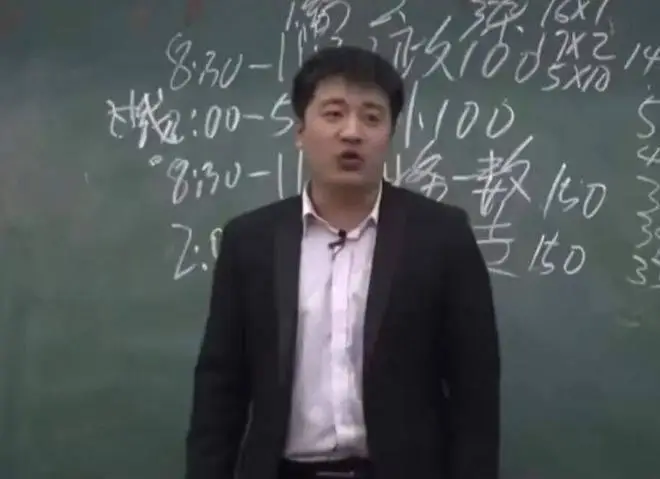
Zhang Xuefeng’s early lectures
Choosing a school and choosing a career is a false solution
The predicament of bottom-level families is real. This must be made clear first. The scale of college graduates, employment rate, unemployment rate, starting salary decline, and social security are all real problems. But the problem is—can maximizing the college entrance examination results and choosing a good major solve the problem?
Putting all hope on “choosing the right major” is itself an oversimplified imagination. The so-called “computer \ electronics” and other popular majors are often regarded as stable havens, but they are rarely put into a longer time scale to look at. Higher education has a lag of at least four years, and the industry cycle changes faster. Today, the big factories that were once regarded as gods are continuously reducing costs and increasing efficiency, and AI code generation technology is also rapidly replacing junior programmers. Those “popular paths” that are repeatedly recommended are becoming crowded and even starting to fail.
Objectively speaking, this extremely utilitarian volunteer application is not completely without returns. In the first one to three years after graduation, it may indeed bring some students a “first employment premium” of a few thousand yuan more per month. But this advantage is often short-lived and unstable. In the case of “civil engineering” that he has repeatedly mentioned, this premium not only did not materialize, but was a Waterloo.
The bigger problem lies in the cost. In order to ensure certainty in the present, students are forced to give up the accumulation of more versatile abilities, and are tightly locked in the highly replaceable “tool man” track. When the 35-year-old workplace crisis, or other industry fluctuations, come, how will those who have been persuaded by Zhang Xuefeng deal with this problem?
When the dividends on the market side are accelerating to fade, another “answer” is constantly reinforced by Zhang Xuefeng: entering the system. But this answer is also built on a premise that cannot withstand scrutiny. The number of applicants for the national examination and provincial examination has repeatedly hit new highs, and tens of thousands of people are competing for a very small number of positions, which means that this is essentially a highly brutal competition. The carrying capacity of local finances also has a clear upper limit, and the positions within the system cannot provide a universal way out for tens of millions of graduates.
A path with a very low probability of success is constantly amplified as the “safest choice”, and the result is often not safety, but another risk: a large number of young people have long been detached from the real labor market, repeatedly investing time and energy, but ultimately failing to obtain the corresponding returns. This process is more like a “black hole” that constantly consumes time and opportunities.
In fact, the college entrance examination volunteer application node itself cannot bear the weight of “changing destiny”. Its function is compressed at both ends: looking forward, family resources, regional differences, and the quality of basic education largely determine where you can go; looking backward, the employment market, economic cycle, personal adaptability, and social network determine how far you can go after graduation. Volunteer application is stuck in the middle, and its importance is far from being emphasized so much.
Describing it as the “only window to change destiny” both overestimates the power of a single choice and invisibly obscures more critical structural factors—class differences, the institutional environment, and the economic structure. These problems cannot be solved by an expensive volunteer card.
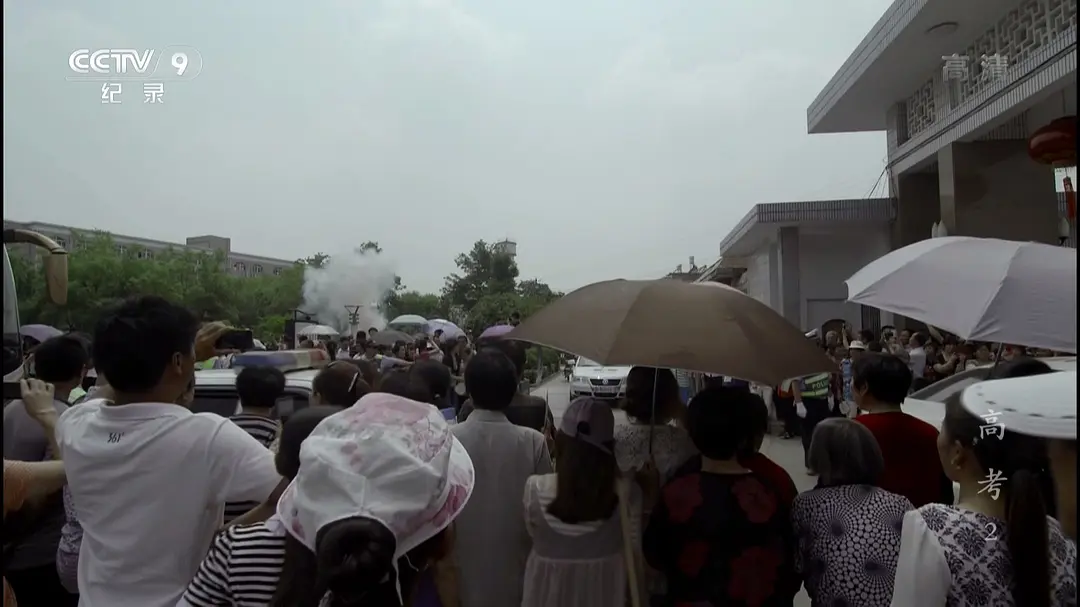
Documentary “College Entrance Examination”
In addition, Zhang Xuefeng’s own experience happens to constitute a counter-evidence to this logic. He graduated from Zhengzhou University with a degree in water supply and drainage engineering, but did not enter the related industry—this is exactly the “major mismatch” he defined himself. What really gave him influence was his ability to express, information organization, and content production, and these abilities happen to be classified by him as the “licking” liberal arts category. His wife is a Ph.D. in history and an associate professor at a university, and history has also long appeared on his “pit” list.
He advocates “certainty is greater than possibility”, but he also faced the uncertainty of “possible bankruptcy at any time” in the early days of his business; he reminded others not to hijack their future with interest, while his own path is highly dependent on interest-driven; he even bluntly said “I am essentially a salesperson”, and this is exactly one of the directions he belittled when he advised liberal arts students to withdraw.
This is not to say that everyone can replicate Zhang Xuefeng’s path, but to explain another thing: a person’s adaptability, cross-border ability, and inner drive often affect how far a person can go more deeply than “choosing the right track”. But in his narrative, these factors are instead constantly compressed or even required to be abandoned. A “prescription” that even the person who prescribed the medicine has not followed is bound to appear ironic.
Zhang Xuefeng’s response is a real era dilemma; but what he provides is a highly simplified solution. The safety it promises is not stable in reality. If this utilitarian narrow road itself is full of uncertainty, then the question may need to be re-raised: are those abilities and choices that are repeatedly advised to withdraw, on the contrary, constitute another possible protection?
If “choosing the right major” is not the answer, then where is the real way out for bottom-level families? This question may be more complex and counter-intuitive than his audience imagines.
Ideals are the trump card of the poor
Imagine two students who both scored 550 points. One is fascinated by history and applied for history based on his interests. The other listened to Zhang Xuefeng’s advice, put aside his interests, and chose a “safe track”. Three years later, they both encountered employment difficulties—in the face of high unemployment, no one is safe. At this time, who is more vulnerable? Intuition will say the one who studies history. But the answer given by psychological research is exactly the opposite.
Self-determination theory is one of the most widely verified frameworks in motivational psychology, proposed by Deci and Ryan in 1985. Its core finding is: intrinsic motivation (**doing something because the thing itself is meaningful to you) is more helpful than extrinsic motivation (doing something for money, status, and other external rewards) to help people persevere in adversity. **
A 2025 study of 316 low-income students from three public universities in eastern China proved the importance of intrinsic motivation: it can not only directly improve academic performance, but also indirectly improve performance by mastering learning strategies and reducing perceived stress; in contrast, extrinsic motivation only plays a little role indirectly through learning strategies, and has almost no effect on stress management. The researchers’ conclusion is very direct: intrinsic motivation is the “key driving force for academic success under economic difficulties”. Another study tracking high school students in low-income areas in the United States also came to a similar judgment: students with intrinsic career motivation are more likely to stick to their career goals when facing the pressure of time and economic costs than students who are aiming for high salaries and status.
From this perspective, Zhang Xuefeng’s disregard for interests and ideals, emphasis on “fragility”, and advocacy of “certainty” in major selection and career paths are essentially depriving a kind of intrinsic motivation. The solution he provides is actually very simple: give up intrinsic drive and exchange it for the certainty of external rewards. But is this really feasible? As long as one enters a person’s real job-seeking situation, this question will become very clear.
A young person chose a major that “can make money”, but found that the job was not easy to find after graduation. Because he has no interest in this field itself, he is very reluctant to continue submitting resumes and continuing to persevere. But if he chooses the direction he really cares about, even if the return has not yet come, he at least has an internal reason to continue to persevere, and also retains the psychological foundation to adjust, shift, and start again in difficulties.
The key question is: who encounters the situation of “returns are slow to come” more often? Of course, it is the poor. Children from wealthy families can take a gap year after failing, can rely on family support for a second education, and can also get the next opportunity with the help of their parents’ connections. They can buy time with money. Children from poor families do not have these buffers. The only thing they can use to get through the long cycle of low returns is often only psychological resources: belief, sense of value, and internal recognition of what they are doing.
This is the most ironic place of “ideals are the luxury of the rich”. The fact may be exactly the opposite: the rich lose their ideals, it may not matter, material conditions can provide a safety net; the poor, once they lose their ideals, may really have nothing left.
A review published in Current Opinioin in Psychology in 2019 further revealed the psychological destructiveness of poverty: it will systematically erode three beliefs—”I have the ability to succeed”, “the world will fairly reward my efforts”, and “career success is worth pursuing”. When these three are weakened at the same time, a person’s motivation to move upward will also collapse. The researchers wrote a meaningful sentence: many people from poor backgrounds have indeed overcome these motivational obstacles, and this just shows how remarkable it is. The implication is actually very clear: the poor can break through, the key is not to give up intrinsic drive, but to try to keep it. For the poor, what they can really rely on is the “armor” composed of intrinsic motivation, sense of value, and interest. But the environment they are in—and voices like Zhang Xuefeng’s—are constantly asking them to take it off.

Movie “Capernaum”
Going back to the two students at the beginning. The person who chose history based on his interests, when encountering employment difficulties, at least knows why he is staying on this path; he has a real curiosity and enthusiasm for this field, which will give him the motivation to continue to persevere, shift, or start again after setbacks. The person who chose the major on the “safe track”, has no intrinsic interest in this field, and chooses it only because “others say it can make money”. Once the promise of making money falls through, he will find that he has neither material buffer nor psychological buffer, and has become truly naked.
This is not to say that if you have interests, you will definitely succeed, nor is it to encourage the poor to ignore economic reality and pursue a certain illusory dream. Intrinsic motivation is not a substitute for economic security, but when economic security is absent—and this is almost the norm for the poor—it is the necessary resource to maintain the ability to act. The two are not contradictory. The real contradiction lies in the fact that Zhang Xuefeng’s harm to bottom-level families is not just providing a specific bad suggestion, but systematically requiring them to give up the only psychological armor left.
This is my biggest and most fundamental criticism of him. I don’t even want to focus on his politically frivolous remarks, or the “uselessness of liberal arts”. Because the deeper question is: he seems to be helping the poor, but in fact he is weakening them.
A person cannot invent such a complete set of sophisticated narratives out of thin air. Behind the Zhang Xuefeng phenomenon, there is something bigger than him—and that thing, on the other side of the world, is doing almost the same thing in another language and with another face.

Movie “Don’t Look Up”
The era and what it shapes
The reason why Zhang Xuefeng’s words are so penetrating is because they are not completely original, but fall into a set of globally accepted narrative templates. Political scientist Cas Mudde summarizes this template as the core grammar of populism: dividing society into “pure people” and “corrupt elites”, mobilizing the masses through the continuous performance of crises, establishing trust with a vulgar style, replacing complex analysis with simplified solutions, and ultimately constructing a self-enclosed narrative system, so that all criticism can be absorbed as its own nourishment.
This grammar can be broken down into several stable elements.
The first is the binary opposition of the people and the elite. Donald Trump divided the United States into “real Americans” and “the establishment”, while Zhang Xuefeng divides China into “children from bottom-level families” and “university professors who talk without back pain”. The characters are different, but the structure is the same.
The second is the constant reinforcement of the crisis. The premise of “Make America Great Again” is that the United States has declined and needs to be saved; what Zhang Xuefeng repeatedly emphasizes is that bottom-level families are declining—”one wrong step leads to a series of wrong steps”, “35-year-old job market crematorium”, “society is a big sieve”. Both put the audience under an imminent pressure to survive, making hesitation itself unacceptable.
Then there is the choice of language style. In Zhang Xuefeng’s expression, phrases like “knock out”, “lick”, and “ancestral graves are on fire”, together with the frequent use of swear words, constitute a tone that is obviously different from that of experts and official media. A cross-national linguistic study published by Cambridge Core in 2024 pointed out that the common characteristics of right-wing populist discourse are “embracing informality, rejecting complexity, and rejecting hesitation and tentative language”. This “roughness” is not a loss of composure, but a clear statement of identity: I am the same kind of person as you.
Next is the compression of complex problems. In Donald Trump’s political discourse, complex economic and social structural problems are often simplified to “immigration issues”; and in Zhang Xuefeng’s narrative, the structural predicament of Chinese youth employment is compressed to “choosing the right major”. A problem that originally requires multiple explanations is replaced by a personal choice that can be implemented immediately—this is the most powerful and dangerous part of this narrative.
Finally, it is the self-enclosure of the narrative. Trump responded to all unfavorable reports with “fake news”; Zhang Xuefeng repeatedly emphasized “I am not selling anxiety, I am reminding everyone to recognize reality”. Under such a framework, the more criticism, the easier it is to be interpreted as “not down-to-earth” and “not considering the poor”. Criticism itself no longer weakens the narrative, but becomes the material for its continued expansion.
These elements put together can almost completely reproduce a set of populist narrative structures. The only difference is the face of the “enemy”: the target of Western right-wing populism is often immigrants or external forces, while in Zhang Xuefeng’s case, the target becomes liberal arts, professors, and idealism. But these targets are in the same position in the structure—they are all “another group of people who are favored and are squeezing your resources”.
This isomorphism across languages and national borders is no coincidence. It grows on similar social soil: economic growth slows down, the channels of class mobility narrow, young people’s expectations for the future deteriorate, and trust in the system declines. Trump’s rise occurred in the deindustrialization and middle-class decline of the American Rust Belt; Zhang Xuefeng’s explosion occurred in the stage of employment difficulties, intensified involution, and the “Kong Yiji literature” and “lying flat” discourse pervading the Internet. Zhang Xuefeng does not need to read Mudde’s papers, the social conditions themselves will cultivate it.
Understanding this grammar, you can see the deepest effect of populist narratives. It does not directly solve the problem, but changes the way the problem is understood. When Trump attributed manufacturing unemployment to immigrants, few people asked about automation or capital outflow; when Zhang Xuefeng attributed employment difficulties to “choosing the wrong major”, the real questions about economic structure and social security were also pushed further away.
In this process, structural problems are translated into personal choice problems—the reason why you are in a difficult situation is not because the system has a problem, but because you have not chosen the right path. Once this translation is accepted, the issues that really need to be discussed will be obscured after the nationwide discussion of “what major should you choose”. The biggest service object of populist narratives is never the “people” it claims to represent, but the forces it helps to obscure that are not questioned.
Therefore, Zhang Xuefeng is not just the story of one person, he is more like a symptom of the times: when the promise of class mobility begins to fail, this populist grammar will grow, whether it is spoken in Chinese or English. Zhang Xuefeng has passed away, but the society that nourishes this narrative still exists, it will not end, it will only continue to look for new outlets, and the problems will become more complex as a result.
Discover more from 自由档案馆
Subscribe to get the latest posts sent to your email.