In recent days, gatherings with friends have always revolved around the major events in real estate, with losses calculated in trillions, and the entire industry is on the verge of collapse. The pain this has caused to countless families and the entire society may take years, even a decade or more, to slowly subside.
According to media reports, the relevant parties involved have already pleaded guilty and expressed remorse. Many scenes from the experiences of these years are still vivid. Having come to this point, those of us in real estate should all reflect on what we have learned from it. We must face the path we have walked for over thirty years; this “tuition” was too expensive.
I have read some expert comments and reflections, and they all have their points. But what is the root cause of the problem? What I say may not be correct, but I just want to honestly share what I have experienced and seen over these years.
From welfare housing to commercial housing
Thirty years ago, China did not yet have a real estate market in the true sense. At that time, housing was allocated by work units. Commercial housing first appeared in special economic zones, and later there was a type of commercial housing called “foreign-sale housing,” which required a foreign-sale permit and was mainly sold to compatriots from Hong Kong, Macau, Taiwan, and foreigners. 1998 was a watershed year—the state decided to stop welfare housing and switch to commercial housing.
But in the first few years, the market couldn’t get going. Many cities were deserted, the government was anxious, and businesses were also anxious; everyone was groping, and no one knew what to expect. At that time, several real estate developers were often invited by the government to discuss countermeasures together. To be honest, we ourselves didn’t understand, and we were just talking about things we only half understood.
Every time we went to Hong Kong, we studied frantically: collecting sales brochures for each building, taking photos of model rooms and models, learning their sales methods, and learning their jargon. Terms like “mortgage,” “real estate,” and “launch” were learned from the Hong Kong people back then.
Looking back, there was nothing wrong with learning itself. The problem was that later we also learned the high-leverage, high-turnover approach, and it quickly went wrong and changed its flavor in China.
Mortgages and Uncontrolled Leverage
To stimulate home purchases, banks began to provide loans to homebuyers, which is “mortgage.” I also supported this direction at the time, with the reason being: it’s better to give homebuyers loans than to give developers loans because homebuyers are the ones who really want to buy a house, and the risk is relatively controllable.
Initially, it was a 50% down payment, which meant one times leverage. But the market performance was far from the expectations of the government and the banks, so the down payment ratio was reduced again and again, 40%, 30%, 20%, and the leverage became higher and higher. Next, absurd things began to happen: some real estate developers and banks colluded to offer a 5% down payment, which meant that they were borrowing 19 times the money they put in themselves. Even more absurdly, someone proposed “zero down payment.”
At that time, there was a program on CCTV called “Dialogue,” and not long after it started, it did an episode about zero down payment, and I was invited to be a guest. I clearly opposed it, and my view was: the leverage of zero down payment is infinite; you can buy a house without paying a penny, and you’re all gambling with other people’s money, and the risk has no bottom line. But when the program was broadcast, all the things I said were cut out.
This incident made me feel deeply. Local governments needed growth, banks needed to lend, and businesses needed to sell houses; everyone was too anxious, and the leverage was added layer by layer like this.
“Land Bank”
At the same time, real estate developers were also trying their best to find ways, create concepts, and produce planning reports. At that time, there were even associations that specifically issued “real estate planner” certificates, and this practice was already very common. One concept that had a great impact was the “land bank,” which was brought in from abroad, meaning: whoever has more land reserves, whose “land bank” is larger, is more likely to be listed, and can also issue shares and bonds. Investment analysts also wrote reports one after another, fueling the flames.
The practice of developers accumulating a large amount of land also happened to meet the needs of local governments to engage in land finance—land transfer revenue quickly became an important source of revenue for many local governments. All parties were working in the same direction, and soon a real estate developer’s land reserves exceeded 100 million square meters. The lagging developers also desperately chased after, fearing to fall behind.
Within a few years, the industry competition was no longer just about who could build and sell houses better, but about who could acquire more land, finance faster, and expand more aggressively. The industry not only expanded rapidly itself, but also drove a whole set of ecosystems revolving around it: real estate media became an industry, intermediary agencies became an industry, and various financial products and planning consultations also flourished. In that atmosphere, you could only say good things and not point out problems. Whoever raised doubts became an outlier, a “prophet of doom.” The real estate industry thus went out of control.
Ponzi Scheme
Later, experts and the government also realized the seriousness of the problem. But for a considerable period of time, the focus was on “the rapid rise in housing prices.” A large amount of social energy was spent on debates about the ratio of house prices to income and the ratio of rent to sale.
The high or low price of housing is of course a problem, but it is not the most core problem. The real problem lies in the operational model behind real estate. When the operational model returns to normal, housing prices will naturally return to a reasonable level.
What is this model? Developers rely on pre-sale payments to survive, using the money from selling houses today to fill the holes of yesterday; companies rely on constantly borrowing new money to repay old debts; local governments rely on selling land to make a living, and subjectively tend to push up land prices; homebuyers believe that housing prices will always rise, and buying a house is not for living, but for making money by reselling.
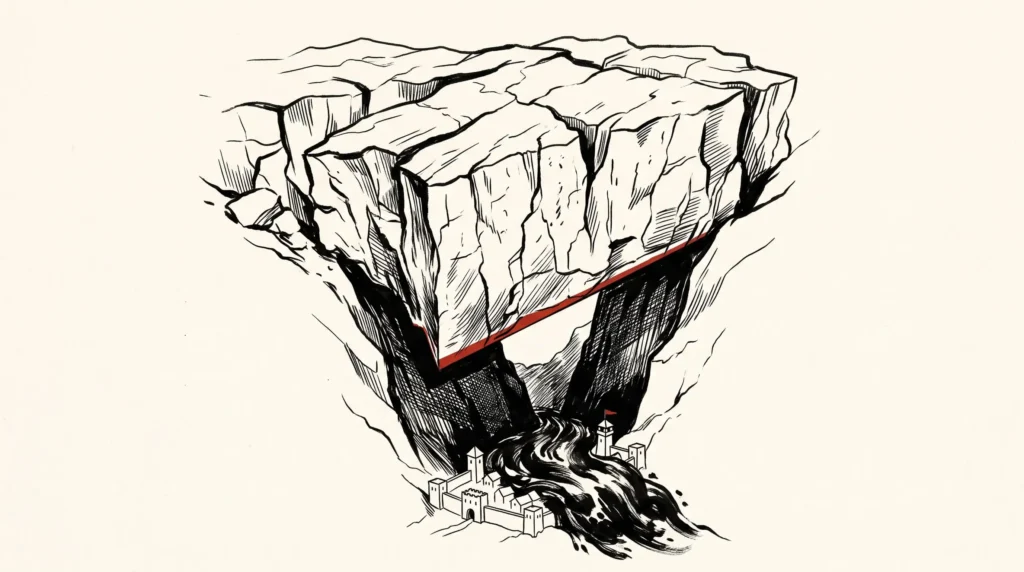
These four things are tied together, and if any one of them breaks, the others will follow. The industry appears prosperous on the surface, but in reality, it is becoming more and more fragile, more and more dependent on later people paying money, subsequent financing keeping up, and price expectations constantly rising to cover the previous commitments and holes.
Of course, houses are real things, and people always need to live in houses, so you can’t lump all real estate transactions together. But it must be admitted that for a considerable period of time, the practices of some real estate companies have been no different from a “Ponzi scheme”: what supports its operation is no longer sound management and real cash flow, but the next round of financing, the next buyer, and the next round of price increases. Once these are cut off at the same time, the chain will collapse.
To put it in plain language, this is called passing the buck. In professional terms, it’s a Ponzi scheme.
Only a few can leave
Around 2004 and 2005, real estate was booming. During a real estate forum, I mentioned in my speech that a company’s business model might have problems. After the forum, the boss of this company called me away from the dinner table and found a quiet place, and warned me in a very stern tone: “Don’t talk about our company’s business model in the future!”
I was silent.
After a while, his tone softened a little, and he said, “You just talked about small property rights housing, and you talked very well. You can talk about small property rights housing in the future.” I continued to be silent, not saying a word.
From then on, I tried to avoid him as much as possible to avoid embarrassment. Later, he asked someone to pass on a few words, and the meaning was still the same: don’t talk about their land bank and business model.
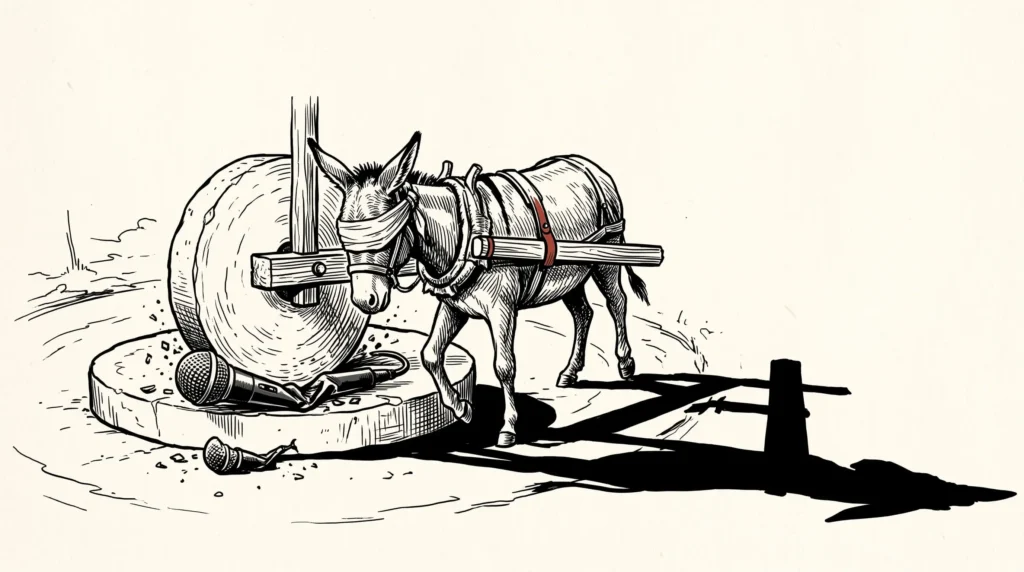
Later, I gradually became an unwelcome person for these real estate developers, and some city governments were not very welcoming to me either. To put it bluntly, because I became the person who was smashing their rice bowls. The polite term in the media was “alternative real estate developer,” and the private term was a prophet of doom.
During the years when real estate was booming, all kinds of organizations were established, associations, chambers of commerce, alliances, with many names. They didn’t welcome me to participate, and the high-sounding reason was that our company was not big enough. Once, I went to Shanghai for a meeting, which was an annual meeting of some kind of alliance, and I couldn’t remember the name. Our company’s name was not on the background board of the meeting, and it was printed and pasted on it later.
There was another experience that left a deeper impression. That company rented our house in Beijing’s Galaxy SOHO to sell their properties, and there was a very long queue outside the door. I put on a hat and pressed the brim very low—to be honest, I was a little worried about being recognized and kicked out. I brought two colleagues and squeezed into the sales office. The situation I saw was simple: each person first paid 50,000 yuan, got a house number, and then this house number itself began to be炒 (speculated).
Seeing this scene, I understood: many people in the queue were not for buying a house to live in, but they tacitly agreed that it would rise, and someone would always offer a higher price to take over. After safely leaving, my colleague asked me how I felt. I said four words: Ponzi scheme.
Those people who lined up in those years, it cannot be said that they were all speculators; many people were just caught in a chain that seemed to always rise. In that chain, everyone felt that they could leave before the drum stopped. But in the end, only a few could really leave.
Enlightenment: Integrity is the bottom line
Thirty years have passed, and too many things have happened. Today, the situation of China’s real estate has come to this, and it is not just the fault of certain real estate developers. The specific crimes have been determined by the judicial authorities. But from the perspective of the industry, the path that these companies eventually took can be summarized in four words: Ponzi scheme. Of course, reaching this point is not just a problem of the companies; it is the result of the combined effects of the system, finance, local finance, corporate expansion, and social expectations.
We indeed knew nothing at first, starting from scratch, learning from others, learning from the Hong Kong people, and exploring as we went. Making mistakes and taking detours in this process was originally unavoidable. Business failure is not terrible—as long as you stick to the bottom line of integrity, the worst result is the company’s bankruptcy, and the losses are mainly borne by yourself, and it will not cause such great harm to others, the economy, and society.
What is truly fatal is when an industry gradually deviates from integrity and builds its business model on constantly adding leverage, constantly financing, and constantly finding people to take over. What is even more dangerous is that some people intentionally set up a trap, creating illusions, and getting more and more people involved. At this point, the mistake is no longer just the company’s own mistake, and the damage will also spread to finance, local finance, ordinary families, and the entire society.
In the final analysis, integrity is the bottom line. If you stick to this bottom line, even if you make mistakes, there is still room for correction; if you lose this bottom line, no matter how big the industry is, no matter how high the growth is, it may eventually collapse overnight.
Written in the end
Reflection is for moving forward.
According to public data, real estate has been falling for 47 consecutive months. When will it recover? I think that first of all, we must deal with these remaining problems as soon as possible. It’s like a person who is sick; you should take medicine as soon as possible, and have surgery as soon as possible if necessary; you can’t drag it out. The longer you drag it out, the more serious the illness will be, and the more difficult it will be to recover. Only by diagnosing the cause of the illness clearly and starting to treat it seriously can real estate possibly bottom out and rebound.
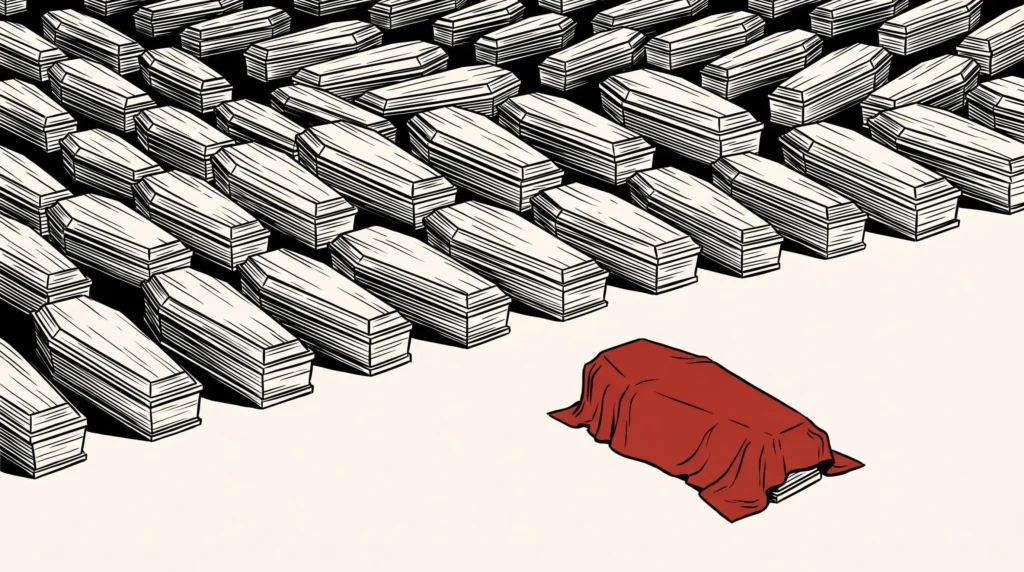
To restore the real estate market, the most important thing is confidence. When dealing with the remaining problems, we must put homebuyers first. They have placed all their trust in us developers. The mortgage loan contract is signed by the bank, the developer, and the homebuyer together. When selling houses, our developers’ mantra is “five certificates complete”—four certificates with red seals and one certificate with the national emblem. These certificates are themselves a kind of endorsement from the government. If you buy a house but can’t get the house, the market’s confidence will be completely gone, and the recovery of real estate will be impossible.
It has been falling for so long, we can’t drag it out any longer. But it’s not enough to just urge treatment; the root of the problem is still to bring back integrity and build confidence on the basis of integrity, and “good houses” are built on the basis of integrity. We look forward to this day coming soon.
Discover more from 自由档案馆
Subscribe to get the latest posts sent to your email.