

There's been a lot of news about tobacco recently:
First, the UK Parliament passed the Tobacco and E-Cigarette Bill, which prohibits retailers from selling tobacco products to people born on or after January 1, 2009, meaning that teenagers aged 17 and under will be banned from buying tobacco products for life.
Second, the Hong Kong government passed the Smoking (Amendment) Ordinance 2025, which prohibits the carrying of "alternative smoking products" (including e-cigarettes, heated tobacco, and herbal cigarettes) in public places, meaning that it is illegal even if you are just carrying them with you and not smoking.
Third, a woman in Shenzhen had a conflict with a smoking man at a bus stop, which caused a huge uproar and became the hottest social event on the Chinese internet in the past two days.
To sum up: selling and smoking tobacco has become a rat crossing the street, everyone is shouting and beating.
But in China, tobacco tax revenue is still high. Let's put it this way, China's tobacco tax revenue is almost the same as the total personal income tax revenue, which were 1.58 trillion and 1.62 trillion respectively last year, which can be called "one tobacco equals personal income tax". You can completely regard the sale of tobacco as a way of collecting taxes. The tobacco bureau is known as the "Third Tax Bureau" (the second is land finance).
But! Please note! Selling tobacco is the worst way of taxation in the world, bar none!
The reasons are listed as follows:
First: Huge harm
There are at least 69 carcinogens in tobacco smoke, and 6 of the top 8 causes of death in the world are related to smoking. In 2022, smoking caused more than 1 million deaths in China.
If effective control measures are not taken, the number of deaths caused by smoking in China is expected to exceed 2 million by 2030.
The number of smokers in China has exceeded 300 million, and about 730 million people have suffered from the harm of secondhand smoke, including nearly 200 million children. The number of deaths caused by secondhand smoke exposure each year exceeds 100,000.
Many people have heard of this data, and I will not elaborate on it here.
Taxes generally have certain negative effects, but no tax is as harmful as tobacco.
Second: More harm than good
Although it was said earlier that the tax revenue is amazing, the economic losses are also amazing. According to the estimate of "2023 China Tobacco Control Observation - Civilian Perspective", the total economic burden of tobacco-related diseases in China in 2018 was 1521.4 billion yuan, while the tobacco tax revenue in the same year was 1155.6 billion yuan, and the loss exceeded the tobacco tax revenue of that year.
And according to the Shenzhen Health Commission public account article, the medical expenses caused by smoking in 2020 plus the loss of labor productivity caused by premature death and disability totaled about 2.43 trillion yuan, while the tobacco fiscal revenue in that year was only 1.52 trillion yuan, and the loss was about 1.6 times the revenue.
Therefore, from the overall perspective of society, the loss is greater than the gain. Similarly, no tax is like this to kill the goose that lays the golden eggs.
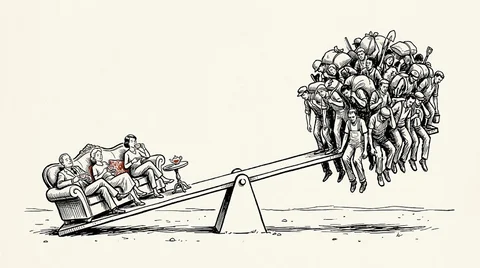
The difference is: the benefits are in the government, the losses are mainly in the individual; the benefits are in the present, the losses are mainly in the future.
Third: High tax cost
Everyone knows that tobacco is the unit with the best treatment in China (whether it is salary, pension or various hidden benefits), bar none, higher than doctors with the highest professional threshold, higher than most civil servants, and of course higher than tax officers.
Where is the difference? Because the money collected by the tax bureau cannot be retained at all, but the income from selling cigarettes by the tobacco company can be retained. This is the "principal-agent dilemma" of state-owned enterprises. As long as it passes through his hands, it must first intercept and enrich itself.
This is also where the tax collection through the sale of tobacco is bad. You might as well collect taxes directly.
And it leads to an absurd result: the people who do the dirty work have the best treatment. What is this value orientation?
Let's talk about these three points first, and in fact, it's far more than that. I'll try to keep it brief:
It is also a "tax on the poor": for the rich, the economic burden of smoking is low, and they will not be impoverished by smoking, while the proportion of tobacco consumption is higher in low-income groups, which is a "robbing the poor to help the rich";
It is also a "IQ tax": the higher the level of education, the more aware of the harm of smoking, and thus reduce smoking, and vice versa;
It is also an "addiction tax": the addictiveness of tobacco means that the government's tax object is not a rational choice, but a physiological dependence, using addiction to maintain the tax base. It is not so much a "tax" as it is the state maintaining "customer stickiness" for tobacco companies, which is immoral.
To sum up: The reason why it is said that "tobacco is the worst way of taxation in the world" is because it meets the problems of harmfulness, regressiveness, high cost, addictiveness, and incentive distortion at the same time. Other tax types may have problems in some aspects, but only tobacco has this whole set.
As for the reason, there is only one core: the integration of government and enterprise, the tobacco monopoly bureau and the tobacco company.
Therefore, if China wants to control smoking, it should pour drinks on their door, but I dare not, I am afraid of personal safety checks.
PS: I have written many articles about tobacco before, but they are all invisible. I will post them on my "Knowledge Planet" later. The pricing is the lowest threshold specified by "Knowledge Planet", and I have backed up most of the articles I wrote in the past. Welcome to join.