

Last year, we wrote an article titled "The Latest Dating Method for Beijing Drifters: Delivering Takeout Together." Later, we realized that with the rapid development of the takeout industry, delivering takeout seemed to have become a pastime for high-paying white-collar workers, a part-time job with an entertainment aspect.
But the reality of the takeout industry is not that simple.
During dinner time, in Yuxinzhuang Village, near the Sixth Ring Road in Beijing, takeout worker Xiao Chen finally received the first wave of orders during the evening peak. He has been running this area for nearly 8 years.
Yuxinzhuang Village is known as the first stop for Beijing drifters after arriving in Beijing. There are hundreds of apartment buildings here, and the roads are complex, but Xiao Chen says he can find which building each alley leads to with his eyes closed. "I can take ten or eight orders at once, I don't even need to look at the navigation."
But this familiarity can no longer bring the income of the past.
This is not his only confusion. According to industry statistics, the number of takeout riders nationwide has exceeded 13 million. At the same time, the platform's delivery unit price has been continuously declining—from an early average of over 10 yuan to the current 3-5 yuan. The unit price has dropped by half, but the number of riders has increased several times. Another takeout worker in Yuxinzhuang Village said: "Dozens or hundreds of people are competing for one order, it depends on whether the system loves you."
Takeout workers don't understand: the algorithm is getting smarter, why are our working hours getting longer, and it's getting harder to make money?
The documentary "2026 China Takeout Worker Survival Report" produced by Sanlian Life Lab is gradually revealing the answers to these questions. Yuxinzhuang Village in Changping, Beijing, is the first stop of our film. We also went to the CBD and the famous Wanliu.
We found that more than 50% of the takeout workers staying in Beijing come from rural areas around Beijing, with the majority being young people from rural Hebei. Through filming, we found that for most takeout workers, delivering takeout is not one of their choices, but the result after having no choice.
They all mentioned a similar sentence: "There are very few opportunities for us young people in the countryside." Similar sentences also include: "My language skills have regressed after delivering takeout" and "I can't even earn money, and I'm worried about my life?"
These words brought us a shock, especially today when technological development is profoundly changing people's lives. Today, the post-00s in the countryside, the people delivering takeout in big cities, these people who seem to be attracted by "high technology" but are actually marginalized, what kind of life are they living?
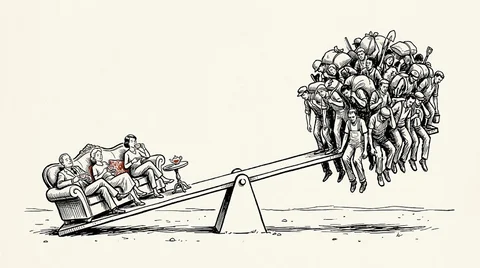
The technology that should have liberated labor is trapping takeout workers in longer working hours, while not significantly improving their income, which is just one of the millions of problems that urgently need to be explored.
What are their expectations? How do they see themselves and others? How do they face tomorrow? My colleague asked: How come even takeout workers have become anxious after entering the internet? Because many takeout workers keep staring at their phones to swipe orders every day, some say they are "anxious, and they dream of delivering takeout at night."
One interviewee made a different and sharp comment on this: "Takeout workers are not trapped in the system, but trapped in their own desires."
I don't guarantee that the content of this documentary is comprehensive, but I absolutely guarantee that it is精彩.
Even though the media has given too many stories of high-paying white-collar workers delivering takeout, this job, which relies on physical strength, has a low threshold, and is also a bit dangerous, mostly belongs to those young people who "have to do it."
A young man from rural Hebei who came to Beijing to deliver takeout said, "It's no longer realistic to farm to support the family."
Also a young man from Hebei, he graduated from a technical secondary school, came to Beijing in February, and initially worked as a chef, but the boss ran away with the money, and the salary was not paid. "Later, I really had no money, so I delivered takeout."
He had been working for just over three months, and last month he earned more than 8,000 yuan. This month, it's almost the end of the month, and he has only just passed 4,000. "Lying flat? Wouldn't that be eating and waiting to die? I can't rely on my parents." His father has a problem with his lumbar spine and just had surgery, and there is no other income in the family.
Young people like him, pouring into the city from rural areas in surrounding provinces, delivering takeout is one of the few jobs they can do.
Wang Wan, the author of "Running Takeout: The World of a Female Rider," said: "Many people may enter this industry just to test the waters, to see if they can make money, and if they don't make money, I'll go to other industries. The mobility of the bottom is still relatively strong, but they have been flowing at the bottom."
Mentioning income, she said: "Delivering takeout (income) is okay, as long as you are willing to pay for your health and your physical strength."
Delivering takeout still seems to be a dangerous job. In the film, there is no lack of criticism from citizens of takeout workers speeding, running red lights, and driving dangerously. You must have also seen riders going the wrong way and having traffic accidents on your commute.
But the takeout workers told us that there are almost no riders who don't go the wrong way. Some of them even said that when eating becomes a problem, life also becomes less important.
"The order time is set there, how can you deliver it on time if you don't go the wrong way?" a young rider said. "It's useless to just worry about safety, you can't make money."
A rider who broke his bones last year recalled that when he was riding normally, a car braked suddenly and did a door-opening kill, and he flew out directly, with five ribs broken and his fingers also broken. He was still holding two orders, and the station manager helped to transfer them, and then he was sent to the hospital.
The riders all know it well, "You went out to run for a day today, and you're back. Whether you can come back tomorrow, you don't know."
Some riders said that they would be scared to sweat every time they ran a red light, "Actually, I'm very scared inside," "But it's more important to deliver quickly." Many more riders said that after running takeout, they couldn't express their emotions, their language function regressed, but they learned to swear...
We filmed a college student, who was hit by a takeout worker and rolled down half a bridge. He said: "I think they are a very alienated class, he only has legs left."
Even so, the takeout industry is still accepting those who are rejected by other doors.
A woman who graduated from a 985 university and was a full-time mother for seven years, after returning to the workplace at the age of 35, found that she couldn't find a job. "No work experience, my education is useless, and I'm over 35." She started delivering takeout. "This takeout thing, no matter if you are male or female, young or old, it can accept you."
"From a 985 graduate to delivering takeout now, I'm still satisfied with myself. I think I can take off Kong Yiji's long gown to deliver takeout, and many people can't do it."
At the rider's rental shop in Yuxinzhuang Village, the boss told us that most of those who come to rent cars to deliver takeout are newcomers and have no money. "This year, all walks of life are under pressure. Those who used to work on computers, many people have come down. What do they do after coming down? Deliver takeout."
Four or five years ago, there were more men, and now there are also many women. "In summary, it's those with lower education, those who can't find other jobs, or even those who are older. This threshold is relatively lower."
In a more prosperous area—the Beijing SKP shopping district, the unit price here is higher, and the riders' lives are also better. They have a cup of coffee to refresh themselves before work, and their helmets are also decorated with colorful decorations. They represent a minority among takeout workers.
A rider who has been running in SKP for a year said that this year, during the Chinese New Year, he was willing to buy himself a down jacket for more than 1,300 yuan. "I've been working for a year, so I have to wear it, right? There is no such much money in the countryside, I can only work hard in the city."
But even in such a high-end shopping district, takeout workers can only enter the mall through the "small employee passage." Do you think the riders will feel embarrassed? The truth is quite the opposite.
A rider said: "It's better if you don't let me in, I wish all the shopping malls wouldn't let me in, then you don't have to go upstairs."
Another rider said directly, "We don't care about luxury houses, what we care about is that it's easy to deliver."
In the past, the most common words we heard from takeout workers might be: "Hello, your takeout has arrived." or "The takeout is placed at your door."
This filming allowed us to hear too many "golden sentences" and language from takeout workers.
In their statements, we know that a takeout worker found a noodle restaurant that would give riders free eggs, so he led the takeout workers he knew to come and eat;
Someone, when delivering a cake, asked the boss for an extra box of candles, because it was his birthday soon, "I'll put the candles on my noodles in a while";
Every year, reuniting with family is the most anticipated day for the riders, "When I open the door and go back, Dad is back, (the child says) I miss you so much, and directly pounces on me to hug me, I feel so happy."
We asked takeout worker Xiao Chen if he still yearns for big cities now? He said, "I don't yearn for it anymore, the unit price is low, and it's much harder than before. I won't do it next year, even if you kill me."
But more takeout workers will, year after year, continue to compete for orders in the system's algorithm, make choices between going the wrong way and being late, and spend time in the meager profit of three yuan per order, continuing to be a person who is "uneducated and has to do it."
Eighteen years ago, China's first takeout order was born online. In the past ten years, the fate of many Chinese people has been changed accordingly. People have mixed feelings about takeout, both love and hate. In any case, takeout workers, along with their wheels, are also unswervingly shaping a world.