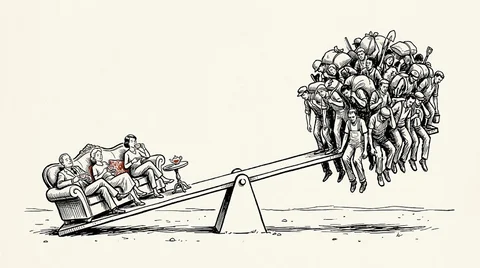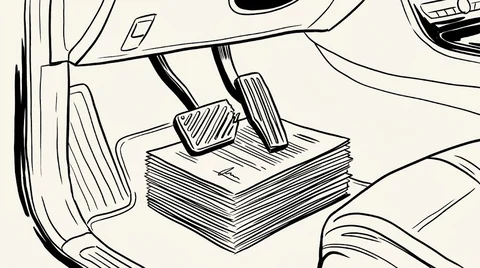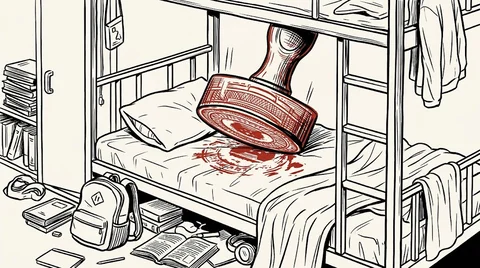


The awkwardness of China's "New Left" lies in the fact that it is very good at criticizing capital, but not very willing to truly engage with the "problem of power." That is to say, it is most sensitive to capital's encroachment on the state, but relatively insensitive to the state's encroachment on society. Therefore, it discusses a lot about state capacity, publicness, common prosperity, governance capacity, and social fairness, but it rarely systematically discusses: how power is restricted, why the judiciary needs to be independent, why universities need autonomy, why information flow needs to be open, why social organizations need to be freely formed, and why the freedoms of speech, publication, assembly, association, and demonstration stipulated in the constitution are not only "abstract rights," but also an important error-correction mechanism in real society.
The "New Left" is unwilling to face and answer the following questions: Which of the two corruptions, capital corruption and state power corruption, is more harmful to the people? The answer is state power corruption. Why? The reason is very simple: capital has competition, the error-correction mechanism is flexible and rapid, and the people have the freedom of relative choice. State power is rigid and ossified, there is a lack of institutional competitors within state power, and the people have no choice.
Many "New Left" will criticize Western competitive democracy: capital manipulates elections, the media is influenced by capital, populism is rampant, and political parties are severely polarized. These criticisms certainly have a basis in reality, but the problem is: pointing out the problems of the West does not automatically prove that another system is the "best choice."
When we further question the "New Left": "Who supervises the supervisors?" "If there is a lack of open criticism and information flow, how does the state correct errors?" "If society lacks open expression space, how can issues such as medical insurance, education, and labor be continuously promoted?" Many "New Left" begin to become vague. They usually do not explicitly advocate that: freedom of speech, independent media, university autonomy, and social freedom should become the core prerequisites of modern politics.
Why? Because they are more worried that: after the state is weakened, capital will completely dominate society. Therefore, they often tend to "strong state publicness." But the problem lies precisely in: if state power itself lacks continuous open checks and balances, then how can "publicness" be maintained for a long time? Thus, the "New Left" in China has a deep contradiction: it criticizes market logic, but relatively lacks the same analysis of power logic; it criticizes capital for shaping society, but rarely analyzes how power shapes the subject;
The "New Left" emphasizes social fairness, but relatively underestimates the importance of open free expression for real error correction. Therefore, it is ultimately easy to fall into a position of "giving advice to the state." That is to say, it is increasingly like: a revisionary advisor to state governance, rather than a force of thought that continuously questions the boundaries of power from outside society.
A deeper problem lies in: although the Chinese "New Left" constantly talks about: the people, society, community, publicness, it defaults that these "major subjects" exist stably. It rarely truly engages with: what kind of information environment, platform structure, attention mechanism, and emotional organization people are in today to form themselves. Thus, although the "New Left" profoundly criticizes capitalism, it rarely truly engages with: how micro-consciousness is shaped - and this may be one of the most core issues of today's political reality.
The awkwardness of Chinese political philosophy research lies in the fact that - in recent years, Chinese political philosophy research has become increasingly lively. There are more and more conferences, the themes are becoming more and more grand, and the scope of discussion is becoming wider and wider: Rawls, Habermas, Hegel, Hobbes, Arendt, political realism, public reason, cosmopolitanism, justice, legitimacy, democracy, equality, and so on. However, a more and more obvious problem has also begun to appear: although many political philosophy studies constantly emphasize "facing reality," it is becoming increasingly difficult to truly engage with reality.
The reason is that a large amount of research still remains at the level of normative frameworks, conceptual analysis, classical interpretation, and theoretical comparison. It discusses: "how institutions should be," but rarely truly discusses how institutions actually operate today. For example: discussing "public reason," but not discussing how information space is organized; discussing "democracy," but not discussing how attention is manipulated by algorithms; discussing "legitimacy," but not discussing information control in reality; discussing "freedom," but not discussing expression space and news structure; discussing "public space," but not discussing how platforms shape public emotions; discussing "political realism," but rarely truly engaging with the internal mechanisms of real power.
Thus, many political philosophy discussions will show a strange state: the theory becomes more and more rigorous internally, but the explanatory power of reality becomes weaker and weaker. Because it defaults: there are stable subjects, there is a normal public space, there is sustainable rational discussion, and there are citizens who can stably form judgments. However, the subjects in today's reality are becoming less and less like this. People in reality: attention is fragmented, emotions are infected in real time, identities are constantly drifting, judgments are formed while being expressed, and people gradually form themselves in the process of participation.
That is to say, the real problem today may no longer be: "how to design institutional principles," but how the subject is actually generated. But this issue, many political philosophy studies have hardly engaged with. It still remains on the premise of a modern subject philosophy: first there is a subject, then there is a choice. However, reality increasingly shows: the subject does not happen in the front. People are constantly forming themselves in platforms, media, emotions, algorithms, information flows, and group infections.
Therefore, the place where political reality truly happens today is no longer just the constitution, institutions, laws, and state machinery, but attention, emotions, rhythm, information structure, platform algorithms, consciousness space, who organizes attention, who shapes the structure of feelings, who controls the rhythm of information - who decides what is seen, who decides what is disappeared, who is getting closer and closer to the real political reality. However, many domestic political philosophy researchers still mainly revolve around principles of justice, normativity, procedural structure, and conceptual boundaries. Thus, it is increasingly easy to form a theoretical cycle that is detached from the mechanism of reality generation. It discusses politics, but it is becoming increasingly difficult to engage with the place where real political reality truly happens.