The anxiety over the “50-50 split” in the high school entrance exam is essentially a projection of the public opinion of middle-class families in big cities. Even if the split is canceled, parents’ anxiety will still not be eliminated against the backdrop of extremely scarce high-quality higher education resources (such as 985/211).

Phoenix.com Original The anxiety over the “50-50 split” in the high school entrance exam is essentially a projection of the public opinion of middle-class families in big cities. Even if the split is canceled, parents’ anxiety will still not be eliminated against the backdrop of extremely scarce high-quality higher education resources (such as 985/211).
Author丨Liu Yuanju
Senior Media Commentator
Researcher at multiple think tanks
The call to include high school for three years in compulsory education and to oppose the 50-50 split has been very strong in online public opinion. This is also a hot topic at this year’s Two Sessions. The so-called 50-50 split refers to the fact that after graduating from junior high school, with a 50% split rate, some go to high school to take the college entrance examination, and some go to vocational high school.
I think there is a lot of discussion about high school education now, but most of it is superficial, and there are many views that are similar but not quite right. Many parents are also confused.
This article does not discuss whether the 50-50 split should be implemented, nor does it discuss whether high school should be included in compulsory education, but rather clarifies some basic issues, logic, and deductions. Only by first discussing what, why, and how things will be, can we discuss what should be done.

The German model is good, but it comes at a cost
First of all, in my opinion, to some extent, the anxiety about the high school split is a public opinion phenomenon, a typical middle-class issue that distorts the real needs. Middle-class families in big cities design the path for their children to “go to college no matter what”, but in fact, more Chinese families do not insist on going to college, but rather have the idea of “if you can study, then study, if you can’t, then learn a skill and find a job”.
However, middle-class families in big cities have a strong ability to speak out in public opinion, which will cover up other voices. For example, in my public account, the proportion of fans in Beijing, Shanghai, Guangzhou, Shenzhen, and Hangzhou can reach 38%, while the total permanent population of Beijing, Shanghai, Guangzhou, Shenzhen, and Hangzhou is 90 million, accounting for only 6% of China’s population.
In fact, children who are anxious about the 50-50 split in junior high school mean that their grades in the class do not exceed the top 50%, while the proportion of people in China who can get into 985 universities is 0.7%, and 211 universities is 1.8%. These children will only be more difficult in high school, and in the end, they will probably only be able to attend a private undergraduate university, which is not very meaningful. Not splitting cannot solve the parents’ obsession.
Of course, some parents want their children to go to high school, not necessarily because they want to take a good college entrance examination, but because the atmosphere in vocational schools is too poor, and they are worried that their children will learn bad things in vocational schools. These parents hope that their children can spend three healthy and safe years in high school.
To solve this problem, one direction is to run vocational high schools well, but this is very difficult.
Education is actually a preparatory stage for social labor and is closely related to society. Therefore, when we discuss education issues, we cannot simply look at education, but rather connect society and education.
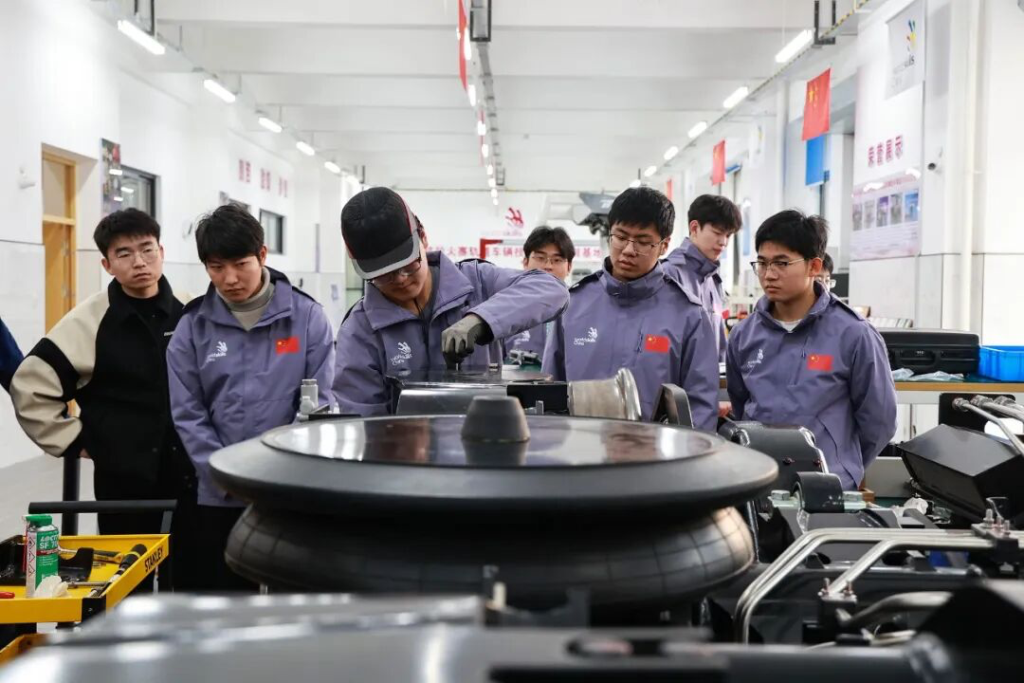
Based on the nature of vocational high schools, they are mostly engaged in physical and standardized labor, which is very simple for enterprises to manage. For example, on a production line, the same parts, A makes 30, B makes 5, there is no excuse, if you can’t do it, you leave. Therefore, enterprises do not care about the quality of employees.
What’s more, the teaching and reality of vocational high schools are also out of touch. A school that teaches car repair, no matter how closely it follows the needs, is not as good as an apprentice in a car repair shop. The school cannot buy a few Xiaomi SU7s and WEY M8s for students to disassemble and assemble. But as an apprentice in a car repair shop, you can see several of them a day. Therefore, even employers like car repair shops do not pay much attention to the quality of teaching.
When employers do not care about the quality of teaching and do not care about the grades of graduates, students do not have basic constraints and motivation. Without the goal constraints of students, this school will be difficult to run well no matter what.
In contrast, the atmosphere in high schools is good for two reasons: First, high school students have goal constraints, they want to take the college entrance examination. This is an internal driving goal that can efficiently drive them to study hard. They are busy all day long and can’t find time to learn bad things.
Following this line, when they get to college, because it is non-standard mental labor, employers will screen for quality. The way to screen is to look at whether they have passed CET-4 and CET-6, look at their GPA, and look at their awards, so college students will also work hard.
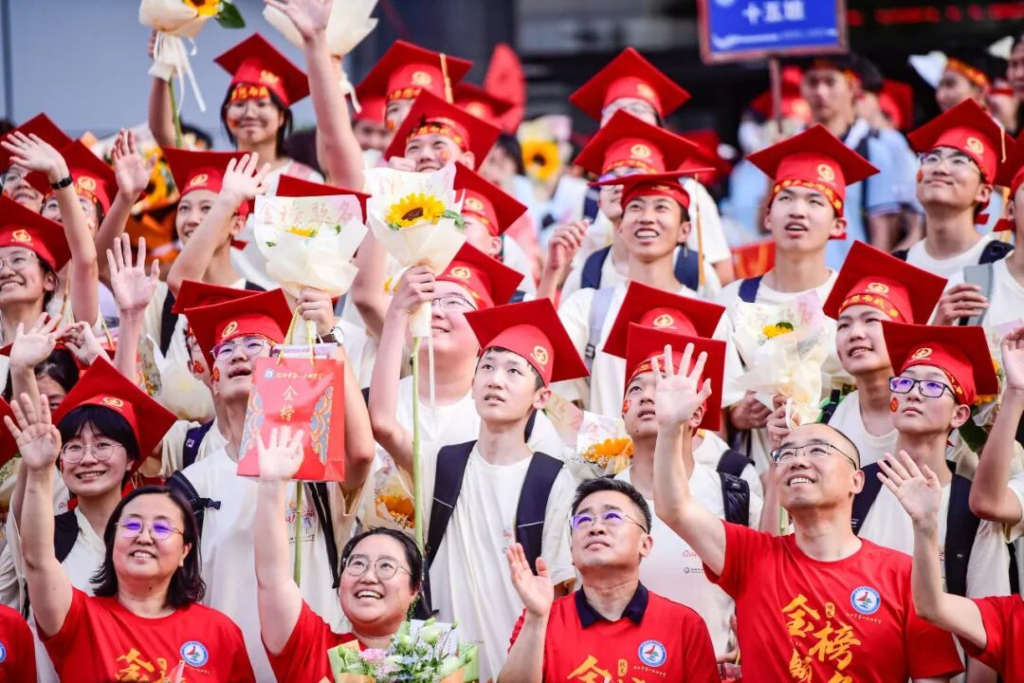
Learning from Germany cannot solve the problem of vocational high schools. It is common in public opinion to envy the good vocational education in Germany. For example, “There is a large gap between the education levels of China and Germany. Germany has the world’s number one vocational education system, and there is no difference in social status between blue-collar workers, white-collar workers, and civil servants. Skilled workers are an important part of the middle class. Germany has a stable vocational education system, providing a continuous supply of high-quality skilled labor for German manufacturing.”
However, skilled workers are part of the middle class, not because vocational education itself is good, but because workers’ wages are high. Workers’ wages are high, not because vocational education is good, but because Germany is a developed country, and workers’ wages are high in the first place.
High wages for workers are, to some extent, due to greater standardization. It is very expensive to install air conditioners in Europe. The installation cost of a common split air conditioner that costs 700 euros (about 4,840 yuan) is often the same as the air conditioner itself. The hourly wage of European electricians is generally between 50-150 euros, and the labor cost for installing a split air conditioner can reach 500-1200 euros.
Installation is expensive because of qualifications.
If installing air conditioners in China requires a license, and the number of people who obtain the qualification each year is strictly controlled, then the price of installing air conditioners will also be very high. An air conditioner costs 5,000 yuan, and you are not allowed to install it yourself. If you install it without a license, you will be fined 20,000 yuan. Then, the vocational high school that teaches air conditioner installation will definitely be the most popular major, and students will study very hard in order to pass the exam.
But then again, high wages for workers are a good thing. But the entry threshold and qualifications may not be a good thing for the manufacturing industry. German Chancellor Scholz said after his visit to China that Germany’s productivity is insufficient. Perhaps, when China’s vocational education is like Germany’s, China’s manufacturing industry will be more high-end, but it will also lose its current momentum and scale.

Each according to their ability, or absolute equality?
Therefore, social needs determine that vocational high schools cannot be like high schools. To some extent, vocational education is bound to fail, or to be precise, it will not meet expectations. So, what about the second direction to solve the problem, “no split, all go to high school”?
The current situation is that people are split, and those who are not motivated and whose family background is relatively low are all assigned to vocational high schools. The good ones are concentrated together, and you chase after me, and the atmosphere is naturally good. The bad ones are concentrated together, and you become what you are around, and only a few can stand out.
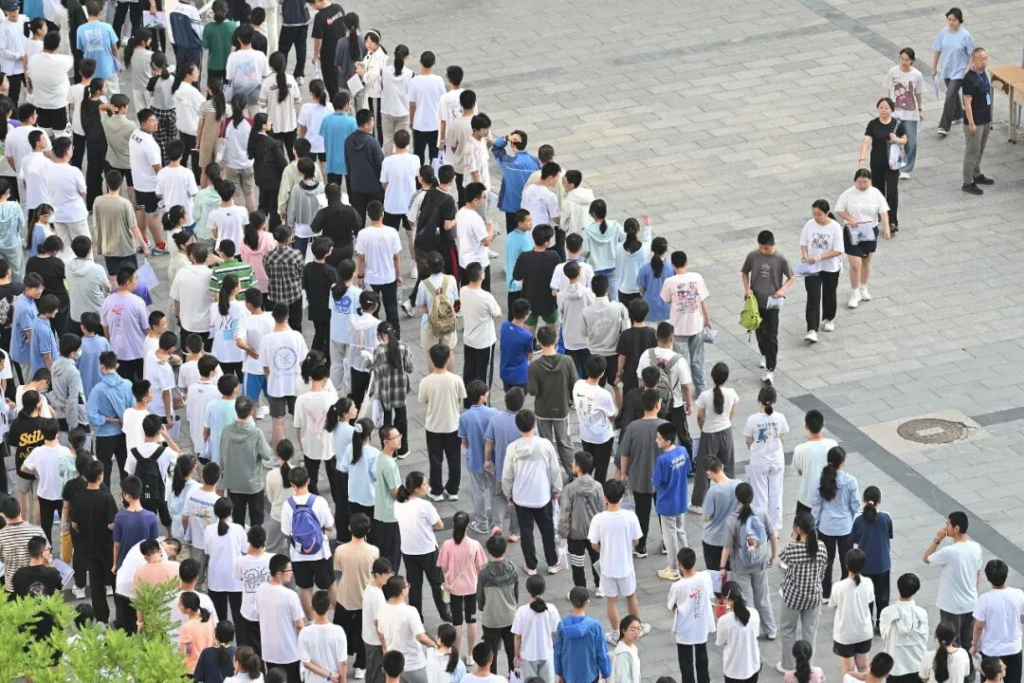
But if there is no split, and all students go to high school, there are two possibilities.
One is to still set up key high schools and divide them according to grades. Then, those with good grades will still go to key high schools, and those with poor grades, the part of people who originally went to vocational high schools, will go to relatively poor high schools.
It’s still the same group of people, going to the same school, but the name is different, changed from vocational high school to high school. Most people still do not have the expectation of taking the college entrance examination, and employers will still not care about grades. So, will there be any changes?
Obviously, this is not what the parents who oppose the 50-50 split expect. Because what they expect is: my child is not split, and goes to high school with good children, rather than all children are not split, mixed, and go to high school together. But the latter is what will really happen.
Another possibility is that since it is compulsory education, there should be no distinction between grades, and key high schools should not be established, and the level of high schools should be leveled. Good children and bad children are no longer “grouped by people”, but are evenly distributed. Junior high school children are still relatively young, and teachers are relatively easy to control. When they get to high school, students can dominate their own society. It is difficult to say whether the result of this mutual influence is that the good ones bring up the bad ones, or the bad ones drag down the good ones.
For students who originally went to vocational high schools, this is not a worse result. But under the current 50-50 split, the parents of students who can go to high school will firmly oppose this “merger”.
Therefore, the imagination of not splitting that exists in public opinion now is not real. Canceling the 50-50 split is destined not to meet the expectations of parents.
Moreover, its most difficult part is not the welfare issue of expanding the high school cake, but it is likely to be an issue of left and right ideologies: the left thinks that it should be more fair, and everyone should be treated equally and go to high school; the right thinks that it should be more free, and everyone should rely on their own abilities, why should you divide my educational resources?
So, with these clearer understandings, in the next article, we can discuss the 50-50 split in more depth, and how the high school system should be changed.
This article is a special original manuscript of the Phoenix.com comment department and only represents the author’s position.
Editor|Berlin
If you think this article is not bad,
I hope you can click “Watch” at the bottom of the article↘,
or set a star for “Wind Sound OPINION” (three dots in the upper right corner of the public account interface),
so that the system can continue to push you high-quality comments.
Discover more from 自由档案馆
Subscribe to get the latest posts sent to your email.