1. Two Sessions Conclude: A Formality Political Show
The Two Sessions officially concluded today. The CPPCC closed yesterday, and the NPC closed today . According to the agenda of the Chinese National People’s Congress, generally on the first day of the meeting, the Premier of the government delivers the government work report, followed by group discussions, then speeches by representatives, and then there may be another plenary session in the middle, and a plenary session will also be held on the last day . The most important function of this plenary session is voting. In the afternoon, a plenary session is held, and then votes are taken one by one. Of course, these votes are just formalities, and it is unlikely that any problems will occur during the voting process .
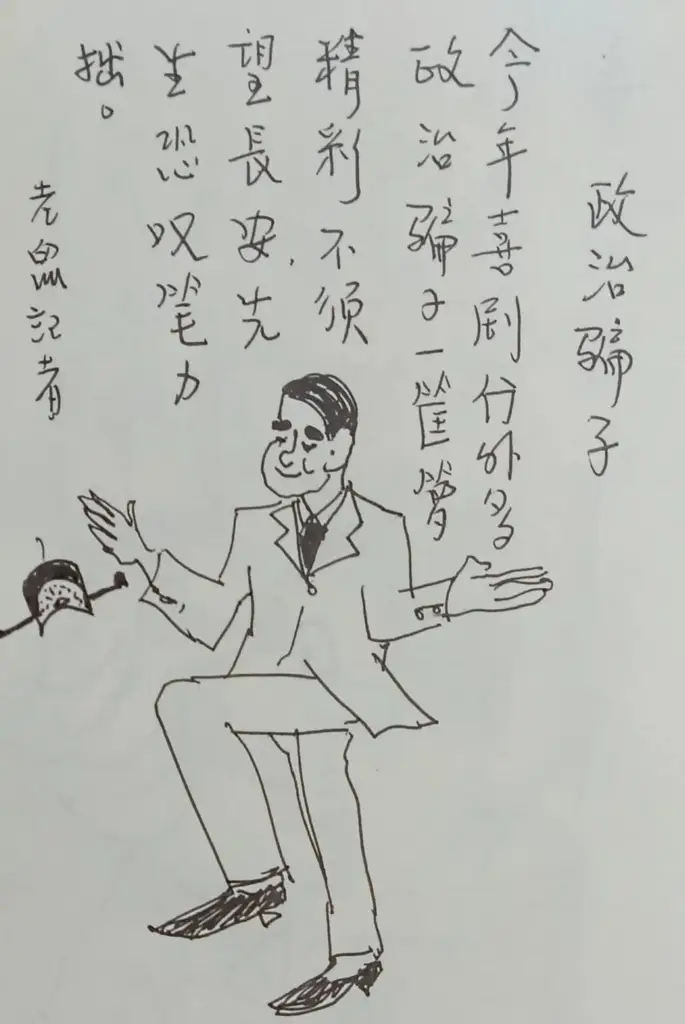
The annual show on the Chinese political stage, the function of the rubber stamp is also completed . This year’s Two Sessions are particularly cold, one is that the session is relatively short. On the other hand, the rubber stamp color of this year’s Two Sessions is even more obvious . All the representatives of the Two Sessions, including government officials, behaved in a proper manner during the Two Sessions, a very competent rubber stamp .
2. Historical Origins: From “Political Spoils” to Procedural Recognition
The CCP actually did not have the NPC when it was first established . In 1949, when Mao Zedong led the CCP officials into Beijing, he was brewing the establishment of the Central People’s Government. At that time, a Political Consultative Conference was convened, and this conference itself was not elected, but nominated. The so-called nomination means that the Communist Party sees who is pleasing to the eye and lets them come . The Political Consultative Conference at that time was actually a political spoils conference between political parties .
The so-called first Political Consultative Conference was a political spoils conference, but it is not a good idea to always engage in political spoils like this . After the establishment of the Central People’s Government of the Communist Party, it must formulate another set of election system and organizational system to make the role of the 8 democratic parties insignificant in the process of the generation of power . Therefore, in 1954, the Constitution was formulated, and the first National People’s Congress representatives were elected at the same time .
According to the Constitution, the government of China should be elected by the NPC representatives, but the Chinese Communist Party had the government first and then the NPC . From the first day of its birth, the NPC is a rubber stamp in terms of procedure, because it needs to recognize the legitimacy of the government, and it is not an organization that really produces the government .
3. The First Law: “Election Law” – Candidate Control and Indirect Elections
The Communist Party turns the NPC representatives into real rubber stamps through the “Election Law”, “Legislation Law”, and the Organization Law of the National People’s Congress .
First of all, the “Election Law” stipulates that the election of NPC representatives is an indirect election . The county and district and township levels are directly elected, but from the city level, the provincial level to the National People’s Congress, it is a layer-by-layer indirect election . The biggest problem this brings is that it completely separates the grassroots public opinion from the highest election institution .
At the direct election level, the core is the control of candidates. Because if you do not enter the candidate, you have almost no chance of being elected . Although the “Election Law” formally stipulates that 10 voters can jointly nominate a candidate, this has been basically stifled by the Communist Party after 2006 . The way to stifle it is very simple, which is to add a “preliminary review procedure”. Through such a procedure, the name of the voters is cut off .
The most absurd point is that the candidates proposed by the presidium do not even need the consent of the person . In the past, Guangdong elected a female worker as a National People’s Congress representative, and she was still working in the workshop, and she didn’t even know that she was elected . If a person does not even have the willingness to participate in politics, and he is brought to the National People’s Congress, isn’t he just a rubber stamp?
4. Hollowed-out Functions: “Non-Permanent System” for Part-time Jobs
The National People’s Congress representatives in China are all very temporary, and they are all concurrent . These people all have formal jobs, and may be government officials, the People’s Liberation Army, teachers or entrepreneurs .
As the highest organ of power, there are less than 3,000 representatives every year, but they are all part-time, which is called アルバイト (part-time job) in Japanese . If you want to exercise your rights, you must have enough time for research. But because they are not permanent, many people cannot even understand the budget report . The CCP uses the “Election Law” to make the NPC representatives a concurrent system, making you a rubber stamp .
5. The Second Law: “Legislation Law” – Representatives Are Shielded Outside the Procedure
The “Legislation Law” stipulates that the main ones who propose legislative bills to the National People’s Congress are the Standing Committee of the National People’s Congress, the State Council, the Procuratorate and the Court . In fact, most laws are formulated by the Law Work Committee of the Standing Committee of the National People’s Congress, and experts and heads of departments are convened during the drafting process, but it has nothing to do with the NPC representatives .
The representatives of the National People’s Congress only have the qualification to vote once at the end of the vote, and they are completely uninvolved in the entire legislative process . And there is no opposition procedure in the voting process, you only have this one chance to press the voting machine . If you press the opposition vote, you may not be allowed to come next time, and if it is more serious, you will be arrested for provoking trouble .
6. The Third Law: Organization Law – Absolute Control of the Presidium
Some people say that representatives have the right to submit bills, for example, 292 bills were received in this session . But after these bills are handed over to the secretariat, they are usually transferred to various special committees for review, and then you will be told the result at the next meeting, and that’s it .
The most important point here is that whether the bills submitted by the representatives of the National People’s Congress can be included in the agenda is decided by the presidium . The presidium decides what kind of bills can be included in the meeting agenda, and it is the most important institution that controls power . And this presidium is produced through a preparatory meeting before the formal meeting, and is usually composed of party and state leaders and important leaders of various departments .
Even if these more than 2,000 representatives are selected by the Communist Party layer by layer, the Communist Party does not trust them and is very strict in preventing them . Through such a procedure, the ordinary representatives are completely separated from the meeting agenda .
7. Summary: The Truth of Suggestion Letters and Weird Proposals
In addition to bills, representatives can also make suggestions, and various departments will write reply letters, pick some good-sounding ones to publish on the website, and then that’s it .
It is through the “Election Law”, “Legislation Law” and the Organization Law of the National People’s Congress that the Communist Party has turned the National People’s Congress representatives into rubber stamps . Because there is no way to truly play the role of a legislator in the procedure, these representatives can only publish those weird bills and suggestions, and let the media report them . Even if they are vases, the vases also want to attract attention, that’s all .
Discover more from 自由档案馆
Subscribe to get the latest posts sent to your email.