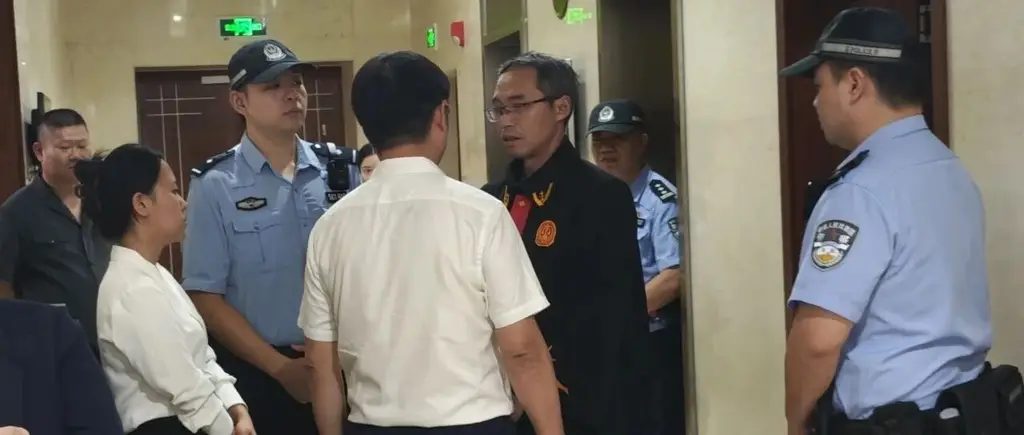
Recently, I provided a first-instance defense for a case involving organized crime in Hebei. I got involved relatively late. After exiting the court to handle the paperwork, I encountered nearly a dozen family members waiting at the entrance, saying they were there to discuss the issue of attending the trial with the judge, and they had been negotiating for several days. The first defendant in this case is named Yang Mouguo, with a total of 19 defendants, mostly from Qian’an City, which is under the jurisdiction of Tangshan. The first instance was designated to be handled by the Luquan District Court in Shijiazhuang City. The family members heard the news that the trial was about to begin and specially rented a car to come to the provincial capital to reflect their situation.
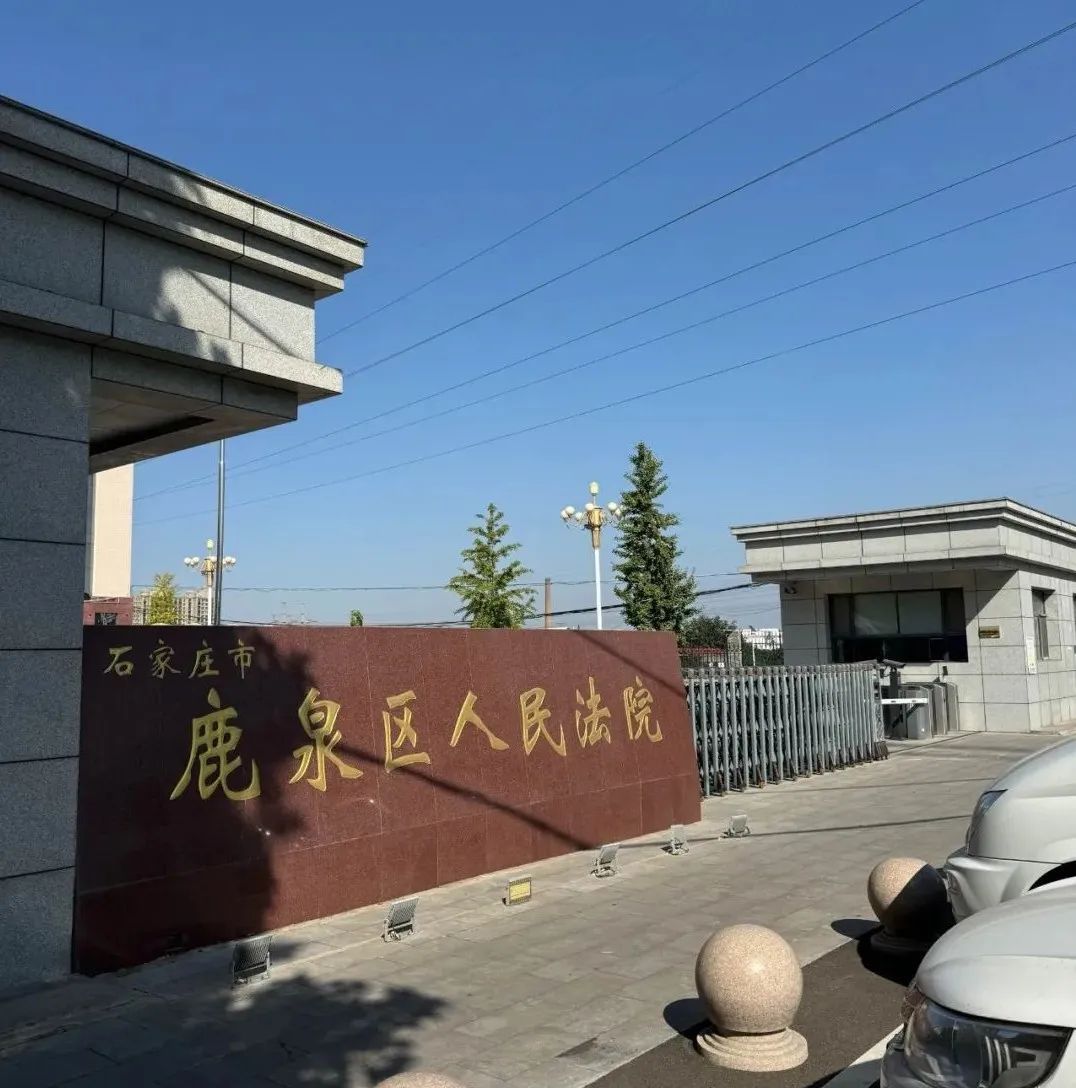
The family members said that the court stated that even its largest courtroom could not accommodate so many people, so it decided to find another courtroom nearby for them to attend the trial via video. The family members disagreed because they had not seen their relatives for nearly two years. Before the judgment takes effect, the trial is the only opportunity, and they are unwilling to give up. The family members also said that the court believed that video attendance was also a form of attendance and asked them to find legal basis for insisting on attending in person.
The family members attending the trial in person has also become a problem, which surprised me. There is absolutely no problem with the legal basis. The current “Rules of the People’s Court Trial” clearly stipulates:
Article 3 The court shall have a trial activity area and an audience area, which are separated by railings, etc.
When news media attend or report on the trial activities, the audience area can set up a special media reporter seat.
Article 9 Citizens can attend public trials.
When the number of seats in the audience area cannot meet the needs, the People’s Court may issue audience tickets according to the order of application or through methods such as drawing lots or drawing numbers, but should give priority to arranging the close relatives of the parties or others who have an interest in the case to attend.
On December 8, 2009, two documents issued by the Supreme People’s Court, “Six Regulations on Judicial Openness” and “Several Regulations on the People’s Court Accepting Supervision by News Media and Public Opinion”, also have very clear and specific provisions.
Article 2 of the Six Regulations: Open Trial
Establish and improve the rules for orderly opening and effective management of attending and reporting trials, and eliminate obstacles to public and media awareness and supervision. In cases tried openly according to law, the audience should enter the courtroom after security checks. Due to objective factors such as the trial venue, the People’s Court may issue audience tickets or meet the needs of the public and media to understand the real situation of the trial through trial videos, live broadcasts, and recordings. All evidence should be disclosed in court, and if it can be certified in court, it should be certified in court.
Article 3 of Several Regulations Prioritize the needs of the media and the close relatives of the parties
For cases tried openly, news media reporters and the public can attend. If the seats in the trial venue are insufficient, the needs of the media and the close relatives of the parties should be given priority. Trial courts with conditions can set up media seats in the audience area as needed.
The above provisions state three levels of meaning:
First, the courtroom must have on-site audience seats. Only when the seats in the audience area are obviously insufficient, a video broadcast audience room is set up as a supplement.
Second, the priority level of the on-site audience seats is stipulated. Priority is given to the close relatives of the parties, other interested parties, and news reporters, among which close relatives are ranked first.
Third, in addition to this, if there are more on-site or video audience seats, and it is difficult to meet the estimated number of attendees, audience tickets can be issued according to the order of registration or by drawing lots or drawing numbers.
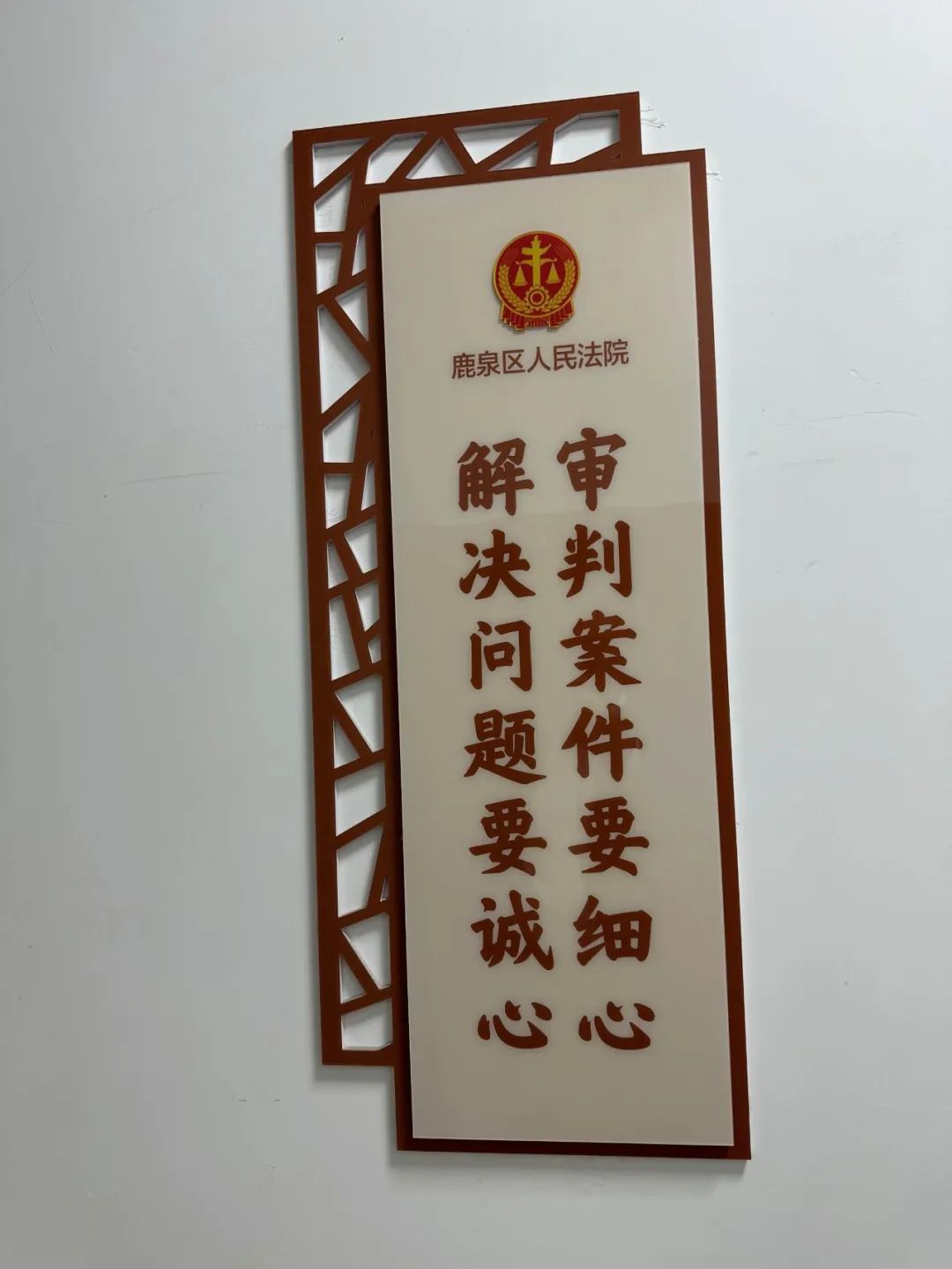
Slogans on the court wall
In fact, the rule of law in Western societies is similar. A few years ago, when the Jiang Ge case, familiar to Chinese netizens, was tried in Japan, a lottery system was also adopted to meet the attendance of groups other than family members.
For this case, the Luquan Court held three pre-trial meetings in August, September, and October of this year. At the third pre-trial meeting I attended, I reflected the demands of the family members to the collegiate bench and stated the above provisions. The next question is, why should the right of family members to attend the trial in person be emphasized? What is the difference between the right to attend the trial in person and video attendance?
First, this is a statutory right of close relatives in criminal proceedings. For the close relatives of the parties, in addition to the right to entrust a defense attorney, the right to act as a defense attorney themselves, the right to appeal on their behalf, etc., the right to know, which is centered on the right to be present at the trial and to obtain important procedural documents, is also a very important right that must be respected and cannot be deprived.
Second, there is no open trial without the right to attend in person. The audience area is a part of the court, and attending in person is the inherent meaning of the open trial system, and the on-site attendance of close relatives should not be restricted in any way. If the courtroom is so small that even an audience area cannot be set up, it means that it does not have the most basic conditions for holding a trial, and it must be replaced with a courtroom with conditions.
Third, the attendance of close relatives in person helps the court to ascertain the facts of the case, which is conducive to a fair trial, and is essentially a direct democracy of supervising judicial activities. Family members, the parties, and lawyers, as the iron triangle of the defense, should be a whole in court, a “force” from the weak side to check and balance public power, and should not be artificially separated physically. In addition, the principles of directness and orality apply not only to the collegiate bench hearing the case, but also fully to both the prosecution and the defense. Defendants will face tremendous pressure if they lie in front of their relatives. If the defendant is treated unfairly, the relatives in the audience area are also silent and powerful support. The one-way output of video attendance cannot guarantee the above rights and effects.
When lawyer Zhou Ze defended the case of Pan Furen, the former vice president of the Shanghai High Court, who was suspected of bribery, I once attended the trial at the Nanchang Intermediate Court for a whole week. After repeated games between the prosecution and the defense, and continuous adjournments, the court basically met the defendant’s right to review the files and question the evidence, and the first-instance judgment also removed more than 5 million of the more than 8 million charges. This result is inseparable from the continuous supervision and pressure of the defendant’s family members in the on-site audience area.
Finally, this is the most basic political ethics and the concept of the rule of law. In our judicial environment where detention is the norm, the defendants and their families usually do not see each other for several years before the trial. Now, you want to send people to prison through the trial, and even sentence them to ten or twenty years, confiscate all their property, and even the family members cannot attend the trial in person, still cannot see their relatives, how can you convince people? Where do you go to talk about justice, human feelings, and national law? In the Luquan Court case, during the pre-trial meetings these days, the family members could only wait outside the court, chasing the prison car in the night, hoping that when the prison car entered and exited the court, their relatives could see their shadows through the dark car windows…”
As for the hardware problem, many courts have strongly promoted the trial on the grounds that they are limited by conditions and do not have a large enough courtroom. This should be the least of the problems.
If there is really no ready-made large courtroom, there are two ready-made solutions.
First, coordinate with the superior court or the large courtroom of other courts to hold the trial. Basically, intermediate courts at all levels and above will have a large courtroom, which can fully meet the needs of the trial of organized crime cases involving more than twenty defendants. In 2019, when we handled the case of Xie Liuqing and 63 other defendants suspected of fraud in Fanchang County, Anhui Province, the Fanchang County Court took the initiative to coordinate with the Wuhu Intermediate Court and held the first instance in the large courtroom of the Intermediate Court. There is a concern that this approach may be criticized for affecting the two-instance final judgment system. In fact, as long as the opinions of both sides of the defense are fully solicited in advance, this approach will usually be understood and will not cause future troubles.
Second, coordinate and borrow public spaces such as gymnasiums and auditoriums to hold the trial. In 2012, the case of Li Qinghong’s organized crime, which was tried in the Xiahe District Court of Guiyang City, borrowed the local gymnasium as the courtroom, and the problem of attendance for everyone, including family members, was solved, and anyone who was not within the scope of the prohibited provisions could enter by swiping their ID card. At that time, I was still working in the media, and I also swiped my ID card to attend the trial for a few days. In the audience area, I also met the famous constitutional expert Professor Tong Zhiwei, the Austrian school economist Yao Zhongqiu and other people from all walks of life. The sincerity of the case’s trial openness work can be seen. I always think that no matter how difficult the steps of the rule of law are, there is no reason to fall behind the level of twelve years ago.
In 2021, I once held a large trial of an organized crime case in the Zhuxi County Court in Hubei, which also involved nearly twenty defendants. The court also had a large courtroom with enough audience space, and also provided a microphone and a display screen in front of each lawyer to facilitate the lawyer to observe whether the clerk’s record was accurate when speaking.
Zhuxi County is adjacent to Ankang, Shaanxi, and is one of the most remote and impoverished counties in Hubei. What a county in the most impoverished province in the central region can do, there is no reason why other places cannot do it. We can not be in a hurry to build so many government buildings, so many buildings and halls, but every court should build a large enough courtroom.
end
Shen Yachuan, pen name Shifeike, graduated from China University of Political Science and Law in 1996. He has 15 years of experience in political and legal reporting and nine years of experience in criminal defense, focusing on cases involving official corruption, organized crime, and freedom of speech.
Discover more from 自由档案馆
Subscribe to get the latest posts sent to your email.