

1
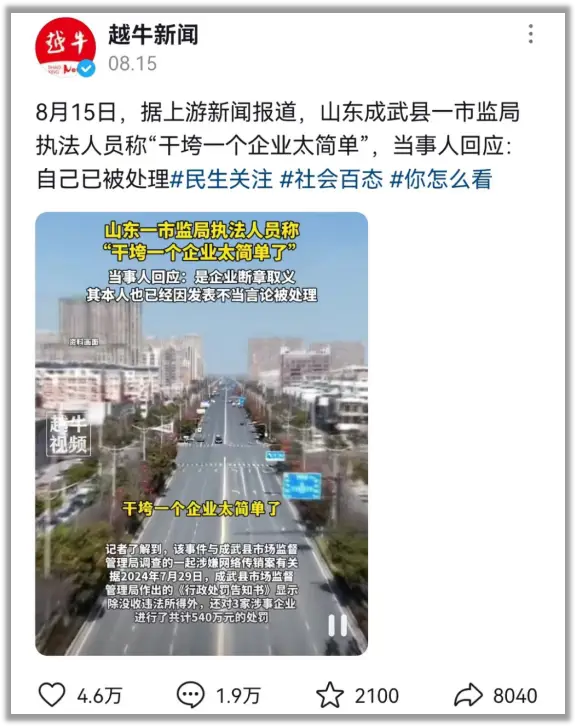
In August, Shandong's Chengwu had just made it onto the trending topics due to a saying from grassroots law enforcement officers.
A month later, this county under the jurisdiction of Heze once again successfully caught the attention of netizens across the country.
This time, the 'buzz' was because the county's development statistics bulletin included these sentences:
"In 2023, the county completed public financial revenue of 166.899 million yuan, an increase of 9.0% compared to last year."
"The county's total public financial expenditure for the year was 508.091 million yuan, a decrease of -11.4% compared to the previous year."
"There are 8,778 retired personnel from government institutions and public institutions, with 785 million yuan in pension benefits paid out;"
"There are 13,220 retired personnel from enterprise units, with 369 million yuan in pension benefits paid out;"
"There are 119,400 people receiving old-age insurance benefits in urban and rural areas, with 251 million yuan in pension benefits paid out."
The Zhihu questioner distilled these data into a question:
"How do you view the fact that Chengwu County's internal system has 8,800 people receiving nearly 800 million in pensions, while 120,000 residents receive 250 million in pensions?"

What else can we say.
We can only say that this historically rich county is quite virtuous in nurturing its personnel.
Under the circumstances of financial deficits, it still takes very good care of the retired personnel within the system, paying them seven to eight thousand yuan in retirement benefits each month.
In Chengwu County, where the per capita GDP is about 42,034 yuan, this money is enough to ensure they enjoy a decent old age.
Comparing this to the average retirement income of two thousand yuan per year for ordinary elderly people in the area, we instantly understand why Shandong people are obsessed with taking civil service exams.
Many young friends question: Is it compliant to pay civil servants so much in retirement benefits?
In fact, from the perspective of document regulations and procedural justice, there is no problem with this operation.
Because this group of retired people have long years of service—
They could start working after graduating from high school, without experiencing layoffs in between, with long and continuous years of service;
High wage base—
Under the 15-level wage system, the salary of civil servants is higher than that of ordinary workers, and successive wage system reforms have established a stable salary growth mechanism for them;
High social security contributions—
Their social security is fully paid by the unit, and under the original dual-track pension system, they don't even need to pay for their own pension insurance;
Therefore, this group of people can receive this amount of retirement benefits when they retire.
As for whether this preferential policy is reasonable?
Everyone's position is different, and the answers given are also different.
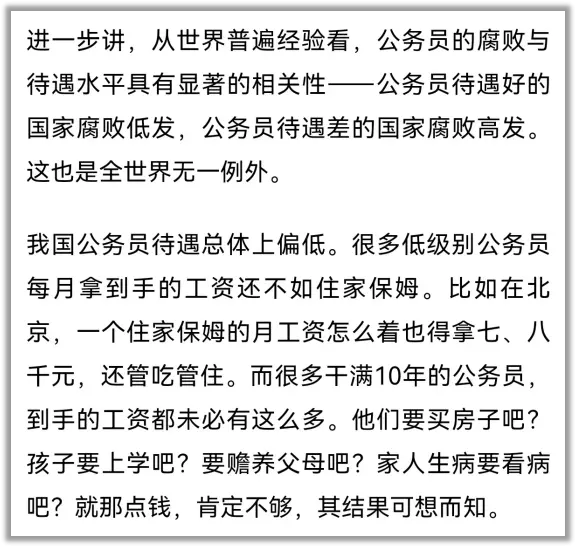
Supporters will say that high salaries help to foster integrity, and consistent good treatment can attract talent to the system.
In this way, it can also benefit the country and society.
Conversely, simply squeezing the grassroots and deducting their retirement benefits will only make those who do things feel disheartened, forcing them to bully the people or be lazy and lie flat.
In the end, it is still the interests of the general public that are harmed.
**(Scholar's view)**
Opponents, on the other hand, complain:
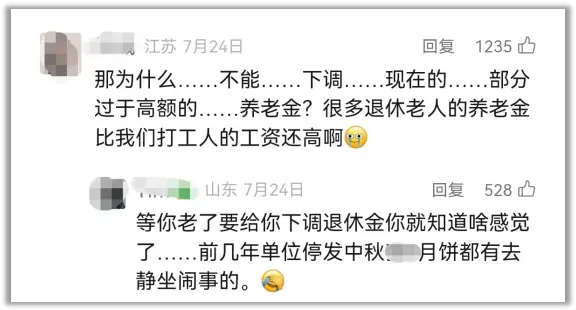
"In order to stabilize the pension fund pool, those born in the 90s have to delay their retirement. Why do these elderly people get to do nothing for a month and still receive a monthly salary higher than that of many workers?"
"Is this fair to young people?"
2
The gap in pension security between those inside and outside the system is not news.
As early as ten years ago, society had launched a major discussion.
At that time, the dual-track pension system had not been completely abolished.
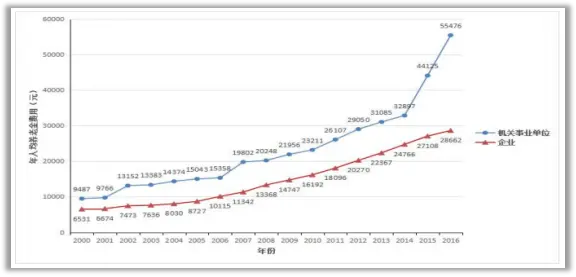
Civil servants did not need to pay pension insurance, but could enjoy an 80%-90% pension replacement rate, receiving almost the same retirement benefits as their previous salaries;
Enterprise employees have been paying pension insurance out of their own pockets, but the retirement benefits they can receive are only 40% of their salary while working.
For this kind of differential treatment, the common people are generally dissatisfied.
Especially those civil servants who followed the organizational arrangements to transfer to private enterprises, they saw the huge gap between their retirement benefits and those of their former colleagues, and their hearts were chilled.
There were even group incidents.
In a survey initiated by People's Daily Online in 2014, netizens directly stated:
"Pension security is the most backward and practical system in the construction of our country's social security field."
Almost everyone was calling for the state to abolish the dual-track system and narrow the gap between the rich and the poor.
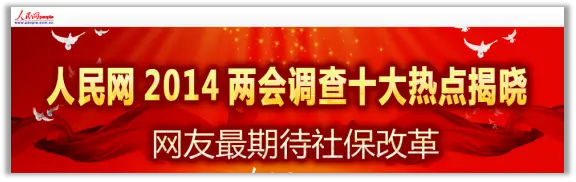
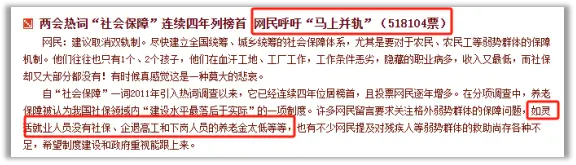
Major newspapers and periodicals also actively followed up, producing a bunch of reports full of living people, directly writing about the social injustice caused by unreasonable policies, and doing enough public opinion mobilization for reform.
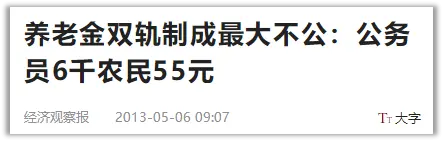
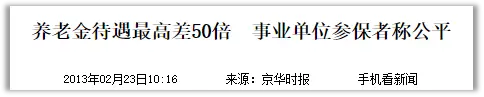
By December 2014, the dual-track pension system finally announced its exit from the stage of history.
Civil servants in various places no longer enjoyed special privileges in pension benefits.
They also, like ordinary employees, need to pay their own pension insurance every month.
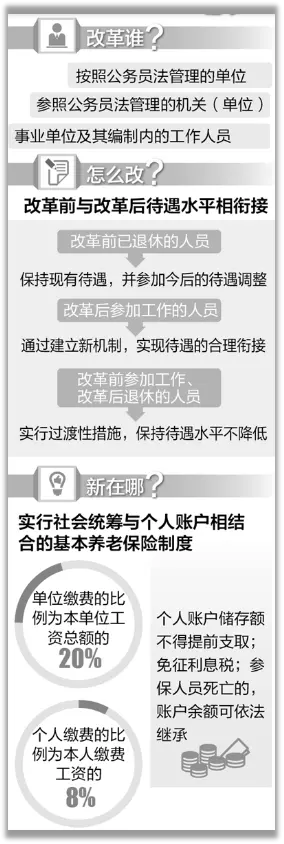
In order to take care of those civil servants in the central and western regions whose wages were not high, the decision-making level also set a ten-year transition period for this reform.
Speaking of this, someone will ask:
"What is the significance of the parallel system?
Look at Chengwu, Shandong, isn't the retirement pension of civil servants still many times that of ordinary residents?"
In fact, pension parallelism does not mean that all retired elderly people can receive the same amount of pension, but rather to narrow the relative gap between those inside and outside the system.
If the parallelism is not implemented, the pension gap in Chengwu County today may be more than 42 times. And in the early statistical bulletin of Chengwu County, we did find that the pension of retired personnel from government institutions was more than 45 times that of urban and rural residents.
As we all know, snatching meat from the mouths of vested interests is a dangerous thing.
Therefore, in conjunction with the pension parallelism, the state also established a professional annuity system for personnel within the system.
With the supplement of the professional annuity, retired civil servants can still enjoy favorable pension benefits.
In this way, the whole set of reforms passed through the deep water area in a relatively stable posture.
This parallel transition period officially ended in October of this year.
Teachers who study public policy like to mention a concept called "mudding through", which means moving forward slowly in the mud, and it is a victory to get by.
The pension parallelism reform has some of this meaning.
Living life, in the case of limited resources, patching up can only make it through safely.
Being moderate and gradual can allow all parties to draw a concentric circle, so as not to hurt the interests of a certain party too much.
3
Let's turn our attention back to Chengwu County.
We noticed that the 2023 statistical bulletin also included these lines of data:
"There are 7,484 people receiving benefits for landless farmers, with fund expenditures of 19.6913 million yuan;"
"There were 937 unemployed people, with unemployment benefits of 1.4631 million yuan, and 34,010 yuan in employee medical insurance fees were paid for 808 unemployed people."
Compared to the 1.4 billion in pension benefits, these expenditures are a small amount, but this may already be the maximum amount that the local government can squeeze out.
Against the backdrop of revenue not covering expenses, this county town has to support retired elderly people, maintain public services, and provide social relief.
A small cart pulling a big horse, just thinking about it makes my head hurt.
And with the acceleration of aging, the pressure of pension payments in the county-level society in the future will likely be more significant.
Chengwu's financial difficulties may also become more severe.
There are fewer and fewer young people who can create GDP for it, but more and more people are asking it for pensions.
Of course, it's not just this small county.
Even prosperous big cities will be affected by the gray rhino of aging.
The research report of the Chinese Academy of Social Sciences shows that from 2030 to 2040, the proportion of the population aged 60 and over in our country will exceed 30%.
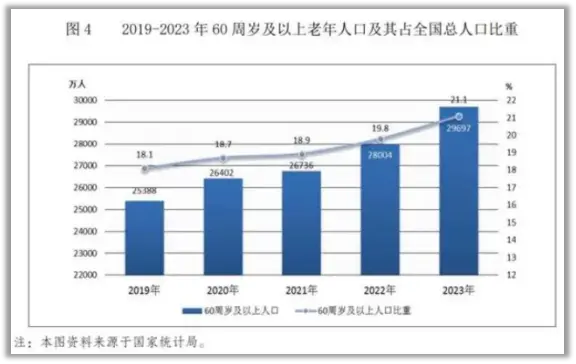
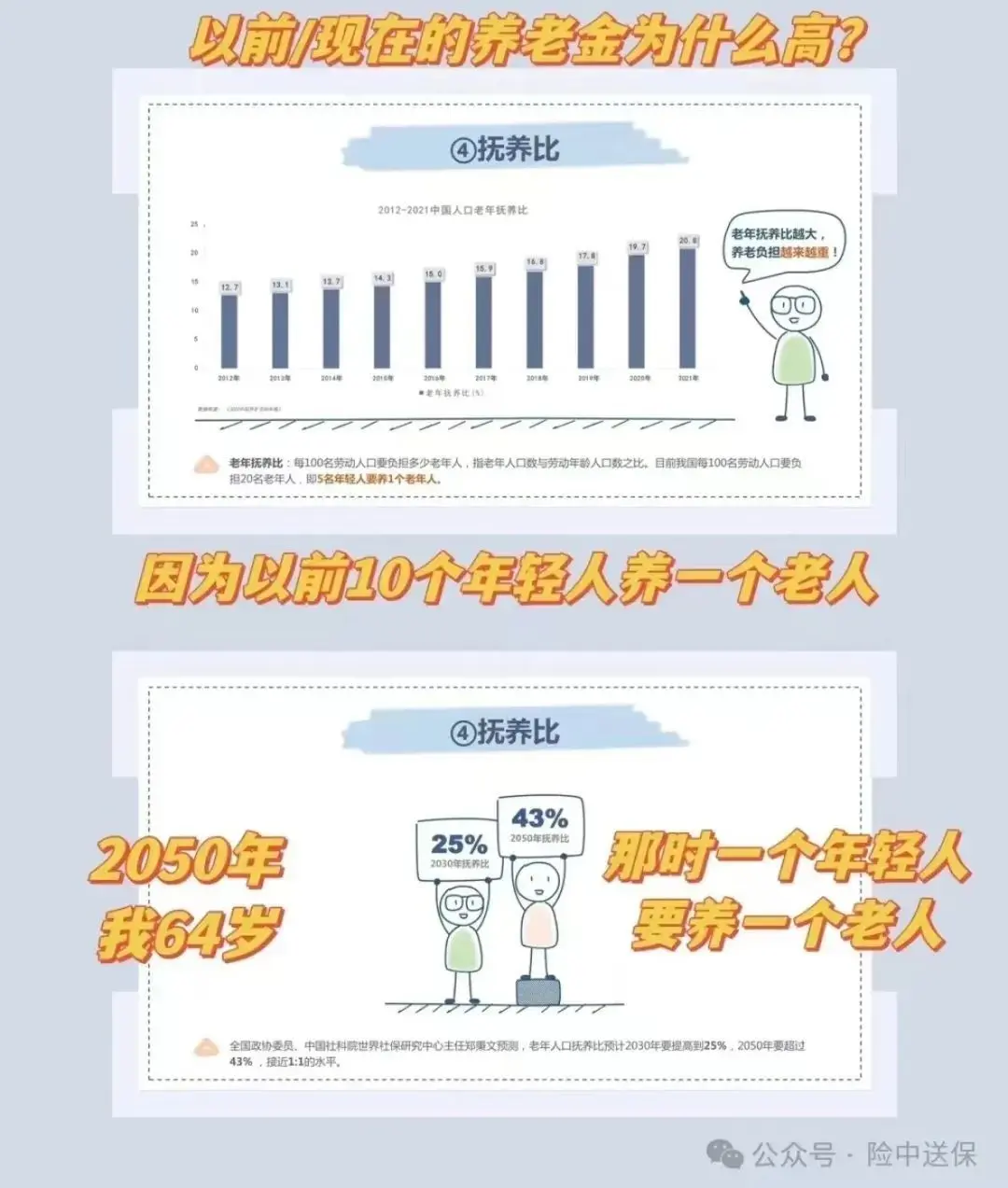
By 2050, the population aged 60 and over will reach 457 million, and the population dependency ratio will be close to 1:1.
That is to say, every young person has to support an elderly person.
Every elderly person's pension is supported by the social security contributions of a young person.
The picture is somewhat sour.
These nearly 500 million elderly people have worked hard all their lives and naturally hope that their retirement benefits will be as high as possible.
But on the other hand, other age groups also have expectations for social welfare.
Middle-aged people hope to receive more relief when they are unemployed, and smoothly go through the low period of their lives;
Children expect to study well in comfortable classrooms, with air conditioning in the severe cold and heat, and to eat healthy and delicious nutritious meals every day...
Everyone yearns for a better life.
Everyone feels that their needs are the blade, but there is only so much money, and there are only so many people who can create wealth.
At that time, how should we divide the cake?
-END-
Welcome to follow
【Recommended reading】
After the Beirut explosion, they started boycotting Apple phones
Do the car-jumping girls really need a "female-only Didi"?
Why bother not eating hardship when you don't give elementary school students air conditioning