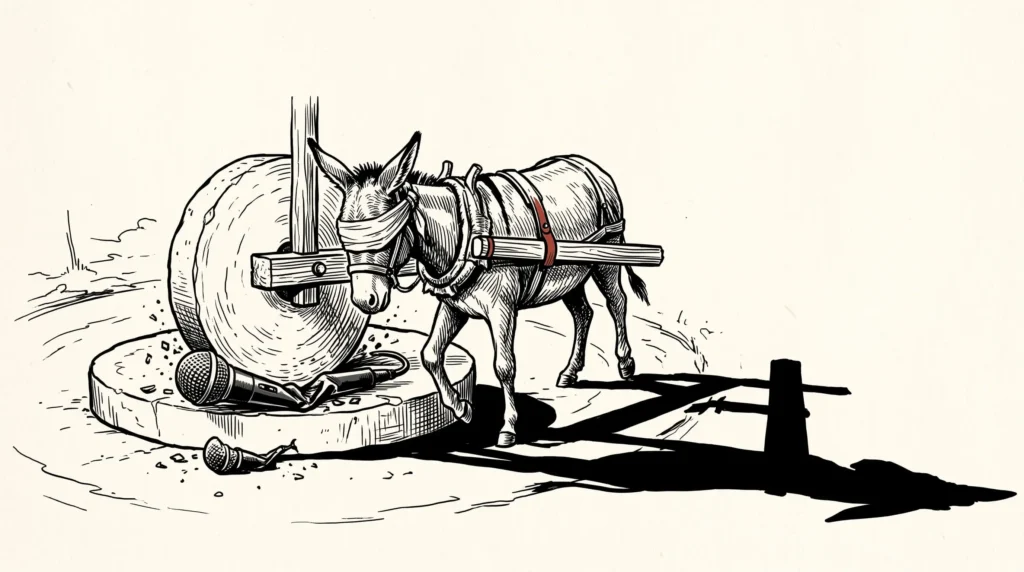


Let’s start with some real data: Chinese workers at Tesla factories earn only about 20-30 yuan per hour (equivalent to $3-5), while the average hourly wage for Tesla workers in the United States is about $25-40, with better benefits.
A gap of almost seven or eight times!
Why is this the case? Some say the United States is more developed than China. Let’s compare based on per capita GDP: China’s per capita GDP is about 1/6 of that of the United States. Compared to the gap in per capita GDP, the wage gap is obviously larger.
The key is that Tesla is already a factory with good treatment in China, often envied for “malicious wage increases.”
Most Chinese companies cannot provide the same treatment to workers as Tesla. Then the real income gap between Chinese and American workers, plus the gap in benefits, must be far greater than the gap in per capita GDP.

In short, we can confirm one thing: the wages of Chinese workers are obviously low. And this is already taking into account the gap in the level of development between the two countries—that is to say, according to the real national strength comparison, Chinese workers should also get more wages, not at the current level.
Calculated, the wages of Chinese workers basically need to double to almost catch up with the real development level of the two countries.
I will never be “double-standard” when looking at economic data. When discussing wages, I must correspond to the level of development rather than absolute values.
But the official media data we see seems to ignore this gap, believing that China’s economic level has actually surpassed the United States.
The official media says: According to the World Bank and IMF, calculated by purchasing power parity, China’s total economic output had already caught up with the United States in 2016, and has since widened its advantage year by year.
This statement has always been evidence of “China surpassing the United States.”
Then it’s awkward, why is the total economic output already surpassing the United States, but the real wage gap is still nearly ten times as large…
According to official media data, even if the total economic output is averaged according to the population of the two countries, the wages of Chinese workers should also reach one-third of that of the United States (after all, the total economic output has already surpassed the United States, while the population is 4 times that of the United States).
More importantly, according to public calculations, the efficiency of Chinese Tesla workers is twice that of American workers.
In other industries, in addition to the difference in efficiency, there may also be the problem of extra working hours. Taking into account unpaid overtime and the gap in benefits (American Tesla workers receive 17 months’ salary per year, as well as generous pensions and social security, and holiday benefits), the real income gap/work input ratio may be widened to about 10 times.
Are the prices in the United States 10 times that of China? Of course not, and even the average price of basic necessities such as meat, eggs, and milk is cheaper than in China.
Regarding this issue, I recently listened to the remarks of an expert and found it absurd.
He studied exchange rates, purchasing power parity… all kinds of economic concepts, and ultimately could not explain one thing—the wages of Chinese workers are indeed lower than they should be.
This expert has done his best to defend and calculate, but no matter how hard he tries, he cannot change this fact. In the end, he himself admitted: whether it is industrial output value, industrial profit, exchange rate, or GDP, per capita GDP as a reference value, after the wages of workers are converted into purchasing power parity, it is indeed too low.
But this expert also said at the end: he doesn’t know why, he doesn’t understand the reason.

Really don’t understand?
Where does the output value of workers go? There must be an explanation in economics. The output value cannot disappear out of thin air. The gap between those output values and incomes, where does the money go? As long as you study it, you can figure it out.
China’s disposable income has long been lower than the GDP level, even lower than many developing countries, lower than the world average, which are all public data.
Then the wage gap is also objectively existing. But it is still quite shocking to calculate that there is such a big gap.
The systemic reasons are very complex, I won’t go into them. I will only say one thing here, which is the cultural factor that contributes to the low-wage society.
Since ancient times, China has been a cultural body that “values material value but does not value labor and service value.”
That is to say, grain is valuable, meat, eggs, and milk are valuable, cotton and silk are valuable, but people are not valuable.
We often see in some Chinese historical phenomena that people are often instrumentalized and consumed, and services have always been of low value.
This cultural continuity is extremely strong, so that even though Chinese people are relatively rich now, they are still unwilling to pay for services. Because in their eyes, services should actually be free.
Even some wealthy Chinese people are like this. It is particularly difficult for them to pay service providers and workers. But if they buy something that they can see and touch, they will spend money like water.
In their subconscious, there should be a fixed group of people who, like NPCs, provide them with extremely low-priced services, and that’s right.
Why do international students returning to China sigh that everything is so convenient—because people are not valuable, there will always be someone to provide you with the lowest price and fastest service.
In ancient times, the upper class were accustomed to having their subordinates do everything. In fact, in the eyes of most people today, there are still “subordinates”, but these people have become those in the service industry, workers, and those engaged in various physical labor.
This is the cultural reason why Chinese workers’ wages are low, labor itself is not valuable.
We can even say that one of the reasons why the steam engine did not appear in China is because labor was too cheap.
When there are the cheapest sedan chairs to go out, the upper class will only feel that the steam engine is superfluous.

When the price of labor and people is very low, the machine seems very expensive—this is a hellish joke, but it is also a real economic choice.
The expert I mentioned earlier, although he recognized the problem of low wages, still did not change his inner “ambition”, which is the biggest problem I see in him.
After he finished talking about the low wages, he quickly shifted the topic to how to seize the Western market. He doesn’t really care about low wages, he still feels that occupying the market and winning over the West is more important than anything else.
What I want to ask him is: Occupy all the markets and then what? What are you going to do? Lower the wages of people all over the world?
Without solving this problem, even if you have great ambitions, it may not matter much to ordinary people.
·END·
Discover more from 自由档案馆
Subscribe to get the latest posts sent to your email.