Source: Listening to the Rain in the Mountains
Author: Commoner Swordsman

(Follow this account: Legal professionals are beneficial for strengthening communication and jointly promoting democracy and the rule of law;
Parties involved can leave messages in the background for free legal consultation)
Early this morning, I saw two similar pieces of news: one was that a person responsible for the Korean air disaster committed suicide at home, and the other was that 32 public officials were held accountable in the Meida Expressway accident. The former was suicide to apologize, and the latter was passive accountability, which can be described as a stark contrast, making people feel mixed emotions.
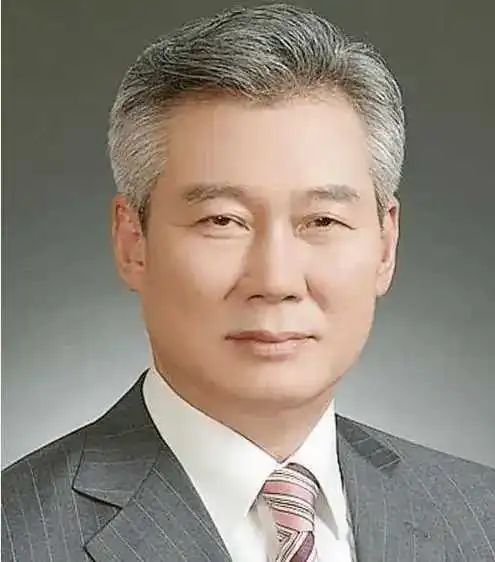
Son Chang-hwan
On the 29th of last month, a Jeju Air passenger plane crashed at the Muan Airport in South Korea. The plane collided with the concrete wall at the end of the runway and exploded and caught fire. Only two of the 181 people on board survived. On January 21, the South Korean police announced that Son Chang-hwan, the former president of the Korea Airports Corporation, who led the concrete engineering project at Muan Airport, was found dead at home.
Currently, the police are still investigating Son Chang-hwan’s death, but have not found any “signs of intrusion or murder.” The South Korean air disaster investigation team also stated that Son Chang-hwan was not the subject of their investigation, nor did he accept questioning as a witness.
Previously, South Korean Minister of Land, Infrastructure and Transport Park Sang-woo had also publicly stated that he planned to resign at an opportune time to take responsibility for the crash.
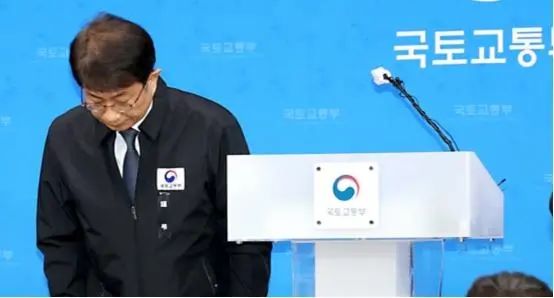
Park Sang-woo
Let’s look at the Meida Expressway accident. Around 2:10 a.m. on May 1, 2024, a section of the Guangdong Meida Expressway near K11+900m in the direction of Dabu to Fujian collapsed, resulting in 23 vehicles falling into the collapse, 52 deaths, and 30 injuries.
On January 22, 2025, Guangdong officials released the “Investigation and Evaluation Report on the ‘5·1’ Collapse Disaster of the Chayang Section of the Meida Expressway”, and at the same time stated that the Guangdong Provincial Discipline Inspection and Supervision Commission, in accordance with the authority of cadre management, seriously held accountable the provincial transportation department, the provincial highway affairs center, the Guangdong Provincial Transportation Group Co., Ltd., the Meizhou Municipal Transportation Bureau and other 4 responsible units and 32 public officials for the problems of dereliction of duty and dereliction of duty in the disaster.
Among them, Wang Xiaotian, the former member of the Party Committee and Deputy Director of the Provincial Highway Affairs Center, is under disciplinary review and supervision investigation by the Provincial Discipline Inspection and Supervision Commission for suspected other serious violations of discipline and law; other relevant responsible persons have been given party disciplinary and administrative sanctions or admonitions and other accountability measures. The illegal and non-compliant acts of relevant enterprises and individuals have been handed over to the competent industry authorities for administrative penalties.
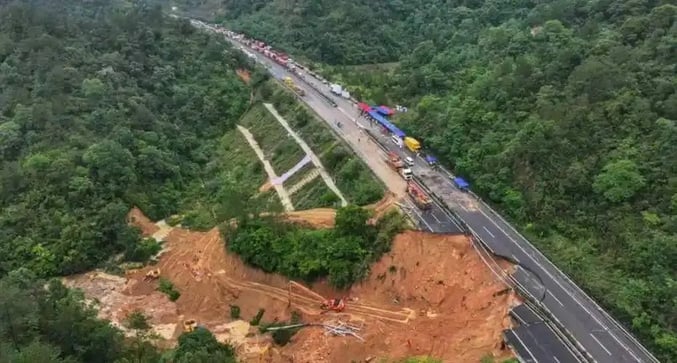
Meida Expressway accident scene
Look, after the Korean air disaster, the Minister of Transport resigned, and the former airport head committed suicide; while after the Meida collapse incident, except for Wang Xiaotian, the deputy director of the Guangdong Provincial Highway Center, who was implicated in other corruption issues and fell from grace, the other responsible persons were basically “punished with three cups of wine” or verbal warnings, and no one resigned voluntarily, nor did anyone commit suicide as a result.
In South Korea, it is not uncommon for officials to resign to take responsibility or commit suicide to atone for their sins. In addition to the resignation of the Minister of Transport and the suicide of Son Chang-hwan this time, there have been many suicides in recent years, including the president—
On the morning of April 16, 2014, the South Korean Sewol ferry accident occurred, resulting in 296 deaths and 8 missing persons. After the disaster, the high school principal Jiang, who escaped successfully, hanged himself. He left a suicide note saying: So many people’s lives and deaths are unknown, I have no confidence to live alone, all the responsibility lies with me, I planned this study tour.
On July 9, 2020, Seoul Mayor Park Won-soon committed suicide after being accused of sexual harassment by a subordinate. You must know that he is the second most powerful official in South Korea and a potential presidential candidate.
On May 23, 2029, South Korean President Roh Moo-hyun at the time was implicated in corruption cases of others and jumped off a cliff to commit suicide…
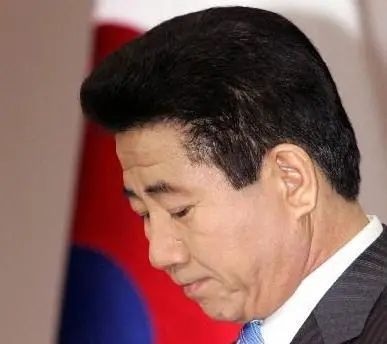
Roh Moo-hyun
As for the officials who resigned to take responsibility, there are countless more. In neighboring Japan, it is also not uncommon for officials to resign to take responsibility or commit suicide to atone for their sins.
In countries such as Europe and the United States, due to their religious doctrines opposing suicide, there are not many officials who commit suicide, but resigning to take responsibility or resigning voluntarily is a common occurrence.
But in China, officials who resign to take responsibility are few and far between, and those who commit suicide to atone for their sins are even unheard of. The main reason is that the official-centered system and the concept of hierarchy are too strong. It takes a lot of “hard work” and “various twists and turns” to become an official, so how can you give up your position just by saying it? And how will others view you after you lose your position? You can’t afford to lose face either.
Therefore, with the binding of vested interests and various considerations such as face, Chinese officials often “cannot bear” to resign. And those who cannot bear to give up their official positions, how can they bear to sacrifice their lives?
But in order to reduce the occurrence of malicious incidents, I still call on those officials who have caused huge losses to the property and safety of the people, such as the responsible persons of malicious accidents such as the Meida Expressway, the responsible persons of health and safety accidents such as Sanlu milk powder and problematic vaccines, and the responsible persons of food safety incidents such as mixed edible oil. If you still have a conscience, you should learn from the officials of South Korea, either resign or commit suicide to atone for your sins, so that you can warn future generations and also make your conscience peaceful.
Only by giving up face can you win face.
What are you waiting for?
Discover more from 自由档案馆
Subscribe to get the latest posts sent to your email.