

The following article is from 盐财经 Author 朱秋雨
Source | Salt Finance
Author | Zhu Qiuyu
Responsible Editor | Bao Butong
Click to viewHardcore financial information:After chatting with 6000 EMBA bosses, I put my recording here!

As in previous years, when winter comes, the complaints about the smelly cars of ride-hailing services, which make people feel like they are "drilling into the driver's quilt" as soon as they get in the car, have resonated with many people.
In December 2024, the person in charge of a ride-hailing platform admitted to the media that the platform received more feedback on odors in winter. "Especially in northern regions, because the mainstream ride-hailing models in the market are new energy vehicles, drivers don't tend to open windows for ventilation in winter when they turn on the air conditioning, which leads to poor air circulation inside and outside the car." Currently, the problem of smelly cars is difficult to eradicate. "If there is no support from related product equipment, it is relatively easy to cause the odor to linger in the car, which can lead to a poor user experience."
Behind the smelly cars, part of the reason is that many ride-hailing drivers live and eat in their cars, and the mixed odors of food, body odor, and clothing jointly exacerbate the production of car odors.
These drivers who live in their cars are sometimes too far from home when they are driving, and they "make do" with spending the night in the car; some do not rent a house and live in their cars. When they are tired, they stop at charging stations, airports, or roadsides to pass the day, and open their eyes to continue driving.
The car is like a fortress, binding ride-hailing drivers to the driver's seat, separating them from the "failures" of the past, the heavy family, and ordinary daily life.

People who lack sleep
"I'm really throwing up." Liu Yu, a "post-80s" driver from Quanzhou, wrote on social media. He fell asleep in the car one night while charging at a charging station.
He slept for a total of 220 minutes.
When he woke up, his 2-hour free parking time had already exceeded. The charging station charged him an extra 11 yuan for parking, and also charged him 30 yuan for overtime occupancy.
"The charging itself was 18 yuan, and I lost 41 yuan for nothing." He felt remorseful. For this driver who counts money by time, 41 yuan means an hour of labor sitting in the car, and also means two or three days' worth of food money.
Liu Yu is a full-time hitchhiking driver. He doesn't rent a house and "wanders" around, living in his car. The longest time, he didn't go home for three weeks in a row, and he solved his washing at gas stations, and slept in his "Aion Hotel".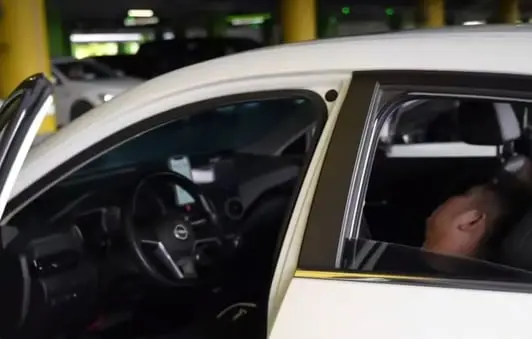
Many ride-hailing drivers said that living in the car is commonplace/Source: Shanghai Car Duo
This is because hitchhiking orders are usually dispatched to places far away from the city center, and sometimes they cross cities. In order not to return empty-handed, Liu Yu followed the high-priced orders and ran around various cities. His footprints are centered on the urban area of Quanzhou, radiating to the coastal cities and towns in the southeast.
In short, he slept in the car after dropping off the passengers; the next day, he went to the surrounding counties and cities with more people to continue taking orders. "If the price is right, I'll go anywhere." He introduced himself on his short video account. At the same time, he often records his frustration and luck on it.
On April 26, 2024, the windows were already pitch black. He wrote: "I'll sleep in the car tonight, I don't want to run back empty. There is also 0.46 yuan per kilowatt-hour of electricity outside (the charging station), which is great."
On May 19, 2024, he wrote: "I ran for 11 hours in one go, and went home for 1 hour empty. I can finally sleep early tonight, I slept in the car last night, and my whole body was sore."
Liu Yu, who lacks sleep, is not alone.
The work of ride-hailing makes many drivers lack sleep, and sleeping five or six hours a day is the norm. After becoming a driver, their weight began to increase, and their urinary system was also prone to problems. The 2023 T3 travel survey shows that cervical spondylosis, gastritis, lumbar disc herniation, and urinary system diseases are the most common occupational diseases among ride-hailing drivers. In addition, more than 40% of the drivers have not had a physical examination for more than a year.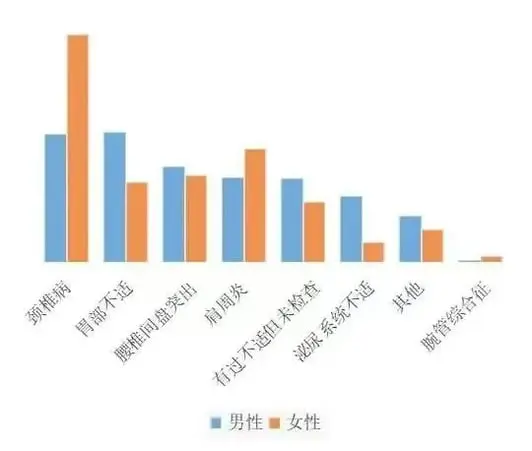
The 2023 T3 travel survey shows that cervical spondylosis, gastritis, lumbar disc herniation, and urinary system diseases are the most common occupational diseases among ride-hailing drivers
In the six months of doing ride-hailing, Zhang Yang, a Henan native in Shanghai, felt the change of his heart beating suddenly. Such heartbeats always come unexpectedly, sometimes at the airport at night, sometimes at the charging station at 3 a.m., and also on the way to drop off passengers.
After all, rest is a "luxury" for Zhang Yang. In order to save the four-digit rent in the big city, he didn't rent a house in Shanghai, worked about 15 hours a day, and slept wherever he went. Living in his car, he has no time to calculate and monitor his sleep, let alone worry about the smell in the car.
The only time he can count is from 3 a.m. to 5 a.m. This is his fixed sleeping time. At this time, the city is basically silent, and there are few orders. He can charge and park for free, which is suitable for napping.
For the rest of the time, Zhang Yang said, "Except for eating, going to the toilet, and washing, my feet haven't touched the ground".
In the summer, he takes a washbasin to the public toilets in the park or the shower rooms at the gas station to wash once a day; in the winter, there is no hot water in the public toilets, and the strangers can only go to the bath center once a week to solve the problem.
The group-buying coupon for the bath center is 29.9 yuan per time, and you can stay all night - this is Zhang Yang's rare relaxation time. He snores when he sleeps, and he is afraid of disturbing others, so he is also embarrassed to sleep in the bright bath center in Shanghai. After washing, he returns to the car, reclines the chair, and has a rare long sleep, which takes about 5 hours.
Liu Yu is not a stranger. Even though he has now married and had children in his hometown of Quanzhou, in the past year, Liu Yu has also become less fond of going home. "Mainly because the village is relatively remote and there are no orders."
Reunion is not important, and accompanying children to grow up is not the primary matter. Making money is the most important life goal for him as the backbone of a rural family.
In order to make more money, Liu Yu likes to drive long distances and often sits in the car with a sore back. When he is tired, he finds a place with water to stop and washes his face with cold water.
Under such a work intensity, he does not dare to go for a physical examination easily. "I haven't been to the hospital for several years, I don't dare to go, I'm afraid of knowing bad news." Even if he has a cold, "as long as I don't cough, I can drink more water and I can continue to run".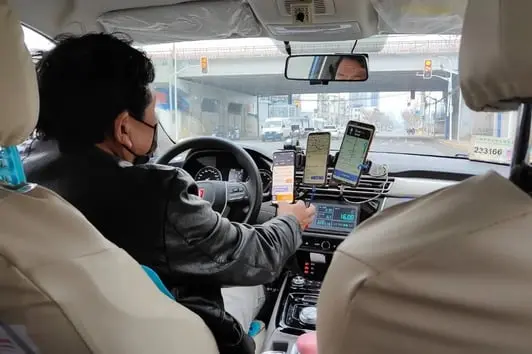
For ride-hailing drivers like Liu Yu: reunion is not the most important thing, making money is the most important life goal for him as the backbone of a rural family/Source: Visual China
Every half month, he goes home to see his relatives, brings the dry food and food prepared by his wife, and can last for many meals. On the road, he doesn't even eat instant noodles. "Basically, I eat bread and biscuits, and I eat rice for lunch and dinner to fill my hunger."
"These are nothing, being poor is more difficult than being tired and suffering." Liu Yu is used to the state of eating and sleeping in the car.
The only pain is that in Fujian's Winter Solstice, there are annoying mosquitoes in the middle of the night.
"Brothers, how do you spend the night outside?" On December 10, 2024, he finally couldn't help but ask on social media.

People who stay up late
More than a dozen ride-hailing drivers from Guangzhou, Fuzhou, Wuhan, Shanghai, and Quanzhou told Salt Finance that it is very common for this group to sleep in the car. A common scenario mentioned is that the platform dispatches drivers to places far away from home. Even if the driver has the right to refuse orders, this will affect the driver's rating on the platform and affect future business.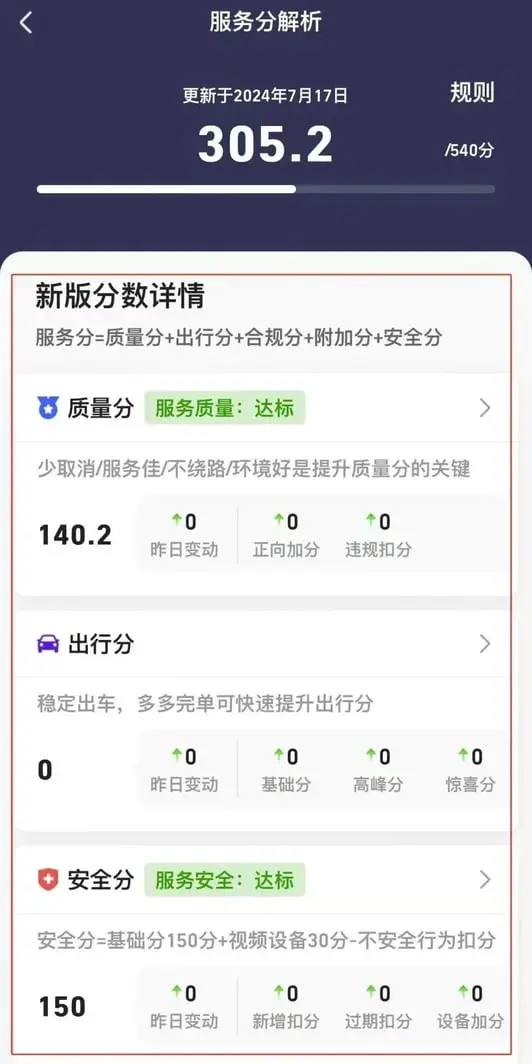
A platform service score analysis page displayed by a ride-hailing driver
Many people have experienced the taste of staying up all night in the car with a pillow and bedding. Chu Yuan, a ride-hailing driver from Fuzhou, described that he "spends eight days out of ten on the road". In the summer, he has to endure the harassment of mosquitoes, and in the winter, he is prone to colds, "which is very difficult to endure".
Yaozi, another ride-hailing driver from Fuzhou, said that he usually sleeps in the car from 3 a.m. to 4 a.m. The most inconvenient thing is that when he wants to go to the toilet late at night, many public toilets are closed. "Although it is uncivilized, I go to the grass to do it at night."
Lin, a driver from Guangzhou, recalled that he occasionally spent the night in the car, "and the next day he felt like he was already useless". Lying down in the car is not flat, and he has difficulty entering deep sleep.
"If there is a bed to sleep on, who doesn't want to sleep on the bed." Lin said.
Liu Yu, who has been sleeping in the car for a long time, has also experienced the "good days" of sleeping in a bed.
That was a few years ago. Around 2018, the ride-hailing platform was just booming across the country, and he tried to drive a hitchhiking car, "there were orders no matter what". The unit price at that time was 2 yuan/kilometer.
Every day on the road, he could earn more than 300 yuan in less than 8 hours, and he drove back home empty-handed every day. Every month, he also had the mood to give himself 3-4 days of vacation.
Seeing the booming market of ride-hailing, in 2020, Liu Yu left the declining real estate industry and took out a loan to buy a new energy vehicle.
It's just that the road seems to be getting narrower and narrower. In 2024, the price of ride-hailing is getting lower and lower, and Liu Yu began to change his work and rest. He gradually stopped going home to sleep, and changed his eating and living to the car, just to maintain a monthly income of about 10,000 yuan.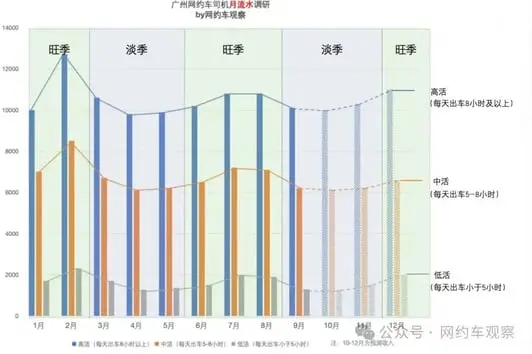
The monthly revenue survey of ride-hailing drivers in Guangzhou shows that: to maintain a monthly revenue of over 10,000 yuan, it is necessary to drive for 8 hours or more on average every day/Source: Ride-hailing Observation
And most of the entrants have an impression: the change started from around 2021.
Since 2021, the rise of aggregated ride-hailing platforms has also promoted the increase of low-priced cars. Various ride-hailing brands have sprung up like mushrooms, increasing from 258 in 2021 to 362 in 2024.
Since then, the "price war" between platforms has become increasingly fierce. Many ride-hailing drivers told Salt Finance that starting from 2023, the unit price during the non-peak hours of the day gradually dropped to 1 yuan - 1.3 yuan/kilometer.
This fee does not include the platform's commission fee, the driver's daily charging fee, food money, social security, and the car rental fee (or car loan) that many ride-hailing drivers have. Sometimes, the drivers who work hard every day find that after deducting their costs, they even lose money the more they drive.
It's just that after the industry price declines, ride-hailing drivers are also helpless. Their common strategy is only one - use time to earn money, and rely on the length of time to win over their peers. The 8-hour work system has long disappeared, and the 10-12 hour driving drivers are the norm. The strong ones are those who drive for more than 15 hours a day, day and night, and are called "driving gods".
Liu Yu was also forced to be involved in this game of "staying up late". In the past, he could earn money from the experience difference by relying on waiting for orders at popular locations and popular residential areas. But now, Liu Yu found that all the skills have no effect.
Now, with more drivers and platforms entering the market, he found that more and more passengers are unwilling to pay the highway fee. He has seen it several times, and the highway fee for a 100-kilometer journey is nearly 50 yuan, and the passengers directly remark in the order that they are unwilling to pay the highway fee.
"I don't accept (passengers) who don't pay (the highway fee), but there are still drivers who will accept such orders," Liu Yu sighed, "It's really endless."
During the interview, he just swiped an order with a total distance of 94 kilometers and a fare of only 66 yuan, which is equivalent to an income of only 70 cents per kilometer.
"It was accepted in seconds." He sent an expression of sweating.
Even if the business is getting better and better, the pressure of supporting the family forces him to persevere. The only way is to "stay up". Stay up for a long time, stay up for endurance, and stay up for the body.
Zhang Yang is like this. Since August 2024, he has come to the vast Shanghai and has been working diligently, like a highly efficient machine. The ride-hailing platform has a mandatory 20-minute rest time every 4 hours. Under normal circumstances, he will not stop and continue to run on different platforms.
"I don't dare to rest." He said to Salt Finance. Thinking about the 6,800 yuan rent per month, he said: "Resting is (losing) money."
Although he is in the car for as long as 16 hours a day, this Henan driver with squinting eyes and a chubby and honest appearance still believes that "hard work can lead to success". Only when he occasionally feels his heart beating suddenly, he will flash a few fears. So, he silently prepared a heart-saving pill and nitroglycerin (a medicine for angina pectoris) in the glove box.

People who cannot escape
The increasingly long driving hours, coupled with the increasingly low income, have made many entrants regret it. Chu Yuan described that sometimes when he drove home, "he wanted to smash the car when he saw the car".
Lin Li, a ride-hailing driver from Wuhan, said that after driving a ride-hailing car, he truly understood the good of work. In the future, his life goal has become "to find a job that is not highly paid, but is stable, not tiring, and does not hurt the body".
Foreign drivers represented by Zhang Yang were once attracted by the beautiful picture of "earning 10,000 yuan a month easily from ride-hailing" displayed on social networks. But now, many people's dreams are shattered. The gap between ideal and reality is not in the result, but in the process. Nowadays, Zhang Yang and Liu Yu both said that they hope that people who want to enter the industry will consider it carefully. "This industry is hard-earned money, and the suffering is not something that ordinary people can bear." Zhang Yang said.
It's just that people sometimes feel confused, in the increasingly difficult ride-hailing industry, why are so many people willing to continuously pour in? In 2024, Shenzhen, Suzhou, Wuhan, Chongqing and many other places issued warnings that the ride-hailing industry is saturated. For example, in December 2024, the Hefei Road Transport Department released the situation. From January to November of that year, the empty driving rate of ride-hailing cars in the city reached 45%; the proportion of drivers with a daily revenue of less than 300 yuan was nearly 80%, and the overall revenue showed a downward trend.
But for many people in it, they are aware that it is not easy to make money, and they also take the initiative to jump into this vortex. Life does not provide them with extra options.
The ride-hailing industry is becoming more and more "competitive", but in order to survive, ride-hailing drivers have no choice
37-year-old Zhang Yang is one of them. Before 2024, except for serving in the army for five years, he had never left his hometown of Zhumadian, Henan, and grew up, got married, and had a lovely baby beside the golden wheat fields.
He worked as a driver in a local enterprise, and his wife was also working. They bought a house and a car, without a loan, and their life was comfortable.
The turning point happened during his wife's second pregnancy in 2024.
At that time, his wife, who was a full-time housewife, began to try online part-time jobs to reduce the burden on the family. Unexpectedly, she got deeper and deeper - she entered a fraud scheme for part-time jobs, and invested more than 300,000 yuan inside and out. When she realized it, it was too late.
The whole family therefore owed a lot of debt.
"Such a big thing happened, and she was carrying her belly at the time, I was afraid that something would happen to her, so I could only coax her." In the summer of 2024, in order to repay the debt, Zhang Yang took a green-skinned train to Shanghai and planned to find a way to turn around in the big city.
He thought about doing all kinds of physical work, but in the end, he chose to become a ride-hailing driver.
"First, the effort and the harvest can be proportional; second, you can withdraw money every day." He explained his original intention to Salt Finance.
He lied to his family that he had found a good job in Shanghai, but in fact, he was taking orders day and night and dropping off passengers. Occasionally, he had time to send messages to his wife, but before he could wait for her reply, he was so tired that he fell asleep.
In addition to daily meals and life, Zhang Yang transfers all the money he earns to his wife to pay off the debt. In order to earn money faster, he eats 5 yuan of Huangshan vegetable rice every day, which is salty and can be refilled indefinitely. Only when he drives well - when he has a daily revenue of more than 1,000 yuan, he rewards himself with a rice set with meat, "which is quite expensive, more than ten yuan".

Ride-hailing drivers share their daily meals on social platforms
Even if he eats less and sleeps less, he hasn't thought about leaving.
"Let's see where we go", nothing can stop a middle-aged man's determination to support his family. In addition, "(I) don't have any other skills, the only thing I can think of is that I have a driver's license", if he changes careers, he can't think of where he can pay off the debt.
Liu Yu also plans to continue to "compete" because of the sunk cost.
After becoming a full-time driver in 2019, he took out a loan to buy a car, which cost most of his family's savings. Now, he has to repay the car loan and bear the expenses of his children's schooling.
"The tuition fees and custodial fees for children are very expensive. I don't have any money to save when I run like this every month, you know how difficult it is."
But, taking a step back, although he lives in his car outside, Liu Yu believes that the ride-hailing driver's "time is free after all, and you can also travel with the passengers".
Moreover, "it's not so easy to find a job that earns 10,000 yuan a month outside now, and it's also very tiring and not free. So, all things considered, running a car is also acceptable", said Liu Yu, who hasn't been home for a week.
Recently, he also found that running orders late at night is the best way to escape the involution. Because, "there are fewer drivers grabbing orders in the middle of the night".
After 10 p.m., the unit price of the mileage at midnight can reach 2 yuan/kilometer. Driving in the empty early morning, Liu Yu seemed to have returned to the good days of running ride-hailing cars before.