

A friend from Nanjing came to me today to complain. He said that due to the instability of local government debt, last year's goal was "to strive for 8% while ensuring 6%", but this year many places have changed to "to strive for 6% while ensuring 3%". What does this mean? It means ensuring the payment of three months' salary and striving to pay more than six months' salary. However, their housing provident fund and social security will not be interrupted.
Civil servants and public institutions in a certain jurisdiction of Nanjing have been in arrears of wages for several months. In the end, it was through administrative orders that funds were forcibly borrowed from various districts within the city to solve the problem of wage arrears for some employees, but the subsequent funds for this year have not yet been determined.

Not only Nanjing, but also the entire Jiangsu Province, as well as economically strong provinces such as Zhejiang and Guangdong, and the municipality directly under the Central Government, Tianjin, have all led to wage arrears or salary cuts for civil servants due to fiscal exhaustion. Some government departments and bus groups in Tianjin have been in arrears of wages for several months, and some cities even have to borrow money from local temples to pay wages.
Multiple local insiders confirmed that in fact, since last year, wages in many places have begun to decrease. Schools, public institutions, and some civil servants have canceled their salaries and weekend overtime pay. And this year, a larger scale of wage arrears has appeared.
Guangdong Province has significantly reduced the wages of retirees, with a decrease of even more than one-third, which means that the two economic powerhouses in the country with a GDP exceeding 10 trillion yuan have already lost their fiscal balance.
Not to mention the inland and northwestern and northeastern provinces.
Chengde, Hebei, and Shijiazhuang, the provincial capital, have also fallen into financial difficulties. The finances of many places have been in deficit and are on the verge of bankruptcy. In order to make up for the funding gap, they have to increase taxes, but this instead makes struggling businesses even more overwhelmed. The more economically deteriorating the area, the more serious the financial problems, and the financial difficulties often intensify and are transferred to the enterprises under its jurisdiction, including directly affiliated enterprises.
For example, some local enterprises' incentives are taxed quarterly. The invoices issued in the first quarter are equivalent to revenue and need to be taxed, but the actual payment may not be received until the fourth quarter.
A civil servant in a certain province in the south said that salary cuts are a nationwide phenomenon, but the magnitude varies from place to place. She said that as a section-level civil servant, her monthly salary is now only more than 5,000 yuan. Because of the tight finances, the subsidies originally intended to encourage teachers to take root in the countryside have been canceled, and the subsidies for schools in remote rural areas, which were more than 300 or 400 yuan a month, are no longer being paid, because the finances have no money.
Under continuous pressure, the government may issue more local government debt at the end of the year to alleviate the financial pressure in various places. The debt-based development model that used to rely on 1.4 billion people as the denominator is now in trouble. The government's formal debt has exceeded 37 trillion yuan, and coupled with the hidden debt of government financing platforms, it is estimated to be no less than 66 trillion yuan. In other words, just the local government debt alone, the per capita debt of the people across the country has reached 46,742 yuan.
China's economic growth has long relied on government-led investment, especially in infrastructure and real estate. Nowadays, the real estate market is sluggish, exports are weak, and consumption is sluggish, and the past growth model is unsustainable. Fiscal revenue is rapidly decreasing, while the pressure of local debt is constantly rising.
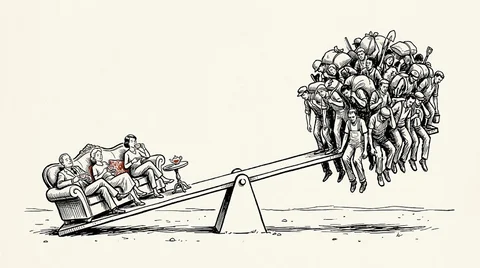
The phenomenon of difficulty in paying wages reveals the intensification of the local financial crisis. The past goal of "striving for 8% while ensuring 6%" has now become "striving for 6% while ensuring 3%", which means that even the basic salary of civil servants has become a problem. This is not only a signal of the local debt crisis, but also increases the overall downward pressure on the economy.
Civil servants have always been considered one of the most stable occupations, with relatively reliable social security and income sources. If even their wages are difficult to guarantee, it will be even more difficult for other industries, because their income directly depends on local finances, and it is also the last link in the economic development cycle. Only when the economy is severely downturned and fiscal revenue is obviously insufficient will it affect the wages and benefits of civil servants.
And if even a group like civil servants is facing the risk of unstable income, the economic problems behind it are undoubtedly huge. Civil servants are also people, they need to support their families and face the pressures of life. When wages cannot be paid on time, some civil servants in some areas even have to rely on borrowing and leverage to maintain their basic lives. This not only affects personal quality of life, but also impacts the confidence of the entire society. Moreover, when the wages of personnel within the system cannot be guaranteed, the lives of ordinary people will only be more difficult.
The local financial problem is no longer a hidden risk, but a real crisis. The inability to pay civil servants' wages also means that the funds for public services are also tight, and the social operation system will also be affected. The social security and public services that ordinary people rely on for survival will also be impacted. In addition, the problems of work stoppages and rising prices brought about by the economic downturn will directly affect people's lives. The downturn in the job market leads to stagnant income, while rising prices further increase the cost of living.
In general, the wage issue reflects the current severe challenges of the economy, which not only affects social stability, but also relates to the quality of life of the people. The current financial difficulties are not only the predicament of personnel within the system, but also relate to the long-term stability of the entire society.